Showing Posts From
The complete poems o
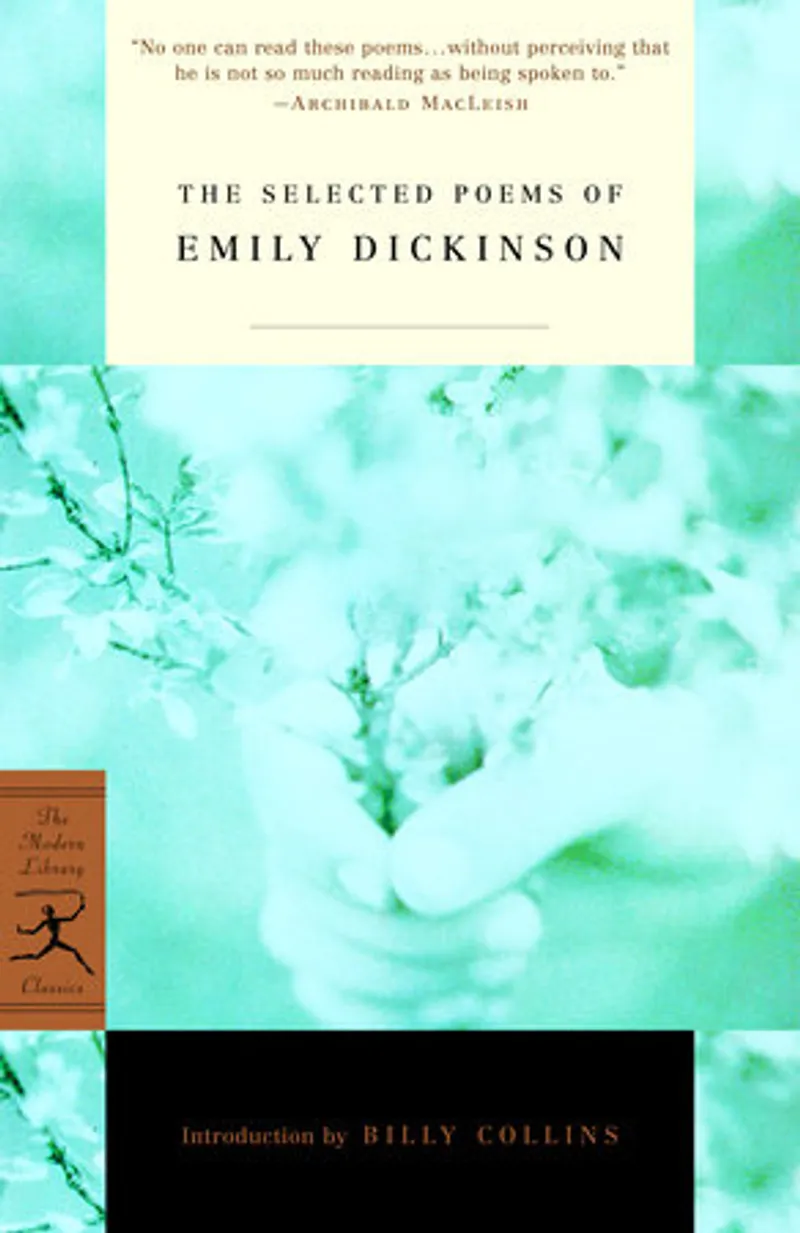
The Selected Poems of Emily Dickinson Author: Emily DickinsonPage Count: UnknownPublication Date: 2000-PRH Emily Dickinson’s The Selected Poems is a masterclass in brevity, intensity, and the sublime. Compiled from the 1,775 poems she left unpublished at her death in 1886, this collection—first published posthumously—reveals a poet who distilled life’s deepest mysteries into fragments of startling clarity. Dickinson, the recluse of Amherst, wrote not for an audience but as a private ritual, crafting a "letter to the world" that would only be deciphered after her passing. The poems here, written between her death and 1900, are a testament to her genius: raw, enigmatic, and utterly modern in their exploration of mortality, love, nature, and the ineffable. At the heart of Dickinson’s work is the tension between the visible and the invisible. She writes of death not as an end but as a threshold, a "Going" that is both terrifying and tender. In "Because I could not stop for Death—", she personifies Death as a gentleman caller, driving her in a carriage toward eternity with quiet inevitability: "We passed the Setting Sun— / Or rather—He passed Us—". The poem’s dashes—those signature marks of Dickinson’s style—create pauses that mimic the suspension of breath, the moment before revelation. Death is not a door but a carriage ride, ordinary and eternal at once. Love, too, is a force Dickinson approaches with equal parts longing and detachment. In "Wild Nights—Wild Nights!", she imagines a love so intense it borders on the divine: "Wild Nights should be / Our luxury!" The exclamation marks crackle with suppressed passion, while the final stanza’s question—"Rowing in Eden— / Ah, the Sea!"—suggests a love that is both paradise and abyss. Dickinson’s love poems are never simple; they are riddles wrapped in metaphors, where the beloved is a "certain Slant of light" or a "Loaded Gun." Nature, for Dickinson, is a mirror for the soul. She observes the world with the precision of a scientist and the reverence of a mystic. In "A Bird came down the Walk—", she watches a bird eat a worm, then fly away, leaving her to ponder the fragility of life: "Than Oars divide the Ocean, / Too silver for a seam— / Or Butterflies, off Banks of Noon, / Leap, plashless as they swim." The poem’s rhythm mimics the bird’s flight, light and fleeting, yet the imagery lingers like a half-remembered dream. Dickinson’s style is unmistakable: short lines, irregular capitalization, and those dashes—em dashes that are not just punctuation but breaths, hesitations, or sudden shifts in thought. Her poems are like telegrams from the subconscious, compressed yet explosive. She avoids the grandiloquent; instead, she finds the monumental in the mundane. A bee, a fly, a slant of light—these are her subjects, and through them, she maps the landscape of the soul. What makes Dickinson timeless is her ability to make the personal universal. She writes of grief, joy, doubt, and faith in terms that feel both intimate and archetypal. In "Hope is the thing with feathers—", she describes hope as a bird that perches in the soul and sings "the tune without the words." The metaphor is simple, yet it captures something essential about human resilience. Hope, for Dickinson, is not passive; it is a living, singing thing that outlives storms. Billy Collins, in his introduction, notes that Dickinson reminds us of the "deeply private nature of literary art." In an age of social media and performative poetry, her work is a rebellion—a refusal to cater to an audience. She wrote for herself, and in doing so, she wrote for all of us. Her poems are like locked rooms; the key is in the reader’s hands, and the reward is the thrill of discovery. The Selected Poems of Emily Dickinson is not just a collection; it is an experience. It demands patience, but it rewards with flashes of insight that feel like lightning strikes. Dickinson’s genius lies in her ability to compress entire universes into a few lines, leaving the reader breathless and yearning for more. To read her is to enter a mind that sees the world with unflinching clarity and yet remains shrouded in mystery. She is, as Henry James called her, a poet of "the landscape of the soul"—a landscape that is vast, wild, and utterly unforgettable. #EmilyDickinson #Poetry #AmericanLiterature #DeathAndBeauty #NaturePoetry #ClassicPoetry Related InsightsBruja’s Nest Book Review and Summary The Falcon of Sparta Book Review and Summary The Host Book Review and Summary{ "@context": "https://schema.org", "@type": "FAQPage", "mainEntity": [ { "@type": "Question", "name": "What is the main focus of The Complete Poems of Emily Dickinson Book Review and Summary?", "acceptedAnswer": { "@type": "Answer", "text": "Everything you need to know about The Complete Poems of Emily Dickinson with our detailed review." } }, { "@type": "Question", "name": "Who authored the comprehensive guide on The Complete Poems of Emily Dickinson Book Review and Summary?", "acceptedAnswer": { "@type": "Answer", "text": "This detailed article and its insights were carefully researched and authored by Emily Dickinson." } }, { "@type": "Question", "name": "Where can I find more related content about Books?", "acceptedAnswer": { "@type": "Answer", "text": "You can explore more articles, detailed reviews, and similar insights by browsing the Related Insights section at the bottom of this article or visiting our dedicated Books category page." } } ] }