Showing Posts From
The dragon republic
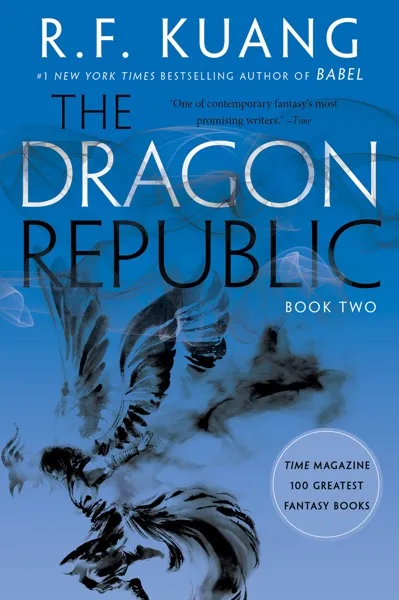

The Dragon Republic Author: R. F. KuangPage Count: UnknownPublication Year: 2019-GB R. F. Kuang’s The Dragon Republic is a searing, unflinching exploration of power, revolution, and the cost of survival in a world where the oppressed are forced to become monsters to fight their oppressors. As the second installment in Kuang’s Poppy War trilogy, it builds on the brutal, morally complex foundation of its predecessor, deepening the themes of imperialism, complicity, and the cyclical nature of violence. But where The Poppy War was a harrowing descent into war, The Dragon Republic is a reckoning—one that questions whether the very tools used to fight tyranny only perpetuate it. At its core, the novel grapples with the question: What happens when the oppressed inherit the tools of their oppression? Kuang’s protagonist, Rin, is a prodigy of the Lore, a destructive magic system tied to gods of fire and war, who once unleashed genocide upon her enemies in The Poppy War. Now, she finds herself caught between the ruins of her own making and the fragile hope of a new republic—one that promises justice but demands sacrifice. The Dragon Republic, a loose alliance of warlords and revolutionaries, is as much a political experiment as it is a military one. Yet Kuang refuses to romanticize rebellion. Every victory is stained with blood, every alliance is a gamble, and every idealist is a potential tyrant waiting to be unleashed. Kuang’s prose is as unrelenting as her themes. She writes with a clinical precision that makes the horror feel immediate—battlefields are not just described but experienced, the stench of burning flesh and the weight of a soldier’s last breath rendered in visceral detail. Yet her style is also laced with dark humor and biting irony, particularly in Rin’s internal monologues. There’s a rawness to her voice, a refusal to sugarcoat the ugliness of war even as Rin clings to her humanity. The dialogue crackles with tension, whether it’s Rin’s razor-sharp exchanges with her mentor, Jiang Ziya, or the morally ambiguous dealings with the Dragon Republic’s leaders. Kuang’s worldbuilding is equally impressive, weaving in elements of Chinese history and mythology without ever feeling like a mere pastiche. The Lore, in particular, feels like a force of nature—beautiful, terrifying, and indifferent to the fate of those who wield it. One of the novel’s most striking strengths is its refusal to offer easy answers. Rin is not a hero, nor is she a villain—she is a survivor who has made choices that haunt her. Kuang forces the reader to sit with that discomfort. The Dragon Republic’s leaders, from the idealistic Venka to the ruthless Negha, are not caricatures but flawed, complex figures whose motives are as muddled as their ethics. The novel asks: Can a revolution born in blood ever be just? And if not, what does that say about the nature of change itself? Kuang’s exploration of power is particularly devastating. The Dragon Republic promises democracy, but Rin quickly realizes that power in any form corrupts. The very act of fighting for a new order requires compromise, and compromise often means allying with the same forces that once oppressed you. The novel’s climax is a gut-punch of a sequence that forces Rin (and the reader) to confront the idea that some battles, once won, only birth new wars. It’s a theme that resonates deeply in today’s political climate, where calls for revolution are often met with the same cycles of violence they seek to dismantle. Stylistically, The Dragon Republic is a masterclass in tension. Kuang’s pacing is relentless, with moments of quiet introspection shattered by bursts of explosive action. The magic system, tied to gods and divine will, is used sparingly but with devastating effect—each incantation feels like a prayer that might be answered or ignored. The prose shifts between Rin’s first-person perspective and omniscient third-person chapters that provide context, creating a sense of dread as the reader watches Rin’s descent from a position of relative privilege into the muck of war. There’s a sense of inevitability to the story, not because it’s predictable, but because Kuang makes you feel the weight of every choice Rin makes, every line she crosses. Ultimately, The Dragon Republic is a novel about the cost of defiance. It asks whether it’s possible to break the cycle of violence, or if the only way out is through it. Rin’s journey is one of disillusionment, but it’s also a testament to resilience. Kuang doesn’t offer redemption—at least, not in the traditional sense—but she does offer something rarer: a story that refuses to lie to its readers, even when the truth is unbearable. If The Poppy War was a war story, The Dragon Republic is a reckoning. It’s a book that will leave you shattered, questioning, and—most importantly—thinking. Kuang has crafted a narrative that lingers long after the last page, a reminder that the fight for justice is never clean, never fair, and rarely ends the way we hope. #TheDragonRepublic #RFKuang #DarkFantasy #EpicFantasy #MorallyGreyCharacters #RevolutionInDarkness Related InsightsFind Me Where It Ends Book Review and Summary Skyward Flight Book Review and Summary I Was Born for This Book Review and Summary{ "@context": "https://schema.org", "@type": "FAQPage", "mainEntity": [ { "@type": "Question", "name": "What is the main focus of The Dragon Republic Book Review and Summary?", "acceptedAnswer": { "@type": "Answer", "text": "Everything you need to know about The Dragon Republic with our detailed review." } }, { "@type": "Question", "name": "Who authored the comprehensive guide on The Dragon Republic Book Review and Summary?", "acceptedAnswer": { "@type": "Answer", "text": "This detailed article and its insights were carefully researched and authored by Anna Kowalska." } }, { "@type": "Question", "name": "Where can I find more related content about Books?", "acceptedAnswer": { "@type": "Answer", "text": "You can explore more articles, detailed reviews, and similar insights by browsing the Related Insights section at the bottom of this article or visiting our dedicated Books category page." } } ] }