Showing Posts From
The falcon of sparta
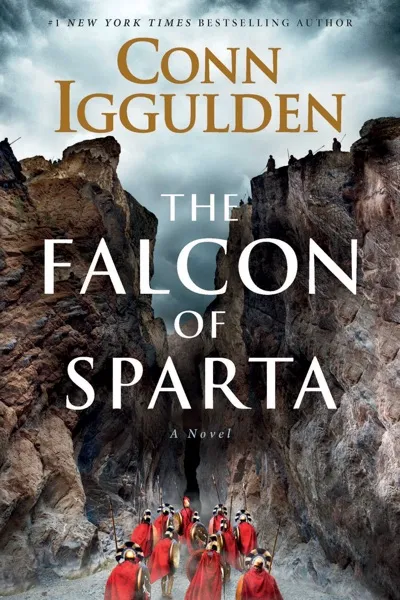

The Falcon of Sparta Author: Conn IgguldenPage Count: UnknownPublication Year: 2018-GB Conn Iggulden’s The Falcon of Sparta is a historical epic that crackles with the tension of ancient warfare and the raw ambition of men who shaped empires. Set against the blood-streaked backdrop of 4th-century BC Greece, this novel reimagines the legendary march of the Ten Thousand—a band of Greek mercenaries who fought their way home after being abandoned by their Persian employer, Cyrus the Younger. Iggulden, a master of historical fiction, doesn’t just recount history; he breathes fire into it, transforming a pivotal but often overlooked campaign into a gripping tale of survival, betrayal, and the indomitable will to survive. At its core, The Falcon of Sparta is a story about defiance. The title itself hints at the duality of power—Cyrus, the titular "falcon," is both a ruthless prince and a visionary leader, while his followers, the Ten Thousand, are the underdogs who dare to challenge the might of an empire. Iggulden explores themes of loyalty and rebellion through the eyes of his protagonist, Xenophon, a young Athenian nobleman who joins Cyrus’s campaign not out of blind allegiance, but because he seeks glory and purpose. The novel asks: What does it mean to fight for a cause when that cause is flawed? When the leader you follow is both brilliant and morally ambiguous? The Ten Thousand’s odyssey becomes a metaphor for the human struggle against overwhelming odds, where every victory is hard-won and every loss feels like a betrayal of the ideals they once held. Iggulden’s writing style is visceral and immersive, blending the strategic depth of a military historian with the narrative flair of a storyteller. His prose is muscular and unadorned, mirroring the gritty reality of ancient warfare. Battle scenes are not just described; they are experienced—the clatter of shields, the stench of sweat and blood, the desperate calculations of commanders who know that one wrong move could spell annihilation. Yet, for all its brutality, the novel is not a mindless slog through carnage. Iggulden understands that war is as much about psychology as it is about steel. The psychological toll on the Ten Thousand is palpable: the paranoia of being hunted, the erosion of trust, the moments of camaraderie that flicker like candle flames in the dark. One of the novel’s greatest strengths is its ensemble cast. Xenophon is a compelling guide, but the true stars are the men around him—men like the hardened Spartan captain Cheirisophus, the cunning Persian traitor Tissaphernes, and the everyman soldiers whose names history has forgotten but whose struggles Iggulden gives life to. The dialogue crackles with authenticity, whether it’s the clipped, militaristic exchanges of seasoned warriors or the philosophical musings of Xenophon as he grapples with the moral complexities of war. Iggulden doesn’t shy away from moral ambiguity, presenting Cyrus as both a charismatic leader and a tyrant, his visionary dreams tainted by his willingness to sacrifice his followers for power. The novel’s pacing is relentless, mirroring the march of the Ten Thousand themselves. There are no chapters that drag; instead, the story unfolds in a series of escalating crises—betrayals, ambushes, near-starvation, and the constant threat of annihilation. Yet, Iggulden balances the tension with moments of quiet reflection, particularly in Xenophon’s internal monologues, where he questions his own motives and the nature of leadership. These introspective pauses make the eventual triumphs and tragedies all the more resonant. Iggulden’s research is meticulous, but he wears it lightly. He doesn’t bog the narrative down with excessive historical detail; instead, he uses well-placed historical footnotes and cultural context to enrich the story without overwhelming the reader. The result is a world that feels alive and authentic, where gods and omens still hold sway over men’s fates, and where the line between victory and defeat is as thin as the edge of a spear. The Falcon of Sparta is more than just a war story—it’s a meditation on the fragility of human ambition. Cyrus’s empire crumbles because of his own hubris, while the Ten Thousand survive through sheer will and adaptability. Their journey is a testament to the power of collective resilience, a theme that resonates just as strongly in the modern world as it did in antiquity. Iggulden’s novel doesn’t just entertain; it challenges the reader to consider what it means to fight for something greater than oneself—and whether that something is worth the cost. For fans of immersive historical fiction, The Falcon of Sparta is a must-read. It’s a book that will leave you breathless, both in admiration for the sheer audacity of its characters and in awe of Iggulden’s ability to make history feel like an immediate, visceral experience. #TheFalconOfSparta #ConnIggulden #HistoricalFiction #AncientGreece #TenThousand #Xenophon Related InsightsWinter's Gifts Book Review and Summary Invisible Girl Book Review and Summary Echoes: The Saga Anthology of Ghost Stories Book Review and Summary{ "@context": "https://schema.org", "@type": "FAQPage", "mainEntity": [ { "@type": "Question", "name": "What is the main focus of The Falcon of Sparta Book Review and Summary?", "acceptedAnswer": { "@type": "Answer", "text": "Everything you need to know about The Falcon of Sparta with our detailed review." } }, { "@type": "Question", "name": "Who authored the comprehensive guide on The Falcon of Sparta Book Review and Summary?", "acceptedAnswer": { "@type": "Answer", "text": "This detailed article and its insights were carefully researched and authored by Thomas Wright." } }, { "@type": "Question", "name": "Where can I find more related content about Books?", "acceptedAnswer": { "@type": "Answer", "text": "You can explore more articles, detailed reviews, and similar insights by browsing the Related Insights section at the bottom of this article or visiting our dedicated Books category page." } } ] }