Showing Posts From
The heavenly table
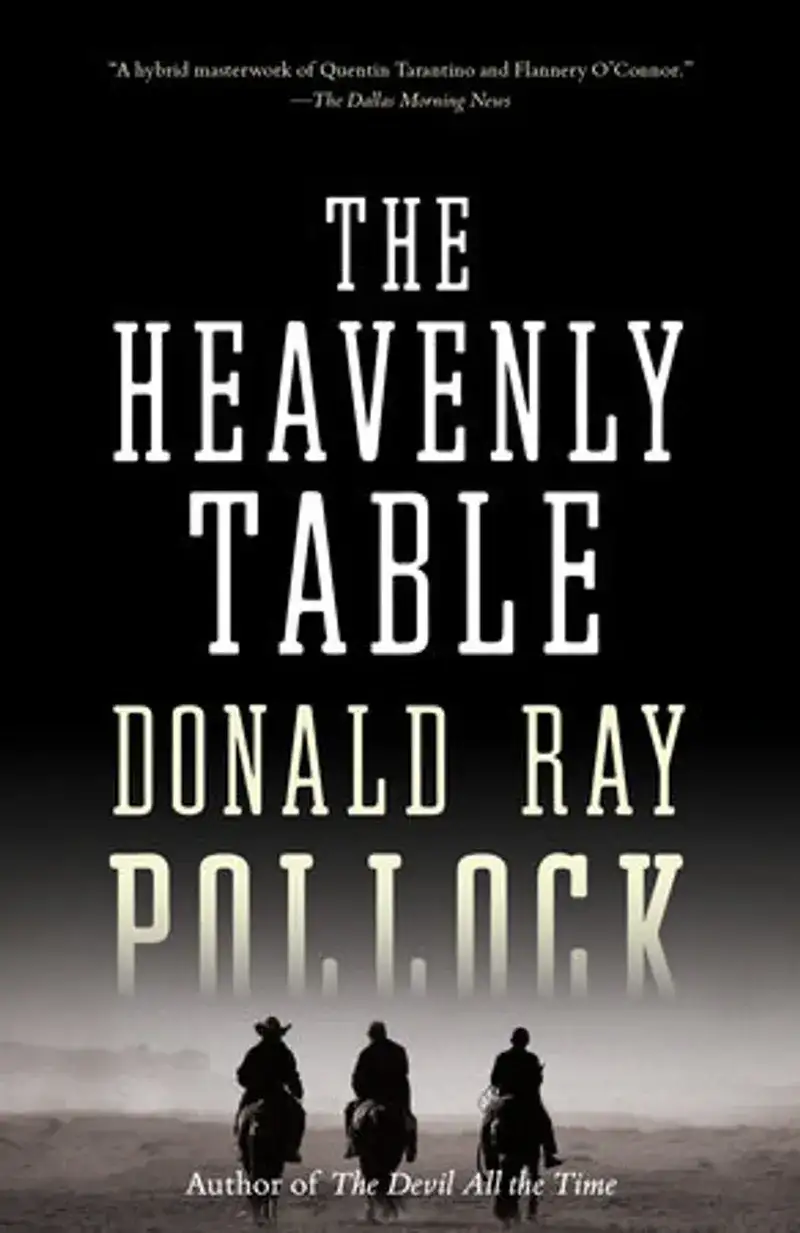

The Heavenly Table Author: Donald Ray PollockPage Count: UnknownPublication Date: 2017-PRH The Heavenly Table: A Bloodsoaked Ballad ofFamily, Faith, and Fated Ruin Donald Ray Pollock’s The Heavenly Table is not a book for the faint of heart. It is a brutal, black-hearted romp through the backwoods of 1917 Georgia and Alabama, where the air smells of sweat, sin, and gunpowder, and where the line between salvation and damnation is drawn in the dirt of a dirt-poor farm. If Flannery O’Connor and Quentin Tarantino had ever collaborated on a Southern Gothic nightmare, this would be it—a novel that drips with the kind of violence and dark humor that feels both timeless and urgently immediate. At its core, The Heavenly Table is a story about two families hurtling toward each other like trains on the same track, their fates entwined by greed, grief, and the kind of reckless, almost biblical justice that only the poor and desperate can afford. On one side, the Jewetts: Pearl, a broken-down farmer clinging to his land like a drowning man to driftwood, and his three sons—Cane, Cob, and Chimney—who are less sons and more feral coyotes, hungry for blood and a quick buck. On the other, the Fiddlers, a family of simple, hardworking farmers who have been swindled out of everything they own, their youngest son, Eddie, lost to the horrors of World War I. When the Jewetts set out on a crime spree that will lead them straight to the Fiddlers’ doorstep, what follows is a collision of violence, vengeance, and a twisted form of redemption. Pollock’s genius lies in his ability to weave together the grotesque and the grotesquely funny, the sacred and the profane, with the ease of a man spinning tales around a campfire. His prose is raw, unpolished, and utterly immersive, as if the words themselves are caked in the grime of the era he’s describing. There’s a relentless rhythm to his sentences, a kind of hypnotic cadence that sucks you into the muck and mire of these characters’ lives. When he describes the Jewetts’ crimes, it’s with the matter-of-fact brutality of a man recounting the weather—no embellishment, no moralizing, just the cold hard facts of what happened. And yet, beneath the violence, there’s a dark humor, a streak of the absurd that makes the bloodshed feel almost cartoonish, if not for the fact that real people are the ones bleeding. The real triumph of The Heavenly Table is its characters—not the kind of people you’d invite to dinner, but the kind you can’t look away from. Pearl Jewett is a man who has given up on God, his land, and even his own sons, yet he clings to a fragile hope that his family might still find its way. His sons, meanwhile, are a trio of outlaws straight out of a folk ballad, each more unhinged than the last. Cane, the eldest, is a self-proclaimed prophet with a messiah complex; Cob is a brute with the IQ of a box of rocks; and Chimney is the youngest, the most volatile, and the most tragic of the bunch. On the other side, the Fiddlers are a family drowning in sorrow, their grief as palpable as the dust in the air. Eddie, their missing son, is a specter haunting every page, his absence as heavy as the weight of the sins about to be committed in his name. What makes this novel so gripping is its exploration of faith—both in its absence and its twisted presence. The Jewetts’ crimes are justified, in their minds, by a warped sense of divine right. Cane, in particular, sees himself as an instrument of God’s will, a bringer of justice to the corrupt and the wicked. Meanwhile, the Fiddlers’ faith is tested in the most brutal way possible, as they struggle to reconcile their belief in a just God with the senseless violence that threatens to consume them. Pollock doesn’t offer easy answers here. Instead, he presents a world where faith is as much a weapon as a crutch, where salvation is just another word for survival, and where the line between the holy and the horrific is thinner than a razor’s edge. The novel’s title, The Heavenly Table, is a sly nod to this theme. It refers to a mythical feast promised to the poor and the righteous, a table laden with abundance where the meek shall inherit. But in Pollock’s world, the heavenly table is always just out of reach, a cruel joke played on those who dare to hope. The Jewetts and the Fiddlers are all chasing after the same dream, only to find that the table is already set with knives instead of bread. If there’s a flaw in The Heavenly Table, it’s that Pollock’s world can feel a little too insular at times. The violence, while shocking, starts to blur together in the middle sections, and the sheer number of brutal acts can make the novel feel like a endurance test rather than a narrative. But this is a minor quibble in a book that otherwise crackles with energy, humor, and a deep, abiding sadness. The Heavenly Table is not a book for everyone. It’s too violent, too dark, too unflinching for those who prefer their Southern fiction served with a side of Southern charm. But for those who crave a story that’s as raw and unfiltered as a fresh wound, Donald Ray Pollock delivers in spades. This is a novel that will leave you breathless, bruised, and, if you’re lucky, a little wiser about the kind of people who haunt the edges of history—the ones who never quite make it to the heavenly table, but who sure as hell make their presence known. #DarkSouthernFiction #GritLit #BrutalFamilySaga #SouthernGothic #PollockStyle #FatedToDie Related InsightsRoyal Witch Book Review and Summary Crash Book Review and Summary Cold Empty Rooms Book Review and Summary{ "@context": "https://schema.org", "@type": "FAQPage", "mainEntity": [ { "@type": "Question", "name": "What is the main focus of The Heavenly Table Book Review and Summary?", "acceptedAnswer": { "@type": "Answer", "text": "Everything you need to know about The Heavenly Table with our detailed review." } }, { "@type": "Question", "name": "Who authored the comprehensive guide on The Heavenly Table Book Review and Summary?", "acceptedAnswer": { "@type": "Answer", "text": "This detailed article and its insights were carefully researched and authored by Carmen Martinez." } }, { "@type": "Question", "name": "Where can I find more related content about Books?", "acceptedAnswer": { "@type": "Answer", "text": "You can explore more articles, detailed reviews, and similar insights by browsing the Related Insights section at the bottom of this article or visiting our dedicated Books category page." } } ] }