Showing Posts From
The hotel new hampsh
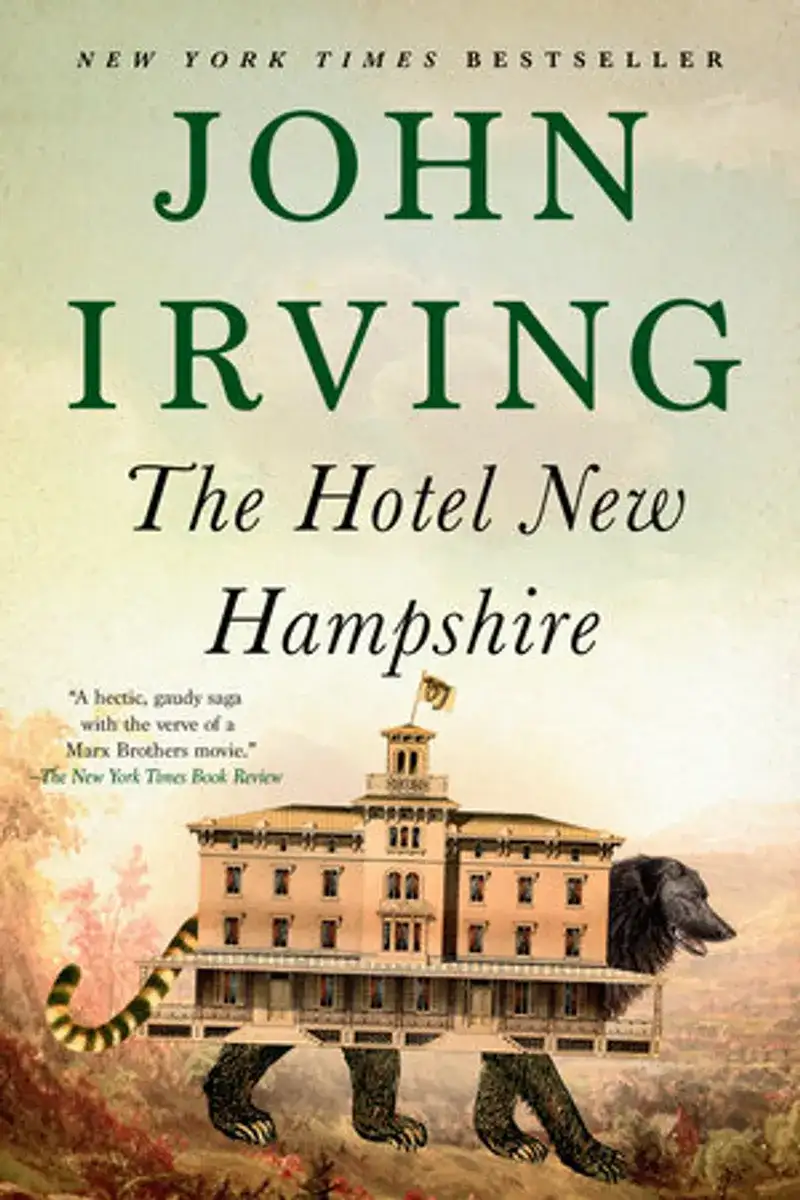

The Hotel New Hampshire Author: John IrvingPage Count: UnknownPublication Date: 2018-PRH John Irving’s The Hotel New Hampshire is a sprawling, darkly comic, and deeply human epic that defies easy categorization—part family saga, part surrealist odyssey, and wholly a testament to the absurdity and beauty of living on the fringes of conventional life. Originally published in 1981, this reissue (2018) reintroduces readers to one of Irving’s most audacious creations: a clan of dreamers who treat chaos like a religion and hotels like their personal playgrounds. At its core, the novel is about the illusions that sustain us, the families we’re stuck with, and the way life’s tragedies and comedies are often two sides of the same coin. The Berry family is Irving’s masterstroke—a collection of misfits whose lives are as unpredictable as the plots of the bad movies they love. The patriarch, Win Berry, is a failed entrepreneur with a penchant for bears and a head full of half-baked schemes, while his wife, Mary, is a former hockey champion turned alcoholic schoolteacher, her dreams as fractured as her teeth. Their children—John, Frank, Franny, Lilly, and Egg—are each shaped by their parents’ delusions, inheriting both their resilience and their knack for disaster. John, the narrator, frames their story with a wry, fatalistic humor: "The first of my father’s illusions was that bears could survive the life lived by human beings, and the second was that human beings could survive a life led in hotels." This line sets the tone: Irving’s world is one where the boundaries between reality and fantasy blur, where survival depends as much on imagination as it does on luck. Irving’s style is unmistakable—lush, digressive, and freighted with a novelist’s obsession for detail. He writes like a man who believes that every subplot, no matter how tangential, matters, and that the only way to tell a truly human story is to pile on the anecdotes until the reader feels as overwhelmed as the characters. His prose is muscular, sometimes to the point of excess, but it’s also warm and inviting, like a hand reaching into the page to pull you into a world that’s equal parts hilarious and heartbreaking. The novel’s structure jumps between timelines and settings with the unpredictability of a dream, yet Irving’s control is absolute; even the most absurd moments (a bear in a hotel, a dwarf-sized wrestling match, a suicide that reads like a farce) feel inevitable once you’re under the spell of his storytelling. The theme of illusion versus reality pulses through every chapter. The Berries’ hotels—first the crumbling Hotel New Hampshire in New Hampshire, then the even more absurdly named Hotel New Hampshire in Vienna—are metaphors for the family itself: grand, dysfunctional, and doomed to collapse under the weight of their own contradictions. Win Berry’s dreams are both his greatest strength and his fatal flaw, a trait shared by all the Berries. Frank, the cross-dressing intellectual, Franny, the beauty queen with a dark secret, and Lilly, the aspiring writer whose stunted growth mirrors her stunted ambition, are all products of their environment, shaped by their parents’ failures as much as their own resilience. Even the novel’s most shocking moments—a rape, a murder, a botched abortion—are treated with a mix of gravity and gallows humor that leaves the reader giddy with discomfort. What makes The Hotel New Hampshire so enduring is its refusal to take itself too seriously. Irving never lets his characters off the hook, but he also never punishes them without mercy. The novel’s emotional core lies in its portrayal of family as both a prison and a sanctuary. The Berries love each other, even when they’re driving each other insane, and their loyalty is as unshakable as their dysfunction. John’s narration, filled with asides and footnotes, gives the story a confessional tone, as if he’s sitting across from you at a bar, drunk on whiskey and nostalgia, laughing through the tears. If there’s a flaw in Irving’s approach, it’s that the novel occasionally risks becoming a victim of its own cleverness. The sheer number of subplots—some brilliant, some meandering—can feel exhausting, and the novel’s insistence on its own mythic grandeur occasionally teeters into self-parody. But these are minor quibbles in a work that’s ultimately as rich and messy as life itself. The Hotel New Hampshire isn’t just a story about a family; it’s a story about the stories we tell ourselves to survive, the lies we dress up as truth, and the way love and pain are inextricably entwined. Irving’s genius lies in his ability to make the absurd feel profoundly real. He writes about bears and hotels and wrestling matches with the same sincerity other writers reserve for war or love, and in doing so, he reminds us that the most extraordinary lives are often the most ordinary ones—just lived a little louder, a little funnier, and a lot more tragically. The Berries aren’t heroes or villains; they’re just people, trying their best, failing spectacularly, and laughing through the wreckage. For readers who love Irving’s work, this novel is a homecoming. For those new to his world, it’s an invitation to dive into a story that’s as unpredictable as it is unforgettable. It’s a book that demands to be read in one breathless sitting, even if you have to come up for air every few pages to laugh or gasp or just shake your head in disbelief. Because that’s the thing about the Hotel New Hampshire: once you check in, you never really want to leave. #HotelNewHampshire #JohnIrving #FamilySaga #DarkComedy #LiteraryFiction #BookReview Related InsightsDream Town Book Review and Summary Until The Stars Burn Out (Shadowsworn, #2) Book Review and Summary House of Earth and Blood Book Review and Summary{ "@context": "https://schema.org", "@type": "FAQPage", "mainEntity": [ { "@type": "Question", "name": "What is the main focus of The Hotel New Hampshire Book Review and Summary?", "acceptedAnswer": { "@type": "Answer", "text": "Everything you need to know about The Hotel New Hampshire with our detailed review." } }, { "@type": "Question", "name": "Who authored the comprehensive guide on The Hotel New Hampshire Book Review and Summary?", "acceptedAnswer": { "@type": "Answer", "text": "This detailed article and its insights were carefully researched and authored by Chloé Laurent." } }, { "@type": "Question", "name": "Where can I find more related content about Books?", "acceptedAnswer": { "@type": "Answer", "text": "You can explore more articles, detailed reviews, and similar insights by browsing the Related Insights section at the bottom of this article or visiting our dedicated Books category page." } } ] }