Showing Posts From
The january 6th repo
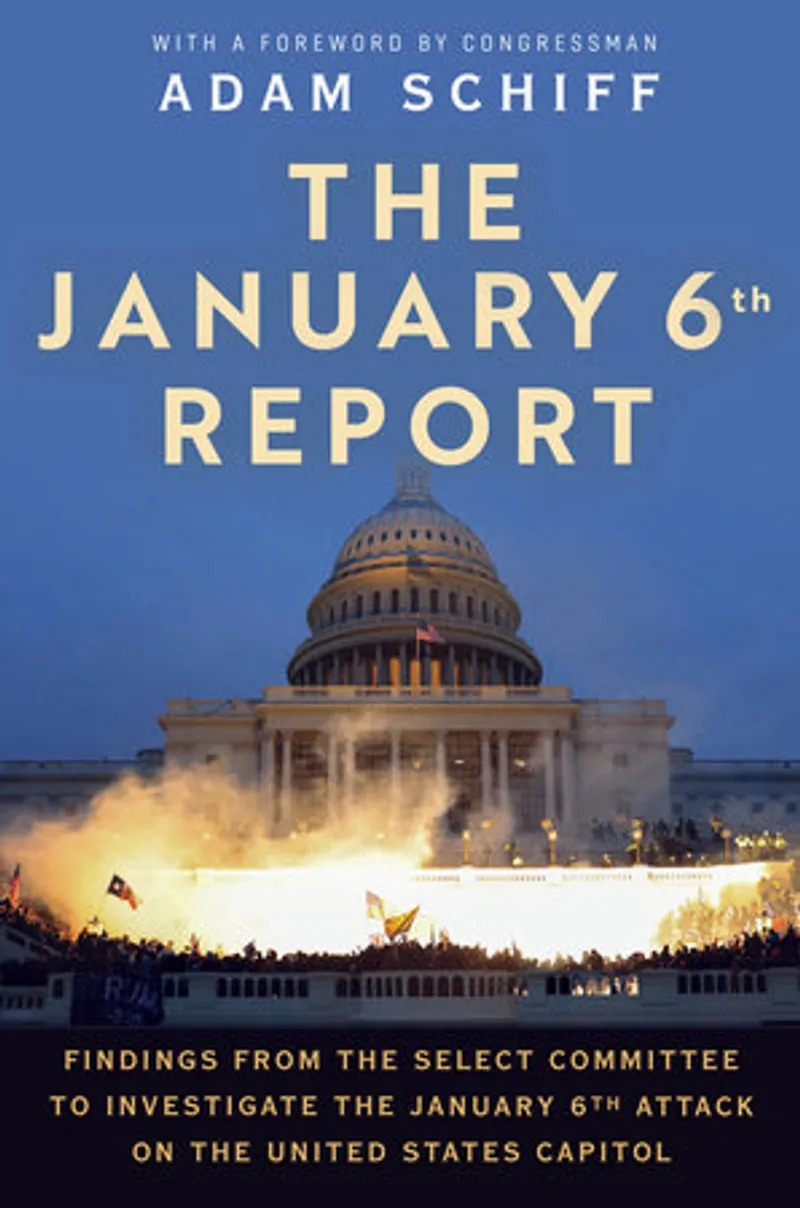

The January 6th Report Author: The January 6 Select CommitteePage Count: UnknownPublication Date: 2023-PRH The January 6th Report: A Chilling Chronicle of Democracy Under Siege Few documents in American history will be as consequential—or as chilling—as The January 6th Report. Compiled by the Select Committee tasked with investigating the violent insurrection at the U.S. Capitol, this official account is not just a recitation of facts but a stark warning about the fragility of democracy when confronted by a leader willing to weaponize lies, intimidation, and mob rule. With meticulous detail and an unflinching gaze, the report strips away the myth of a spontaneous riot, revealing instead a calculated coup attempt orchestrated from the highest levels of power. At its core, the book is a damning indictment of Donald Trump’s relentless effort to overturn the 2020 election. The committee’s findings—backed by thousands of hours of testimony, documentary evidence, and witness accounts—paint a portrait of a president who, upon losing the election, embarked on a multi-pronged strategy to subvert the will of the voters. From pressuring state officials to "find" votes, to pressuring the Department of Justice to legitimize baseless fraud claims, to summoning a violent mob to Washington on January 6th, the report exposes a president who treated the peaceful transfer of power not as a democratic norm but as an obstacle to be crushed. The report’s strength lies in its methodical, almost clinical dissection of events. Unlike partisan screeds or sensationalized accounts, it adheres to a rigorous evidentiary standard, presenting facts in a way that leaves little room for denial. The committee’s bipartisan composition—including Republicans like Liz Cheney and Adam Kinzinger—lends the report an air of credibility that no single-party narrative could muster. Yet, despite its factual precision, the book is far from dry. The transcripts of Trump’s phone calls—pleading with Georgia Secretary of State Brad Raffensperger to "find" 11,780 votes, for instance—are chilling in their brazenness. The juxtaposition of Trump’s private demands with the public spectacle of his rally speeches, where he urged supporters to "fight like hell," underscores the deliberate nature of his incitement. Congressman Adam Schiff’s foreword, added to this edition, serves as both a coda and a call to action. Schiff, who played a key role in Trump’s first impeachment, frames January 6th not as an isolated incident but as part of a broader assault on democratic norms. His analysis is sharp, drawing parallels between Trump’s behavior and the tactics of authoritarian leaders worldwide. Schiff’s warning—that the threat to democracy did not end on January 6th—hangs over the report like a specter, reminding readers that the battle for the soul of American governance is ongoing. The report’s most haunting passages are those that detail the violence itself. The committee does not shy away from graphic descriptions of the rioters’ brutality—officers beaten with flagpoles, bloodied faces, and the chilling moment when the mob chanted, "Hang Mike Pence!" The contrast between the peaceful transfer of power that had defined American democracy for centuries and the chaos engineered by a defeated president is jarring. It forces the reader to confront an uncomfortable truth: the January 6th attack was not an aberration but the logical endpoint of a presidency that thrived on division, conspiracy, and the erosion of trust in institutions. Stylistically, the report is a masterclass in forensic storytelling. It balances the weight of its subject matter with a structure that guides the reader through the labyrinth of Trump’s schemes. Each chapter builds on the last, revealing new layers of the conspiracy—from the fake electors plot to the pressure campaign on Vice President Pence. The inclusion of exhibits, such as text messages between Trump allies and rally organizers, adds a visceral immediacy to the narrative. These documents do not merely support the committee’s conclusions; they force the reader to reckon with the real-time coordination of an attempted coup. Yet, for all its damning evidence, the report is not without its limitations. By design, it is a political document, shaped by the committee’s mandate and the constraints of a divided Congress. It does not delve deeply into the broader cultural forces that enabled Trump’s rise—such as the rise of far-right media, the weaponization of social media, or the decades-long erosion of trust in institutions. Nor does it offer a roadmap for preventing future assaults on democracy, beyond the obvious need for accountability. These omissions are not flaws in the report itself but reminders that the fight to preserve democracy is far from over. Ultimately, The January 6th Report is a book that demands to be read—not just as a historical record, but as a mirror. It forces Americans to ask: How close did we come to losing our democracy? And what will we do to ensure it never happens again? The answers are not comforting. But the report’s existence—its relentless pursuit of truth in the face of obstruction and denial—is a testament to the resilience of democratic institutions. In an era where facts are often dismissed as opinions and truth is treated as negotiable, this document stands as a bulwark against the tide of disinformation. For anyone seeking to understand the true gravity of January 6th, this report is essential reading. It is not a partisan screed, nor is it a sensationalized account. It is the cold, hard truth—delivered with the urgency it deserves. #January6Report #DemocracyInPeril #TrumpCoup #AccountabilityNow #DefendDemocracy #NeverForgetJanuary6 Related InsightsStone and Sky Book Review and Summary Lina & June Book Review and Summary Being a Witch, and Other Things I Didn't Ask For Book Review and Summary{ "@context": "https://schema.org", "@type": "FAQPage", "mainEntity": [ { "@type": "Question", "name": "What is the main focus of The January 6th Report Book Review and Summary?", "acceptedAnswer": { "@type": "Answer", "text": "Everything you need to know about The January 6th Report with our detailed review." } }, { "@type": "Question", "name": "Who authored the comprehensive guide on The January 6th Report Book Review and Summary?", "acceptedAnswer": { "@type": "Answer", "text": "This detailed article and its insights were carefully researched and authored by Victoria Smith." } }, { "@type": "Question", "name": "Where can I find more related content about Books?", "acceptedAnswer": { "@type": "Answer", "text": "You can explore more articles, detailed reviews, and similar insights by browsing the Related Insights section at the bottom of this article or visiting our dedicated Books category page." } } ] }