Showing Posts From
The joy luck club
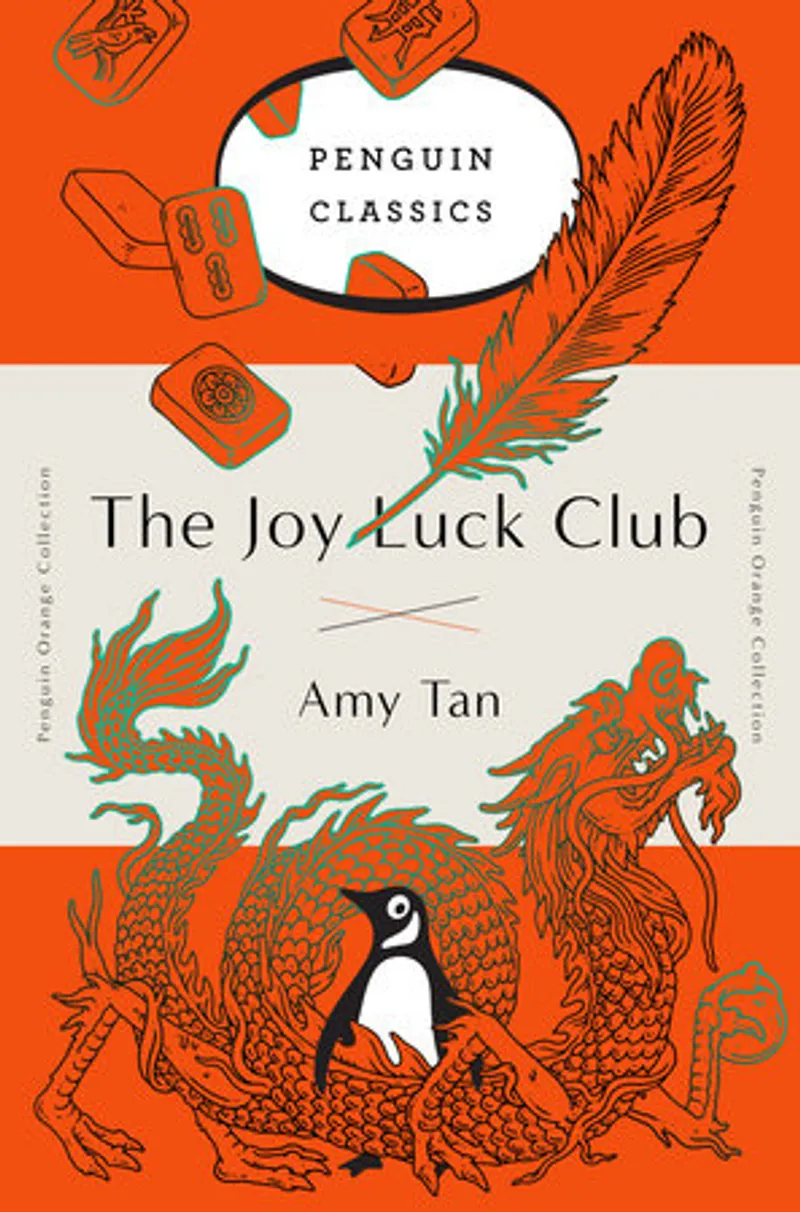
The Joy Luck Club Author: Jessica HischePage Count: UnknownPublication Date: 2016-PRH The Joy Luck Club is more than a novel—it’s a symphony of memory, culture, and the unbreakable bonds between mothers and daughters. Amy Tan’s debut masterpiece, now a Penguin Classic in the striking Orange Collection, weaves together the lives of four Chinese immigrant women who form the Joy Luck Club in 1949 San Francisco, seeking solace in shared stories, mahjong, and dim sum. Their daughters, born and raised in America, navigate the chasm between two worlds, each grappling with the weight of their mothers’ pasts and the expectations of their futures. Tan’s prose is a dance between the lyrical and the raw, where every sentence hums with the cadence of oral tradition and the sting of unresolved grief. At its core, The Joy Luck Club is a meditation on the immigrant experience—not just the physical journey from one country to another, but the emotional odyssey of carrying two identities. The mothers, survivors of war, poverty, and the loss of homeland, cling to traditions as lifelines, while their daughters, raised on American individualism, often see those traditions as chains. Tan doesn’t shy away from the friction this creates. There are no easy resolutions here, only the messy, beautiful truth of love that refuses to be simplified. A mother’s warning—"You can never tell what is in a person’s heart"—echoes through the novel, a reminder that understanding is a lifelong pursuit, not a given. Tan’s style is deceptively simple, yet it crackles with emotional depth. She structures the novel as a series of vignettes, each told from alternating perspectives—mother and daughter—like a patchwork quilt stitched from different threads. The effect is immersive, as if the reader is sitting at the mahjong table, listening to these women’s stories unfold in real time. There’s a rhythmic quality to her writing, a cadence that mimics the oral storytelling of her characters. When a mother recounts the horrors of the Japanese invasion in China, the prose is sparse but devastating: "The Japanese came. They took my father. They took my home. They took my name." The brevity makes the pain sharper, the loss more palpable. Yet Tan also infuses her narrative with humor and warmth. The Joy Luck Club’s gatherings are filled with laughter, gossip, and the clatter of mahjong tiles, a counterbalance to the heavier themes. Even in moments of sorrow, there’s resilience. One mother, Lindo Jong, outwits her cruel husband by claiming her face is "too ugly" to be a good wife—until he believes her and frees her from their marriage. It’s a moment of cunning triumph, a testament to the power of wit in the face of oppression. Tan’s characters are flawed, contradictory, and deeply human, which makes their struggles all the more relatable. The daughters, too, are a study in contrasts. Jing-mei Woo, the novel’s central figure, grapples with her mother’s expectations, feeling like a "tiger’s daughter" who can never live up to the myth her mother has created. Her journey to China to meet her half-sisters is a poignant exploration of identity—where does she belong? Is she Chinese or American? The answer, Tan suggests, is both and neither. It’s a question that lingers long after the last page. What makes The Joy Luck Club timeless is its universality. While the specifics are rooted in Chinese-American experience, the themes resonate with anyone who has ever felt torn between two worlds. Tan’s genius lies in her ability to make the personal profoundly political. The mothers’ stories are not just personal histories; they are testimonies to the resilience of women who survived unimaginable hardship. Their daughters’ struggles are not just generational gaps; they are the echoes of history, the weight of the past pressing into the present. The Penguin Orange Collection’s design—bold, iconic, and nostalgic—does justice to Tan’s legacy. The tri-band cover, a nod to Penguin’s classic aesthetic, feels like a bridge between the old and the new, much like the novel itself. This edition isn’t just a book; it’s a collector’s item, a tribute to a story that has shaped generations of readers. In the end, The Joy Luck Club is a love letter to the stories that shape us. It reminds us that our mothers’ pasts are not just history—they are living, breathing parts of who we are. Tan’s novel doesn’t offer easy answers, but it does offer something far more valuable: the courage to ask the questions. #JoyLuckClub #AmyTan #MotherDaughterStories #ImmigrantLiterature #AsianAmericanVoices #ModernClassics Related InsightsHush, Hush Book Review and Summary The Monster Hunter's Librarian Book Review and Summary Go Ask Alice Book Review and Summary{ "@context": "https://schema.org", "@type": "FAQPage", "mainEntity": [ { "@type": "Question", "name": "What is the main focus of The Joy Luck Club Book Review and Summary?", "acceptedAnswer": { "@type": "Answer", "text": "Everything you need to know about The Joy Luck Club with our detailed review." } }, { "@type": "Question", "name": "Who authored the comprehensive guide on The Joy Luck Club Book Review and Summary?", "acceptedAnswer": { "@type": "Answer", "text": "This detailed article and its insights were carefully researched and authored by Amy Tan." } }, { "@type": "Question", "name": "Where can I find more related content about Books?", "acceptedAnswer": { "@type": "Answer", "text": "You can explore more articles, detailed reviews, and similar insights by browsing the Related Insights section at the bottom of this article or visiting our dedicated Books category page." } } ] }