Showing Posts From
The judge and the hi
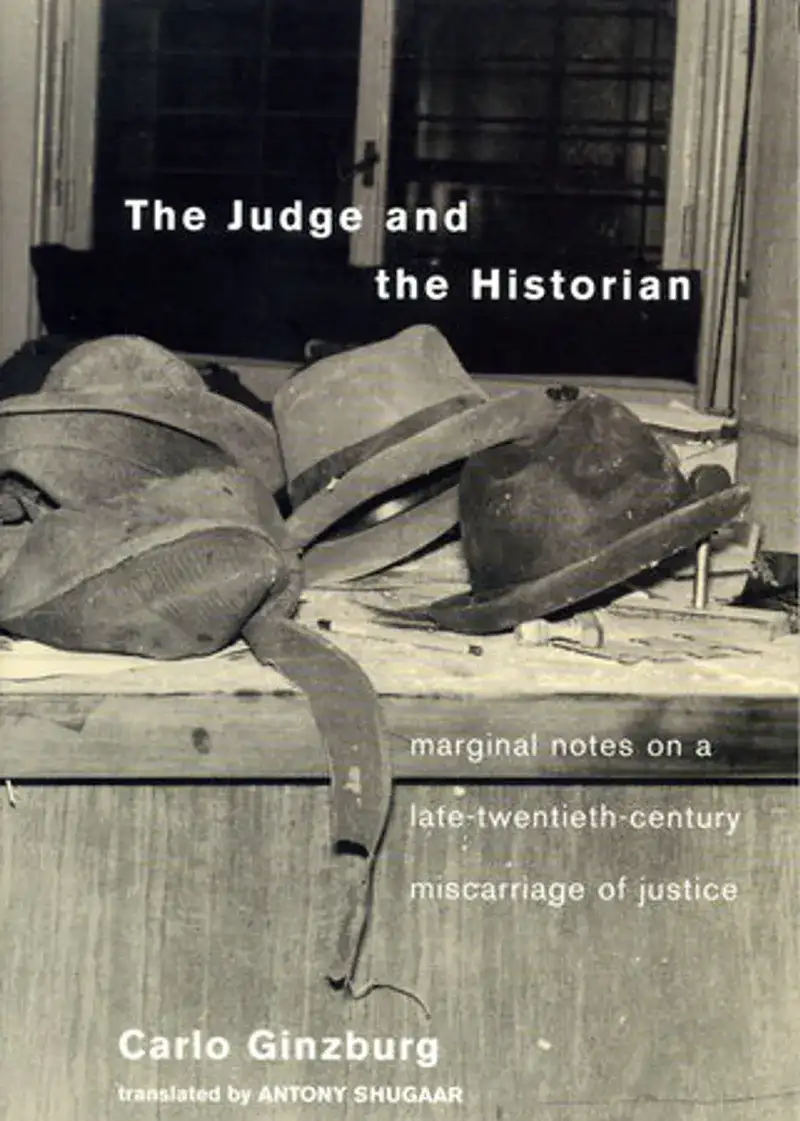

The Judge and the Historian Author: Carlo GinzburgPage Count: UnknownPublication Date: 2002-PRH Carlo Ginzburg’s The Judge and the Historian is more than a critique of a late-20th-century political trial—it is a masterclass in historical reasoning, a confrontation between past and present, and a defiant assertion of the historian’s moral and intellectual independence. Ostensibly about the dubious legal proceedings surrounding a bomb attack in Italy, a police officer’s murder, and the controversial death of an anarchist, the book transcends its immediate subject to interrogate the very foundations of justice, truth, and the historian’s role in society. Ginzburg, a scholar renowned for his groundbreaking work on witchcraft trials and microhistory, turns his analytical lens on a modern courtroom drama, exposing the dangerous parallels between the judicial and historical processes—both of which, he argues, are shaped by power, prejudice, and the selective interpretation of evidence. At the heart of The Judge and the Historian lies a bold confrontation: Ginzburg, acting as both scholar and public intellectual, challenges the Italian state’s official narrative of a series of violent acts linked to left-wing political movements in the 1970s and 1980s. The central case revolves around the killing of a police commissar in 1988 and the subsequent trial of members of the far-left group Lotta Continua. Yet the real drama unfolds not in the courtroom but in the pages of Ginzburg’s meticulous analysis. He dissects the prosecution’s case with the precision of a surgeon—exposing inconsistencies, ignoring contradictory evidence, and constructing a narrative that serves ideological ends rather than truth. The historian becomes the judge’s adversary, not in the courtroom, but in the realm of interpretation, where facts are not neutral but are shaped by the frameworks of power. Ginzburg’s style is as rigorous as it is revelatory. Drawing on his lifelong study of early modern European witch hunts, where judges relied on spectral evidence and coerced confessions, he draws a chilling parallel to the modern trial: both hinge on the manipulation of evidence, the reliance on dubious testimony, and the assumption of guilt by association. Yet unlike the witch trials, which Ginzburg has shown to be products of collective hysteria and institutional coercion, the modern case is framed as a battle against terrorism—a justification for procedural shortcuts and political expediency. The historian’s task, he insists, is not to serve the state or the ideologues but to question, to contextualize, and to reveal the contradictions that lurk beneath official narratives. What makes The Judge and the Historian particularly compelling is Ginzburg’s refusal to offer easy answers. He does not dismiss the violence of the era out of hand, nor does he glorify the accused. Instead, he insists on the necessity of doubt—a quality he finds sorely lacking in the judicial process. The judge, he argues, functions as an agent of the state, bound by laws and precedents that may themselves be unjust. The historian, by contrast, is free to question those laws, to examine the social and political forces that shape them, and to uncover the voices that have been silenced. In this sense, the book is not just a defense of historical method but a manifesto for intellectual resistance. Ginzburg’s prose is dense with references, not only to legal documents and trial transcripts but to literary and philosophical works—from Zola’s J’Accuse to Foucault’s critique of power. Yet his argument remains accessible, not because he simplifies, but because he trusts the reader to engage with complexity. He moves seamlessly between close textual analysis and broad historical synthesis, showing how the past echoes in the present. The bomb of the 1970s is not just an artifact of history; it is a metaphor for how societies construct enemies and justify repression. Ultimately, The Judge and the Historian is a plea for humility in the face of truth—a reminder that history is not a court of law, and historians are not judges. The book resonates far beyond Italy’s borders, speaking to any society where justice is politicized and where the past is weaponized for present gain. Ginzburg’s greatest triumph is to turn a seemingly narrow legal case into a universal meditation on the fragility of truth and the courage required to seek it. #Ginzburg #HistoricalMethod #JusticeAndPower #PoliticalTrials #Microhistory #TruthAndMemory Related InsightsEstuche Stephen King. El rey del terror. Tres novelas clásicas Book Review and Summary Freakonomics (Spanish Edition) Book Review and Summary Heir Book Review and Summary{ "@context": "https://schema.org", "@type": "FAQPage", "mainEntity": [ { "@type": "Question", "name": "What is the main focus of The Judge and the Historian Book Review and Summary?", "acceptedAnswer": { "@type": "Answer", "text": "Everything you need to know about The Judge and the Historian with our detailed review." } }, { "@type": "Question", "name": "Who authored the comprehensive guide on The Judge and the Historian Book Review and Summary?", "acceptedAnswer": { "@type": "Answer", "text": "This detailed article and its insights were carefully researched and authored by Marco Conti." } }, { "@type": "Question", "name": "Where can I find more related content about Books?", "acceptedAnswer": { "@type": "Answer", "text": "You can explore more articles, detailed reviews, and similar insights by browsing the Related Insights section at the bottom of this article or visiting our dedicated Books category page." } } ] }