Showing Posts From
The left hand of dar
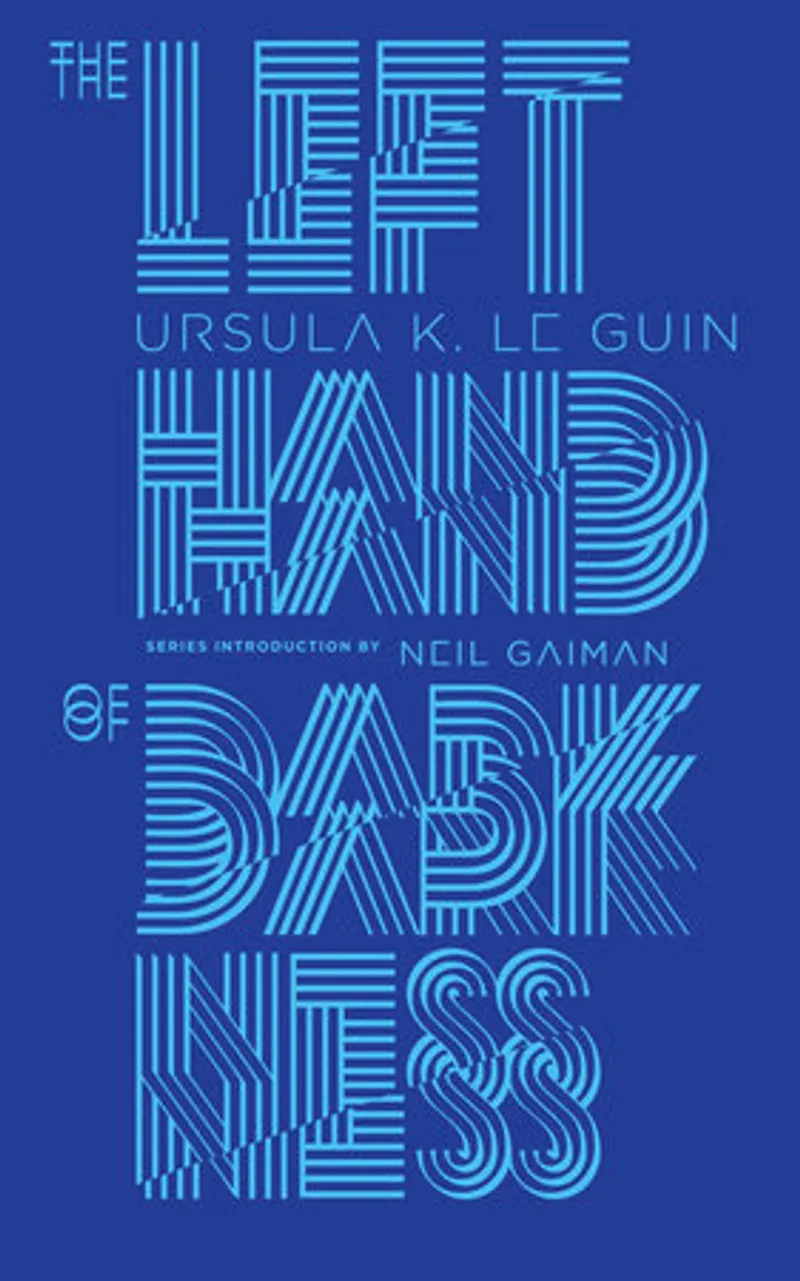
The Left Hand of Darkness Author: Ursula K. Le GuinPage Count: UnknownPublication Date: 2016-PRH Ursula K. Le Guin’s The Left Hand of Darkness is not just a science fiction novel—it is a philosophical odyssey that challenges the very foundations of human identity, culture, and perception. First published in 1969, this groundbreaking work remains one of the most intellectually daring and emotionally resonant explorations of gender, society, and the limits of human understanding. Now reissued in a deluxe hardcover edition as part of Penguin Galaxy—a series curated by Neil Gaiman—Le Guin’s masterpiece continues to illuminate the dark corners of our own world through the lens of an alien civilization. At its core, The Left Hand of Darkness is a story about duality. The planet Gethen, known to its inhabitants as Winter, is a world of perpetual cold where its humanoid population, the Gethenians, are ambisexual—neither male nor female, but capable of shifting gender depending on their biological and social circumstances. The novel follows Genly Ai, an envoy from the Ekumen, a loose interstellar alliance, who arrives on Winter to persuade its people to join this coalition. But Genly, a human shaped by binary gender norms, struggles to comprehend a society where sexuality and identity are fluid, where the very concept of fixed gender roles is alien. Le Guin’s genius lies in her ability to turn this premise into a profound meditation on difference and connection. The novel is not merely about gender; it is about how we construct meaning in a universe that resists our categories. The Gethenians, with their androgynous nature, force Genly—and the reader—to confront the arbitrariness of human assumptions. Are men and women truly separate, or are these roles learned, imposed, and ultimately limiting? By removing gender as a fixed category, Le Guin exposes how deeply ingrained our biases are, even in our most intimate relationships. Her prose is spare yet evocative, blending the clinical detachment of a diplomat’s report with the lyrical intimacy of a personal journal. The narrative unfolds through multiple perspectives: Genly’s first-person account is interspersed with the mythic and historical writings of the Gethenians themselves, particularly the enigmatic figure of the Handdara, a spiritual tradition that values paradox and balance. This structure mirrors the novel’s central theme—the necessity of holding opposing truths in tension. Genly, a man of rigid logic, must learn to embrace uncertainty, while the Gethenians, who see gender as a transient state, must grapple with the permanence of human emotion. The relationship between Genly and Estraven, a Gethenian politician who becomes his unlikely ally, is the emotional heart of the book. Their bond—part friendship, part love, part mutual necessity—transcends cultural and biological differences. It is a relationship that challenges the reader to reconsider what it means to truly know another being. Estraven’s patience and wisdom contrast sharply with Genly’s initial arrogance, and their journey across the icy landscapes of Winter becomes a metaphor for the arduous path toward understanding. Le Guin’s world-building is meticulous yet understated. Winter is not a fantastical realm of magic, but a plausible planet where the cold shapes every aspect of life—from architecture to social structure. The Gethenians’ lack of fixed gender roles leads to a society where violence is rare, where sexuality is not tied to power, and where individuals are judged by their actions rather than their biology. Yet this utopia is not without its tensions. The novel’s climax forces Genly to confront the limits of his own empathy, revealing that even the most open-minded among us carry invisible chains. What makes The Left Hand of Darkness timeless is its refusal to offer easy answers. Le Guin does not advocate for a genderless society as a solution to human conflict; instead, she asks us to consider how our own rigid categories—of gender, of nation, of self—might be limiting our potential for connection. In an era where debates about gender identity and cultural relativism are more urgent than ever, the novel feels not like a relic of the past, but a prophetic vision of the future. Her style is deceptively simple, yet every sentence carries weight. She writes with a quiet authority, trusting the reader to engage with the ideas rather than being spoon-fed them. The novel’s power lies in its restraint—there are no explosions, no laser battles, no grand space operas. Instead, it is a story of two people walking across a frozen wasteland, talking, thinking, and slowly, painfully, coming to understand each other. In the end, The Left Hand of Darkness is a book about the left hand of darkness—the side of ourselves we fear, the parts of our nature we ignore, the truths we refuse to acknowledge. It is a call to embrace the unknown, to accept that some questions have no answers, and to find meaning in the journey rather than the destination. Ursula K. Le Guin does not just write science fiction; she writes philosophy in the form of a story, and in doing so, she invites us to see the universe—and ourselves—anew. #LeftHandOfDarkness #UrsulaKLeGuin #SciFiClassic #GenderFiction #SpeculativeFiction #MustReadSF Related InsightsOff Balance (The Heights, #2) Book Review and Summary Woman Down Book Review and Summary Return to Breakneck Island (The Treasure Hunters Club #2) Book Review and Summary{ "@context": "https://schema.org", "@type": "FAQPage", "mainEntity": [ { "@type": "Question", "name": "What is the main focus of The Left Hand of Darkness Book Review and Summary?", "acceptedAnswer": { "@type": "Answer", "text": "Everything you need to know about The Left Hand of Darkness with our detailed review." } }, { "@type": "Question", "name": "Who authored the comprehensive guide on The Left Hand of Darkness Book Review and Summary?", "acceptedAnswer": { "@type": "Answer", "text": "This detailed article and its insights were carefully researched and authored by Ursula K. Le Guin." } }, { "@type": "Question", "name": "Where can I find more related content about Books?", "acceptedAnswer": { "@type": "Answer", "text": "You can explore more articles, detailed reviews, and similar insights by browsing the Related Insights section at the bottom of this article or visiting our dedicated Books category page." } } ] }