Showing Posts From
The lion the fox and
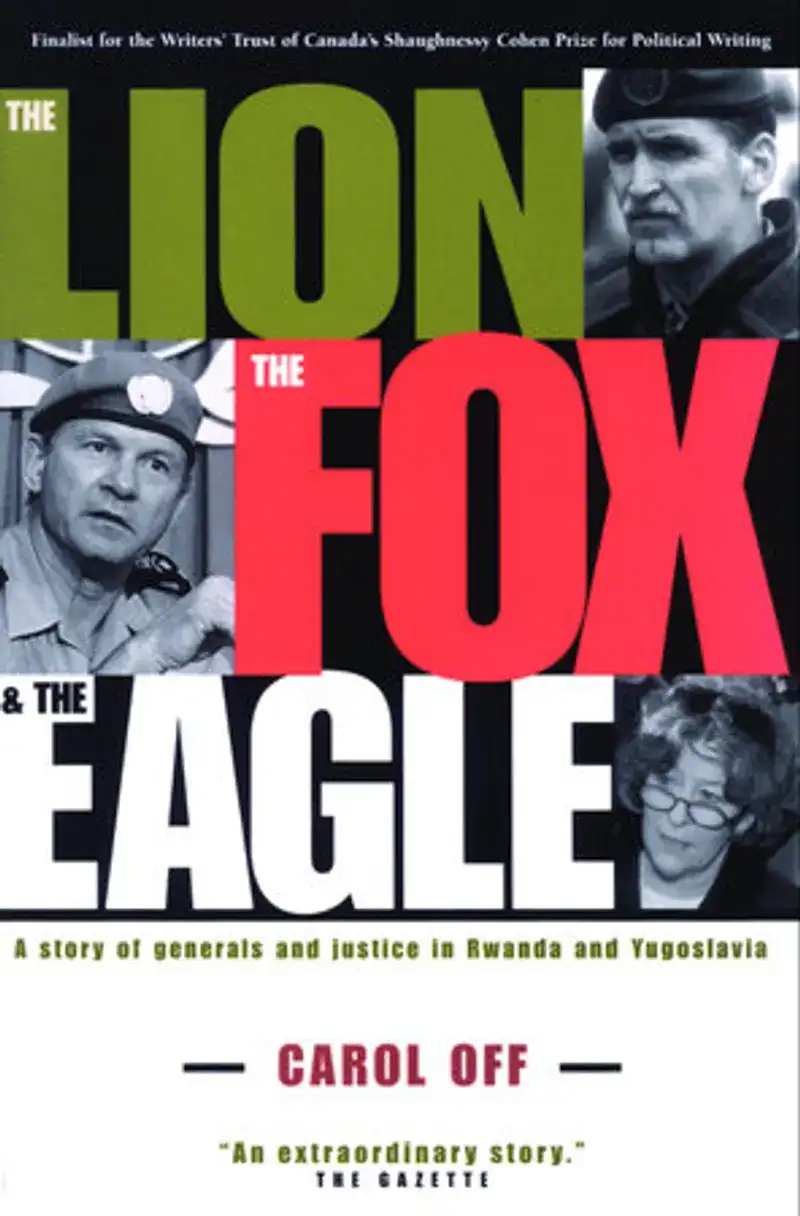

The Lion, the Fox and the Eagle Author: Carol OffPage Count: UnknownPublication Date: 2010-PRH Carol Off’s The Lion, the Fox and the Eagle is a searing indictment of international inaction and moral failure, woven through the lives of three Canadians whose roles in the 1990s’ defining atrocities—Bosnia and Rwanda—could not have been more consequential or more tragic. This is not merely a recounting of history; it is a meticulously constructed reckoning with the ways power, cowardice, and bureaucracy conspire to enable genocide. Off, a veteran journalist known for her sharp, unflinching prose, crafts a narrative that is both a damning critique and a poignant elegy for the lost lives and squandered opportunities of the era. At the heart of the book lies a deceptively simple metaphor: the lion, the fox, and the eagle. Romeo Dallaire, the lion, embodies raw courage and moral clarity—his desperate pleas to intervene in Rwanda, his nightmares of the slaughter he could not stop, his later breakdowns—all serve as a mirror to the world’s indifference. Dallaire’s story is one of heroic failure, a man who saw the abyss and tried to warn the rest of us, only to be handcuffed by politics and bureaucratic inertia. Off doesn’t romanticize him; she presents him as a flawed, human figure whose greatest tragedy was not his inability to act, but the fact that he knew what needed to be done and was systematically denied the tools to do it. Lewis MacKenzie, the fox, is the book’s most controversial figure. A Canadian general whose command in Sarajevo during the early days of the Bosnian War is alternately praised as a masterclass in peacekeeping and condemned as a failure of moral imagination, MacKenzie emerges here as a man of cunning pragmatism. He navigates the treacherous terrain of UN mandates, political expediency, and ethnic violence with a fox’s instinct for survival rather than confrontation. Off doesn’t vilify him—she dissects his choices with surgical precision, revealing how his cautious, containment-focused approach may have saved lives in the short term but ultimately prolonged the conflict. There’s a chilling moment when MacKenzie reflects on the siege of Sarajevo, noting that the city’s resilience was a double-edged sword: it kept people alive, but it also kept the war going. That duality—saving some while enabling more suffering—is the essence of his legacy, and Off forces the reader to grapple with it. Then there is Louise Arbour, the eagle, whose role as Chief Prosecutor for War Crimes in the Hague represents the international community’s belated attempt at redemption. Arbour’s crusade to hold perpetrators accountable, from Slobodan Milošević to the architects of the Rwandan genocide, is a rare bright spot in this grim tableau. Yet even her victories are tinged with bitterness. Off highlights the Sisyphean nature of her task: the slow grind of justice, the political interference, the way the same institutions that failed to prevent genocide now sought to prosecute it. Arbour’s story is one of quiet defiance, a reminder that even in the face of overwhelming odds, the pursuit of justice is not futile—but it is never enough. Off’s writing style is the book’s greatest strength. She balances meticulous research with a novelist’s eye for drama, drawing out the human dimensions of these larger-than-life figures. Her prose is clean and direct, avoiding the jargon of military or legal analysis in favor of visceral, often heartbreaking detail. When she describes Dallaire’s breakdown in a Montreal hotel room, or MacKenzie’s weary reflections on the futility of peacekeeping, or Arbour’s steely determination in the face of diplomatic obstruction, the reader is not just informed—they are there. Off also excels at exposing the contradictions in the UN’s actions, particularly its insistence on neutrality in the face of genocide. Her critique is not just of individuals but of a system that rewards inaction while claiming to uphold humanity. What makes The Lion, the Fox and the Eagle so devastating is its refusal to offer easy answers. There are no heroes here, only people doing the best they can within a framework that was designed to fail. Dallaire’s guilt, MacKenzie’s pragmatism, Arbour’s dogged pursuit of justice—all are presented with a journalist’s rigor and a storyteller’s empathy. Off doesn’t let us off the hook. She forces us to confront uncomfortable truths: that peacekeeping, as it was practiced in the 1990s, was often a euphemism for abandonment; that the world’s failure in Rwanda and Bosnia was not an accident but a choice; and that the pursuit of justice, while noble, is often too little, too late. This is a book that lingers, not just because of its historical importance but because of its moral urgency. It is a call to remember—and to do better. In an era where atrocities continue to unfold with the world looking on, Off’s work is a necessary corrective to complacency. #GenocideAwareness #PeacekeepingFailures #Rwanda94 #BosniaWar #JusticeDelayed #CarolOff Related InsightsProving Ground Book Review and Summary Howards End Book Review and Summary Mrs. Dalloway Book Review and Summary{ "@context": "https://schema.org", "@type": "FAQPage", "mainEntity": [ { "@type": "Question", "name": "What is the main focus of The Lion, the Fox and the Eagle Book Review and Summary?", "acceptedAnswer": { "@type": "Answer", "text": "Everything you need to know about The Lion, the Fox and the Eagle with our detailed review." } }, { "@type": "Question", "name": "Who authored the comprehensive guide on The Lion, the Fox and the Eagle Book Review and Summary?", "acceptedAnswer": { "@type": "Answer", "text": "This detailed article and its insights were carefully researched and authored by Anna Kowalska." } }, { "@type": "Question", "name": "Where can I find more related content about Books?", "acceptedAnswer": { "@type": "Answer", "text": "You can explore more articles, detailed reviews, and similar insights by browsing the Related Insights section at the bottom of this article or visiting our dedicated Books category page." } } ] }