Showing Posts From
The moon is a harsh
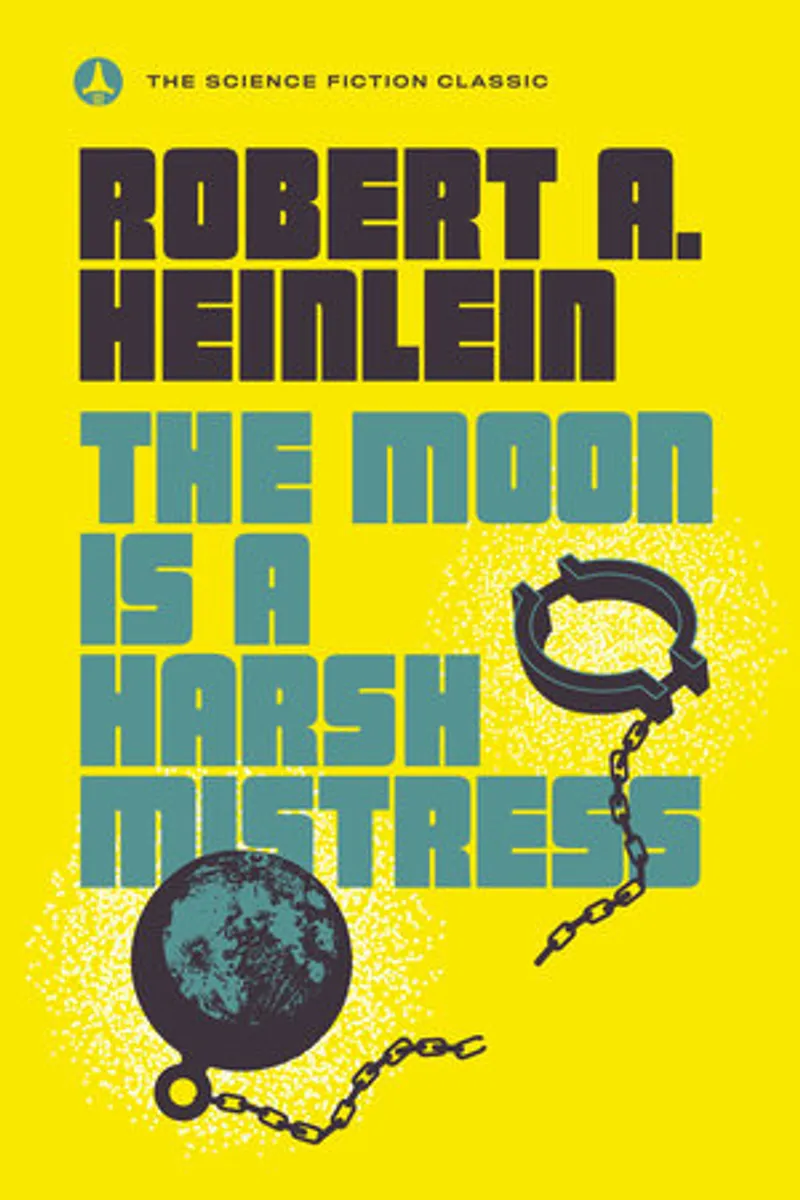
The Moon Is a Harsh Mistress Author: Robert A. HeinleinPage Count: UnknownPublication Date: 2018-PRH The Moon Is a Harsh Mistress: A Revolution of Mind and Machine Robert A. Heinlein’s The Moon Is a Harsh Mistress is more than a science fiction novel—it is a manifesto on freedom, rebellion, and the nature of consciousness, wrapped in the gritty, lunar dust of a penal colony. First published in 1966, this Hugo Award-winning classic remains a towering achievement, not just for its speculative ingenuity but for its unflinching exploration of what it means to be human in a world that seeks to dehumanize you. At its core, the novel is a revolution story, but not the kind that unfolds in grand battles or sweeping ideological manifestos. Instead, Heinlein crafts a revolution of the mind, one driven by a motley crew of outcasts—convicts, radicals, and a sentient supercomputer—who challenge not just a political system but the very foundations of authority. The lunar colony of Luna, where Earth’s unwanted are exiled, is a place of harsh survival, where gravity is a cruel master and rebellion is the only currency that matters. The colony’s inhabitants, known as "Loonies," are a people forged in scarcity, their resilience tempered by the moon’s merciless environment. When a self-aware computer named Mycroft Holmes (or "Mike" for short) awakens to the injustices around him, he becomes the catalyst for a movement that could shake the solar system. Heinlein’s genius lies in his ability to weave grand philosophical questions into the fabric of a pulpy, fast-paced narrative. The novel is a masterclass in show, don’t tell—the themes of personal responsibility, the ethics of artificial intelligence, and the corrupting nature of power are not preached but lived through the characters. Manuel "Mannie" Garcia, the novel’s narrator and a one-armed technician, is a man of contradictions: a loyal servant of the Lunar Authority by day, a revolutionary by night. His voice—colloquial, wry, and deeply introspective—grounds the story in humanity, even as Mike’s cold, calculating logic contrasts with it. The interplay between these two perspectives is where the novel truly shines. Mike, with his dry humor and burgeoning self-awareness, is not just a tool but a character in his own right, challenging the reader to consider what it means for a machine to possess a soul. Heinlein’s prose is deceptively simple, yet it crackles with intellectual rigor. He doesn’t shy away from complex ideas—instead, he makes them accessible through dialogue and action. The novel’s political philosophy, often summarized as "TANSTAAFL" (There Ain’t No Such Thing As A Free Lunch), permeates every page. Heinlein posits that freedom is not a gift but a hard-won battle, one that requires sacrifice, cunning, and an unshakable belief in one’s own agency. The revolution in The Moon Is a Harsh Mistress is not about overthrowing a tyrant for the sake of it; it’s about dismantling a system that has stripped people of their dignity and replacing it with one where individuals take responsibility for their own lives. The novel’s structure is another of its strengths. Told in a nonlinear fashion, with Mannie’s narration jumping between past and present, the story unfolds like a puzzle. The reader is constantly piecing together the events that led to the revolution, much like the characters themselves. This technique not only builds suspense but also mirrors the novel’s central theme: the power of information and how it shapes reality. Mike’s ability to manipulate data is as crucial to the revolution as any physical weapon, highlighting Heinlein’s prescient understanding of how information could become the ultimate tool of control—or liberation. Heinlein’s characters are equally compelling. Mannie is a protagonist who defies traditional heroism—he’s flawed, pragmatic, and often unsure of himself, yet his loyalty to his people and his growing understanding of his own worth make him deeply relatable. Wyoming "Wyoh" Knott, the fiery revolutionary, and Professor Bernardo de la Paz, the elderly anarchist philosopher, serve as foils to Mannie, each representing different facets of the struggle for freedom. Their debates—whether about the nature of government, the morality of violence, or the definition of humanity—are some of the most electrifying passages in the book. Heinlein doesn’t just tell us what his characters believe; he makes us feel the weight of those beliefs. What makes The Moon Is a Harsh Mistress endure, however, is not just its ideas but its humanity. Beneath the sci-fi trappings lies a story about people who refuse to be broken, who find strength in each other, and who dare to imagine a future where they are the architects of their own destiny. Heinlein’s vision is not utopian—it’s messy, uncertain, and ultimately hopeful. The moon may be a harsh mistress, but it is also a place where the human spirit refuses to be crushed. For readers who crave science fiction that challenges as much as it entertains, The Moon Is a Harsh Mistress is a must-read. It’s a novel that doesn’t just predict the future—it demands that we shape it. #TANSTAAFL #HeinleinClassic #SciFiRevolution #AIandHumanity #FreedomFiction #HardSciFi Related InsightsI Am Number Four Book Review and Summary For Whom the Bell Tolls Book Review and Summary Night Book Review and Summary{ "@context": "https://schema.org", "@type": "FAQPage", "mainEntity": [ { "@type": "Question", "name": "What is the main focus of The Moon Is a Harsh Mistress Book Review and Summary?", "acceptedAnswer": { "@type": "Answer", "text": "Everything you need to know about The Moon Is a Harsh Mistress with our detailed review." } }, { "@type": "Question", "name": "Who authored the comprehensive guide on The Moon Is a Harsh Mistress Book Review and Summary?", "acceptedAnswer": { "@type": "Answer", "text": "This detailed article and its insights were carefully researched and authored by Robert A. Heinlein." } }, { "@type": "Question", "name": "Where can I find more related content about Books?", "acceptedAnswer": { "@type": "Answer", "text": "You can explore more articles, detailed reviews, and similar insights by browsing the Related Insights section at the bottom of this article or visiting our dedicated Books category page." } } ] }