Showing Posts From
The poppy war
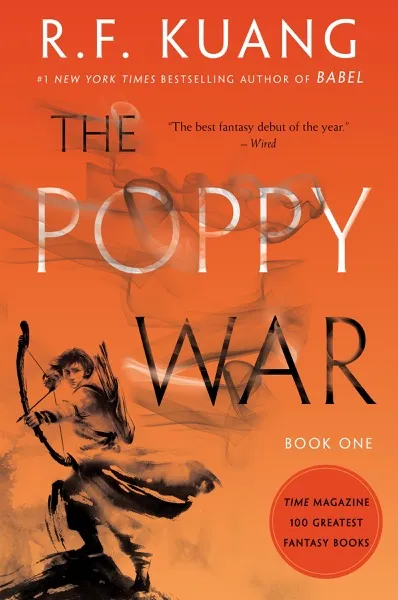

The Poppy War Author: R. F. KuangPage Count: UnknownPublication Year: 2018-GB The Poppy War: A Brutal, Brilliant Masterpiece of War and Magic R. F. Kuang’s The Poppy War is not just another grimdark fantasy—it’s a visceral, unflinching exploration of war’s horrors, wrapped in the seductive yet treacherous allure of power. A global bestseller and the inaugural novel in the Poppy War trilogy, Kuang’s debut is a staggering achievement that blends military strategy, dark magic, and the psychological toll of violence into a story that feels both ancient and urgently modern. At its core, The Poppy War is a war story, but not the kind that glorifies battle. Instead, Kuang strips away the romanticism of conflict, presenting war as what it truly is: a machine of suffering, where survival often demands the surrender of one’s humanity. The novel is inspired by the Second Sino-Japanese War and the Opium Wars, grounding its fantastical elements in real-world atrocities. Yet it never feels like a straightforward allegory—Kuang’s genius lies in making history feel immediate, personal, and devastatingly real. The protagonist, Rin, is an unlikely heroine in a world that constantly tries to break her. Orphaned and mistreated, she claws her way into the elite military academy of Sinegard through sheer will and a terrifying aptitude for the destructive art of shamanism. Rin’s journey is one of relentless ambition, but it’s also a descent into moral ambiguity. She begins as a scrappy underdog, but as she wields greater power, she becomes complicit in horrors she once despised. Kuang doesn’t shy away from showing Rin’s complicity—her rage, her cruelty, her willingness to sacrifice others for the sake of victory. This is not a story of a hero who triumphs through purity of heart; it’s about a girl who becomes the very thing she once fought against. Kuang’s writing style is as uncompromising as her themes. Her prose is sharp, economical, and often brutal, mirroring the relentless pace of war. There are no drawn-out descriptions of scenery or flowery metaphors—every sentence serves a purpose, whether it’s advancing the plot, deepening character, or delivering a gut-punch moment of violence. The magic system, centered around the opium-derived power of the Phoenix god, is terrifyingly visceral. Shamanism isn’t a mystical gift here; it’s a visceral, almost addictive force that warps the body and mind. Rin’s training scenes are particularly harrowing, filled with grotesque transformations and the physical cost of wielding such power. What makes The Poppy War so compelling is its refusal to offer easy answers. There are no clear villains or heroes—just people making impossible choices in impossible circumstances. The novel’s climax is a masterclass in tragic irony, where victory is indistinguishable from defeat, and the cost of survival is paid in blood and trauma. Kuang doesn’t just describe the brutality of war; she makes the reader feel it, in the way Rin’s hands shake after she commits her first atrocity, or how the scent of burning flesh lingers long after the battle is over. Kuang’s background as a Chinese-American immigrant and her academic expertise in 20th-century Chinese history lend the novel an authenticity that many Western fantasy novels lack. She doesn’t exoticize Asian culture for the sake of flavor—she grounds her worldbuilding in real historical and cultural touchstones, from the opium trade that fuels the Phoenix’s power to the strategic brilliance of Rin’s military campaigns. Yet despite its historical roots, The Poppy War never feels like a history lesson. It’s a story about power, corruption, and the lies we tell ourselves to justify the unforgivable. For readers who crave fantasy that challenges rather than comforts, The Poppy War is essential. It’s a book that demands to be reckoned with—not just for its epic scale, but for its willingness to stare into the abyss and report back. Kuang doesn’t just write about war; she forces you to confront why we mythologize it in the first place. And by the final page, you’ll be left with the unsettling realization that Rin’s story is not just a fantasy—it’s a mirror. If you read only one dark fantasy novel this year, make it The Poppy War. Just don’t expect to sleep well afterward. #ThePoppyWar #DarkFantasy #MilitaryFantasy #RFKuang #WarNovel #PhoenixGoddess Related InsightsRaven Cycle Series Collection 4 Books Set By Maggie Stiefvater Book Review and Summary The Unseen Tapestry: Weaving the Fabric of Reality with the Threads of the Impossible in Magical Realism The Brothers Karamazov Book Review and Summary{ "@context": "https://schema.org", "@type": "FAQPage", "mainEntity": [ { "@type": "Question", "name": "What is the main focus of The Poppy War Book Review and Summary?", "acceptedAnswer": { "@type": "Answer", "text": "Everything you need to know about The Poppy War with our detailed review." } }, { "@type": "Question", "name": "Who authored the comprehensive guide on The Poppy War Book Review and Summary?", "acceptedAnswer": { "@type": "Answer", "text": "This detailed article and its insights were carefully researched and authored by Lucia Garcia." } }, { "@type": "Question", "name": "Where can I find more related content about Books?", "acceptedAnswer": { "@type": "Answer", "text": "You can explore more articles, detailed reviews, and similar insights by browsing the Related Insights section at the bottom of this article or visiting our dedicated Books category page." } } ] }