Showing Posts From
The queen of nothing
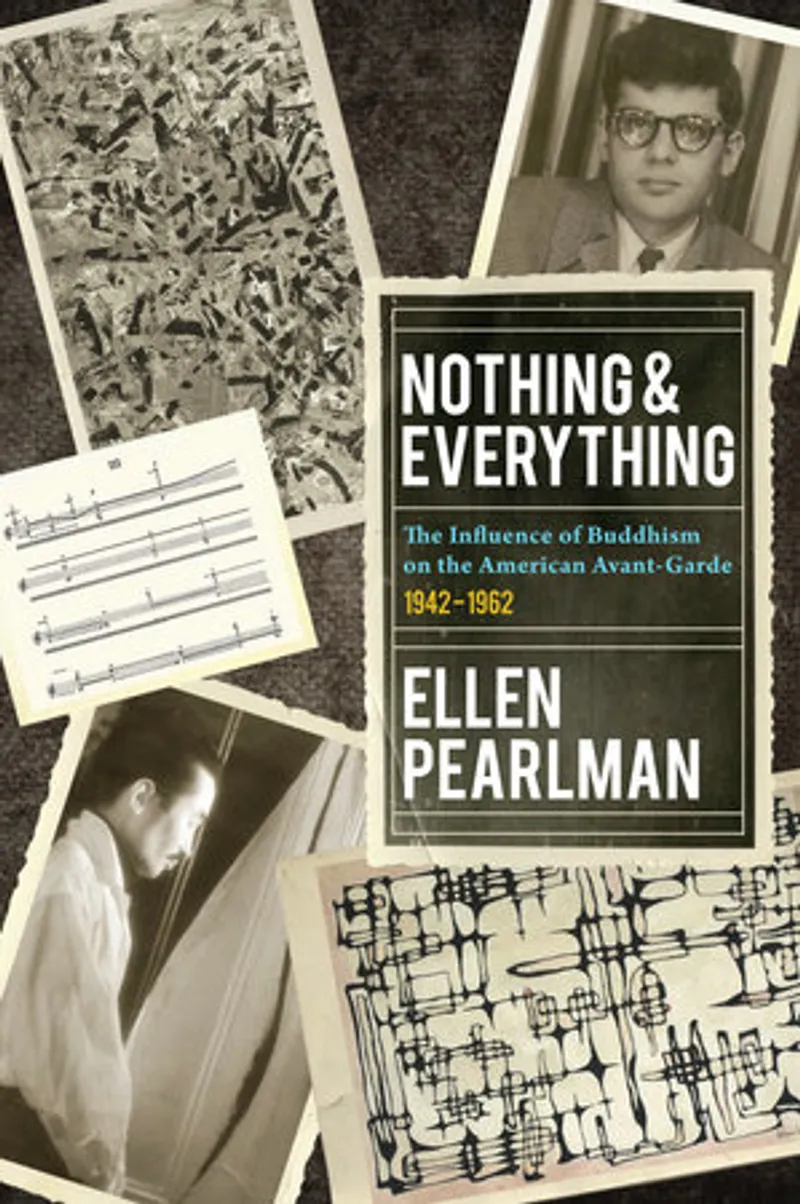
Nothing and Everything - The Influence of Buddhism on the American Avant Garde Author: Ellen PearlmanPage Count: UnknownPublication Date: 2012-PRH Ellen Pearlman’s Nothing and Everything: The Influence of Buddhism on the American Avant Garde is a revelatory excavation of a cultural crossroads where Zen thought collided with artistic rebellion, reshaping the very nature of creativity in mid-century America. More than just a historical account, this book is a living testament to how ideas—when seized by visionaries—can ignite revolutions not only in art but in consciousness itself. Pearlman’s central thesis is both elegant and radical: the seismic shifts in American avant-garde art during the late 1950s and 1960s were not merely aesthetic innovations but spiritual awakenings, deeply indebted to the teachings of Zen Buddhism. She meticulously traces how the philosophy of “enlightenment in the present moment” seeped into the American imagination through the teachings of D.T. Suzuki, whose lectures on Zen became intellectual catalysts for artists and writers alike. Suzuki’s most famous student, John Cage, emerges as a pivotal figure whose compositions—silent or otherwise—challenged the very definition of art, echoing Zen’s embrace of emptiness (śūnyatā) and impermanence. From Cage’s experimental music sprouted Fluxus, the “happenings” of the 1960s, and a radical reimagining of artistic practice as an act of pure presence. What makes Pearlman’s work so compelling is her refusal to treat Buddhism as a mere influence or decorative motif. Instead, she presents it as a transformative force that dissolved boundaries between art and life, subject and object, creator and audience. The abstract expressionists—Jackson Pollock, Mark Rothko, and others—were not just painting emotion; they were embodying the Zen concept of non-attachment, where the ego dissolves into the act of creation. Meanwhile, in New York’s downtown art scene, The Club became a hub where Zen philosophy mingled with avant-garde experimentation, hosting lectures by Japanese artists like Saburo Hasegawa, whose abstract works were steeped in Zen aesthetics. Pearlman’s narrative is richly layered, weaving together parallel movements across continents. While American artists were digesting Suzuki’s teachings, Japanese collectives like Gutai and Hi Red Center were breaking down artistic conventions in their own right, creating multi-installation works that mirrored the spontaneity and immediacy of Zen practice. The book’s strength lies in its global scope, revealing how these exchanges were not one-way transmissions but dynamic dialogues—artists in Tokyo and New York, Los Angeles and Kyoto, all grappling with the same existential questions through different mediums. The author’s prose is both scholarly and accessible, striking a balance between academic rigor and narrative momentum. She draws on rare photographs, personal letters, and primary sources to bring these figures to life, revealing the personal and philosophical struggles behind their work. For instance, her portrayal of Jack Kerouac’s The Dharma Bums or Allen Ginsberg’s Howl as Zen-infused manifestos is particularly illuminating, showing how Buddhism became a language for expressing the inexpressible—whether in poetry, jazz, or performance art. Pearlman’s style is immersive, almost cinematic in its pacing. She doesn’t just recount events; she recreates the atmosphere of the time—the smoky lofts of New York, the avant-garde salons of Tokyo, the quiet intensity of a meditation hall. This makes Nothing and Everything more than a history book; it’s an experience, a portal into an era when art and spirituality were not separate domains but intertwined paths to truth. One of the book’s most striking revelations is how deeply these artists internalized Zen’s paradoxes. The idea that “nothing” could be everything—silence as sound, emptiness as fullness, stillness as motion—became the guiding principle of their work. Pearlman captures this beautifully in her analysis of Cage’s 4’33”, where the absence of intended sound becomes the ultimate composition, a literal manifestation of Zen’s emphasis on the present moment. The book also serves as a corrective to the often-narrow narratives of modern art history. By centering Buddhism, Pearlman expands the story beyond the usual Eurocentric focus, highlighting the global currents that shaped the avant-garde. She demonstrates how the exchange between East and West was not a one-sided appropriation but a mutual fertilization, where Japanese artists like Gutai’s Jiro Yoshihara were equally influenced by American abstraction as vice versa. Nothing and Everything is essential reading for anyone interested in the intersections of art, philosophy, and spirituality. It’s a book that challenges us to see art not as a product but as a practice—a way of being in the world. Pearlman’s work reminds us that the most radical art is often the simplest: a brushstroke, a silent moment, a breath held in stillness. In an era when the boundaries between disciplines continue to blur, Pearlman’s book feels urgently relevant. It’s a call to remember that true innovation often begins not with a hammer or a canvas, but with a quiet mind. #ZenArtRevolution #AvantGardeSpirit #BuddhismAndModernism #JohnCageLegacy #FluxusManifestations #ArtAsEnlightenment Related InsightsEndless Promises (Harmony Hills, #2) Book Review and Summary Of Human Bondage Book Review and Summary Elon Musk Book Review and Summary{ "@context": "https://schema.org", "@type": "FAQPage", "mainEntity": [ { "@type": "Question", "name": "What is the main focus of The Queen of Nothing Book Review and Summary?", "acceptedAnswer": { "@type": "Answer", "text": "Everything you need to know about The Queen of Nothing with our detailed review." } }, { "@type": "Question", "name": "Who authored the comprehensive guide on The Queen of Nothing Book Review and Summary?", "acceptedAnswer": { "@type": "Answer", "text": "This detailed article and its insights were carefully researched and authored by Holly Black." } }, { "@type": "Question", "name": "Where can I find more related content about Books?", "acceptedAnswer": { "@type": "Answer", "text": "You can explore more articles, detailed reviews, and similar insights by browsing the Related Insights section at the bottom of this article or visiting our dedicated Books category page." } } ] }