Showing Posts From
The quiet american
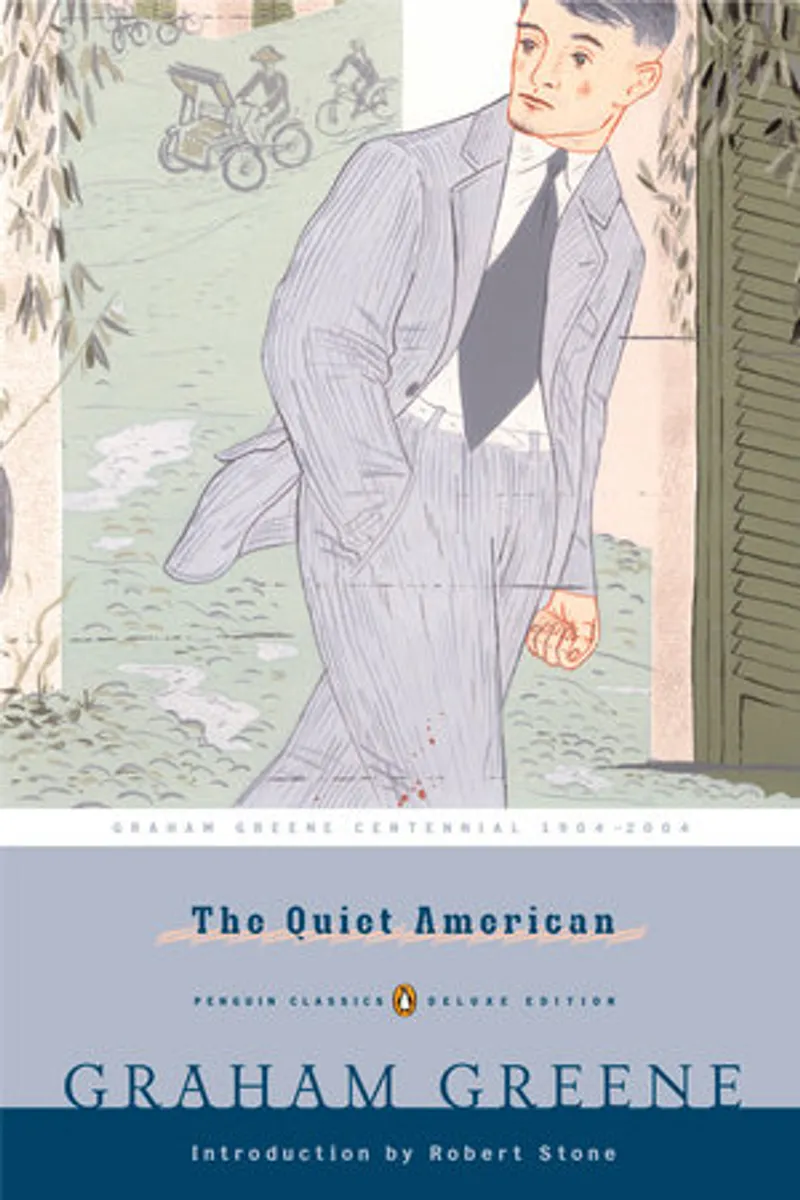
The Quiet American Author: Graham GreenePage Count: UnknownPublication Date: 2004-PRH Graham Greene’s The Quiet American is a razor-sharp dissection of idealism, moral ambiguity, and the unintended consequences of good intentions. Set against the simmering tensions of 1950s Vietnam, this novel is less a political thriller than a haunting meditation on the collision between innocence and experience, where the line between heroism and hubris blurs into oblivion. At its core, the book is a duel of perspectives between two men: Thomas Fowler, a weary British journalist who has buried his emotions in the opium haze of Saigon, and Alden Pyle, the titular "quiet American"—a fresh-faced, idealistic CIA operative sent to Vietnam with a mission to "save" the country from communism. Pyle embodies the dangerous allure of American interventionism, his motives cloaked in the language of democracy and progress, yet his actions—whether through naivety or calculation—unleash violence and chaos. Fowler, by contrast, is a man who has seen too much to believe in grand narratives. His cynicism is not mere jadedness but a survival tactic, a shield against the hypocrisy of empires and ideologies. Yet when Pyle steals Fowler’s young Vietnamese mistress, Phuong, the personal becomes political, and Fowler is forced to confront his own complicity in the mess he claims to despise. Greene’s genius lies in his refusal to offer easy answers. Pyle is not a villain but a tragic figure, a man who genuinely believes in his cause, even as it leads to ruin. His idealism is both his strength and his fatal flaw, a quality that makes him dangerous precisely because he cannot see the damage he causes. Fowler, meanwhile, is no hero either. He is a man who has compromised his principles for comfort, who rationalizes his inaction as wisdom but is ultimately as culpable as the systems he critiques. The novel’s power lies in this moral gray zone, where no one is purely good or evil, and where the quest for purity—whether in love, politics, or ideology—inevitably leads to bloodshed. Greene’s prose is deceptively simple, yet every word carries weight. His descriptions of Vietnam are vivid but never romanticized; the country is a place of heat, dust, and simmering violence, where the French colonial presence is as oppressive as the looming threat of communism. The dialogue crackles with tension, particularly in the exchanges between Fowler and Pyle, where politeness masks deeper hostilities. Greene’s narrator, Fowler, is a masterstroke—a man who claims to be an observer but is deeply entangled in the events he describes. His voice is dry, ironic, and often self-loathing, yet it is this very detachment that makes his eventual descent into moral reckoning so compelling. The novel’s prescience is its most chilling aspect. Written in 1955, The Quiet American eerily foreshadows America’s later entanglement in Vietnam, capturing the hubris of a superpower convinced of its moral superiority while blind to the consequences of its actions. Pyle’s belief in "third force" solutions—his faith in a nebulous, American-backed alternative to both colonialism and communism—mirrors the flawed logic that would later drive U.S. policy in Southeast Asia. Greene, who had spent time in Vietnam as a war correspondent, understood the futility of such interventions long before they became a global tragedy. Yet the book is not just a political allegory; it is also a deeply human story. The relationship between Fowler and Phuong is one of the most poignant in literature, a bond forged in a world where love is as fragile as the political order. Phuong, caught between two men who see her as a prize or a symbol, is more than a passive object—she is a mirror reflecting the absurdity of their struggles. Her quiet dignity underscores the novel’s central irony: that the most "innocent" figures are often the ones who suffer the most. The Quiet American is a book that lingers, its themes echoing long after the last page. It is a warning, a lament, and a masterclass in narrative tension. Greene’s ability to weave personal drama into geopolitical stakes is unparalleled, and his refusal to offer easy resolutions makes the novel as relevant today as it was nearly seven decades ago. In an era where idealism often masquerades as virtue while delivering only ruin, The Quiet American is a necessary read—a reminder that the road to hell is paved not just with good intentions, but with the blindness of those who refuse to see the world as it truly is. #QuietAmerican #GrahamGreene #VietnamWar #PoliticalFiction #MoralAmbiguity #ClassicLiterature Related InsightsThe Little Prince Book Review and Summary Native Son Book Review and Summary Love to Loathe You Book Review and Summary{ "@context": "https://schema.org", "@type": "FAQPage", "mainEntity": [ { "@type": "Question", "name": "What is the main focus of The Quiet American Book Review and Summary?", "acceptedAnswer": { "@type": "Answer", "text": "Everything you need to know about The Quiet American with our detailed review." } }, { "@type": "Question", "name": "Who authored the comprehensive guide on The Quiet American Book Review and Summary?", "acceptedAnswer": { "@type": "Answer", "text": "This detailed article and its insights were carefully researched and authored by Graham Greene." } }, { "@type": "Question", "name": "Where can I find more related content about Books?", "acceptedAnswer": { "@type": "Answer", "text": "You can explore more articles, detailed reviews, and similar insights by browsing the Related Insights section at the bottom of this article or visiting our dedicated Books category page." } } ] }