Showing Posts From
The raven tower
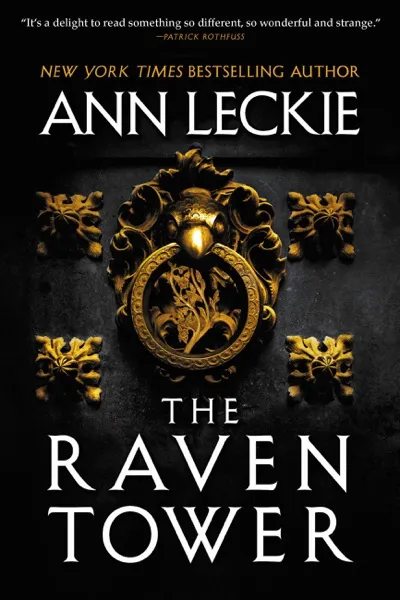
The Raven Tower Author: Ann LeckiePage Count: UnknownPublication Year: 2019-GB The Raven Tower by Ann Leckie is a masterclass in redefining fantasy—where gods are not distant deities but living, breathing forces of nature, and where storytelling itself is as much a character as the people who speak it. Leckie, already renowned for her Imperial Radch series, once again subverts expectations, this time crafting a narrative that feels like a myth whispered across centuries, its weight carried not just in the plot but in the very cadence of its prose. At its core, The Raven Tower explores the nature of power, belief, and the stories we tell to make sense of the world. The novel is framed as a dialogue between two voices: the mortal Eolo, a loyal servant to the Raven’s Lease (a ruler who speaks for the god-like Raven), and Mawat, the disinherited heir of the Raven’s Lease, who seeks to reclaim his birthright. But the true protagonist is the god himself—the Raven, a being of shifting form and inscrutable will, whose existence is tied to the health of the world’s great tree and the faith of its people. The Raven’s voice is one of quiet, eerie authority, a being who has watched empires rise and fall but remains, in its own words, "a patient thing." The novel asks: What does it mean to wield power when power is not just force, but language, memory, and the collective will of the world? Leckie’s prose is deliberate, even hypnotic. She avoids the typical trappings of fantasy—there are no sprawling maps, no endless lists of nobles or lineages. Instead, the story unfolds through conversation, ritual, and the slow unraveling of history. The dialogue crackles with tension, not just between characters but between the reader and the text itself. The Raven’s speeches are particularly striking, blending the cadence of ancient myths with a modern, almost philosophical depth. When the god muses on time, on the fragility of belief, or on the cost of defiance, it feels less like exposition and more like a revelation. The novel’s structure is daring. For much of the book, the reader is kept in the dark about key events, informed only through secondhand accounts or fragmented memories. This isn’t a trick to withhold information for suspense—it’s a statement about how power distorts truth. The Raven’s rule is built on stories, on what people choose to remember and what they are forced to forget. The novel itself becomes a kind of ritual, where the reader must piece together meaning just as the characters do, reading between the lines of history. Leckie’s worldbuilding is subtle but immersive. The setting—somewhere between a high-fantasy kingdom and a mythic past—feels alive in its contradictions. There are no clear heroes or villains, only beings caught in the web of their own desires and the gods’ designs. The magic system is tied to language and memory, reinforcing the theme that reality is shaped by what we choose to say and believe. The Raven’s Lease, for instance, is not just a ruler but a vessel for the god’s will, and their power is as much about persuasion as it is about force. The novel’s greatest strength may be its ambiguity. Leckie refuses to provide easy answers. The Raven is neither benevolent nor malevolent—it is a force of nature, and its motivations are as inscrutable as the tides. Mawat’s quest for vengeance, Eolo’s loyalty, the Raven’s quiet, patient wisdom—all are presented with equal weight, as if none can claim moral superiority. This refusal to simplify makes the story feel weightier, more real. The Raven Tower is not a book for those who crave fast-paced action or clear-cut resolutions. It is a book for those who savor language, who enjoy being unsettled by the questions it raises. It asks: Who gets to shape history? Who decides what is remembered? And what happens when the gods themselves are just another story we tell? Leckie’s answer is less a revelation and more an invitation—to sit with the unease, to listen to the whispers of the Raven, and to recognize that power, like a story, is never as simple as it seems. If The Raven Tower has a flaw, it’s that its deliberate pacing may frustrate some readers. But for those who surrender to its rhythm, it becomes something rare—a fantasy novel that feels like a living myth, where every word carries weight and every silence speaks volumes. #TheRavenTower #AnnLeckie #FantasyBooks #MythicFantasy #SFF #GodsInFantasy Related InsightsThe French Illusion Book Review and Summary Veronika Decides to Die Book Review and Summary The Honey-Don't List Book Review and Summary{ "@context": "https://schema.org", "@type": "FAQPage", "mainEntity": [ { "@type": "Question", "name": "What is the main focus of The Raven Tower Book Review and Summary?", "acceptedAnswer": { "@type": "Answer", "text": "Everything you need to know about The Raven Tower with our detailed review." } }, { "@type": "Question", "name": "Who authored the comprehensive guide on The Raven Tower Book Review and Summary?", "acceptedAnswer": { "@type": "Answer", "text": "This detailed article and its insights were carefully researched and authored by Piotr Nowak." } }, { "@type": "Question", "name": "Where can I find more related content about Books?", "acceptedAnswer": { "@type": "Answer", "text": "You can explore more articles, detailed reviews, and similar insights by browsing the Related Insights section at the bottom of this article or visiting our dedicated Books category page." } } ] }