Showing Posts From
The silmarillion
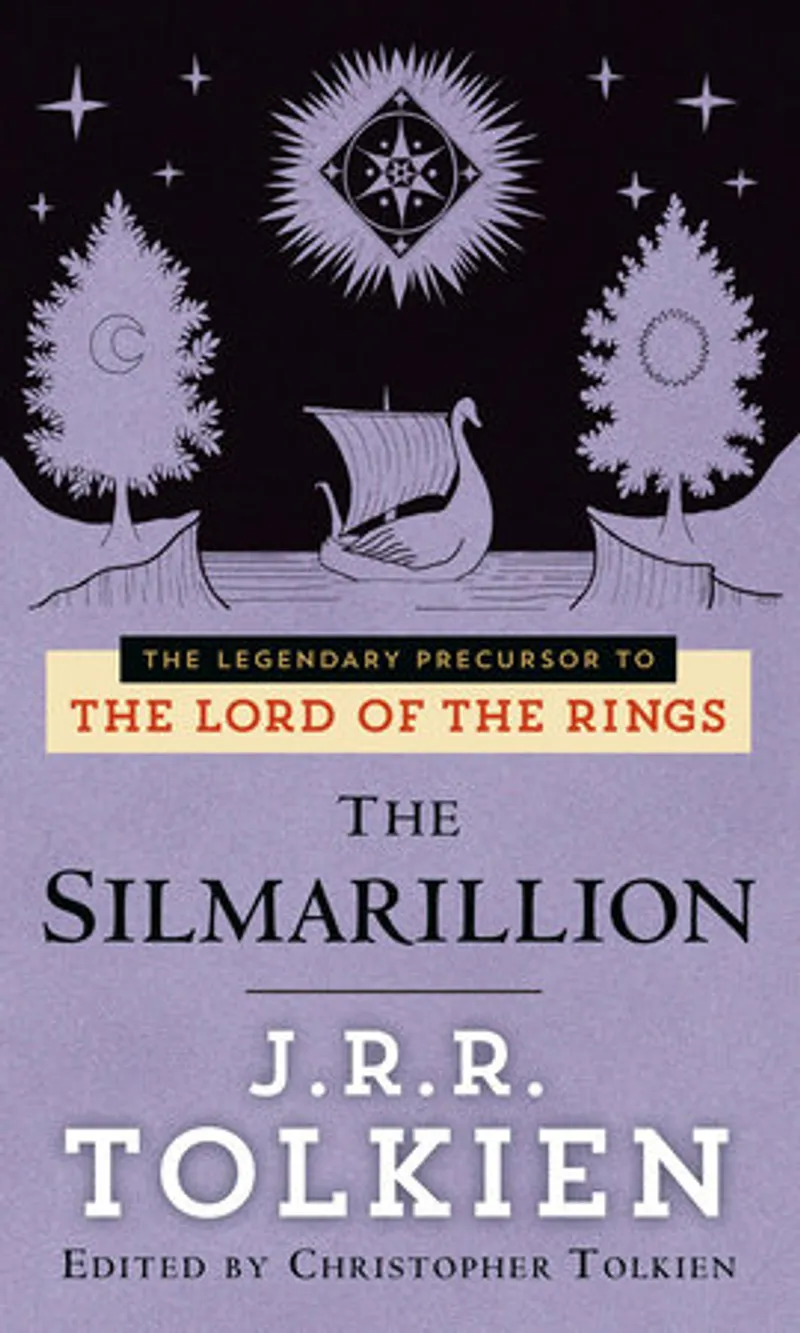
The Silmarillion Author: J.R.R. TolkienPage Count: UnknownPublication Date: 1985-PRH The Silmarillion is not merely a book—it is a mythic tapestry woven by J.R.R. Tolkien with the same reverence and meticulous craft as the Elves forged their legendary jewels. Published posthumously in 1985, this work stands as the cornerstone of Middle-earth’s lore, a grand cosmogony that predates The Lord of the Rings by millennia. To call it a "prequel" would be reductive; it is the primordial fire from which all of Tolkien’s later stories—from the fall of Númenor to the War of the Ring—emerge like embers carried on the wind. If The Lord of the Rings is an epic poem of heroism and camaraderie, The Silmarillion is its tragic prologue, a saga of divine hubris, irrevocable loss, and the unyielding struggle between light and darkness. At its core, The Silmarillion is a meditation on the cost of creation and the burden of immortality. The central conflict revolves around the Silmarils—three flawless jewels that encapsulate the divine light of the Two Trees of Valinor. When these trees are destroyed by the dark lord Morgoth, the Silmarils become the last vestige of that celestial radiance, and their theft by Morgoth sets in motion a chain of events that defines the First Age. The tragedy lies not in the theft itself, but in the response of Fëanor, the greatest of the Elven craftsmen. His oath of vengeance, sworn in a fit of divine wrath, binds his sons and their kin to an endless war against Morgoth—a war they cannot win, yet cannot abandon. The Silmarils, meant to be a blessing, become a curse, a symbol of the Elves’ fall from grace. Tolkien, ever the philologist, embeds this theme in language itself: the very word "Silmaril" carries the weight of sil (light) and mar (to dwell), suggesting both brilliance and doom. Tolkien’s prose in The Silmarillion is deliberately archaic, evoking the cadence of ancient myths and biblical genealogies. There are no modern comforts here—no introspective soliloquies, no witty asides. Instead, the narrative unfolds like a liturgical text, with names, lineages, and divine decrees cascading in rhythmic prose. This style is not merely ornamental; it is essential. By adopting the voice of a chronicler recounting events from the mists of time, Tolkien immerses the reader in the mythic weight of his world. The language feels eternal, as if these stories have always existed, waiting to be remembered. When the reader encounters phrases like "There was Eru, the One, who in Arda is called Ilúvatar" or "The Doom of the Noldor was made known", the effect is not just literary—it is spiritual. Tolkien, a devout Catholic, infuses his mythology with a sense of divine providence, where even the most catastrophic events serve a greater, if inscrutable, purpose. Yet for all its grandeur, The Silmarillion is deeply human in its emotional core. The tragedy of the Elves—immortal beings who love, suffer, and die—mirrors the human condition in its most raw form. Consider the fate of Beren and Lúthien, whose love defies the will of the gods; or the doomed heroism of Túrin Turambar, whose life is a tapestry of sorrow woven by fate itself. These stories are not just about good versus evil; they are about the inevitability of loss, the fleeting nature of joy, and the stubborn hope that persists even in the darkest hours. Morgoth, the first Dark Lord, is not merely a villain but a force of entropy, a being who twists creation into something monstrous. His presence looms over the entire work, a reminder that evil is not just an absence of good but an active, corrosive force that seeks to unmake the world. Tolkien’s genius lies in his ability to make the cosmic feel intimate. The wars of gods and demons are not abstract; they are felt in the grief of a father losing his son, the betrayal of kin, the slow erosion of hope. The Silmarils themselves are more than MacGuffins—they are symbols of lost innocence, of a time when the world was young and the light of the gods still shone untainted. Their loss is not just a plot device; it is a wound that never heals, a memory that haunts the Elves for ages. For those who approach The Silmarillion expecting the narrative drive of The Lord of the Rings, the experience may be disorienting. This is not a novel with a linear plot but a collection of interconnected myths, each with its own rhythm and tone. Some sections read like a genealogy, others like a battle chronicle, and a few like a lament. Yet within this fragmented structure lies the book’s power. It is a work that demands patience, not because it is difficult, but because it is vast—like standing at the foot of a mountain and realizing you must climb it to see the stars. In the end, The Silmarillion is a work of profound melancholy, but also of awe. It is a reminder that even in a world of gods and dragons, the most compelling stories are those of love, sacrifice, and the enduring will to defy darkness. Tolkien once wrote that "all we have to decide is what to do with the time that is given us." The Silmarillion is his answer—a testament to the idea that even in defeat, there is nobility, and even in loss, there is beauty. #TheSilmarillion #Tolkien #MiddleEarth #FantasyEpic #ElvesOfMiddleEarth #MythicFantasy Related InsightsCut to the Ending: A Novel Book Review and Summary Welcome to the Fairy Smut Hospital (Fairy Smut Hospital, #1) Book Review and Summary Crescendo Book Review and Summary{ "@context": "https://schema.org", "@type": "FAQPage", "mainEntity": [ { "@type": "Question", "name": "What is the main focus of The Silmarillion Book Review and Summary?", "acceptedAnswer": { "@type": "Answer", "text": "Everything you need to know about The Silmarillion with our detailed review." } }, { "@type": "Question", "name": "Who authored the comprehensive guide on The Silmarillion Book Review and Summary?", "acceptedAnswer": { "@type": "Answer", "text": "This detailed article and its insights were carefully researched and authored by J.R.R. Tolkien." } }, { "@type": "Question", "name": "Where can I find more related content about Books?", "acceptedAnswer": { "@type": "Answer", "text": "You can explore more articles, detailed reviews, and similar insights by browsing the Related Insights section at the bottom of this article or visiting our dedicated Books category page." } } ] }