Showing Posts From
The song of achilles
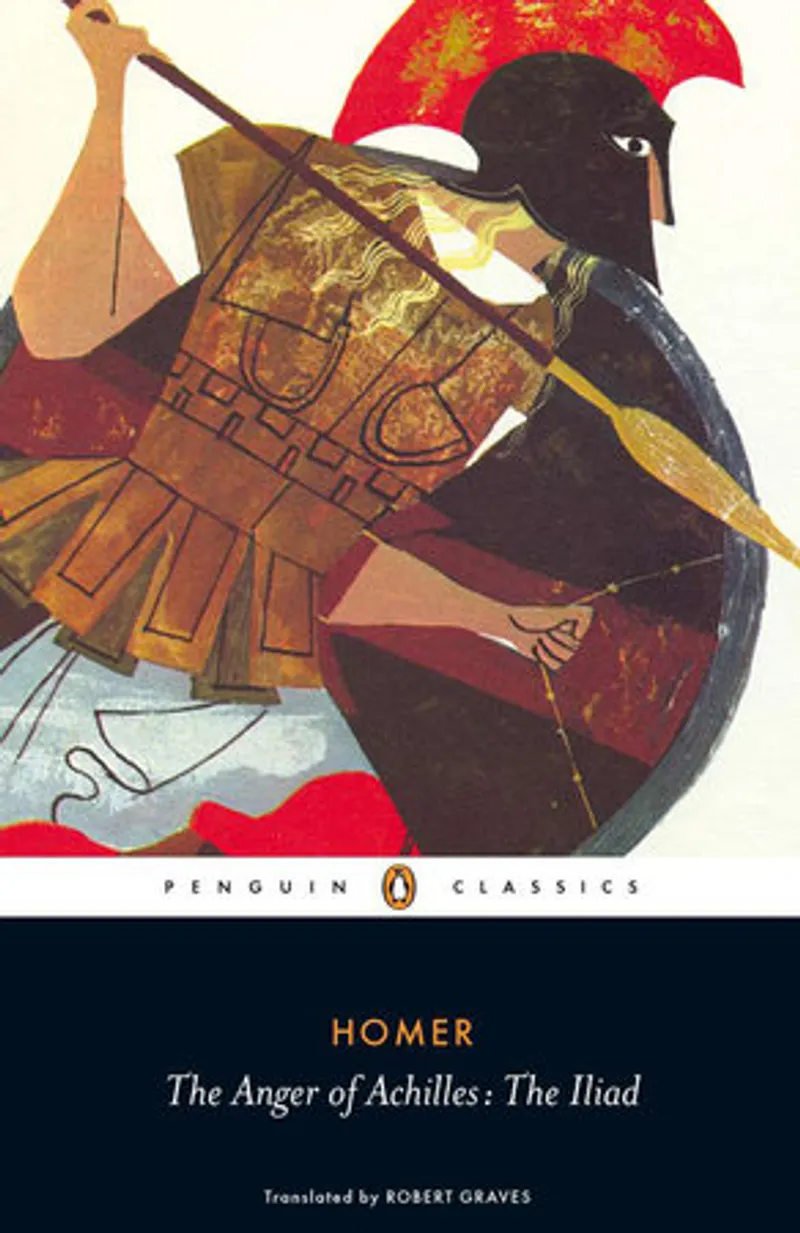
The Anger of Achilles Author: HomerPage Count: UnknownPublication Date: 2009-PRH Robert Graves’s The Anger of Achilles is not just a retelling of Homer’s Iliad—it is a reinvention, a fiery distillation of the epic’s raw emotion into something immediate and visceral. Published in 2009 as part of Penguin Classics, this edition strips away the archaic grandeur of traditional translations to reveal the timeless, human core of the story: the destructive power of rage, the fragility of honor, and the inevitability of fate. Graves, a master of mythic storytelling, transforms Homer’s sprawling narrative into a taut, dramatic confrontation where every word feels like a blade unsheathed. At the heart of Graves’s retelling is the theme of mēnis—the divine wrath of Achilles, which sets the entire Trojan War in motion. Achilles’ fury is not merely a personal vendetta; it is a cosmic force, a storm that engulfs gods and mortals alike. Graves captures this with unflinching precision, portraying the hero not as a flawless demigod but as a man consumed by pride, grief, and an almost childish pettiness. When Agamemnon seizes Briseis, Achilles’ war prize, his withdrawal from battle is less a strategic retreat than a tantrum—a sulking that paralyzes an army. Yet Graves does not glorify this rage; he exposes its hollowness. Achilles’ anger is both his strength and his undoing, a paradox that mirrors the human condition itself. The reader is left to wonder: Is his fury noble, or is it the petulant outburst of a man who has been spoiled by divine favor? Graves’s prose is muscular and direct, eschewing the ornate flourishes of some translations in favor of a lean, rhythmic cadence that mimics the clash of swords. His language is modern enough to feel accessible, yet it retains the mythic weight of the original. The dialogue crackles with tension, particularly in the exchanges between Achilles and his mother, Thetis, whose pleas for restraint are met with the defiance of a son who knows his own doom. Even the gods are rendered with a brutal clarity—Zeus, wavering between duty and desire; Athena, cunning and merciless; Apollo, gleeful in his role as Hector’s protector. Graves’s gods are not distant figures of worship; they are capricious, petty, and deeply invested in the fates of men, their interventions as arbitrary as the whims of a spoiled child. The emotional climax of the book—Achilles’ return to battle after Patroclus’s death—is rendered with devastating impact. Graves does not shy away from the brutality of war; the battlefield is a meat-grinder, and the heroes are as likely to die from a stray arrow as from a heroic duel. When Achilles finally faces Hector, the confrontation is less a triumphant showdown than a grim reckoning. The reader feels the weight of every strike, the desperation of a man who knows he is already dead. Graves’s Achilles is not a triumphant warrior but a tragic figure, doomed by his own nature, his rage as much his enemy as the Trojans. What makes Graves’s retelling so compelling is its refusal to romanticize heroism. The Iliad is often celebrated as a tale of glory, but Graves strips away the shine to reveal the rot beneath. The Greeks are not noble saviors; they are a fractious, selfish lot, their victories as hollow as their losses. Achilles is not a paragon of virtue but a man whose greatest strength—his invincibility—is also his greatest curse. His anger is not a noble passion but a destructive force that consumes everything around him, including himself. Graves’s style is not for those who seek a stately, academic Homer. This is a Homer for the modern reader who craves immediacy, who wants to feel the heat of the battlefield and the sting of betrayal as if they were happening in real time. The pacing is relentless, the prose sharp enough to cut, and the emotional payoff as inevitable as the fall of Troy itself. By the final pages, when Achilles drags Hector’s body behind his chariot, the reader is left with a sense of exhausted awe—not just at the scale of the tragedy, but at the way Graves has made it feel personal, as if we, too, have been complicit in the hero’s downfall. In an era where epic storytelling often defaults to spectacle over substance, Graves’s The Anger of Achilles is a reminder that the greatest myths endure because they speak to the most primal parts of us: our capacity for love, our vulnerability to pride, and the inescapable weight of our choices. It is a book that demands to be read in one breathless sitting, then pondered in the silence that follows. #Homer #Iliad #Achilles #GreekMythology #EpicPoetry #RobertGraves Related InsightsSweep of the Heart Book Review and Summary L'Odyssée de l'Âme : Plongée Abyssale dans la Comédie Divine de Dante Alighieri Daughter of the Deep Book Review and Summary{ "@context": "https://schema.org", "@type": "FAQPage", "mainEntity": [ { "@type": "Question", "name": "What is the main focus of The Song of Achilles Book Review and Summary?", "acceptedAnswer": { "@type": "Answer", "text": "Everything you need to know about The Song of Achilles with our detailed review." } }, { "@type": "Question", "name": "Who authored the comprehensive guide on The Song of Achilles Book Review and Summary?", "acceptedAnswer": { "@type": "Answer", "text": "This detailed article and its insights were carefully researched and authored by Madeline Miller." } }, { "@type": "Question", "name": "Where can I find more related content about Books?", "acceptedAnswer": { "@type": "Answer", "text": "You can explore more articles, detailed reviews, and similar insights by browsing the Related Insights section at the bottom of this article or visiting our dedicated Books category page." } } ] }