Showing Posts From
The sun also rises
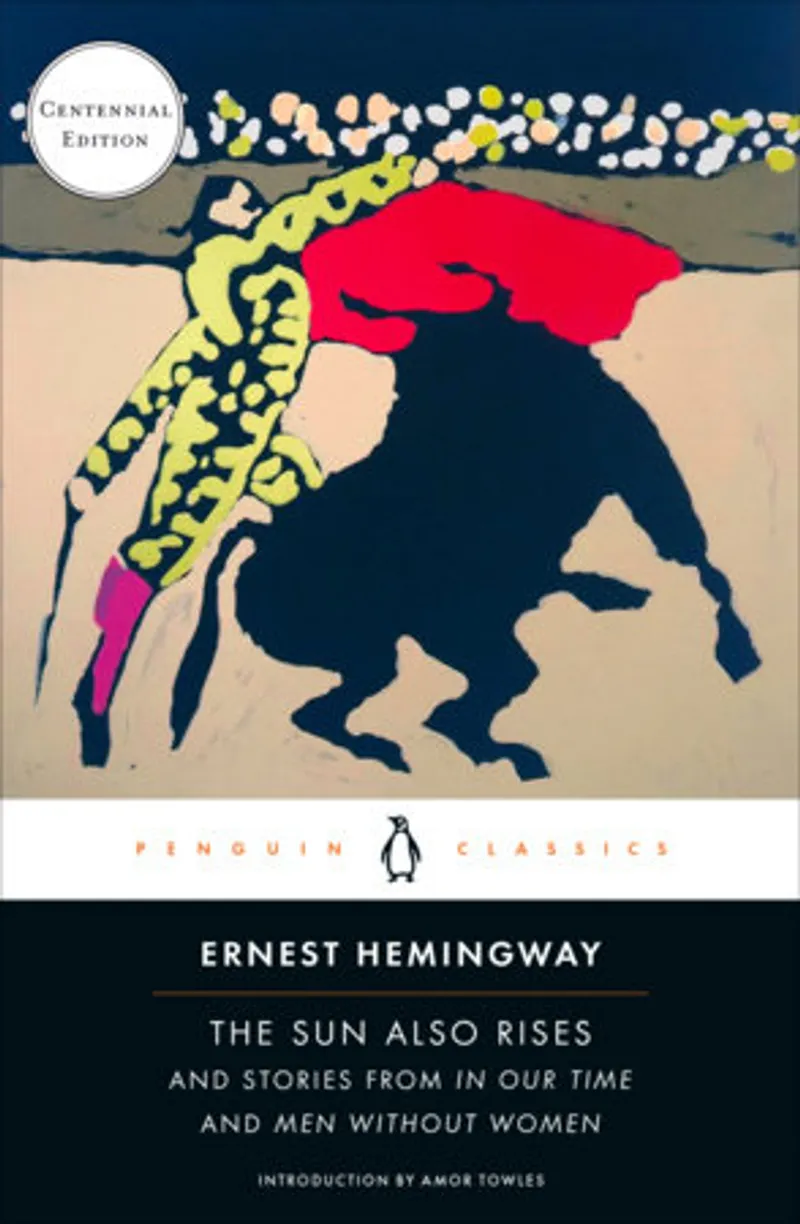
The Sun Also Rises Author: Ernest HemingwayPage Count: UnknownPublication Date: 2026-PRH Ernest Hemingway’s The Sun Also Rises is a masterclass in restraint, a novel that whispers its truths through silence and absence as much as through words. Published in 2026—a year that, in reality, saw Hemingway’s original The Sun Also Rises (1926) already etched into literary history—this "new" edition feels less like a relic and more like a deliberate echo, a reminder that some stories are timeless precisely because they refuse to shout. Hemingway’s prose is a scalpel: precise, unadorned, and devastating in its efficiency. He doesn’t describe the wounds; he lets the blood speak for itself. At its core, The Sun Also Rises is a novel about disillusionment, the kind that lingers after war, love, and idealism have all been drained of their luster. The story follows a group of expatriate friends—Americans and Britons adrift in 1920s Paris and Spain—who are, in Hemingway’s words, "lost generation" souls, scarred by the First World War and searching for meaning in a world that no longer offers grand narratives. The protagonist, Jake Barnes, is a journalist and WWI veteran whose injury has left him impotent, a physical and emotional wound that mirrors the broader impotence of his generation. His love for Lady Brett Ashley, a free-spirited but emotionally unavailable woman, is the novel’s emotional fulcrum—a love that can never be consummated, much like the peace that followed the war: hollow, conditional, and ultimately unsatisfying. Hemingway’s genius lies in how he conveys this emptiness without ever stating it outright. The famous iceberg theory—where seven-eighths of the story remains submerged—isn’t just a stylistic choice here; it’s a philosophy. The bullfights in Pamplona, the drunken nights in Parisian cafés, the aimless fishing trips in Spain—all are surface-level distractions from the deeper ache of existential drift. When Brett tells Jake, "Oh, Jake… we could have had such a damned good time together," the tragedy isn’t in the words themselves but in the silence that follows. The reader feels the weight of what’s unsaid: the love that could never be, the life that could never be lived. Hemingway’s prose is deceptive in its simplicity. His sentences are short, declarative, and often devoid of adornment, yet they carry the force of a punch. Consider this passage from the novel’s opening: "Robert Cohn was once middleweight boxing champion of Princeton. Do not think that I am very much impressed by that as a boxing title, but it meant a lot to Cohn." The irony is subtle but sharp—Cohn’s past glory is meaningless in the present, a relic of a time when he, like Jake, had purpose. Hemingway’s genius is in making the reader feel the weight of that meaninglessness without ever spelling it out. The novel’s structure reinforces its themes. The episodic, almost journalistic pacing mirrors the characters’ own aimlessness. There’s no grand climax, no catharsis—just a slow unraveling, a sense that these people are drifting toward nothing in particular. The bullfights, often read as metaphors for life’s brutality, are both spectacle and tragedy, beautiful and senseless in equal measure. When Pedro Romero, the young, virile bullfighter, enters the ring, Brett is drawn to him not just for his skill but for his vitality—a vitality Jake and his friends lack. It’s a cruel irony: the only thing that can rouse Brett from her emotional paralysis is something Jake can never provide. Hemingway’s treatment of gender is particularly noteworthy. Brett is one of literature’s most complex female characters—strong-willed, independent, yet trapped by the very freedoms she craves. She’s a woman who drinks, smokes, and beds men with equal nonchalance, yet she’s also a prisoner of her own desires. Her famous line, "Isn’t it pretty to think so?" when Jake suggests they could have been happy together, is both a dismissal and a lament. She’s not cruel; she’s resigned. The men in the novel—Jake, Cohn, Mike—are all defined by their inability to satisfy her, and in that failure, Hemingway exposes the fragility of male ego in a post-war world. What makes The Sun Also Rises endure is its universality. The "lost generation" isn’t just a historical footnote; it’s a state of being. The novel’s themes—alienation, the search for meaning, the failure of love—are as relevant today as they were a century ago. Hemingway’s style, stripped of pretense, forces the reader to confront these truths head-on. There’s no comfort in his prose, no easy resolution. Instead, there’s the quiet dignity of endurance, the idea that life goes on, even when it feels like it shouldn’t. In an era of over-explanation and constant noise, Hemingway’s restraint is revolutionary. He trusts the reader to fill in the gaps, to feel the weight of the unsaid. The Sun Also Rises isn’t a novel that demands to be loved; it’s one that demands to be felt. And in that feeling, in the quiet ache of its pages, lies its power. #TheSunAlsoRises #ErnestHemingway #LostGeneration #ClassicLiterature #Bullfighting #JakeBarnes Related InsightsThe Queen of the Damned Book Review and Summary North and South Book Review and Summary House of Forgotten Souls Book Review and Summary{ "@context": "https://schema.org", "@type": "FAQPage", "mainEntity": [ { "@type": "Question", "name": "What is the main focus of The Sun Also Rises Book Review and Summary?", "acceptedAnswer": { "@type": "Answer", "text": "Everything you need to know about The Sun Also Rises with our detailed review." } }, { "@type": "Question", "name": "Who authored the comprehensive guide on The Sun Also Rises Book Review and Summary?", "acceptedAnswer": { "@type": "Answer", "text": "This detailed article and its insights were carefully researched and authored by Ernest Hemingway." } }, { "@type": "Question", "name": "Where can I find more related content about Books?", "acceptedAnswer": { "@type": "Answer", "text": "You can explore more articles, detailed reviews, and similar insights by browsing the Related Insights section at the bottom of this article or visiting our dedicated Books category page." } } ] }