Showing Posts From
The three musketeers
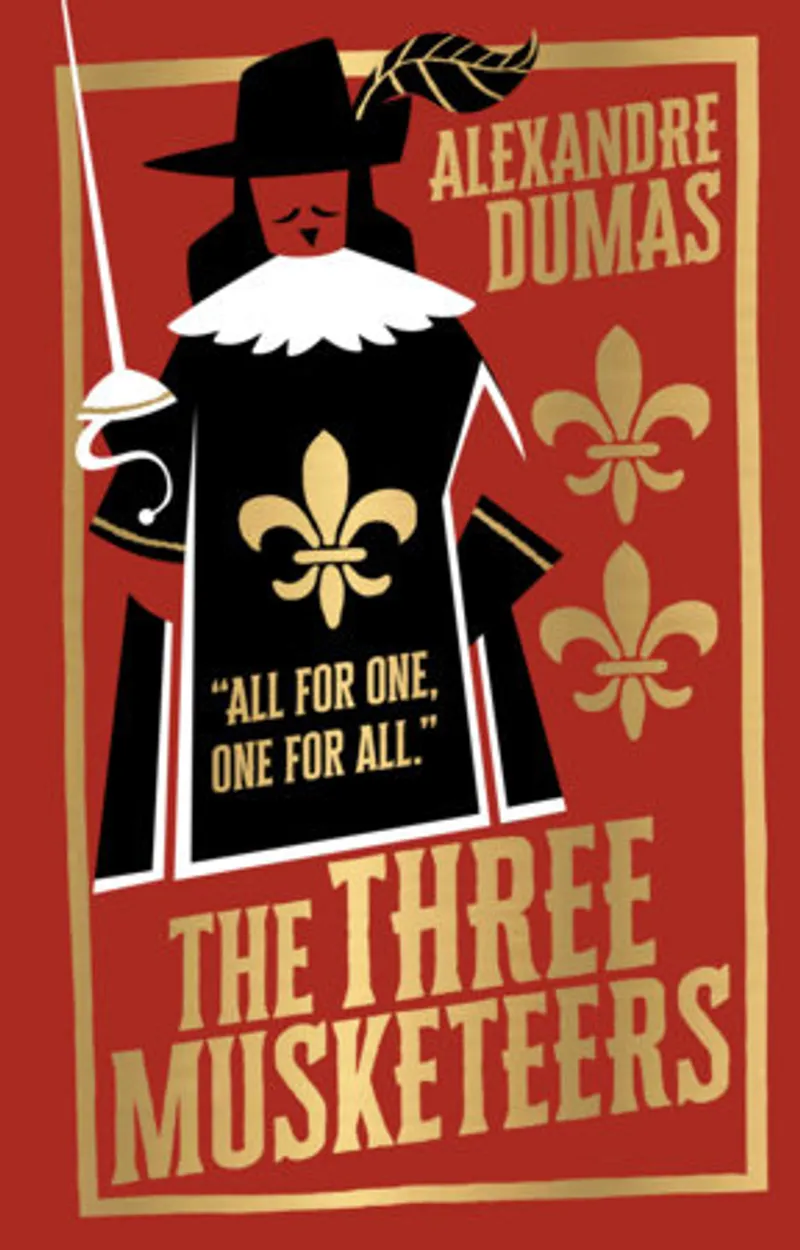
The Three Musketeers Author: Alexandre DumasPage Count: UnknownPublication Date: 2023-PRH Swordplay, Intrigue, and Brotherhood: Why The Three Musketeers Still Stings Like a Rapier Alexandre Dumas’ The Three Musketeers is not merely a novel—it is a manifesto of swagger, a ballet of blades, and a love letter to the kind of camaraderie that makes men (and women) willing to die for each other. First published in 1844, this tale of dashing rogues, political conspiracies, and relentless adventure has aged like fine wine, its themes of loyalty, ambition, and the clash between duty and desire as sharp today as they were nearly two centuries ago. If you’ve ever dreamed of donning a plumed hat, wielding a sword with panache, or outwitting villains with a wink and a quip, Dumas’ masterpiece will feel less like reading and more like being inducted into an exclusive club where the password is "All for one, and one for all!" At its core, The Three Musketeers is a story about the power of friendship—and the chaos it can unleash. The bond between Athos, Porthos, Aramis, and d’Artagnan is the novel’s beating heart, a brotherhood forged in taverns, duels, and near-death scrapes. Dumas doesn’t just tell us these men would die for each other; he shows us, over and over, in scenes that crackle with tension and humor. Their loyalty is tested not just by external foes like the cunning Cardinal Richelieu or the treacherous Milady de Winter, but by their own flaws—pride, recklessness, and the occasional bout of romantic idiocy. Yet what makes their friendship so compelling is its imperfection. They bicker, they betray (briefly), they make terrible life choices, but they always circle back, because in Dumas’ world, true brotherhood isn’t about being saints—it’s about being there when it counts. Dumas’ genius lies in his ability to balance high-stakes drama with effortless charm. His prose is like a well-oiled rapier—precise, elegant, and deadly when it needs to be. He doesn’t waste time on purple prose or overlong descriptions; instead, he plunges the reader into the action, whether it’s a midnight duel on the streets of Paris, a daring prison break, or a race against time to save a queen’s honor. The dialogue crackles with wit, the pacing never falters, and the villains are deliciously despicable (Milady de Winter, with her icy beauty and venomous schemes, is one of literature’s most unforgettable antagonists). Dumas also has a knack for making even minor characters feel vivid—from the boisterous Porthos, whose appetite for food and glory is matched only by his ego, to the pious Aramis, whose swordsmanship is rivaled only by his love of theological debate. Yet beneath the swashbuckling surface, The Three Musketeers is a meditation on power and corruption. Richelieu, the novel’s primary antagonist, is no mustache-twirling villain but a calculating statesman who wields influence like a scalpel, manipulating events from the shadows. His schemes—whether undermining the monarchy or orchestrating the downfall of innocents—serve as a reminder that true power isn’t held by those who brandish swords, but by those who pull the strings. Dumas doesn’t glorify violence; he shows its cost. Dueling is a way of life, but it’s also a constant reminder of mortality. The musketeers’ bravado is undercut by moments of vulnerability, whether it’s d’Artagnan’s youthful naivety or Athos’ haunted past. In this way, the novel feels surprisingly modern, exploring themes of loyalty in a corrupt world, the price of ambition, and the thin line between heroism and recklessness. Dumas’ style is also a masterclass in how to write a page-turner. He structures the novel like a series of set pieces, each more thrilling than the last, with cliffhangers that demand you keep reading. The plot is a labyrinth of twists, turns, and double-crosses, yet it never feels convoluted—because at the center of it all is the unshakable bond between the musketeers. Their friendship is the novel’s true engine, driving the story forward even when the external conflict threatens to overwhelm them. And let’s not forget the women—though often sidelined in adaptations, the female characters in The Three Musketeers are far from passive. Constance Bonacieux, d’Artagnan’s love interest, is more than a damsel in distress; she’s clever, resourceful, and ultimately a victim of the men’s world. Milady, meanwhile, is a force of nature, a woman who refuses to be anyone’s pawn, even if it costs her everything. If The Three Musketeers has a flaw, it’s that it occasionally indulges in the kind of casual misogyny and classism typical of its time. Women are often reduced to either saints or temptresses, and the aristocracy is portrayed with a mix of admiration and satire. But these flaws don’t detract from the novel’s brilliance; if anything, they serve as a reminder of how far we’ve come (and how much further we still have to go). Dumas’ world is one where honor is everything, where a man’s word is his bond, and where the greatest sin isn’t murder—it’s betrayal. In the end, The Three Musketeers endures because it’s a story about the things that make life worth living: friendship, adventure, and the thrill of standing your ground when the world tries to knock you down. It’s a novel that reminds us that courage isn’t the absence of fear—it’s charging ahead anyway. So if you’ve ever wanted to be part of a legend, if you’ve ever dreamed of a world where loyalty is the ultimate currency, then sharpen your wits, grab your cloak, and dive in. The musketeers are waiting, and they’ve got a spot for you. #TheThreeMusketeers #AlexandreDumas #SwashbucklingAdventure #ClassicLiterature #BrotherhoodInLiterature #SwordAndSorcery Related InsightsThe Best American Mystery Stories 2020 Book Review and Summary Die stille Architektur des Denkens: Warum Philosophie mehr ist als nur Fragen stellen Crash Course Book Review and Summary{ "@context": "https://schema.org", "@type": "FAQPage", "mainEntity": [ { "@type": "Question", "name": "What is the main focus of The Three Musketeers Book Review and Summary?", "acceptedAnswer": { "@type": "Answer", "text": "Everything you need to know about The Three Musketeers with our detailed review." } }, { "@type": "Question", "name": "Who authored the comprehensive guide on The Three Musketeers Book Review and Summary?", "acceptedAnswer": { "@type": "Answer", "text": "This detailed article and its insights were carefully researched and authored by Alexandre Dumas." } }, { "@type": "Question", "name": "Where can I find more related content about Books?", "acceptedAnswer": { "@type": "Answer", "text": "You can explore more articles, detailed reviews, and similar insights by browsing the Related Insights section at the bottom of this article or visiting our dedicated Books category page." } } ] }