Showing Posts From
The vampire lestat
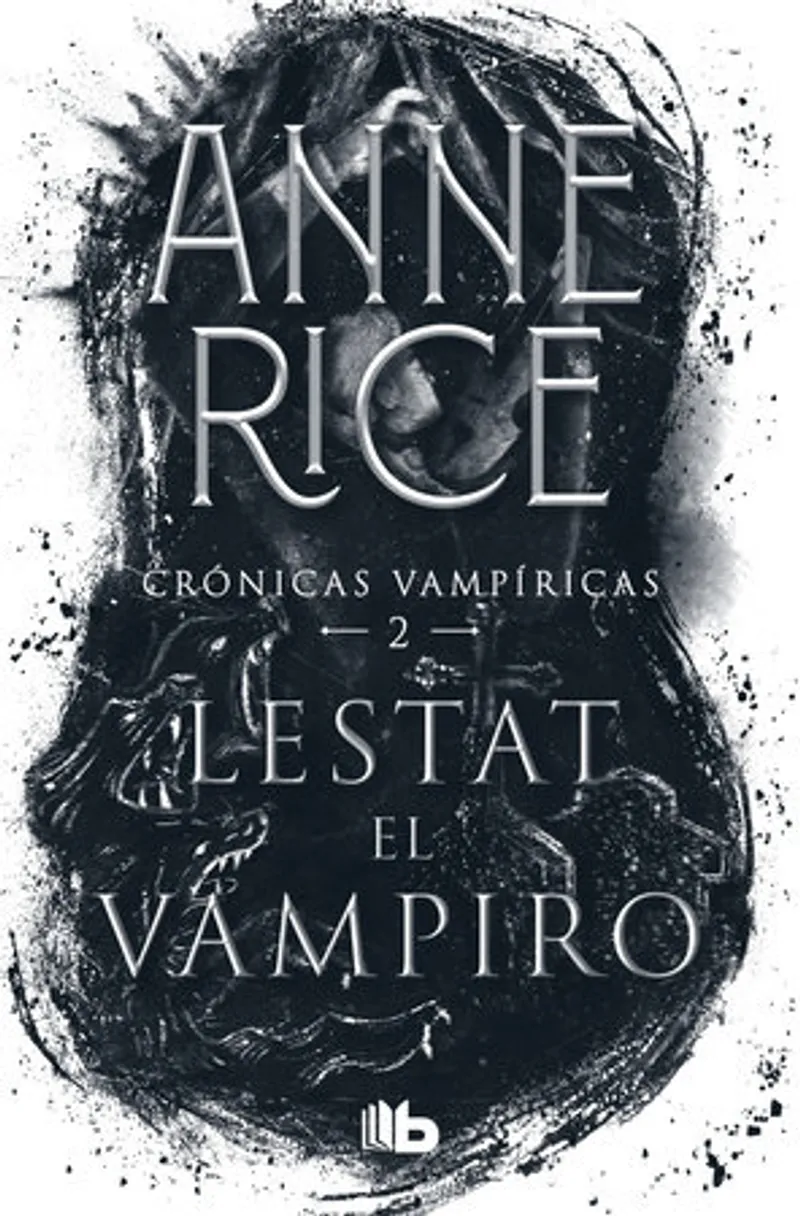
Lestat el vampiro / The Vampire Lestat Author: Anne RicePage Count: UnknownPublication Date: 2021-PRH Anne Rice’s The Vampire Lestat is not merely a sequel—it is a reinvention. Where Interview with the Vampire introduced us to the brooding, tragic Louis, this second installment strips away the melancholy to reveal the raw, unapologetic power of Lestat de Lioncourt, the vampire who would become a rock star, a rebel, and the very embodiment of defiance against mortality. Published decades after the original novel that sparked the vampire renaissance, this book reaffirms Rice’s genius in crafting a protagonist who is as magnetic as he is monstrous, as philosophical as he is feral. It is a story that doesn’t just explore immortality—it weaponizes it. At its core, The Vampire Lestat is a meditation on identity and the search for meaning in an eternity of hunger. Lestat, awakened from his slumber in the 1980s, is a creature of contradictions: a medieval nobleman who becomes a modern icon, a predator who craves connection, a being who both revels in his power and despises the curse of his existence. Rice frames his journey not as a linear biography but as a feverish, nonlinear odyssey through time—from the druidic forests of ancient Britain to the decadent salons of pre-revolutionary France, from the blood-soaked streets of Rome under Augustus to the neon-lit excesses of 1980s Los Angeles. Each era is rendered with lush, almost cinematic detail, but Rice’s true triumph lies in how she uses these settings to reflect Lestat’s evolving psyche. The past is not just backdrop; it is a mirror. The vampire’s memories are not passive recollections but active, visceral experiences that bleed into his present, making him both victim and architect of his own legend. Rice’s prose is the heartbeat of this novel—a decadent, intoxicating rhythm that pulses between the lyrical and the lurid. Her writing is sensual in the way that blood is sensual: rich, thick, and impossible to resist. She doesn’t just describe Lestat’s world; she immerses the reader in it, making the reader feel the chill of a Parisian winter night or the electric thrill of a rock concert stage as if they were standing beside him. There is a hypnotic quality to her sentences, a hypnotism that mirrors Lestat’s own allure. He is, after all, a creature who seduces not just with fangs but with words, with stories, with the sheer force of his personality. When he declares, “I am the vampire Lestat. I am immortal. More or less,” it is not arrogance—it is a statement of fact, delivered with the swagger of a man who has seen empires rise and fall and still finds himself standing. Yet for all its glamour, The Vampire Lestat is also a dark, unsettling exploration of what it means to be truly alone. Lestat’s immortality is not a gift but a prison, and his quest for others like him is as much about escaping his solitude as it is about understanding his nature. The novel’s most haunting passages are not the ones where he hunts or performs, but where he grapples with the silence of eternity. Rice captures this beautifully in moments of quiet introspection, where Lestat’s bravado cracks to reveal something far more vulnerable beneath. His relationship with his maker, Magnus, is a masterclass in gothic horror—less a father-son dynamic than a twisted inheritance, where power is both blessing and curse. And when he finally encounters other vampires, the reunion is less a celebration than a confrontation, a clash of egos and ideologies that forces Lestat to confront the limits of his own myth. What makes The Vampire Lestat enduring is its refusal to be confined by genre. It is a horror novel, yes, but it is also a rock opera, a historical epic, a philosophical treatise, and a love letter to excess. Rice’s vampires are not just monsters; they are artists, rebels, and outcasts who refuse to be tamed by morality or mortality. Lestat, in particular, is a figure who embodies the contradictions of the human condition—capable of both profound cruelty and profound longing, of both destruction and creation. His story is a rebellion against the very idea of endings, a defiant scream into the void of time. Anne Rice’s genius lies in her ability to make the supernatural feel achingly real. She doesn’t just write about vampires; she writes about what it means to be human—or rather, what it means to not be human, and how that absence shapes every desire, every fear, every act of defiance. The Vampire Lestat is not just a book about a vampire; it is a book about the hunger for meaning in a world that offers none, about the lengths to which we go to carve out our own legends when the world refuses to give us one. If Interview with the Vampire was a tragedy, then The Vampire Lestat is its triumphant, defiant counterpart. It is a novel that dares to ask: What if the monster is the hero? And what if the hero’s greatest sin is not his bloodlust, but his refusal to be forgotten? #VampireChronicles #AnneRice #Lestat #DarkFantasy #GothicHorror #VampireLiterature Related InsightsDark Tracks Book Review and Summary What Happens at Nightfall: A Novel Book Review and Summary Fleet of Ghosts Book Review and Summary{ "@context": "https://schema.org", "@type": "FAQPage", "mainEntity": [ { "@type": "Question", "name": "What is the main focus of The Vampire Lestat Book Review and Summary?", "acceptedAnswer": { "@type": "Answer", "text": "Everything you need to know about The Vampire Lestat with our detailed review." } }, { "@type": "Question", "name": "Who authored the comprehensive guide on The Vampire Lestat Book Review and Summary?", "acceptedAnswer": { "@type": "Answer", "text": "This detailed article and its insights were carefully researched and authored by Anne Rice." } }, { "@type": "Question", "name": "Where can I find more related content about Books?", "acceptedAnswer": { "@type": "Answer", "text": "You can explore more articles, detailed reviews, and similar insights by browsing the Related Insights section at the bottom of this article or visiting our dedicated Books category page." } } ] }