Showing Posts From
The world of the shi
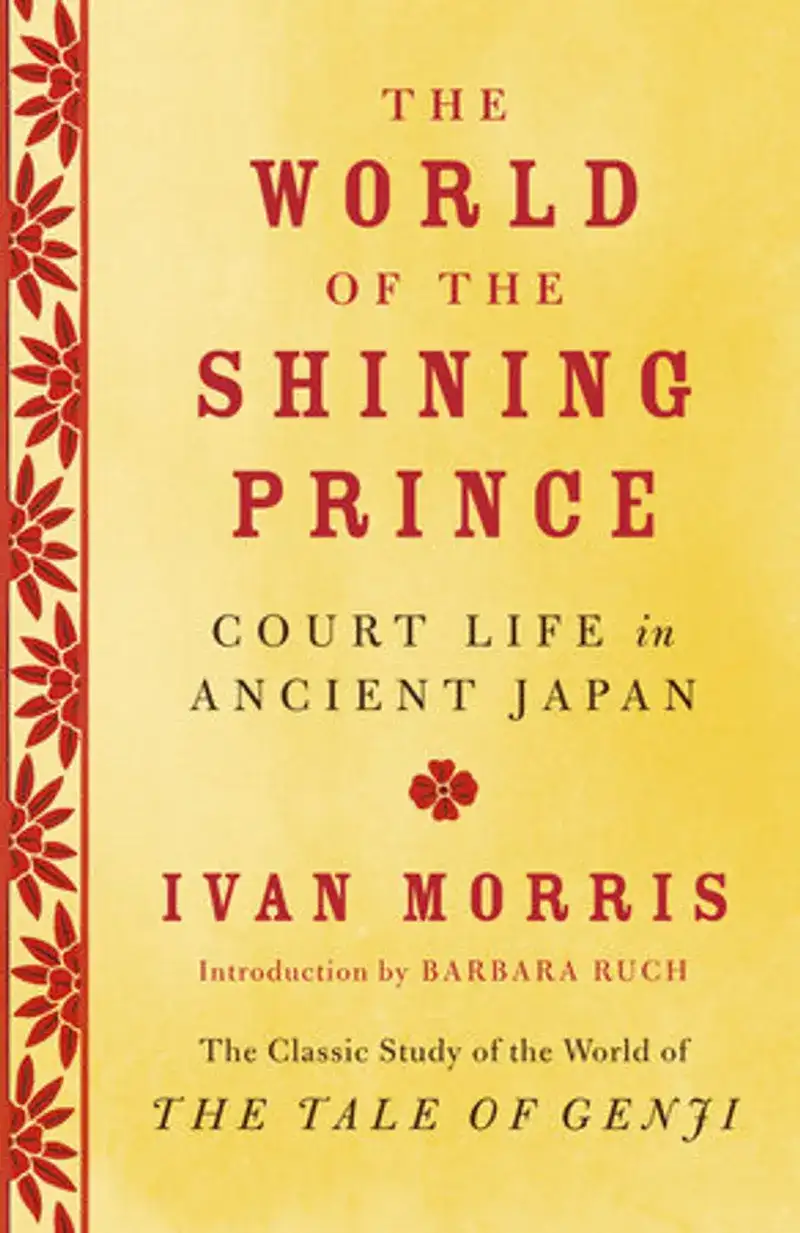

The World of the Shining Prince Author: Ivan MorrisPage Count: UnknownPublication Date: 2013-PRH Ivan Morris’s The World of the Shining Prince is not merely a book about ancient Japan—it is a portal to a lost world, a time when beauty was power, poetry was politics, and the subtlest gestures could shape destinies. First published decades ago but still luminous in its insight, this masterful work transports readers to the Heian period (794–1185), a golden age of refined sensibility often romanticized but rarely understood with such depth and clarity. Morris, a scholar of rare discernment, crafts a portrait that is as scholarly as it is evocative, blending meticulous research with a narrative grace that makes the past feel intimate and alive. At its core, the book explores the paradoxical world of the imperial court, where elegance was currency and melancholy was a cultural virtue. Morris anchors his exploration in The Tale of Genji, Murasaki Shikibu’s 11th-century masterpiece, but he transcends mere literary analysis. He recreates the rhythms of daily life—the swish of silk robes, the flicker of candlelight in dim corridors, the hushed whispers behind folding screens. This was a society ruled by aesthetics: calligraphy, scent, the arrangement of flowers, even the tilt of a sleeve conveyed meaning. A woman’s beauty was not just admired; it was a form of influence, a silent language in a world where direct speech was often frowned upon. Morris is particularly adept at illuminating the paradox of power in this era. The emperor, though revered, was often a distant figure, his authority mediated by courtiers who maneuvered through courtly rituals as deftly as courtesans navigated love affairs. The women of the court, cloistered behind screens and veiled by convention, wielded extraordinary cultural influence. They composed poetry, shaped fashion, and decided the fate of men through subtle emotional manipulation. In one striking passage, Morris describes how a woman’s refusal to acknowledge a lover—even through a mere glance—could ruin a man’s reputation overnight. Such was the power of passive resistance in a society that prized restraint over direct confrontation. The author’s style is a blend of precision and poetry. He writes with the rigor of a historian but the flair of a novelist. His prose is never dense or academic; instead, it unfolds like a scroll painting, revealing layers of meaning with each turn of the page. He has a knack for distilling complex social structures into vivid scenes. For instance, he describes a court ceremony not as a dry historical event but as a drama of glances and gestures, where the slightest misstep could cause a scandal. This approach makes the book accessible to general readers while satisfying the curiosity of specialists. Morris also excels in exploring the spiritual landscape of the Heian period. He delves into the syncretic blend of Shinto and Buddhism that colored daily life, where omens, dreams, and ghostly apparitions were taken as seriously as political edicts. He recounts tales of curses, possession, and prophetic dreams with the same seriousness he applies to courtly intrigue. It’s this balance—between the mundane and the mystical—that gives the book its depth. The reader comes away not just knowing about the Heian court but feeling its atmosphere: the scent of incense, the weight of tradition, the quiet ache of unfulfilled longing that permeates even its most joyous moments. One of the book’s most enduring strengths is its refusal to idealize its subject. Morris does not shy away from the darker aspects of Heian society: the political scheming, the emotional cruelty, the suffering of women trapped in polygamous marriages. He portrays the court as a glittering cage, where beauty was both a shield and a prison. This nuance elevates the book beyond mere nostalgia. It’s a reminder that even in the most refined cultures, power is often a fragile illusion, and happiness is a fleeting dream. In an era obsessed with progress and utility, The World of the Shining Prince offers a counterpoint—a world where artistry mattered more than efficiency, where subtlety was a virtue, and where the soul was nurtured through contemplation rather than consumption. Morris’s book is not just a historical study; it’s an elegy for a lost way of being, a culture that valued the ephemeral over the permanent. Reading it is like stepping into a time when life was lived at the pace of a poem, when every gesture held meaning, and when the heart’s quietest whispers could echo through the centuries. For anyone drawn to Japan’s past, to the interplay of art and power, or simply to the timeless human longing for beauty and connection, The World of the Shining Prince is essential. It is a book that lingers, like the memory of a perfect moonlit night in a garden long vanished. #HeianJapan #ClassicalLiterature #JapaneseHistory #MurasakiShikibu #IvanMorris #AncientCourts