Showing Posts From
Things fall apart
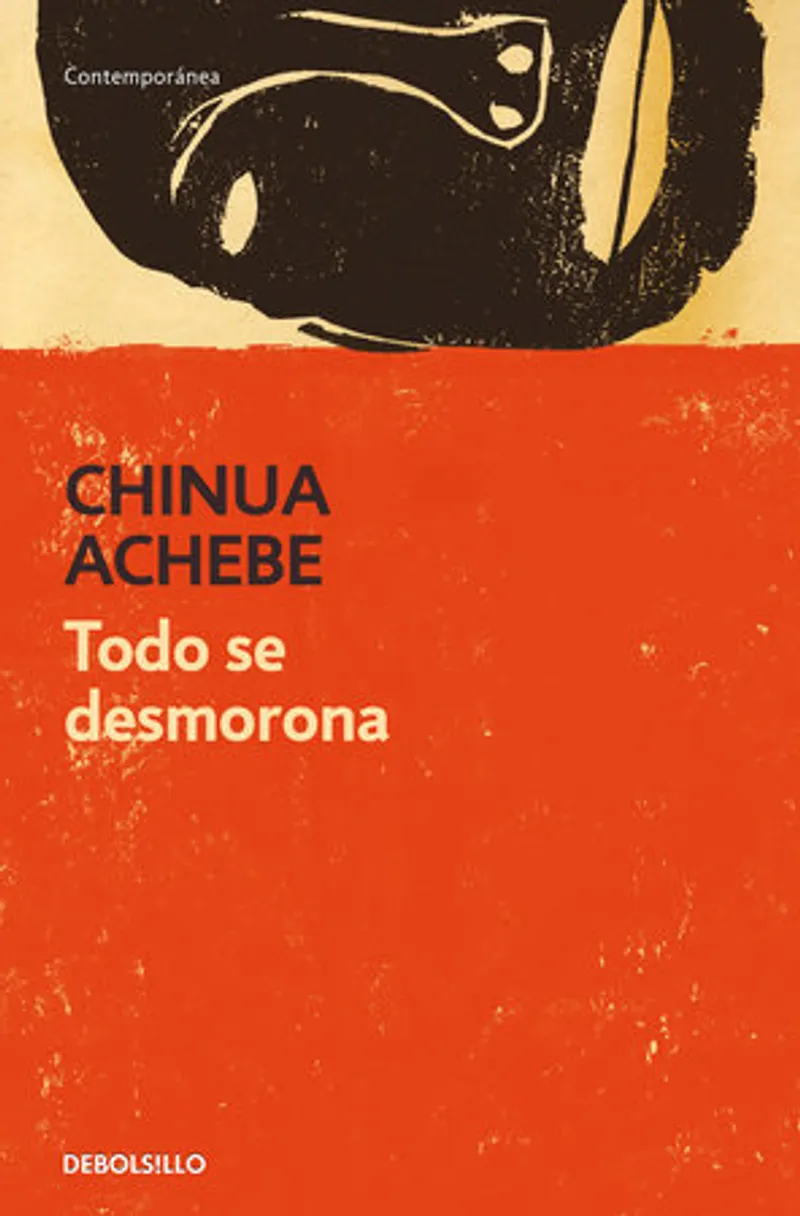
Todo se desmorona / Things Fall Apart Author: Chinua AchebePage Count: UnknownPublication Date: 2023-PRH Chinua Achebe’s Things Fall Apart is not just a novel—it is a seismic tremor in the landscape of world literature, a work that reshaped how Africa and its people are perceived by the world. Published in 1958, long before postcolonial studies became an academic discipline, Achebe’s masterpiece dismantles the myths of colonialism with unflinching honesty, weaving a story that is at once deeply personal and profoundly universal. The novel’s power lies in its ability to make the reader feel the weight of history not as a distant abstraction, but as a lived, breathing tragedy. At its core, Things Fall Apart is a meditation on the collision of cultures, a story of pride, loss, and the inexorable march of change. The protagonist, Okonkwo, is a man forged in the fire of Igbo tradition—a warrior whose strength and discipline have elevated him to a position of respect in his village of Umuofia. Yet Okonkwo is also a man haunted by fear: the fear of weakness, of emasculation, of becoming like his father, Unoka, a man scorned for his laziness and debt. His entire identity is built on defiance—defiance of failure, defiance of colonial intrusion, defiance even of the gods when they seem to betray him. But when the white man arrives, bringing with him not just foreign religion but an entirely new system of governance, Okonkwo’s world begins to unravel. His resistance is futile, not because he lacks courage, but because the tide of history cannot be stemmed by one man’s will. Achebe’s genius lies in his refusal to romanticize either side of this conflict. The Igbo people are not portrayed as noble savages living in harmony with nature, nor are the colonizers reduced to mere villains. Instead, Achebe presents a nuanced, often brutal reality. The Igbo society is complex, with its own hierarchies, superstitions, and cruelties—Okonkwo himself is a product of that system, his violence and rigidity as much a part of Umuofia as its festivals and proverbs. The colonizers, meanwhile, are not uniformly evil; some, like Mr. Brown, seek to understand and adapt, while others, like Reverend Smith, embody the destructive arrogance of cultural imperialism. Achebe’s prose is spare but evocative, allowing the reader to inhabit Okonkwo’s world without sentimentality. The novel’s famous opening line—“Okonkwo was well known throughout the nine villages and even beyond”—sets the tone: this is a story of a man whose legacy is both his greatest strength and his undoing. The tragedy of Things Fall Apart is not just Okonkwo’s personal downfall, but the erasure of a way of life. The novel’s title, taken from W.B. Yeats’ poem “The Second Coming,” signals this inevitability: “Things fall apart; the centre cannot hold.” Achebe does not moralize about colonialism; he simply shows its effects. The Igbo people, once proud and self-sufficient, are reduced to subjects of a foreign power. Their gods are mocked, their traditions dismissed, their very language sidelined. Okonkwo’s suicide—an act that horrified many readers—is not just a personal tragedy but a symbol of the collapse of a world. In Igbo tradition, suicide is an abomination, a sin that denies the dead a proper burial. Yet Okonkwo, in his despair, chooses death over submission, a final act of defiance in a world that has already defeated him. Achebe’s style is deceptively simple, yet every word carries weight. His use of Igbo proverbs and folktales grounds the narrative in a cultural richness that feels authentic, not imposed. The novel’s structure mirrors its themes: the first part immerses us in Igbo life, the second part shows the slow creep of colonialism, and the final part delivers the crushing blow of its triumph. There are no easy answers here, no heroes or villains, just the raw, unfiltered reality of change. Things Fall Apart is more than a classic; it is a necessary book. In an era where Africa is still often reduced to stereotypes—either as a place of unending suffering or as a monolithic “dark continent”—Achebe’s novel is a corrective, a reminder that Africa, like any other continent, is a land of individuals, of stories, of people who love, fear, and struggle just like everyone else. It is a book that demands to be read, not just for its historical significance, but for its enduring humanity. #ThingsFallApart #ChinuaAchebe #PostcolonialLiterature #AfricanLiterature #Okonkwo #Colonialism