Showing Posts From
Tokyo the devil of n
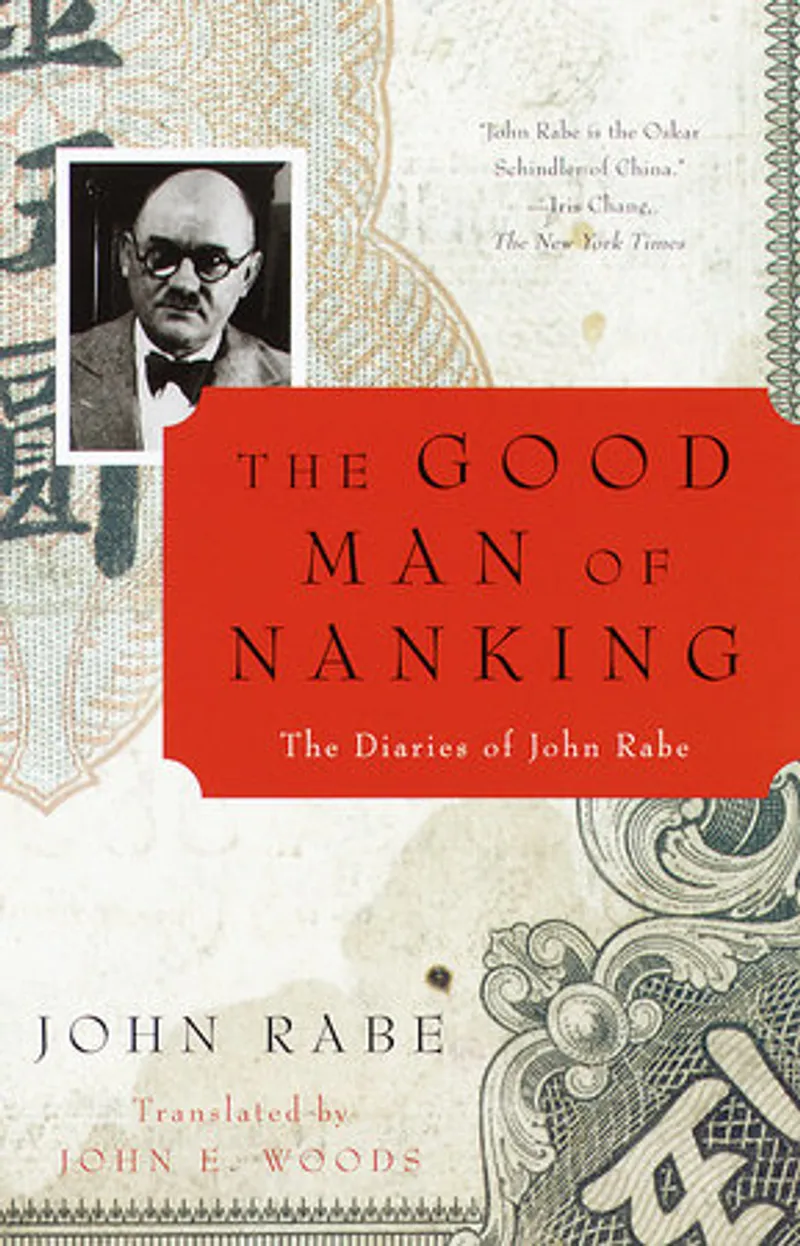
The Good Man of Nanking Author: John RabePage Count: UnknownPublication Date: 2000-PRH John Rabe’s The Good Man of Nanking is not just a book—it is a moral earthquake disguised as a diary. Published posthumously in 2000, this harrowing account pulls back the curtain on one of history’s most grotesque episodes: the 1937 Rape of Nanking, where Japanese imperial forces slaughtered an estimated 300,000 Chinese civilians in a matter of weeks. Yet what makes Rabe’s narrative so extraordinary is not merely the scale of the atrocities he documents, but the quiet, stubborn heroism of a man who defied both his own government and the tide of war to save lives. Rabe, a German businessman who had lived in China for three decades, was no saint by conventional measures. A card-carrying member of the Nazi Party, he admired Hitler and initially saw Japan as a bulwark against communism. But when the Japanese army descended upon Nanking in December 1937, Rabe’s loyalties were tested—and he failed spectacularly. Not in the way one might expect. Instead of turning away, he threw himself into the chaos, organizing the Nanking Safety Zone, a demilitarized area where he and a small team of Westerners sheltered over 200,000 Chinese civilians. At one point, he even housed 600 people in his own home, using his status as a German national to shield them from Japanese soldiers. His diaries reveal a man oscillating between exhaustion and resolve, between despair and an almost absurd faith in the power of decency. What makes The Good Man of Nanking so compelling is Rabe’s unflinching honesty. He doesn’t cast himself as a flawless savior; he admits his fears, his moments of doubt, and even his occasional frustration with the Chinese refugees who depended on him. His prose is blunt, direct—sometimes clumsy—but that only heightens its authenticity. There are no grand speeches, no self-aggrandizing flourishes. Just a man scribbling in the margins of history, trying to keep track of the dead, the missing, and the miracle of those who survived. Rabe’s voice is that of an unlikely witness. As a German in a Japanese-occupied city, he was both an outsider and a protected figure, a paradox that allowed him to move through the city with a fragile immunity. His diaries serve as a bridge between cultures, a rare Western perspective on an event that Japan has long sought to erase from public memory. Yet Rabe’s account is not just a historical document; it’s a meditation on the fragility of human morality. He writes of Japanese officers who seemed almost embarrassed by the brutality of their troops, of Chinese civilians who begged for help only to vanish into the night, of the sheer absurdity of war where the line between heroism and survival blurs into nothingness. The book’s power lies in its immediacy. Rabe’s entries are raw, unfiltered, written in the moment or shortly after. On December 13, 1937, he records: "The Japanese have begun their reign of terror. They’re killing everyone they can get their hands on—men, women, children. They’re raping every woman they find, then killing them. It’s unspeakable." His language is sparse, but the horror is undeniable. There are no metaphors, no euphemisms—just the cold, hard facts of a city drowning in blood. What’s perhaps most striking is Rabe’s relationship with his own government. As a Nazi, he expected some level of protection or at least neutrality from Berlin. Instead, he found indifference. The German embassy in Nanking was evacuated, leaving him to fend for himself. His pleas for intervention went unanswered. In one chilling entry, he laments: "Hitler’s Germany has abandoned us. We are alone." This irony—of a man loyal to a regime built on racial purity and authoritarianism, yet forced to act against the very principles he once espoused—adds a layer of tragic complexity to his story. The Good Man of Nanking is also a testament to the power of individual action in the face of systemic evil. Rabe’s efforts were not enough to stop the massacre, but they saved tens of thousands. His story forces us to confront an uncomfortable truth: heroism is often not about grand gestures, but about stubborn persistence in the face of overwhelming odds. He didn’t overthrow the Japanese army; he outlasted it, one life at a time. John Rabe’s legacy is a complicated one. To some, he is the Oskar Schindler of China—a righteous foreigner who risked everything to do what was right. To others, he remains a figure of controversy, a Nazi who happened to do good. But The Good Man of Nanking transcends such simplistic labels. It is a book about the failure of institutions and the triumph of the human spirit. It is a reminder that even in the darkest corners of history, there are those who refuse to look away. Rabe’s diaries were hidden for decades, buried under the weight of political expediency. Their publication was a act of restitution, a way to honor the voices of the victims and the quiet courage of a man who, for a brief moment, stood against the tide. The Good Man of Nanking is not just a book about the past—it’s a challenge to the present. It asks us: What would we have done? And more importantly, what will we do when the next Rabe is needed? #NankingMassacre #JohnRabe #WWIIHistory #NeverForget #HistoricalHeroes #WarCrimes