Showing Posts From
Tourism cosmopolitan
-
 Camille Dubois
 - 11 Jul, 2025 05:57
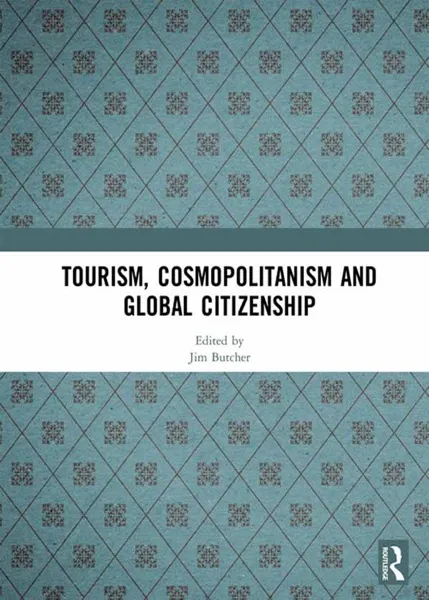
Tourism, Cosmopolitanism and Global Citizenship Book Review and Summary
Tourism, Cosmopolitanism and Global Citizenship Author: Jim ButcherPage Count: UnknownPublication Year: 2019-GB Jim Butcher’s Tourism, Cosmopolitanism and Global Citizenship (2019) is a sharp, incisive critique of the romanticized ideals that often shroud contemporary tourism. Far from being a dry academic treatise, the book is a provocative exploration of how tourism intersects with broader notions of global citizenship, identity, and the politics of belonging. Butcher, a geographer at Canterbury Christ Church University, challenges the reader to see tourism not as a benign force for cultural exchange but as a complex, often exploitative phenomenon that reinforces inequalities under the guise of cosmopolitan virtue. At its core, the book dissects the myth of the "global citizen"—a figure who, in the popular imagination, moves seamlessly across borders, embodying openness, tolerance, and a disdain for parochialism. Butcher dismantles this ideal with a surgeon’s precision, arguing that tourism, far from fostering genuine cosmopolitanism, often serves as a stage for the performance of cultural superiority. The tourist, in this framing, is not a humble seeker of knowledge but a participant in a system that privileges consumption over connection. The "global citizen" becomes, in Butcher’s view, a neoliberal construct that masks the material realities of displacement, commodification, and power imbalances that tourism both relies on and perpetuates. Butcher’s style is both erudite and accessible, blending theoretical frameworks—drawn from postcolonial studies, critical geography, and political theory—with vivid case studies. He examines everything from voluntourism in the Global South to the ethics of cruise ship tourism, exposing the contradictions inherent in these practices. For instance, he highlights how voluntourism often reduces poverty to a spectacle for the benefit of the wealthy, while cruise tourism turns entire cities into stages for transient spectacle, eroding local cultures for the sake of entertainment. His analysis is grounded in a refusal to accept the surface-level narratives of tourism as a force for good, instead interrogating who benefits from these global flows—and who is left behind. One of the book’s most compelling arguments is its challenge to the idea that tourism inherently fosters cosmopolitanism. Butcher argues that while tourism can expose individuals to new cultures, it rarely fosters the deep, reciprocal understanding that cosmopolitanism implies. Instead, it often reinforces stereotypes, exoticizes the "other," and allows tourists to return home with a fleeting sense of enlightenment—without ever truly engaging with the complexities of the places they visit. The global citizen, in this sense, becomes a tourist who mistakes superficial exposure for genuine ethical engagement. Butcher’s prose is clear and unflinching, avoiding the jargon that often bogs down similar works. He writes with a journalist’s eye for the telling anecdote and a scholar’s commitment to rigorous analysis. His critique is not a wholesale dismissal of tourism but a call to recognize its darker undercurrents. He doesn’t advocate for the abandonment of travel but for a more honest reckoning with its consequences. Tourism, in his view, is not inherently virtuous; it is a tool that can be wielded for better or worse, and its moral weight depends entirely on who holds the reins. The book’s strength lies in its refusal to offer easy answers. Butcher doesn’t propose a grand alternative to tourism or global citizenship but instead urges the reader to question the narratives that surround these concepts. He exposes the hypocrisies of an industry that sells itself as a force for good while often perpetuating harm. In doing so, he invites a more critical engagement with the act of travel itself—a call that feels increasingly urgent in an era where tourism is both a global phenomenon and a growing ethical dilemma. Tourism, Cosmopolitanism and Global Citizenship is essential reading for anyone who has ever traveled with the belief that they were contributing to a better world. It’s a book that will make you think twice about that voluntourism trip, that luxury resort stay, or even that Instagram post from a "remote" village. Butcher doesn’t just critique tourism; he challenges the very idea of what it means to be a citizen of the world in an age of inequality and displacement. #TourismMatters #GlobalCitizenship #Cosmopolitanism #CriticalGeography #EthicalTravel #ButcherOnTourism