Showing Posts From
Travel
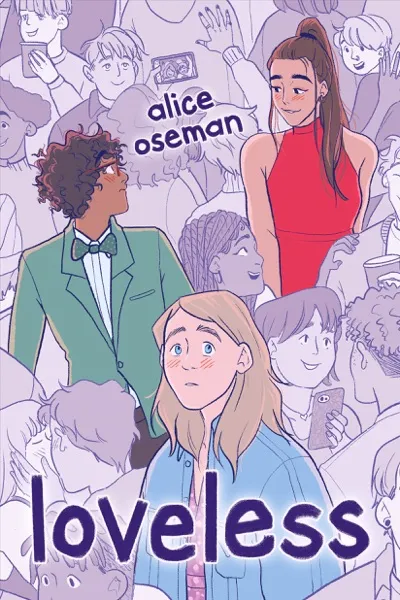

Loveless Author: Alice OsemanPage Count: UnknownPublication Year: 2020-GB Love, Identity, and Belonging: A Powerful Exploration of Asexuality in Loveless Alice Oseman’s Loveless isn’t just a coming-of-age story—it’s a heartfelt, sometimes painful, and ultimately liberating journey through the messy, often confusing landscape of identity, love, and self-acceptance. Published in 2020, this YA novel quickly became a global bestseller, resonating with readers for its raw honesty and unflinching portrayal of asexuality, a topic rarely explored in mainstream literature. At its core, Loveless is about Georgia Warr, a 19-year-old film student who enters her first year at university with two firm convictions: she’s aromantic (feeling no romantic attraction) and asexual (feeling no sexual attraction), and she’s perfectly fine with that. Or so she tells herself. When she arrives at university, however, she finds herself surrounded by the kind of intense romantic and sexual relationships she assumed she’d never crave. Her best friends, Pip and Jason, are in a passionate relationship, and her flatmate, Roo, is navigating a breakup that leaves her questioning her own desires. Georgia, meanwhile, can’t help but feel like an outsider in a world that seems to revolve around love and attraction. Oseman’s genius lies in her ability to weave Georgia’s personal struggles with broader themes of friendship, family, and societal expectations. The novel doesn’t shy away from the awkwardness of Georgia’s journey—her initial denial, her desperate attempts to "fix" herself by dating, and her eventual realization that her asexuality isn’t a problem to be solved but a valid part of her identity. Oseman’s writing is sharp, witty, and deeply empathetic, making Georgia’s frustrations and triumphs feel vividly real. One of the most compelling aspects of Loveless is its exploration of platonic love versus romantic love. Georgia’s relationships with her friends—Pip’s unwavering support, Jason’s quiet understanding, and Roo’s messy, human flaws—highlight how much of our identity is tied to the people we surround ourselves with. Oseman doesn’t romanticize friendship; she portrays it as just as complex, rewarding, and sometimes painful as any other relationship. This nuanced approach makes Loveless more than just a story about asexuality—it’s a story about belonging, about finding your place in a world that often defines you by who you love. Oseman’s prose is both accessible and deeply immersive. Her dialogue crackles with authenticity, and her characters feel like real people, flaws and all. Georgia’s journey isn’t a neat, linear path to self-acceptance; it’s messy, contradictory, and sometimes frustrating, which only makes her eventual breakthrough more satisfying. The novel’s strength lies in its refusal to offer easy answers. Georgia doesn’t magically find "the one" or suddenly discover she’s not asexual. Instead, she learns to embrace the ambiguity of her identity and the people who love her for who she is. What makes Loveless truly special is its ability to educate without feeling like a lecture. Oseman seamlessly integrates discussions about asexuality into the narrative, avoiding didacticism while still providing valuable insights. Georgia’s internal monologue is a masterclass in self-discovery, and her gradual understanding of her own desires—without pressure or judgment—feels both empowering and deeply human. Ultimately, Loveless is a story about learning that love isn’t one-size-fits-all. Whether it’s romantic, platonic, or something in between, love is valid as long as it’s true to who you are. Oseman’s novel is a celebration of identities that don’t fit neatly into boxes, a reminder that being different isn’t a flaw—it’s just part of the beautiful, complicated tapestry of human experience. For anyone who’s ever felt lost in their own skin, Loveless is a beacon of hope. It’s a book that says: You are enough, just as you are. #Loveless #AliceOseman #AsexualRepresentation #YABooks #ComingOfAge #AceRomance Related InsightsCandle and Crow Book Review and Summary The Lightning-Bug and the Lightning: Debunking the Myths of Mark Twain, in His Own Words Book Review and Summary A Madness of Sunshine Book Review and Summary{ "@context": "https://schema.org", "@type": "FAQPage", "mainEntity": [ { "@type": "Question", "name": "What is the main focus of Loveless Book Review and Summary?", "acceptedAnswer": { "@type": "Answer", "text": "Everything you need to know about Loveless with our detailed review." } }, { "@type": "Question", "name": "Who authored the comprehensive guide on Loveless Book Review and Summary?", "acceptedAnswer": { "@type": "Answer", "text": "This detailed article and its insights were carefully researched and authored by Beatriz Costa." } }, { "@type": "Question", "name": "Where can I find more related content about Books?", "acceptedAnswer": { "@type": "Answer", "text": "You can explore more articles, detailed reviews, and similar insights by browsing the Related Insights section at the bottom of this article or visiting our dedicated Books category page." } } ] }

Primera persona del singular Author: 村上春樹Page Count: UnknownPublication Year: 2021-GB Haruki Murakami’s Primera Persona del Singular is a masterclass in introspection, blending the mundane with the surreal in a way that only he can. Published in 2021, this collection of eight short stories feels like a whispered conversation with the reader—intimate, fragmented, and deeply human. Murakami, ever the philosophical bartender, serves up tales that linger like the aftertaste of a well-aged whiskey: smooth, thought-provoking, and impossible to shake. At its core, Primera Persona del Singular explores the quiet revolutions of the self. The stories orbit around identity, memory, and the fragile boundaries between reality and imagination. Murakami’s protagonists—lonely jazz enthusiasts, alienated office workers, and wandering musicians—are all searching, though they may not know it. Whether it’s a man who wakes up to find his shadow missing or a woman whose cat becomes her unwitting confidant, the narratives pulse with the kind of existential curiosity that defines Murakami’s oeuvre. The title itself, a nod to first-person perspective, underscores the book’s focus on the internal monologue, the way we narrate our own lives even as our selves slip through our fingers. Murakami’s style is deceptively simple, like a Zen koan disguised as casual prose. His sentences flow with the effortless rhythm of a cat padding across a tatami mat—unhurried, deliberate, yet charged with hidden tension. There’s a jazz-like improvisation to his storytelling; themes recur like recurring motifs in a Miles Davis solo, subtly shifting each time they appear. The supernatural elements—ghosts, doppelgängers, sudden disappearances—are never fully explained, because in Murakami’s world, the mystery isn’t the point. The point is the way these uncanny moments force his characters (and readers) to confront the unanswerable: Who are we, really? Take the opening story, “Cream,” where a man reflects on his high school days and a girl he once loved. The narrative unfolds like a memory being excavated, layer by layer, with the protagonist piecing together fragments of the past that may or may not be true. The prose is sparse, almost clinical, but the emotions it conveys are raw and aching. It’s a reminder that Murakami’s genius lies not in grand revelations but in the quiet devastation of small, personal truths. Another standout, “Charlie Parker Plays Bossa Nova,” is a surrealist gem about a jazz musician who stumbles upon a record that shouldn’t exist—one that predicts the future. The story is a meditation on art, fate, and the eerie synchronicities that bind us. Murakami’s love for music shines here, as it often does, with jazz serving as a metaphor for life’s improvisational nature. The characters don’t just listen to music; they become it, dissolving into the rhythm of existence. What makes Primera Persona del Singular so compelling is how it refuses to offer closure. The stories end not with answers, but with questions—like the one in “With the Beatles,” where a man receives a mysterious vinyl record that may or may not belong to him. The ambiguity is deliberate, a reflection of life’s inherent uncertainty. Murakami doesn’t provide catharsis; he provides presence. He invites us to sit with the discomfort of not knowing, to embrace the strangeness of being alive. This collection is a testament to Murakami’s ability to find profundity in the ordinary. His characters are everymen (and everywomen) caught in the gears of modernity, yet their struggles feel timeless. They listen to records, drink coffee, walk city streets, and occasionally, the fabric of reality frays just enough to let something extraordinary peek through. It’s a delicate balance—one Murakami maintains with the precision of a tightrope walker. For readers new to Murakami, Primera Persona del Singular is a perfect introduction. For longtime fans, it’s a reunion with an old friend—one who still knows how to surprise. Either way, it’s a book that demands to be read slowly, savored like a rare vintage, and returned to again and again, each time uncovering new layers of meaning. In a world that often feels too loud, too rushed, Murakami’s quiet, insistent voice is a balm. He reminds us that the most profound stories are the ones we tell ourselves when no one else is listening. #Murakami #JapaneseLiterature #ShortStories #ExistentialFiction #Surrealism #BookRecommendation Related InsightsBlack Officer, White Navy Book Review and Summary The Pale House Devil Book Review and Summary Cars on the Road (Disney/Pixar Cars on the Road) Book Review and Summary{ "@context": "https://schema.org", "@type": "FAQPage", "mainEntity": [ { "@type": "Question", "name": "What is the main focus of Primera persona del singular Book Review and Summary?", "acceptedAnswer": { "@type": "Answer", "text": "Everything you need to know about Primera persona del singular with our detailed review." } }, { "@type": "Question", "name": "Who authored the comprehensive guide on Primera persona del singular Book Review and Summary?", "acceptedAnswer": { "@type": "Answer", "text": "This detailed article and its insights were carefully researched and authored by Beatriz Costa." } }, { "@type": "Question", "name": "Where can I find more related content about Books?", "acceptedAnswer": { "@type": "Answer", "text": "You can explore more articles, detailed reviews, and similar insights by browsing the Related Insights section at the bottom of this article or visiting our dedicated Books category page." } } ] }
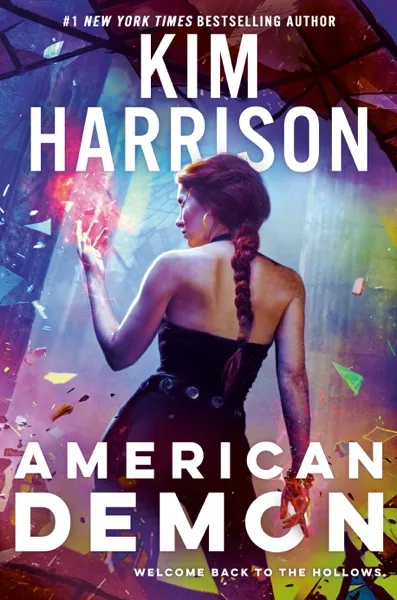
American Demon Author: Kim HarrisonPage Count: UnknownPublication Year: 2020-GB American Demon by Kim Harrison is a masterful blend of dark fantasy, urban horror, and relentless suspense, delivering a story that lingers long after the final page. As part of Harrison’s long-running Hollows series, this installment solidifies her reputation as a modern master of the genre, weaving together supernatural intrigue, razor-sharp wit, and a protagonist whose flaws make her irresistibly compelling. At its core, American Demon explores the theme of identity in a world where monsters and humans collide—sometimes literally. Rachel Morgan, the series’ indefatigable witch-turned-bounty-hunter, finds herself thrust into a conspiracy that blurs the line between myth and reality. The story grapples with the idea of what it means to be human when the supernatural is not just lurking in the shadows but actively shaping the world. Harrison doesn’t just ask whether monsters deserve rights; she forces the reader to confront the terrifying implication that humans might be the true monsters, hiding their own capacity for cruelty behind laws and bureaucracy. Harrison’s prose is as sharp as Rachel’s wit, with a voice that oscillates between sardonic humor and bone-deep tension. The dialogue crackles with the kind of snappy exchanges that have become Harrison’s trademark, but beneath the banter lies a deeper current of dread. The pacing is relentless, with each chapter escalating the stakes, whether it’s a high-speed chase through Cincinnati’s underbelly or a tense confrontation with a demon whose motives are as murky as its form. Harrison excels at creating atmosphere, painting a world where neon signs flicker over alleyways teeming with the supernatural, and where every shadow could hide a threat—or a betrayal. One of the book’s most compelling aspects is its exploration of power and corruption. Rachel, who has spent much of the series fighting to protect her world from those who would exploit it, finds herself questioning whether the systems she’s upholding are any better than the forces she opposes. The political intrigue is as layered as the magic, with alliances shifting like sand and enemies lurking in plain sight. Harrison deftly balances action with introspection, ensuring that the reader is never lulled into complacency. The demonic forces at play are not just threats to be vanquished; they are mirrors reflecting humanity’s own darkness, forcing Rachel—and the reader—to confront uncomfortable truths. Harrison’s world-building is another standout feature. The Hollows universe is richly detailed, with a history that feels lived-in and a magic system that is both inventive and grounded. The supernatural elements are integrated seamlessly into the real world, making the impossible feel plausible. Whether it’s the political machinations of the Inderlander Council or the gritty realities of Rachel’s life as a runner, Harrison creates a world that is as immersive as it is dangerous. Rachel Morgan herself is a protagonist for the ages—a flawed, fierce, and deeply human heroine who stumbles but never truly falls. Her evolution across the series is nothing short of remarkable, and American Demon finds her at a crossroads, forced to make choices that will define not just her future but the future of the world she’s sworn to protect. Harrison’s ability to craft a character who is as relatable as she is extraordinary is a testament to her skill as a storyteller. In American Demon, Kim Harrison has crafted a tale that is as much a meditation on morality as it is a thrilling adventure. It’s a story about the masks we wear, the monsters we create, and the fragile line that separates the two. With its relentless pacing, razor-sharp prose, and a protagonist who feels like a friend in the trenches, this book is a must-read for fans of urban fantasy and dark fiction alike. #KimHarrison #AmericanDemon #HollowsSeries #UrbanFantasy #RachelMorgan #SupernaturalThriller Related InsightsThe 1619 Project Book Review and Summary The City and Its Uncertain Walls Book Review and Summary The Woven Bag Book Review and Summary{ "@context": "https://schema.org", "@type": "FAQPage", "mainEntity": [ { "@type": "Question", "name": "What is the main focus of American Demon Book Review and Summary?", "acceptedAnswer": { "@type": "Answer", "text": "Everything you need to know about American Demon with our detailed review." } }, { "@type": "Question", "name": "Who authored the comprehensive guide on American Demon Book Review and Summary?", "acceptedAnswer": { "@type": "Answer", "text": "This detailed article and its insights were carefully researched and authored by Beatriz Costa." } }, { "@type": "Question", "name": "Where can I find more related content about Books?", "acceptedAnswer": { "@type": "Answer", "text": "You can explore more articles, detailed reviews, and similar insights by browsing the Related Insights section at the bottom of this article or visiting our dedicated Books category page." } } ] }