Showing Posts From
Travelhistory
-
 Zola Ndlovu
 - 12 Sep, 2026 11:11
The Whispering Paths: Tracing Europe's Forgotten Salt Roads, From Alpine Mines to Adriatic Shores
Where the White Gold Carved the Earth To traverse the salt roads of Europe is to walk the veins of a continent that was once powered by the scarcity of sodium. Long before the modern conveniences of supermarkets and global logistics chains, salt was the world’s most precious currency—the "White Gold" that preserved life through harsh winters and fueled the rise of great empires. My journey begins not in a bustling capital, but in the damp, cool silence of the Salzkammergut region of Austria. This is where the story of European wealth truly starts, in the deep subterranean tunnels of Hallstatt, where salt has been extracted for over 7,000 years. Tracing these routes is not merely a historical exercise; it is a lesson in geography and logistics. The paths were narrow, designed for mule trains carrying sacks of salt from the high-altitude mines down toward the rivers and eventually the Adriatic Sea. Today, many of these trails have been reclaimed by nature or paved over by modern highways, but the whispering paths remain for those willing to look closer. When I think of these routes, I think of the sheer grit required to move tons of salt across treacherous Alpine passes. The logistics were brutal, the toll on animal and human life was immense, and the reward was the solidification of regional economies. For the modern traveler, this route offers a rare opportunity to peel back the layers of European identity. As we look toward 2026, traveling these roads requires a keen understanding of local economics, particularly for those of us living a nomadic lifestyle. Navigating the cost of living while uncovering history is the new challenge, and using tools like Numbeo, we can see that while these historic regions offer immense beauty, they also demand strategic financial planning to ensure that the journey remains sustainable for the long haul.Secrets of the Subterranean Labyrinths The mines of Hallstatt and Berchtesgaden are not just tourist attractions; they are the architectural bedrock of the region. As I descended into the tunnels, the temperature dropped significantly, a stark reminder of the environment in which miners spent their entire lives. The engineering feat of these mines, dating back to the Bronze Age, remains a testament to human ingenuity. Salt was mined here using fire-setting techniques and later, more sophisticated hydraulic methods that kept the industry alive through the Middle Ages. When planning your visit, it is vital to reconcile the romanticism of the past with the economic reality of the present. As a digital nomad, you are constantly balancing the desire for discovery with the limitations of your monthly budget. Analyzing the cost of living in countries like Austria or Slovenia, where many of these routes converge, reveals a significant variance in expenditure. Numbeo data provides a clear picture of the fiscal landscape in these regions. For instance, the cost of transit and basic sustenance in the Alpine regions of Austria is higher than in the coastal villages of Croatia, yet the quality of life index in these regions remains among the highest globally. It is this trade-off that we must navigate. If you are planning to spend a month documenting these routes, you need to account for high accommodation costs in the peak season, especially near popular heritage sites. My strategy has always been to balance the "premium" days—those spent in high-cost, high-reward locations like Hallstatt—with extended stays in smaller, less commercialized villages along the salt routes, where the local price of food and public transport drops significantly. Mapping the Logistics of the Ancient Trade Moving salt from the mountains to the Adriatic was a logistical nightmare that forced the creation of sophisticated trade networks. The "Salt Road" was not a single highway but a spiderweb of tracks that bypassed treacherous terrain and managed to find the most stable mountain passes. As salt moved from the Salzkammergut toward the salt pans of Piran and the markets of Venice, it passed through a series of checkpoints and customs houses that eventually evolved into the cities we know today. The transition from the Alpine interior to the Mediterranean coast is a study in contrasts. You move from the cold, damp shadows of the Alps to the sun-drenched salt pans of the Adriatic. In Piran, Slovenia, you can still witness the traditional harvesting of salt using methods that have remained unchanged for centuries. This is the culmination of the journey. Standing in the salt pans, you can almost hear the echoes of the mule trains arriving from the north. However, for the modern nomad, this journey brings its own set of logistical hurdles. In 2026, traveling across borders—even within the Schengen Area—requires more than just a passport. It requires a digital footprint. As you traverse these paths, ensure you have reliable connectivity. Numbeo’s global benchmarks on internet quality indicate that while city hubs offer stellar speeds, the remote mountain passes still face significant "dead zones." Plan your work-sync days carefully; do not assume that a picturesque village will provide the fiber-optic speed necessary for a professional blogger or consultant.Location Avg. Monthly Cost of Living (USD) Transport Rating Digital ConnectivityHallstatt, Austria $2,850 High ModerateSalzburg, Austria $2,600 Very High ExcellentLjubljana, Slovenia $1,900 High HighPiran, Slovenia $2,100 Moderate ModerateVenice, Italy $3,200 Very High HighThis table, compiled using data benchmarks for 2026, highlights the cost-of-living fluctuations for a nomadic traveler. The data illustrates that while the "classic" salt route destinations like Venice and Hallstatt command a premium due to tourism demand, the peripheral towns like Ljubljana offer a more balanced fiscal environment. High transit ratings are consistent throughout the route due to Europe’s extensive rail network, which essentially follows the path of the original salt-mule tracks.The Economic Pulse of Modern Nomadic Travel Living on the road in 2026 demands a level of financial literacy that early salt merchants would have found bewildering. When I began my journey through the salt roads, I realized that the cost of living index was not just a number on a website; it was a reflection of the infrastructure that had been built upon these very routes. A high cost of living in these historic towns often correlates with superior healthcare, efficient public transport, and reliable municipal services—the modern "infrastructure" that replaced the salt trade. Digital nomads often overlook the hidden costs: tax implications, local VAT on short-term rentals, and the varying costs of healthcare across different European nations. If you are staying in the EU, you need to be aware of the "nomad tax" implications that vary significantly from country to country. In 2026, many European nations have refined their visa and tax structures, making it easier for remote workers to stay long-term, but this comes with mandatory registration and tax contributions. Before you settle in a town along the Salt Road to finish your writing, cross-reference your specific location with current data on Numbeo. Look beyond the rent prices. Examine the cost of a fitness club, the price of a cinema ticket, and the local market costs. If you find yourself in a place where the cost of a basic lunch is disproportionately high, it is usually a sign of a tourist-heavy economy, which can be draining on a long-term budget. To maintain the "salt trail" lifestyle, choose base camps that are historical yet functional—cities that retain their character but provide the amenities necessary to sustain a 21st-century professional life.The Silent Echoes and Future Horizons As the sun sets over the Adriatic, reflecting the same salt-crusted horizon that guided the merchants of the 14th century, I am struck by the continuity of human ambition. The paths have changed, the technology of transport has evolved from wooden wagons to high-speed trains, and the currency has shifted from sacks of salt to digital packets of data, yet the impulse to travel, to trade, and to connect remains unchanged. We are all, in our own way, searching for the "White Gold" of our time—whether that is stability, experience, or the pursuit of professional freedom. My final piece of advice for those looking to retrace these whispering paths is to go slowly. The history of the Salt Road is not meant to be consumed in a weekend. It is meant to be felt in the slow climb of a mountain pass, the cool air of a mine, and the sharp, salty breeze of the coast. Use the data available to you to secure your logistics, but do not let the metrics dictate your experience. The true value of this journey lies in the intersection of the past’s endurance and the present’s potential. We live in a golden age of mobility, provided we possess the discipline to manage our resources and the curiosity to look beyond the paved highway. The salt roads are waiting for you, whispering stories of an age when every grain mattered. If you approach them with respect, preparedness, and a keen eye on your professional needs, you will find that these routes offer much more than just a destination; they offer a profound understanding of how we built the modern world, one path at a time. The road is open, the data is clear, and the history is yours to claim. Proceed with purpose, and let the whispers guide you home. #SaltRoads #DigitalNomad #EuropeanHistory #SlowTravel #NomadLife
-
 Cemre Seyyah
 - 07 Jul, 2026 17:53
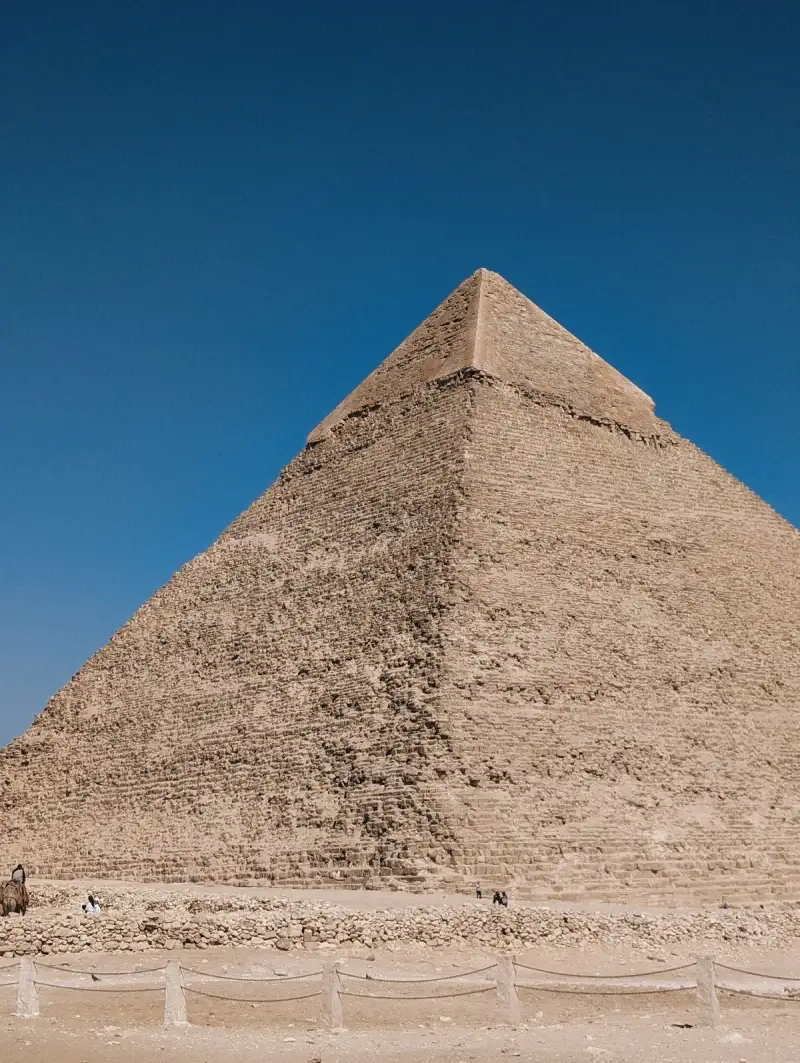
The Immutable Sentinel: Unveiling the Enduring Majesty of Khufu's Great Pyramid
Upon the sun-scorched plains of Giza, where the relentless sands whisper tales of forgotten millennia, stands a monument unlike any other—a stark, immutable sentinel etched against the boundless canvas of the sky. It is a structure born of a will so absolute, an ambition so profound, that it defied the very limits of human endeavor, becoming a beacon of an age shrouded in mystery and unparalleled ingenuity. The Great Pyramid of Giza, a colossal enigma sculpted from the earth itself, does not merely occupy space; it commands time, anchoring our present gaze to the distant horizon of 2600 BC, a silent testament to a civilization that understood eternity not as an abstract concept, but as a tangible architectural imperative. This monolithic edifice, the largest of all Egyptian pyramids and undeniably the most celebrated landmark of the Giza complex, carries the distinction of being the sole survivor among the Seven Wonders of the Ancient World to remain largely intact. It is a singular achievement, a testament to the meticulous planning and unwavering dedication of those who labored under the aegis of Pharaoh Khufu, known to the Greeks as Cheops. For over 3,700 years, this structure held the uncontested title of the world's tallest human-made creation, its apex piercing the heavens as a symbol of divine kingship and an unyielding belief in an afterlife meticulously prepared. Its very existence, a narrative in stone, compels us to ponder the depths of human aspiration and the ephemeral nature of all else. Architectural Grandeur: A Testament in Stone The Great Pyramid, a monumental undertaking spanning approximately 26 years, was constructed around 2600 BC during the Fourth Dynasty of Egypt’s Old Kingdom. Initially, it towered at an astonishing 146.6 meters (481 feet), a height that dwarfed every subsequent human construction for millennia. Today, bereft of its exquisite smooth white limestone casing, which was gradually removed over centuries to be repurposed for other building projects, its height stands at 138.5 meters (454.4 ft). What we behold now is the raw, rugged beauty of its underlying core structure, still capable of instilling awe. The sheer scale of its foundation is equally staggering: each side of its base measures approximately 230.3 meters (755.6 ft) in length. This colossal footprint, combined with its impressive height, yields an estimated volume of roughly 2.6 million cubic meters (92 million cubic feet), a figure that includes a significant internal hillock integrated into its design. The ancient Egyptian architects, working with the royal cubit as their primary unit, crafted a structure with a precise height of 280 royal cubits (146.7 m; 481.4 ft) and a base length of 440 cubits (230.6 m; 756.4 ft). Its slope, a critical element of its iconic silhouette, was meticulously maintained with a seked of 5+1/2 palms, translating to an angle of 51°50'40". Such precision, achieved without the aid of modern surveying tools, speaks volumes about the sophisticated understanding of geometry and engineering possessed by its builders. The construction itself involved the quarrying and placement of an estimated 2.3 million large blocks, collectively weighing an astounding 6 million tonnes. The majority of these stones, primarily local limestone sourced directly from the Giza Plateau, are far from uniform in size or shape, and were only roughly dressed before being set into place. The outer layers, however, were meticulously bound together with a robust mortar, ensuring the stability and longevity of the colossal structure. Beyond the local limestone, specialized materials were imported: shimmering white limestone from the Tura quarries, transported by boat along the Nile, formed the smooth, brilliant casing that once rendered the pyramid a gleaming beacon under the desert sun. For the critical structural elements of the King's Chamber, immense blocks of granite, some weighing up to 80 tonnes, were painstakingly quarried from Aswan, hundreds of kilometers to the south, and floated upstream.While various scientific and alternative hypotheses strive to unravel the exact construction techniques employed—ranging from elaborate ramp systems to internal spiral passages—no definitive consensus has yet been reached. This enduring mystery only deepens the allure of the Great Pyramid, cementing its status as a marvel not just of ancient engineering, but of human problem-solving itself. Khufu's vizier, Hemiunu, is often credited by some scholars as the master architect behind this monumental achievement, a mind capable of orchestrating an endeavor of such unprecedented scale and complexity. A Labyrinth Within: Chambers of the Pharaoh Within the immense stone mass of the Great Pyramid lie three known chambers, each offering a glimpse into the evolving design and profound symbolic significance of the structure. The lowest of these, a chamber cut deep into the bedrock upon which the pyramid was founded, remains unfinished, its rough-hewn surfaces hinting at an altered plan during the construction process. Above ground, nestled within the heart of the pyramid's vast internal structure, are the two principal chambers: the so-called Queen's Chamber and, higher still, the King's Chamber. The King's Chamber, the ultimate destination within this ancient monument, houses a simple yet imposing granite sarcophagus. This austere vessel, carved from the same formidable Aswan granite that characterizes the chamber itself, was designed to contain the earthly remains of Pharaoh Khufu. Intriguingly, unlike the later tombs adorned with elaborate hieroglyphs and vibrant wall paintings, the internal chambers of the Great Pyramid, consistent with the architectural norms for Egyptian tombs of the fourth to late fifth dynasty, are remarkably devoid of inscriptions or decorations. The only exceptions are the occasional work-gang graffiti, simple marks left by the builders, which crucially include the names of Khufu—a silent, yet powerful, attribution. This absence of textual embellishment is particularly notable, given that the pyramid's construction predates the custom of inscribing pyramids with funerary texts by more than two centuries, placing it firmly in an earlier, more reserved artistic and theological tradition. The serene emptiness of these chambers, therefore, is not a sign of incompleteness but rather a reflection of the prevailing mortuary beliefs and artistic conventions of Khufu's time. Beyond the Apex: The Funerary Complex Unveiled The Great Pyramid was never a solitary monument; it was the focal point of an expansive and intricately planned funerary complex, a sacred landscape meticulously designed to serve the pharaoh's journey into the afterlife and sustain his eternal cult. This complex comprised two mortuary temples: one, the pyramid temple, situated immediately adjacent to the eastern face of the pyramid, and another, the valley temple, positioned closer to the life-giving waters of the Nile. These two temples were interconnected by a long, processional causeway, an elevated pathway that likely witnessed countless rituals and ceremonies. Surrounding the central pyramid were smaller, yet significant, structures dedicated to Khufu's immediate family and court. Three smaller pyramids, arrayed to the east of the Great Pyramid, served as the tombs for Khufu's wives, reflecting their elevated status within the royal family. An even smaller "satellite pyramid" was also part of this sacred ensemble, its purpose still pondered by Egyptologists. The landscape was further dotted with extensive cemeteries, containing tombs (mastabas) for the high officials, nobles, and family members who served Khufu during his reign, ensuring their proximity to their divine king in the afterlife. One of the most remarkable discoveries within the complex involves five deeply buried pits, each containing the disassembled components of immense solar barques—ceremonial boats intended to transport the pharaoh's spirit across the heavens with the sun god Ra. These vessels were not merely symbolic; the best-preserved, Khufu's Ship, recovered from its pit, is a masterpiece of ancient shipbuilding, revealing a level of craftsmanship astonishing for its age. This entire sprawling complex, a testament to Khufu's enduring power and the elaborate nature of Old Kingdom funerary beliefs, is a crucial component of the UNESCO World Heritage Site "Memphis and its Necropolis," recognized globally for its outstanding universal value to humanity. The Sacred Purpose: Life Beyond Death The construction of the Great Pyramid, far from being merely an ostentatious display of wealth, was deeply rooted in the core tenets of ancient Egyptian religious belief, serving as the eternal tomb of Pharaoh Khufu. Like other elaborate tombs of the Egyptian elite, it fulfilled four paramount purposes, each intricately linked to the pharaoh's journey into and maintenance of his status in the afterlife. Firstly, it was designed to house the sacred body of the deceased pharaoh and, perhaps more critically, to keep it eternally safe from desecration and the ravages of time. The immense bulk and intricate internal passages were, in essence, an ultimate fortress, safeguarding the vessel through which the pharaoh's ka (life force) and ba (personality) could continue to exist. Secondly, the sheer monumental scale and unparalleled grandeur of the pyramid served as an unequivocal demonstration of the deceased pharaoh's exalted status and that of his royal family. It was an immutable declaration of divine kingship, an architectural assertion of unparalleled power and privilege that resonated across the land. Thirdly, the pyramid ensured the deceased's perpetual place in society, an enduring symbol that reinforced the societal hierarchy even after death. In ancient Egypt, high social status was not merely desirable but was considered an absolutely positive and divinely ordained state. The monumental social inequalities of the era were strikingly symbolized by the gigantic pyramids of kings and queens, towering over the comparatively modest mastaba tombs of officials. Finally, and perhaps most poignantly, the tomb served as a sacred space where offerings could be brought to the deceased, sustaining their spirit in the afterlife. These offerings, ranging from food and drink to precious artifacts, were vital for the pharaoh's continued existence and prosperity in the Field of Reeds. The ancient Egyptian understanding of death was not an end, but a transformation, as eloquently captured in the profound decree: "Make your grave well furnished and prepare thy place in the west. Look, death counts little for us. Look, life is valued highly by us. The house of the dead (the tomb) is for life." This powerful sentiment underscores the pyramid's fundamental role: it was not a monument to death, but a vibrant conduit to eternal life.The precise regulation of funerary architecture, including the allowed dimensions of tombs, was enshrined in royal decrees, reflecting the king's ultimate authority. In the Old Kingdom, the privilege of a pyramid tomb was reserved exclusively for kings and queens, a clear demarcation of their unparalleled divine status. Architectural layout and funeral equipment were also strictly sanctioned and, like access to vital materials and skilled workers, remained entirely at the discretion of the pharaoh, further emphasizing the centralized power structure of the age. Echoes of Khufu: Proving the Builder For centuries, the attribution of the Great Pyramid to Pharaoh Khufu rested largely upon the narratives of classical antiquity's great authors, most notably Herodotus and Diodorus Siculus, whose accounts, though centuries removed from the pyramid's construction, linked the edifice directly to Cheops. However, during the medieval period, as historical memory blurred and new legends arose, other figures were credited with its construction, including biblical characters like Joseph from the Book of Genesis, the mythical king Nimrod, or the legendary Saurid ibn Salhouk, reflecting a fascination with its origins that transcended historical fact. It was not until the intrepid explorations of the 19th century that irrefutable internal evidence began to surface, solidifying the attribution to Khufu. In 1837, the discovery of four previously inaccessible relieving chambers situated above the King's Chamber, accessed through painstaking tunneling, provided a critical breakthrough. The walls of these hidden chambers were adorned with hieroglyphs painted in red ochre—not formal inscriptions, but rather the casual, yet deeply significant, marks left by the work gangs themselves. These "graffiti" included the names of the gangs, often incorporating the pharaoh's name, such as "The gang, The white crown of Khnum-Khufu is powerful." The name of Khufu, spelled out with distinct cartouches, appeared over a dozen times within these chambers, serving as an unambiguous signature of the pyramid's intended owner. Further supporting this, Goyon later discovered similar graffiti on an exterior block from the 4th layer of the pyramid, reinforcing the internal evidence. These inscriptions bear striking resemblance to those found at other sites unequivocally associated with Khufu, such as the alabaster quarry at Hatnub or the harbor at Wadi al-Jarf, and are also present in the pyramids of other pharaohs, establishing a consistent pattern of royal attribution. The twentieth century further cemented Khufu's claim through extensive archaeological excavations of the cemeteries surrounding the pyramid. These burial grounds revealed the tombs of Khufu's closest kin and high-ranking officials, strategically positioned within the complex. The East Field, located south of the causeway, housed members of the immediate family and court, while the West Field contained the tombs of Khufu's wives, children, and grandchildren, as well as significant figures like Hemiunu (the likely architect) and Ankhaf, and even the funerary cache of Hetepheres I, Khufu's revered mother. As the eminent Egyptologist Selim Hassan aptly observed, "From the early dynastic times, it was always the custom for the relatives, friends and courtiers to be buried in the vicinity of the king they had served during life. This was quite in accordance with the Egyptian idea of the Hereafter." The continuous expansion of these cemeteries until the 6th dynasty further underscores the enduring connection between Khufu and his monumental resting place, providing a compelling archaeological argument for his unequivocal ownership. A Cult of Eternity: The Enduring Spirit While the internal chambers of the Great Pyramid remained stark and undecorated, the pyramid complex itself was a vibrant hub of ritual and commemoration. Khufu's two temples, integral to the funerary complex, were lavishly adorned and inscribed, offering a striking contrast to the pyramid's interior. The pyramid temple, situated directly beside the colossal tomb, was specifically dedicated to the Sed festival, an ancient jubilee celebrating a pharaoh's 30th year of rule, intended to rejuvenate his kingship. Surviving scenes within this temple portray Khufu himself, along with officials, priests, and other significant characters, engaged in various vital rituals, reinforcing his divine authority and continuous reign, even in the afterlife. The valley temple, though largely unexcavated to this day, has yielded tantalizing fragments of its original grandeur. Blocks reused by the later pharaoh Amenemhat I depict captivating scenes, including nautical imagery and intriguing personifications of Khufu's royal estates, such as the evocative "Khufu is beautiful." The sustained operation of a dedicated mortuary cult for Khufu, maintained within these very temples for hundreds of years after his passing, serves as powerful historical evidence that he was indeed successfully interred within the Great Pyramid, and that his cult was diligently observed. Further reinforcing this narrative is the presence of the cartouches of Khufu's son and successor, Djedefre, on the blocks that meticulously sealed the boat pits adjacent to the pyramid, indicating his filial responsibility in overseeing his father's funeral rites. Despite these elaborate preparations for eternal peace, the Great Pyramid, like many ancient tombs, was not immune to the passage of time and the covetousness of later generations. It was likely looted as early as the First Intermediate Period, a tumultuous era marked by political instability, and may even have been reused for various purposes thereafter. Arab accounts from the medieval period speak of legendary discoveries within the pyramid, painting vivid pictures of forgotten treasures and ancient mysteries. For instance, the historian Al-Maqrizi (1364–1442) recounts the astounding discovery of three shrouded bodies, a sarcophagus brimming with gold, and even a corpse clad in golden armor, wielding a sword of inestimable value, and bearing a ruby "as large as an egg." While these accounts may be embellished by legend, they underscore the enduring fascination and allure of the Great Pyramid, a structure that has continually sparked the human imagination for millennia. The Great Pyramid of Giza, therefore, is more than just a colossal stone structure. It is a profound architectural statement, an engineering marvel, and a silent narrator of ancient beliefs. It stands as an enduring testament to the human capacity for grand vision and persistent execution, a monument that transcends its original purpose as a tomb to become a symbol of eternity itself. As we gaze upon its weathered form, we are not merely observing an ancient relic, but connecting with a spirit of ambition and faith that shaped one of humanity's most extraordinary achievements, forever binding the sands of Giza to the annals of global wonder.#AncientWonders #EgyptianPyramids #GizaComplex #PharaohKhufu #HistoricalTravel #KhufuPyramid #AncientEgypt #Giza #History #Travel Related Insights'Hallstatt: Where Time Carved Its Name into the Alps and Salt Whispered Eternity' Real Alcázar de Sevilla: Belleza Mudéjar L'Eterna Seduzione della Costa Azzurra: Tra Scogliere di Porfido e Misteri Belle Époque{ "@context": "https://schema.org", "@type": "FAQPage", "mainEntity": [ { "@type": "Question", "name": "What is the main focus of The Immutable Sentinel: Unveiling the Enduring Majesty of Khufu's Great Pyramid?", "acceptedAnswer": { "@type": "Answer", "text": "Journey into the heart of ancient Egypt's most magnificent creation, the Great Pyramid of Giza, a monumental testament to pharaonic power, engineering brilliance, and an enduring mystery that continues to captivate the human spirit." } }, { "@type": "Question", "name": "Who authored the comprehensive guide on The Immutable Sentinel: Unveiling the Enduring Majesty of Khufu's Great Pyramid?", "acceptedAnswer": { "@type": "Answer", "text": "This detailed article and its insights were carefully researched and authored by Cemre Seyyah." } }, { "@type": "Question", "name": "Where can I find more related content about Travel?", "acceptedAnswer": { "@type": "Answer", "text": "You can explore more articles, detailed reviews, and similar insights by browsing the Related Insights section at the bottom of this article or visiting our dedicated Travel category page." } } ] }