Showing Posts From
Unescoheritage
-
 John Explorer
 - 13 Jul, 2026 09:17
Where Earth Breathes Ages: A Deep Dive into Grand Canyon National Park
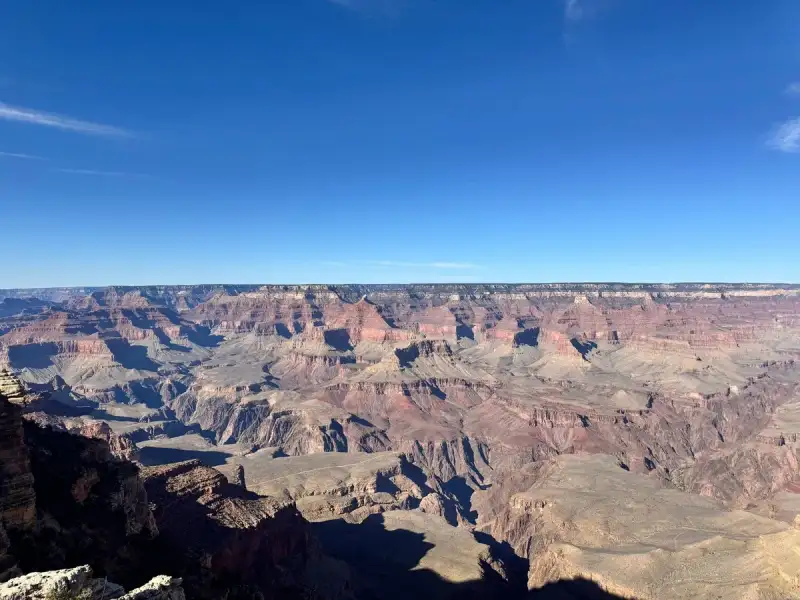
In the vast silence of northwestern Arizona, where the earth has been meticulously carved by the relentless hand of time, lies a chasm that defies easy description: the Grand Canyon. It is not merely a geological formation but a profound statement, an open book of epochs, often hailed as one of the natural Wonders of the World. Sprawling across 1,217,262 acres of unincorporated land within Coconino and Mohave counties, this majestic gorge, sculpted by the mighty Colorado River, forms the heart of Grand Canyon National Park. As the 15th site to earn the prestigious national park designation, it has captivated millions, drawing over 4.9 million recreational visitors in 2024 alone, a testament to its enduring, almost primordial, allure. Its significance extends beyond national borders, having been recognized globally as a UNESCO World Heritage Site in 1979, a fitting tribute to a landscape that celebrated its centenary on February 26, 2019. A Tapestry Woven by Time: Geological Genesis The true marvel of the Grand Canyon lies not just in its breathtaking scale but in the story told by its exposed layers of colorful rocks. This colossal cut through the Colorado Plateau reveals a stratigraphic record stretching back to Precambrian times, offering geologists and casual observers alike an unparalleled glimpse into Earth's ancient past. The canyon's formation is a dramatic saga of uplift and erosion. Millennia ago, the Colorado Plateau began its slow, inexorable rise. As it ascended, the nascent Colorado River system, already charting its course, began to incise itself deeper and deeper into the bedrock, relentlessly carving the intricate network of canyons we see today. It is this combination of sheer size, profound depth, and the brilliantly exposed, multi-hued strata that elevates the Grand Canyon from a mere valley to a geological masterpiece, a living laboratory where the forces of nature have painted history in stone. The river, a sculptor of unimaginable patience and power, continues its work, a constant reminder of the dynamic forces that shaped and continue to shape our planet.The Long Road to Preservation: A Century of Stewardship The story of the Grand Canyon's official protection is as vast and complex as its geological history. While indigenous peoples had revered this land for millennia, it only began to capture the widespread American imagination in the 1880s, spurred by the expansion of railroads and the nascent development of tourism infrastructure. Yet, the path to national park status was anything but direct. One of its most influential champions was President Theodore Roosevelt, whose 1903 visit left him profoundly moved. "The Grand Canyon fills me with awe," he declared, his words echoing through the annals of conservation. "It is beyond comparison—beyond description; absolutely unparalleled throughout the wide world… Let this great wonder of nature remain as it now is. Do nothing to mar its grandeur, sublimity and loveliness. You cannot improve on it. But you can keep it for your children, your children's children, and all who come after you, as the one great sight which every American should see." These impassioned words underscored a deep conviction for preservation, yet even Roosevelt’s formidable influence could not immediately confer national park status upon the Grand Canyon. The legislative struggle began much earlier, in 1882, when then-Senator Benjamin Harrison introduced the first bill to establish Grand Canyon as the United States' third national park, following Yellowstone and Mackinac. His efforts in 1883 and 1886 proved unsuccessful. However, upon his election to the presidency, Harrison managed to establish the Grand Canyon Forest Reserve in 1893, marking an important preliminary step in its formal protection. Roosevelt, picking up the mantle, further solidified its protected status, first creating the Grand Canyon Game Preserve by proclamation on November 28, 1906, and then designating it as the Grand Canyon National Monument on January 11, 1908. Despite these significant actions and Roosevelt's fervent advocacy, subsequent Senate bills aimed at establishing it as a national park faced defeat in 1910 and 1911. It wasn't until February 26, 1919, that President Woodrow Wilson finally signed the Grand Canyon National Park Act (Pub. L. 65–277) into law, securing its permanent protection as a national park. The administration of this newly designated park fell to the National Park Service, which itself had been established just three years prior, in 1916. This triumph was a landmark achievement for the burgeoning conservation movement, embodying a collective will to safeguard natural wonders for future generations. Crucially, its national park status proved instrumental in repelling proposals to dam the Colorado River within its pristine boundaries, though the Glen Canyon Dam would later be constructed upriver, illustrating the continuous vigilance required in environmental stewardship.The park's boundaries and protective measures continued to evolve. In 1932, a second Grand Canyon National Monument was proclaimed to the west, expanding the scope of its preservation. A pivotal moment came in 1975 with the Grand Canyon National Park Enlargement Act, an act of Congress signed on January 3 (Pub. L. 93–620). This legislation integrated the 1932 monument and the Marble Canyon National Monument—established in 1969 and encompassing the Colorado River northeast from the Grand Canyon to Lees Ferry—into the expansive Grand Canyon National Park. Four years later, on October 26, 1979, the international community formally recognized its global significance when UNESCO declared the park a World Heritage Site, solidifying its place among the planet's most treasured natural landscapes. However, the designation did not end the challenges. By 1987, the National Parks Overflights Act highlighted emerging threats, stating that "Noise associated with aircraft overflights at the Grand Canyon National Park is causing a significant adverse effect on the natural quiet and experience of the park and current aircraft operations at the Grand Canyon National Park have raised serious concerns regarding public safety, including concerns regarding the safety of park users." This underscores the ongoing delicate balance between access and preservation. In a modern nod to its iconic status, Grand Canyon National Park was honored with its own coin in 2010 as part of the America the Beautiful Quarters program. On February 26, 2019, the park proudly commemorated a century since its initial designation, reflecting on a hundred years of dedicated protection. Administratively, the park transitioned from the National Park Service's Intermountain Region until 2018, now falling under Region 8, also known as the Lower Colorado Basin, ensuring its continued oversight. The park also faces contemporary threats, as evidenced by the Dragon Bravo Fire on July 9, 2025, which tragically led to the destruction of multiple structures on the North Rim, including the historic Grand Canyon Lodge, burning for over a week concurrently with the White Sage Fire. Such events serve as stark reminders of the ongoing vulnerability of even the most protected natural treasures. Stewards of the Sublime: The Administrators Behind the grandeur of the Grand Canyon lies a legacy of dedicated individuals who have overseen its protection and management. From its initial acting administrators like William Harrison Peters in 1919 and John Roberts White in 1921, to longer-serving superintendents such as Miner Raymond Tillotson (1927–1938) and Harold Child Bryant (1941–1954), each has played a crucial role in safeguarding this immense wilderness. The continuous chain of leadership, from Dewitt L. Raeburn to Ed Keable, who took the helm in April 2020, reflects an unwavering commitment from the National Park Service to maintain the canyon's integrity, manage its complex ecosystems, and provide an unparalleled experience for its millions of visitors, navigating the challenges of both natural forces and human impact over more than a century. Navigating the Immensity: A Geographic Overview The Grand Canyon's geography is defined by its sheer scale and rugged character. Beyond the well-trodden paths of its primary public areas, the vast majority of the park remains incredibly remote and challenging to access, a testament to its wild heart. While some intrepid explorers venture into these backcountry realms via pack trails and rugged roads, the park's primary public face is presented by its two distinct rims: the South Rim and the North Rim. The Accessible South Rim For the overwhelming majority of visitors, the journey to the Grand Canyon leads to the South Rim. Its superior accessibility, primarily via Arizona State Route 64, which enters the park near Tusayan, is a key factor, accounting for a staggering 90% of the park's total visitation. This ease of access ensures that countless individuals can experience the canyon's grandeur firsthand. The park headquarters are strategically located at Grand Canyon Village, a hub of activity and services situated conveniently near the South Entrance and offering proximity to some of the most popular and iconic viewpoints. From these vantage points, visitors are treated to expansive, sweeping vistas of the canyon's immense scale and its intricate geological features, a truly humbling experience that etches itself into memory.While the provided data emphasizes the South Rim's prominence, the existence of the North Rim, though less visited, implies a distinct character—likely more remote, higher in elevation, and offering different perspectives on the canyon's vastness. The contrast between these two primary public areas further highlights the diverse experiences the Grand Canyon offers, from readily accessible panoramas to more secluded, wilderness encounters for those willing to venture deeper. The sheer magnitude of the canyon, and its complex network of tributary canyons, means that even after decades of exploration and preservation, it retains an air of mystery and an endless capacity to inspire awe. The Grand Canyon National Park stands as a monumental achievement, both of nature's raw power and humanity's collective will to protect it. From its ancient Precambrian foundations to its hard-won national park status, and through the continuous efforts of its many stewards, this site remains a beacon for conservation. It is a place where one can truly feel the pulse of the earth, witness the artistry of geological time, and understand the profound importance of safeguarding such unparalleled natural heritage for every generation yet to come. It is more than a destination; it is an enduring journey into the heart of our planet's magnificence.#GrandCanyon #NationalPark #ArizonaTravel #UNESCOHeritage #GeologicalWonder