Showing Posts From
Vikings
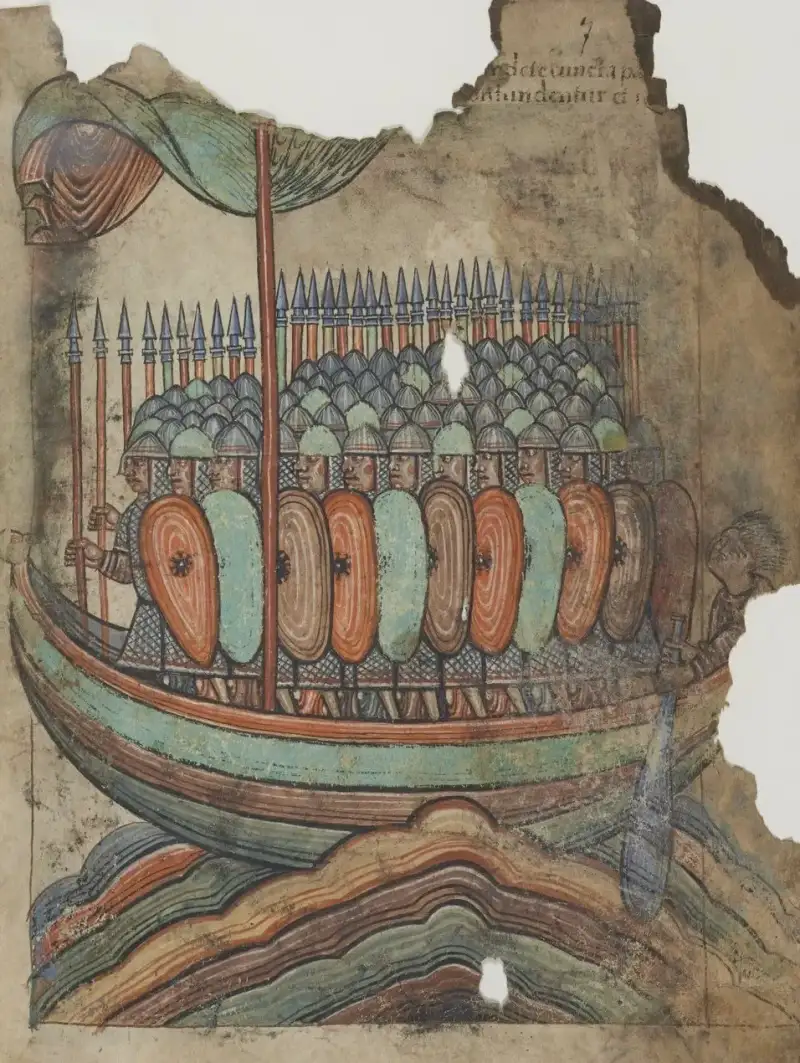

The biting chill of the North Sea wind howled like a choir of vengeful spirits, tearing at the heavy, woven wool sails of the longship as it cut mercilessly through the slate-grey waters. To the devout monks of Lindisfarne, the sea had always been a steadfast barrier, a vast, watery moat of God’s own creation protecting their sacred sanctuary from the chaos of the mainland. They did not know—could not have possibly known—that for the hardened men of the North, the sea was not a wall, but a grand, open highway. When the morning mist finally parted on that fateful, blood-soaked morning in 793 AD, it revealed not the comforting, golden light of dawn, but the terrifying, predatory silhouettes of shallow-drafted vessels. Their prows were carved into the snarling, aggressive visages of dragons and sea serpents, designed to frighten the land spirits of their victims. The Viking Age had officially arrived, heralded not by diplomats or royal decrees, but by the clash of cold steel, the terrifying roar of the berserker, and the crimson staining of holy ground. #AncientHistory #VikingAge I am Mark Dinn, and in my decades of weaving the intricate, often brutal threads of historical fiction, I have found very few tapestries as blood-soaked, culturally complex, and utterly captivating as that of the Norsemen. We universally call them "Vikings," a term that originally denoted a specific activity—fara í víking, going on an expedition or raid—rather than an ethnic or national identity. Yet, over the centuries, the word has become entirely synonymous with horned helmets (a complete Victorian theatrical fabrication), mindless savagery, and an unquenchable, animalistic thirst for plunder. The truth, as is always the case when one dares to peel back the heavy layers of myth and propaganda, is far more intricate, deeply dramatic, and endlessly fascinating. These were not merely unwashed barbarians hammering at the fragile gates of civilization; they were the supreme maritime navigators of their age, exceptionally shrewd merchants, intrepid global explorers, and pragmatic politicians who permanently reshaped the very map of Europe. Let us journey back, far beyond the embellished sagas and the Hollywood screens, to uncover the true, breathing Norse warriors behind the legends. #HistoricalFiction #NorseMythology #Vikings The Crucible of the North: Forging a Warrior Culture To truly understand the Viking, one must first understand the harsh, unforgiving forge in which he was made. The Scandinavian homeland—comprising modern-day Norway, Sweden, and Denmark—was a realm of stark, breathtaking natural beauty, but also of uncompromising environmental hostility. It was a land where winter held an iron dominion for much of the year, where the soil was often thin, acidic, and rocky, and where towering mountains plunged precipitously into deep, dark fjords. Survival here was a daily, exhaustive battle against the elements, breeding a people who were inherently resilient, fiercely resourceful, and intimately tied to the violent rhythms of nature. #Scandinavia #NordicHistory The Pressures that Broke the Ice As the late 8th century drew to a close, a volatile confluence of socioeconomic and environmental pressures began to build within this icy crucible. The situation was a powder keg waiting for a spark, driven by several key factors:Climatic Warming and Overpopulation: The region experienced a period of relative warming, which, paradoxically, led to a population boom. More mouths to feed meant less arable land to go around in a geography already starved for farming space. The Law of Primogeniture: The rigid cultural practice where the eldest son inherits the entire family estate left countless younger sons entirely disenfranchised, landless, and incredibly hungry for both material wealth and societal status. Political Consolidation: Ambitious chieftains and emerging petty kings began forcibly consolidating their localized power into larger realms, driving political dissidents, independent freemen, and defeated rivals out of their ancestral homes.Faced with a stark lack of opportunity at home, these desperate, ambitious men looked to the misty horizon. They possessed a martial culture that prized physical bravery above all other virtues, and they possessed the technological marvel that would make their wildest ambitions a reality: the longship. The combination was highly volatile. The resulting explosion across Europe was inevitable. #VikingHistory #MedievalEurope Masters of the Waves: The Engineering Miracle of the Longship If the Viking Age was a sudden, violent, earth-shattering storm, the longship was the lightning bolt that struck first. It is nearly impossible to overstate the absolute technological superiority of these vessels in the context of the early Middle Ages. While the rest of Christian Europe was painfully constructing heavy, lumbering cogs that required deep-water ports and highly favorable winds just to move, the Norse shipwrights were crafting absolute masterpieces of marine engineering. #NauticalHistory #Shipbuilding The secret of their dominance lay in their revolutionary construction methods. Built using the overlapping clinker method—where radially split oak planks were meticulously riveted together with iron and caulked with tarred animal hair or wool—the longships were incredibly flexible. They didn't stubbornly fight the massive waves of the ocean; they rode them, bending and flexing with the fury of the water like a living serpent. This flexibility made them incredibly fast, phenomenally seaworthy, and capable of crossing the treacherous, storm-tossed open waters of the North Atlantic. The Tactical Advantage of the Shallow Draft But their true, terrifying genius lay in their specific design geometry. They were perfectly symmetrical, allowing them to reverse direction instantly without the cumbersome need to turn the entire vessel around—a massive tactical advantage in the narrow confines of a river or during a hasty, contested retreat. Most importantly, they had an astonishingly shallow draft. A massive warship carrying fifty fully armed, mail-clad warriors could float in less than a meter of water. This specific engineering trait meant the Vikings absolutely did not need deep-water harbors to launch an invasion. They could navigate far up shallow, inland rivers, completely bypassing coastal defenses, striking at the soft, undefended underbelly of Europe. They could beach their ships directly on the sand or riverbank before their victims even fully realized they were under attack. The longship was, without hyperbole, the ultimate stealth bomber and amphibious assault craft of the medieval world. #VikingShips #NavalWarfare Lindisfarne: The Shattering of the Christian World "Never before has such terror appeared in Britain as we have now suffered from a pagan race," lamented the influential Northumbrian scholar Alcuin of York in a letter to the King. The year was 793, and the target was the Holy Island of Lindisfarne, the very cradle and beating heart of Christianity in northern England. #Lindisfarne #AngloSaxon The monks of Lindisfarne were incredibly wealthy, and far more importantly to the raiders, they were entirely defenseless. To the devout Christian mindset of the 8th century, a monastery was an absolute sanctuary, protected by the invisible wrath of God and the respect of civilized men. To the pragmatic, opportunistic Norse mindset, a monastery was simply an undefended treasure house, packed to the rafters with solid gold chalices, silver reliquaries, and jeweled gospel books, guarded only by soft men whose strange religion expressly forbade them to raise a sword in self-defense. It was an irresistible, highly logical target. The raid on Lindisfarne was a psychological earthquake that fractured the medieval psyche. The Norsemen arrived unannounced, slaughtering the monks where they stood, drowning some in the freezing sea, and dragging others away in iron chains to be sold as slaves in foreign markets. They stripped the gilded altars bare and trampled the holy, ancient relics into the mud. When news of the atrocity spread across the continent, it was met with absolute, paralyzing horror. How could an omnipotent God allow dirty pagans to desecrate His holiest sites? The terrified answer, many clerics concluded, was that the Vikings were a divine, apocalyptic punishment for the mounting sins of the Christian world. This horrific raid marked the official, bloody commencement of the Viking Age, initiating three centuries of relentless terror, extortionate tribute, and permanent cultural transformation. #Christianity #VikingRaids The Warrior Ethos: Honor, Iron, and the Halls of Valhalla What specific internal fire drove a man to leave his family, cross a raging, unpredictable ocean in an open wooden boat, and willingly throw himself into the meat-grinder of a shield wall? The answer lies in the deeply ingrained, unyielding warrior ethos of the Norse people, an ethos intrinsically and permanently linked to their fatalistic cosmology and their demanding gods. #Valhalla #Odin The Norse fully believed in a pantheon of deeply flawed, violently passionate, and immensely powerful deities. Odin, the All-Father, was not merely a benevolent god of wisdom, but a terrifying god of war, bloody frenzy, and death. Thor, the mighty thunderer, was the fierce protector of mankind, endlessly wielding his crushing hammer Mjolnir against the chaotic forces of the giants. To truly worship these gods was to emulate their violence and their bravery. The Unbreakable Threads of Fate Central to their entire belief system was the absolute concept of Fate, known as Wyrd. A man's time of death was spun by the mystical Norns before he was even born into the world. Nothing he did, no amount of cowardice or caution, could change the specific day he was destined to die. Therefore, the only thing a man could truly control was how he died, and the lasting reputation he left behind in the songs of the skalds. The ultimate, overriding goal of a Norse warrior—a true Drengr—was to fight with unparalleled bravery and fall in the heat of battle, his sword firmly in hand. Only then would he be personally chosen by the terrifying Valkyries to ascend to Valhalla, Odin's great hall of the slain, where he would feast on boar and fight his brothers for all eternity until the apocalyptic end of the world at Ragnarok. This fatalistic, dark worldview created warriors completely and utterly devoid of the paralyzing fear of death. To retreat from a pitched battle was not just considered cowardly; it was a profound denial of fate and a direct, unforgivable insult to the gods themselves. This psychological armor made the Vikings terrifying, relentless opponents. Among their ranks were the legendary Berserkers, elite shock troops who worshipped Odin and fought in a trance-like, animalistic fury. They purportedly bit the rims of their wooden shields, howled like wolves, and ignored grievous wounds, entirely convinced they were temporarily impervious to iron and fire. While the exact historical reality of the berserker state is still fiercely debated by modern historians—some attributing it to psychological conditioning, others to the ingestion of hallucinogenic mushrooms—the sheer, unbridled ferocity of the Norse infantry charge was undisputed by anyone who survived it. #Berserker #NorseMyth #VikingWeapons The Silk Road of the North: Traders, Explorers, and the Varangian Guard If we paint the Vikings solely in the crimson blood of their victims, we miss half the historical picture. The exact same longships that brought terrifying raiders to the misty coasts of France and England also carried shrewd merchants to the very edges of the known, civilized world. The Norse were consummate, pragmatic opportunists; if a coastal town was heavily fortified and well-defended, they traded silver for goods; if it was weak and unguarded, they drew their axes and raided. Often, they engaged in both activities on the very same voyage. #VikingTrade #MedievalCommerce Their economic trade networks were staggeringly vast and incredibly complex. While the Danes and Norwegians focused their maritime efforts largely on the west—battering the shores of Britain, Ireland, and Francia—the Swedes, known to history as the Rus, turned their dragon prows eastward. Navigating the treacherous, winding river systems of Eastern Europe, they established permanent fortified trading posts that would eventually grow into the massive, powerful city-states of Novgorod and Kyiv, literally laying the foundational political and genetic roots of modern Russia, Belarus, and Ukraine. The Lure of the East The Rus dragged their ships overland to travel down the Volga and the Dnieper rivers, eventually reaching the warm waters of the Caspian and Black Seas. They traded highly prized northern goods: dense furs, golden amber, carved walrus ivory, and—most crucially and brutally—tens of thousands of Slavic slaves. In exchange, they received the fabulous, unimaginable wealth of the Islamic Caliphates and the ancient Byzantine Empire. Millions of silver dirhams minted in Baghdad and Damascus have been found buried in massive Swedish hoards, a silent, gleaming testament to this sprawling, intercontinental economic web. In Constantinople, the glittering capital of the Byzantine Empire, the Norsemen encountered a civilization of wealth and political intrigue they could hardly comprehend. The Byzantine Emperors, recognizing the fierce, unyielding loyalty and terrifying martial prowess of these towering northern giants, formed the Varangian Guard. This elite, highly paid unit of axe-wielding bodyguards served directly under the Emperor, fighting in brutal campaigns across the Mediterranean, from Sicily to Syria, and returning to the snowy fjords of Scandinavia laden with gold, exotic spices, and shimmering silks. The incredible story of Harald Hardrada, a Norwegian prince who spent years commanding the Varangian Guard before returning north to violently claim the throne of Norway, remains one of the most epic, sweeping sagas of the entire era. #VarangianGuard #ByzantineEmpire #Constantinople From Raiding to Conquest: The Great Heathen Army and the Danelaw For decades, Viking raids followed a highly predictable, seasonal pattern: violent hit-and-run strikes during the warm summer months, followed by a swift return to Scandinavia before the deadly autumn storms churned the North Sea. But in the pivotal year of 865 AD, everything fundamentally changed. A massive, unprecedented coalition of Norse warriors, which the terrified writers of the Anglo-Saxon Chronicle dubbed the micel heathen here—the Great Heathen Army—landed on the shores of East Anglia. This was no longer a simple raid for silver; this was a coordinated, full-scale invasion of a nation. #GreatHeathenArmy #Invasion Legend dictates that this massive army was jointly led by the vengeful sons of the legendary hero Ragnar Lothbrok—Ivar the Boneless, Halfdan, and Ubba—seeking bloody retribution for their father's execution in a pit of venomous snakes by the arrogant King Aella of Northumbria. Regardless of the mythological embellishments added by later poets, the historical reality is that this highly organized army carved a bloody, unstoppable swath through the politically fragmented, squabbling kingdoms of Anglo-Saxon England. The Tactics of Total War They employed brilliant, highly adaptive strategic warfare. They captured local horses to move their infantry rapidly across the countryside, outmaneuvering the slower English armies. They fortified overwintering camps on strategic river islands, allowing them to maintain their military presence year-round rather than retreating. Kingdom after kingdom fell to the Norse axes. Proud Northumbria collapsed in a bloody coup, East Anglia was brutally conquered, and the powerful kingdom of Mercia was brought entirely to its knees. Only the southern kingdom of Wessex, under the stubborn, brilliant leadership of King Alfred the Great, managed to stem the relentless tide through a combination of guerrilla warfare and military reorganization. The resulting, uneasy peace treaty physically divided England, creating the Danelaw—a vast swathe of northern and eastern England where Danish laws, customs, and language held total sway. The Vikings had officially transitioned; they were no longer just raiders stealing wealth; they were settlers, land-owning farmers, and political rulers. They established the fortified city of Jorvik (modern York) as a thriving, multicultural hub of international trade, leaving an indelible, permanent Norse imprint on the culture, laws, and genetics of the British Isles. #Danelaw #AlfredTheGreat #Jorvik The Unsung Heroes: Shieldmaidens and the Matriarchs of the North The popular, modern image of the Viking Age is overwhelmingly, almost exclusively male, dominated by bearded men swinging broad axes. Yet, the complex society that produced these famous warriors was remarkably nuanced regarding gender roles and expectations. While the Norse world was undeniably patriarchal, women possessed legal rights, social agency, and economic power that were almost completely unheard of in the heavily subjugated female populations of the rest of medieval Christian Europe. #WomenInHistory #VikingWomen A free Norse woman could legally own property in her own name, officially request a divorce if her husband displeased her or failed to provide, and reclaim her full dowry if the marriage failed. When the men went "a-viking" for months or years on end, or engaged in long-distance trading, the women were left in absolute, unquestioned command of the sprawling farms and estates. They managed the complex finances, directed the labor of the thralls (slaves), and ensured the harvests were brought in before the snows fell. The ultimate symbol of a Norse woman's profound authority was not a weapon, but the heavy set of iron keys she wore proudly suspended from her ornate bronze brooches. The Reality of the Warrior Women But what of the legendary Shieldmaidens—the skjaldmær? The ancient sagas are utterly replete with heroic tales of fierce warrior women like Lagertha, Hervor, and Brynhildr, who fought fiercely in the bloody shield wall alongside the men, commanding fleets and armies. For centuries, traditional male historians dismissively categorized these stories as mere mythological archetypes or romantic fantasies. However, the historical paradigm shifted dramatically and permanently in 2017 with the advanced genomic analysis of a famous 10th-century warrior grave discovered in Birka, Sweden. The grave, packed to the brim with an array of deadly, high-quality weapons, sacrificed horses, and the tactical gaming pieces of a high-ranking military officer, had always been confidently assumed to belong to a male chieftain. The modern DNA results were absolute and conclusive: the esteemed, highly decorated warrior was biologically female. While it is highly unlikely that women formed a massive portion of the rank-and-file fighting forces, the physical evidence strongly suggests that exceptional, driven women did indeed take up the sword, proving definitively that the fiercely independent Viking spirit was never confined by gender. #Shieldmaiden #BirkaWarrior #Lagertha The Siege of Paris: Extortion on a Royal, Imperial Scale The soaring ambition of the Norsemen was never limited to the foggy shores of Britain. The politically fractured Carolingian Empire, the wealthy remnants of Charlemagne's vast European realm, presented an incredibly lucrative, tantalizing target. The broad, slow-moving rivers of Francia—the Seine, the Loire, the Garonne—quickly became heavily trafficked highways for massive Viking fleets seeking plunder and political leverage. #Francia #SiegeOfParis In the spring of 845 AD, a massive, terrifying fleet of 120 longships, commanded by a ruthless chieftain named Reginherus (whom many historians conflate with the legendary Ragnar Lothbrok himself), sailed aggressively up the Seine and laid direct siege to Paris, the jewel of the empire. The Frankish King Charles the Bald frantically assembled an army to defend the city, but the Vikings employed devastating psychological warfare. In full view of the terrified Frankish troops stationed on the riverbanks, the Vikings brutally executed 111 prisoners by hanging them from trees in a mass sacrifice honoring Odin. The Frankish army, horrified and demoralized by the sheer brutality, fled in terror without striking a blow, and the Vikings thoroughly sacked the city of Paris. The Birth of the Danegeld and the Normans To save his burning capital, Charles the Bald resorted to a desperate political tactic that would become disastrously common across Europe: he paid the Danegeld. He handed over an astonishing 7,000 pounds of pure silver to convince the Vikings to lift the siege and leave. It worked, but only temporarily. Paying a Viking to leave only ensures that he, or his heavily armed cousins, will inevitably return the moment the silver runs out. The Norsemen quickly learned that strategic extortion was often far more profitable—and far less physically dangerous—than outright, bloody combat. Decades later, the Vikings returned in force, and the geopolitical situation culminated in the early 10th century when a massively powerful chieftain named Rollo laid heavy siege to the city of Chartres. Recognizing that the Norsemen could not be permanently defeated by military force alone, the Frankish King Charles the Simple made a brilliant, enduring political maneuver. In 911 AD, he offered Rollo a vast, wealthy tract of land in northern France, provided Rollo convert to Christianity, swear fealty, and aggressively defend the coast against all other incoming Viking raiders. Rollo pragmatically accepted the deal. The land became forever known as Normandy (the land of the Northmen), and Rollo's highly adaptable descendants—the Normans—would eventually cross the channel and conquer all of England in 1066. #Normandy #Rollo #MedievalFrance Sailing the Edge of the World: Ice, Green Lands, and Vinland The exact same socio-economic pressures that drove the Vikings south into Europe and east into Russia also drove them west, directly into the uncharted, freezing, and utterly terrifying void of the open North Atlantic. They were unparalleled, instinctive navigators, relying not on magnetic compasses, but on their deep, generational understanding of the sun's position, the stars, the shifting ocean currents, the color of the water, and the flight patterns of seabirds to guide their fragile wooden longships across the vast, open ocean. #Exploration #NorthAtlantic In the late 9th century, intrepid Norse explorers discovered Iceland, a volcanic, geothermally active island of stark, otherworldly beauty. A massive migration rapidly followed, as fiercely independent chieftains, fleeing the increasingly autocratic and taxing rule of King Harald Fairhair of Norway, sought a new, unclaimed land where they could govern themselves entirely free of royal interference. They established the Althing, one of the world's absolute oldest surviving democratic parliaments, creating a unique, functioning republic without a king. Reaching the New World But the western horizon always beckoned to the most restless souls. In 982 AD, a notoriously fiery-tempered man named Erik the Red was legally exiled from Iceland for committing multiple murders. With nowhere else to go, he sailed further west into the ice flows and discovered a massive, glacially capped landmass. With a modern marketer’s distinct flair for branding, he deliberately named it "Greenland" to attract eager settlers from overcrowded Iceland. The most astonishing, world-changing chapter of Norse exploration, however, belongs to Erik's restless son, Leif Erikson. Around the pivotal year 1000 AD—a staggering five full centuries before Christopher Columbus was even born—Leif sailed further west from the settlements of Greenland, making historical landfall on the rugged coast of North America. He called this bountiful new territory Vinland (Land of Wine), due to the abundance of wild grapes and fertile soil he found there. The sagas describing this incredible trans-Atlantic journey were long dismissed by European scholars as mere mythological tall tales, right up until the 1960s, when archaeologists finally uncovered the physical remains of a Norse settlement at L'Anse aux Meadows in Newfoundland, Canada. The undeniable physical evidence of iron smithing and Norse architecture proved definitively that the Vikings were the very first Europeans to set foot in the Americas, pushing the absolute boundaries of the known, civilized world to their absolute limits. #Vinland #LeifErikson #LAnseAuxMeadows #Discovery The Twilight of the Gods: 1066 and the End of an Era No storm, no matter how violent or world-altering, lasts forever. The Viking Age, which had raged unabated across the globe for nearly three bloody centuries, eventually began to inevitably subside. The historical reasons for this decline were complex, interconnected, and manifold. Firstly, the Scandinavian homelands themselves fundamentally changed. The once-fractured kingdoms became centralized and politically stable under powerful Christian kings, dramatically reducing the number of exiled, landless chieftains desperately seeking fortune abroad. Secondly, European military defenses vastly improved; kings ordered the construction of heavily fortified towns (burhs), built bridges to block river access, and maintained professional standing armies, making the business of raiding significantly more dangerous and far less profitable. #1066 #VikingEnd The Power of the Cross Most importantly, however, the Norsemen were slowly, inexorably assimilated into the very Christian cultures they had once terrorized. The ultimate, victorious weapon against the Viking was not the broadsword or the castle wall, but the cross. The gradual, often forceful Christianization of Scandinavia fundamentally and permanently altered the Norse worldview. The glorious promise of fighting in Valhalla was violently replaced by the terrifying threat of burning in Hell; the ruthless warrior ethos was slowly tempered by the Christian doctrines of peace and sin. Scandinavian Kings quickly began to realize that the organized Church offered a massively powerful political tool for centralizing absolute authority, collecting taxes, and legitimizing their permanent rule through the concept of divine right. The definitive, bloody end of the Viking Age is traditionally pegged by historians to the momentous year 1066. Harald Hardrada, the towering King of Norway and the last great Viking warlord of the old breed, launched a massive, ambitious invasion of England, seeking to violently claim the empty throne. He met the defending English King Harold Godwinson at the infamous Battle of Stamford Bridge in Yorkshire. In a brutal, exhausting, hand-to-hand conflict that lasted all day, the Norse army was completely annihilated. Hardrada himself, the giant who had survived wars in Byzantium and Sicily, fell dead with an English arrow violently piercing his throat. The terrifying Viking threat to England was finally, permanently extinguished. Ironically, just three short weeks later, that same victorious Harold Godwinson would be utterly defeated and killed at the Battle of Hastings by William the Conqueror—the Duke of Normandy, and a direct, blood descendant of the Viking chieftain Rollo. The Norsemen had not truly been defeated by history; they had simply evolved to master it. #StamfordBridge #Hastings #WilliamTheConqueror Conclusion: The Enduring Legacy of the North Today, the sleek dragon ships no longer prowl the misty coasts of Europe, and the bloody altars of Odin have long since gone cold and silent under the earth. Yet, the profound, inescapable legacy of the Vikings is woven inextricably into the very fabric of the modern world. #Legacy #ModernHistory We speak their ancient words daily without realizing it. The English language is heavily, permanently peppered with Old Norse terminology—foundational words like sky, knife, window, husband, anger, trust, and even the days of the week we structure our lives around (Thursday is Thor's day, Wednesday is Odin/Woden's day, Friday is Freya's day). They established trading hubs that grew into massive cities that thrive to this very day, from the pubs of Dublin to the golden domes of Kyiv. Their unparalleled innovations in shipbuilding and oceanic navigation directly laid the necessary technical groundwork for the later Age of Global Exploration. More than the physical artifacts and the linguistic remnants, the Vikings endure fiercely in our collective, global imagination. They represent a primal, untamed human spirit, a ferocious, uncompromising independence, and a fearless, bold confrontation with the vast unknown. In my own daily work as an author of historical fiction, I find myself continually, obsessively drawn back to the mist-shrouded, icy fjords and the terrifying, blood-soaked shield walls. I return to them because the raw human drama, the massive stakes, and the sheer scale of the Viking Age are utterly unparalleled in human history. They were men and women of immense, beautiful contradictions: they were savage, remorseless killers who composed breathtaking, intricate poetry; they were ruthless, greedy extortionists who crafted exquisite, delicate jewelry; they were fierce pagan warriors who ultimately shaped the geographic and political destiny of Christian Europe. The story of the Viking raids is not merely a depressing tale of death and destruction. It is the epic, sweeping story of a dynamic, restless, brilliant people bursting forth from the ice, driven by sheer necessity, burning ambition, and a fatalistic courage, to permanently carve their names into the very bedrock of human history. And as long as the north wind blows cold and the grey waves crash violently against the shore, the legends of the true Norse warriors will never be forgotten. #MarkDinn #HistoryWriter #EpicHistory #NorseLegacy Related InsightsThe Rosetta Stone: Breaking the Silence of Ancient Egypt The Great Pyramid of Giza: A Timeless Monument to Human Ingenuity The Whispering Stones of Chichen Itza: Echoes of the Maya{ "@context": "https://schema.org", "@type": "FAQPage", "mainEntity": [ { "@type": "Question", "name": "What is the main focus of Viking Raids: The True Norse Warriors Behind the Legends?", "acceptedAnswer": { "@type": "Answer", "text": "A dramatic deep dive into Viking Raids: The True Norse Warriors Behind the Legends. Mark Dinn explores the untold history, drama, and legacy of this fascinating subject." } }, { "@type": "Question", "name": "Who authored the comprehensive guide on Viking Raids: The True Norse Warriors Behind the Legends?", "acceptedAnswer": { "@type": "Answer", "text": "This detailed article and its insights were carefully researched and authored by Mark Dinn." } }, { "@type": "Question", "name": "Where can I find more related content about History?", "acceptedAnswer": { "@type": "Answer", "text": "You can explore more articles, detailed reviews, and similar insights by browsing the Related Insights section at the bottom of this article or visiting our dedicated History category page." } } ] }