Showing Posts From
We need to talk abou
![We Need to Talk About Kevin by Shriver, Lionel. [Paperback] Book Review and Summary](/images/books/we-need-to-talk-about-kevin-by-shriver-lionel-paperback.webp)
- 20 Jan, 2026 17:38
We Need to Talk About Kevin by Shriver, Lionel. [Paperback] Book Review and Summary
We Need to Talk About Kevin Author: Lionel ShriverPage Count: UnknownPublication Date: 2003-PRH In "We Need to Talk About Kevin," Lionel Shriver delivers a haunting and thought-provoking exploration of the darkest corners of human nature, delving into the complexities of motherhood, violence, and responsibility. Through the eyes of Eva, a reluctant and ambivalent mother, Shriver masterfully weaves a narrative that is both piercing and unforgettable. At its core, the novel is a scathing examination of the societal expectations placed upon mothers and the sacrifices they must make. Eva's internalized dislike for her own son, Kevin, serves as a catalyst for a profound exploration of the nature versus nurture debate. As Eva grapples with the aftermath of Kevin's horrific rampage, she is forced to confront the possibility that her own actions, or lack thereof, may have contributed to his descent into violence. Shriver's writing style is striking in its directness and simplicity, which belies the complexity of the themes she explores. Through a series of letters to her estranged husband, Franklin, Eva's narrative voice is both deeply personal and profoundly introspective. Her words are laced with a sense of guilt, regret, and longing, drawing the reader into a world of unflinching honesty. One of the most striking aspects of Shriver's writing is her ability to craft a narrative that is both deeply unsettling and utterly compelling. As Eva recounts the events leading up to Kevin's rampage, the reader is drawn into a world of creeping unease, where the lines between good and evil are increasingly blurred. Throughout the novel, Shriver raises important questions about the role of parents in shaping their children's characters. Is Eva's ambivalence towards motherhood a contributing factor to Kevin's violence, or is it simply a convenient excuse for the actions of a troubled individual? Shriver's refusal to provide easy answers only adds to the novel's sense of complexity and nuance. Ultimately, "We Need to Talk About Kevin" is a novel that will leave readers shaken and disturbed. Shriver's unflinching examination of the darkest aspects of human nature is both a testament to her skill as a writer and a reflection of the world we live in. As the Boston Globe so aptly put it, this is a book that is "impossible to put down." #WeNeedToTalkAboutKevin #LionelShriver #SchoolShooting #Motherhood #ViolenceAndResponsibility #PsychologicalThriller
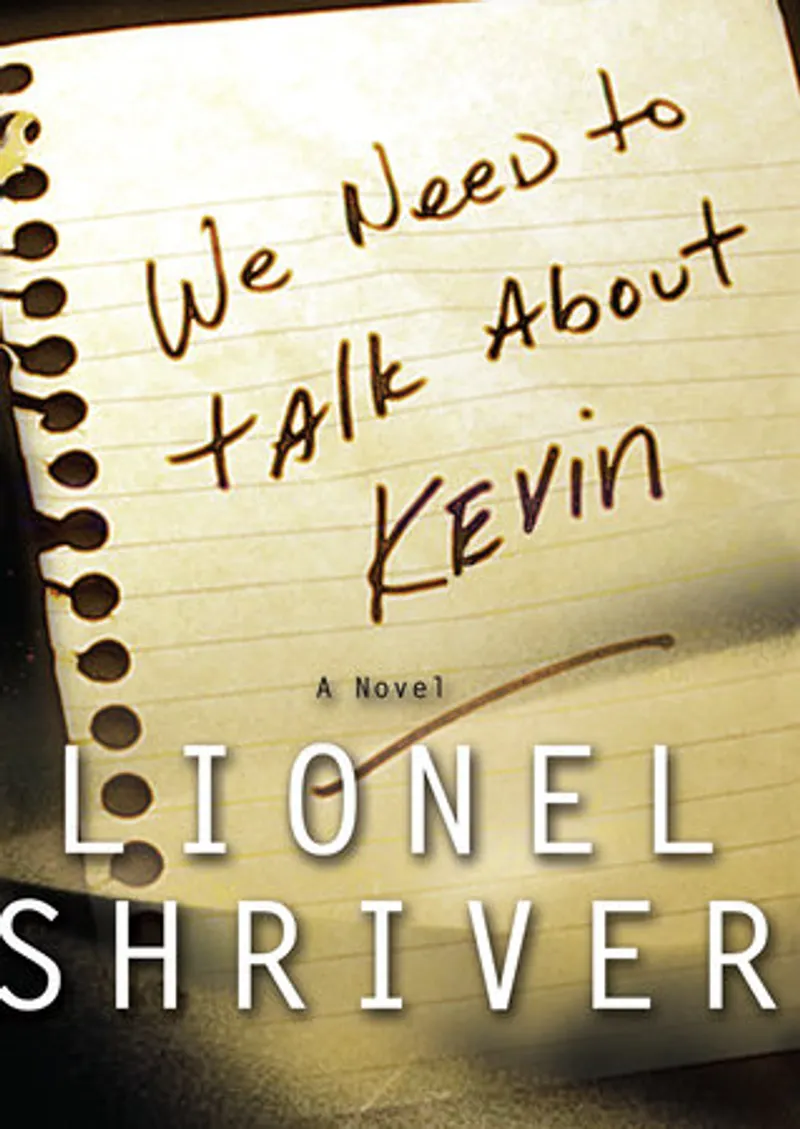
We Need to Talk About Kevin Author: Lionel ShriverPage Count: UnknownPublication Date: 2003-PRH In "We Need to Talk About Kevin", Lionel Shriver crafts a thought-provoking and haunting narrative that delves into the complexities of motherhood, violence, and the intricate dynamics of family relationships. Through the eyes of Eva, a reluctant mother, we are drawn into a world of guilt, regret, and the unrelenting quest for answers in the aftermath of a devastating tragedy. The novel's central theme - the exploration of nature versus nurture in shaping a child's character - is masterfully woven throughout the narrative. Eva's ambivalence towards motherhood and her internalized dislike for her son, Kevin, raise fundamental questions about the responsibility of parents in molding their children's personalities. As Eva grapples with the horrific consequences of Kevin's actions, she is forced to confront the darkest corners of her own psyche, laying bare the intricate web of emotions that define her relationship with her son. Shriver's writing style is both piercing and poignant, rendering the narrative impossible to put down. Her use of epistolary format, where Eva's story is revealed through a series of letters to her estranged husband, Franklin, adds a layer of intimacy and immediacy to the narrative. The reader is drawn into Eva's inner world, sharing her turmoil, and anguish as she struggles to come to terms with the events that have shattered her life. One of the most striking aspects of the novel is its thought-provoking examination of the consequences of violence on a family, a marriage, and a community. Shriver's portrayal of the aftermath of the tragedy is both nuanced and unflinching, laying bare the fault lines that exist in even the most seemingly ordinary families. The novel raises important questions about the role of society in shaping individual behavior and the devastating consequences that can unfold when the bonds of family and community are broken. Throughout the novel, Shriver's prose is marked by a stunning clarity and precision, rendering the narrative both accessible and unflinching. Her ability to capture the complexities of human emotions, the subtleties of relationships, and the devastating consequences of violence is a testament to her skill as a writer. Ultimately, "We Need to Talk About Kevin" is a novel that will leave readers unsettled, disturbed, and perhaps even transformed. It is a powerful exploration of the human condition, a searing examination of the darkest aspects of family life, and a haunting portrayal of the consequences of violence. As a work of fiction, it is both unforgettable and impossible to put down. #WeNeedToTalkAboutKevin #LionelShriver #SchoolShooting #Motherhood #FamilyDynamics #PsychologicalFiction
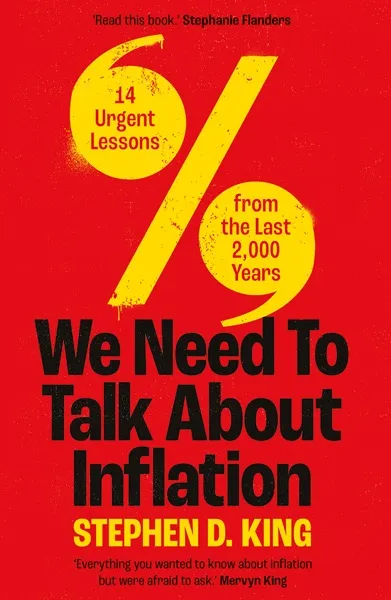

We Need to Talk about Inflation Author: Stephen D. KingPage Count: UnknownPublication Year: 2023-GB Inflation Isn’t Just a Number—It’s a Crisis: Stephen D. King’s We Need to Talk About Inflation Exposes the Hidden Forces Shaping Our Economy In an era where grocery bills spiral out of control and mortgage rates feel like a moving target, inflation isn’t just a dry economic statistic—it’s a daily anxiety. Stephen D. King, the renowned economist and former chief economist at HSBC, doesn’t just dissect inflation in We Need to Talk About Inflation; he transforms it into a gripping narrative, exposing the human consequences behind the numbers. This isn’t another dry policy manual; it’s a wake-up call wrapped in sharp analysis and compelling storytelling, making it essential reading for anyone who’s ever wondered why their paycheck doesn’t stretch as far as it used to. King’s book arrives at a pivotal moment, as central banks grapple with post-pandemic price surges and geopolitical shocks like the Ukraine war. But rather than drowning readers in jargon, he crafts a vivid portrait of inflation as a multifaceted beast—one that isn’t just about money printing or supply chain disruptions, but about power, inequality, and the very fabric of modern society. The title itself is a masterstroke: it’s not just an academic treatise; it’s a conversation starter, a demand for attention to an issue that’s reshaping lives in ways few politicians or economists dare to admit. At the heart of King’s exploration is the idea that inflation is more than a temporary blip—it’s a symptom of deeper structural failures. He traces its roots to the 1970s oil shocks, the deregulatory fervor of the 1980s, and the financial crises of the 21st century, arguing that today’s inflationary pressures are the result of decades of policy missteps. What makes his argument so compelling is his ability to weave historical context with contemporary relevance. He doesn’t just tell us inflation is bad; he shows us how it erodes trust in institutions, fuels political extremism, and deepens social divides. His prose is accessible yet rigorous, blending economic theory with real-world examples—like how the 2008 financial crisis laid the groundwork for today’s inflationary spiral. King’s writing style is one of his greatest strengths. He avoids the cold detachment often associated with economics, instead adopting a conversational yet authoritative tone that feels like a mentor guiding you through a complex subject. His use of metaphors—comparing inflation to a “hidden tax” or a “slow-motion heist”—makes abstract concepts tangible. Even readers who normally shy away from economics will find themselves absorbed in his explanations of quantitative easing, wage-price spirals, and the psychological toll of rising prices. The book’s structure is equally well-crafted, moving seamlessly from historical analysis to forward-looking solutions without ever feeling disjointed. One of the most striking aspects of We Need to Talk About Inflation is King’s unflinching critique of both left and right-wing economic orthodoxies. He dismantles the simplistic narratives that blame inflation solely on corporate greed or government spending, instead arguing that the roots are far more insidious. His dissection of the “Great Moderation”—the period of relative stability from the 1980s to 2007—is particularly damning, revealing how the illusion of control over inflation masked deeper vulnerabilities. Yet, he doesn’t leave readers in despair. Instead, he offers a roadmap for reform, advocating for policies that address inequality, rein in financial speculation, and restore public trust in institutions. The book’s power lies in its humanity. King doesn’t just crunch numbers; he humanizes them. He highlights the stories of ordinary people—small business owners, retirees, young families—whose lives are upended by inflation in ways that statistics alone can’t capture. This approach makes the book not just informative but deeply empathetic, a rare feat in economic literature. It’s a reminder that inflation isn’t an abstract force; it’s a lived experience, one that shapes decisions, dreams, and even political loyalties. For those who’ve followed King’s work, We Need to Talk About Inflation will feel like a culmination of his decades-long career. His insights are sharp, his arguments persuasive, and his warnings urgent. But even for newcomers, the book is a revelation—a rare blend of intellectual rigor and narrative drive that makes complex economics feel urgent and personal. It’s the kind of book that doesn’t just inform; it changes how you see the world. If there’s a criticism to be made, it’s that King occasionally leans too heavily on historical parallels, which might feel repetitive to readers already familiar with economic history. However, this is a minor quibble in an otherwise flawless work. The book’s greatest achievement is its ability to make inflation feel like the defining crisis of our time—not just an economic problem, but a moral one. We Need to Talk About Inflation is more than a book; it’s a manifesto for a more honest conversation about the economy. In an age of misinformation and oversimplification, King’s clarity and depth are a breath of fresh air. Whether you’re an economist, a policymaker, or simply someone trying to make sense of your shrinking paycheck, this book is indispensable. It doesn’t just explain inflation—it forces you to confront its human cost and demand better from those in power. #InflationCrisis #EconomicJustice #StephenDKing #MoneyMatters #EconomicReckoning