Showing Posts From
Witch king
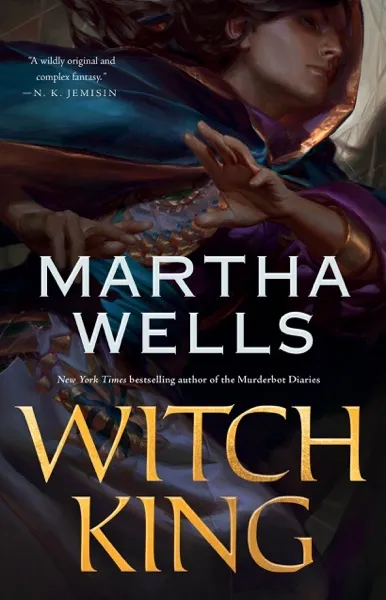

Witch King Author: Martha WellsPage Count: UnknownPublication Year: 2023-GB Martha Wells’ Witch King (2023) is a masterclass in blending dark fantasy with sharp, subversive wit—a book that feels both timeless and urgently modern. Building on the success of her Murderbot Diaries series, Wells once again crafts a protagonist who is as deeply human in their flaws as they are otherworldly in their power. But where the Murderbot stories thrived on existential dread and corporate absurdity, Witch King dives into the raw, visceral consequences of power, identity, and the lies we tell ourselves to survive. At its heart, Witch King is a story about reclaiming agency in a world that has tried to define you. The protagonist, a half-goblin witch named Arasaka, is a figure of both reverence and revulsion—a being whose very existence challenges the hierarchical structures of the empire that once enslaved her kind. Wells doesn’t just present Arasaka as a victim or a hero; she is a survivor who has internalized the brutality of her world, wielding her magic and cunning in a calculated dance of survival. The book’s central tension isn’t just about defeating an enemy (though there is that, in spades) but about whether Arasaka can break free from the cycles of violence she’s been trapped in—whether she can define herself outside the roles others have forced upon her. Wells’ prose is a study in precision and economy. She doesn’t waste words, yet her descriptions are vivid enough to make the world feel tangible. The goblin lands, with their mist-shrouded forests and ancient ruins, are rendered with a tactile richness that contrasts sharply with the cold, sterile halls of the empire. Her dialogue crackles with tension, whether it’s the brittle politeness of courtly intrigue or the raw, unfiltered rage of confrontation. There’s a musicality to her writing, too—a rhythm that pulls the reader along even in the quieter moments, when the real work is happening beneath the surface. What sets Witch King apart, though, is Wells’ ability to weave deep emotional stakes into what could have been a straightforward revenge fantasy. Arasaka’s journey isn’t just about power; it’s about the cost of power, and the ways in which it warps both the wielder and the world around them. The empire she fights against isn’t just a faceless monolith—it’s a system that has convinced itself of its own righteousness, and Arasaka’s defiance forces it to confront its hypocrisy. Wells doesn’t shy away from the moral ambiguity of rebellion; the line between liberation and destruction is deliberately blurred, and the book thrives in that gray area. The supporting cast is equally compelling. Wells excels at creating characters who are flawed but not caricatures—each with their own motivations that occasionally align with Arasaka’s, but just as often diverge. There’s a delicious tension in their interactions, especially in the way Wells plays with power dynamics. A mentor who might be more than they seem. A rival who is both ally and antagonist. A love interest whose loyalty is as fragile as it is fierce. These relationships are the engine of the story, driving Arasaka forward not just as a witch with a grudge, but as a woman (or something like one) trying to carve out a place for herself in a world that has tried to erase her. Wells’ style also shines in the way she handles magic. It’s not the flashy, spell-slinging spectacle of high fantasy, but something more insidious—a force that seeps into the bones of the world, altering reality in subtle, unsettling ways. Arasaka’s magic is tied to her emotions, to her pain, and that makes it both a weapon and a vulnerability. There’s a visceral quality to the magical moments, where the boundaries between the physical and the supernatural blur, and the cost of wielding such power becomes all too clear. If there’s a weakness in Witch King, it’s that Wells’ worldbuilding sometimes feels like it’s being revealed in fragments—just as the reader starts to piece together the larger picture, the story shifts its focus. But this is also part of the book’s strength. The world feels lived-in and organic, with history that stretches beyond the page. The empire’s fall and the goblin resistance aren’t just backdrops; they’re living, breathing forces that shape the present. At its core, Witch King is a story about the stories we tell ourselves. Arasaka is a witch, but she’s also a liar—about her past, about her motives, even about who she is. The empire is built on lies, too, and the only way to dismantle it is to confront those lies head-on. Wells doesn’t offer easy answers, but she does offer something more valuable: a protagonist who refuses to be defined by the narratives others impose on her. For readers who love fantasy that’s as intellectually rigorous as it is emotionally resonant, Witch King is a must-read. It’s a book that lingers, that makes you question not just the magic in its pages, but the systems we all live under. Martha Wells has done it again—crafted a story that is both a thrilling adventure and a sharp, necessary critique of power. #WitchKing #MarthaWells #DarkFantasy #GoblinWitch #FantasyRevenge #WitchKingReleases