Showing Posts From
Words of radiance
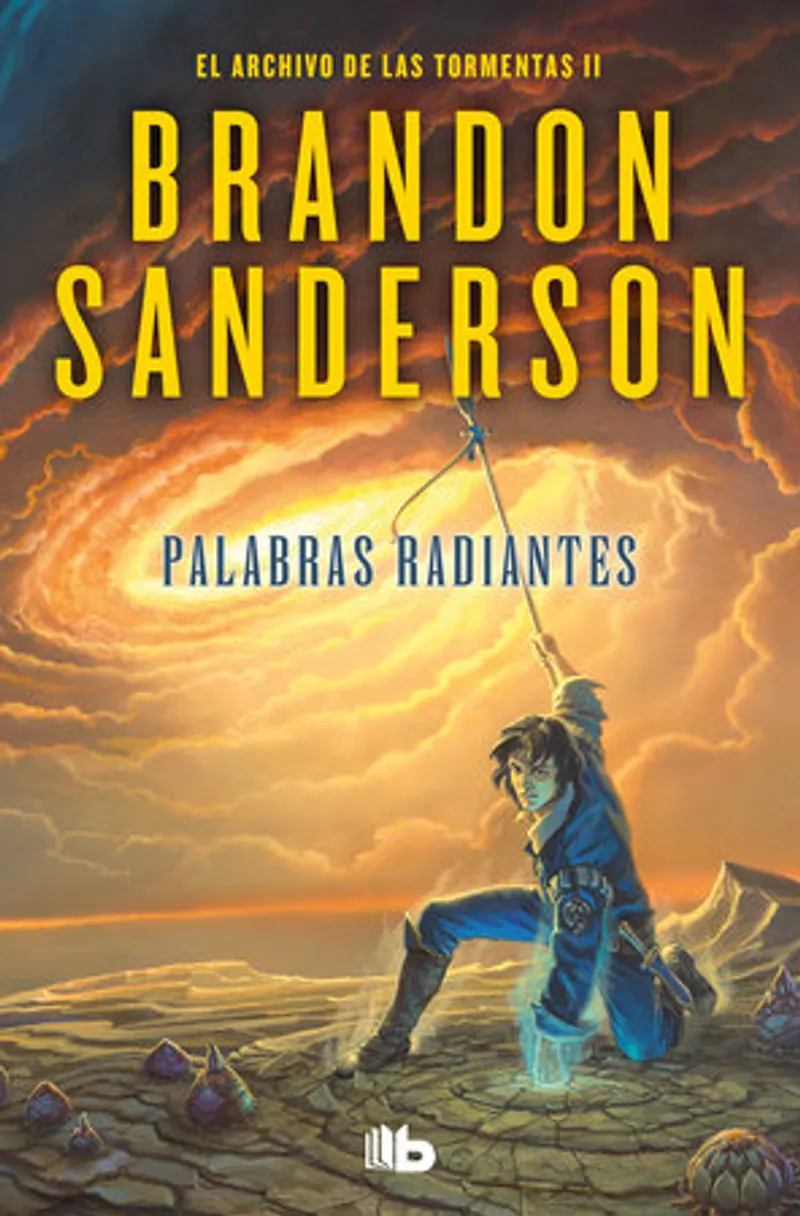
Palabras radiantes / Words of Radiance Author: Brandon SandersonPage Count: UnknownPublication Date: 2025-PRH Brandon Sanderson’s Palabras Radiantes (Words of Radiance) is a masterclass in epic fantasy, a book that doesn’t just expand its world—it ignites it. As the second volume in the Stormlight Archive series, Sanderson doubles down on everything that made The Way of Kings a modern classic: intricate magic, sprawling lore, and characters who feel as real as the stones beneath their feet. But where the first book laid the foundation, Words of Radiance erects a cathedral—one that hums with divine energy, moral complexity, and a narrative ambition that few authors dare to attempt. At its core, Words of Radiance is a story about revelation. Not just the kind that comes with a sudden flash of insight, but the slow, painful unraveling of truth—personal, historical, and cosmic. Sanderson explores how people confront the lies they’ve told themselves, the gods they’ve worshipped, and the wars they’ve waged in their names. The novel’s title itself is a clue: radiance isn’t just light; it’s the inescapable truth that burns away illusion. Kaladin, Shallan, Dalinar, and Adolin each grapple with their own forms of blindness—whether it’s Kaladin’s struggle with depression and duty, Shallan’s fractured identity and buried trauma, or Dalinar’s visionary quest to unite a broken world. Sanderson doesn’t offer easy answers. Instead, he forces his characters (and readers) to sit with discomfort, to question whether their ideals are worth the cost. What sets Sanderson apart is his ability to weave philosophy into action. The book’s magic system, Surgebinding, isn’t just a tool for combat—it’s a metaphor for human potential and limitation. Stormlight, the energy that powers the Radiants, is both a gift and a burden. It demands sacrifice, discipline, and, above all, trust. The more characters wield it, the more they’re forced to confront their own flaws. Dalinar’s visions, for instance, aren’t just mystical experiences; they’re a confrontation with history’s moral ambiguities. He sees the past not as a series of triumphs but as a tapestry of violence, cowardice, and redemption. Sanderson’s genius lies in making these philosophical musings feel urgent, even when they’re delivered in the midst of a battle or a political intrigue. The prose is Sanderson at his most polished. His writing is deceptively simple—clean, direct, and devoid of purple passages—yet it carries an undercurrent of poetry. The Stormlight Archive is a series where the magic feels tactile, where the weight of a sword or the ache of a bruise is as vivid as the dialogue. Sanderson’s dialogue, in particular, crackles with tension. Whether it’s Shallan’s razor-sharp wit, Kaladin’s gruff pragmatism, or Dalinar’s thunderous declarations, every exchange feels purposeful. Even minor characters leap off the page, their voices distinct and their arcs satisfyingly resolved (or, in some cases, left tantalizingly open). The book’s structure is ambitious, juggling multiple POVs with precision. Sanderson doesn’t just switch perspectives; he makes each one feel like a necessary piece of a larger puzzle. Shallan’s sections, in particular, are a revelation. Her journey from a woman drowning in secrets to someone who begins to reclaim her agency is one of the most compelling character arcs in modern fantasy. Her internal monologues are a masterclass in psychological depth, revealing a mind that’s both brilliant and self-destructive. Meanwhile, Kaladin’s chapters are a gut-punch of emotional rawness, his struggle with depression and his growing bond with the Stormfather adding layers of complexity to his heroism. Sanderson’s worldbuilding is, as always, breathtaking. Roshar isn’t just a setting; it’s a character—a place of storms and silence, where the land itself seems to breathe. The flora and fauna are alien yet believable, the cultures rich with history and conflict. The Alethi, with their rigid codes and internal fractures, feel like a reflection of real-world empires, their grandeur masking deep rot. The Parshendi, too, are more than just antagonists; they’re a people with their own myths, their own grievances, and their own radiance waiting to be uncovered. If there’s a flaw, it’s the book’s sheer scope. At over 1,000 pages, Words of Radiance can feel daunting, and Sanderson’s tendency to linger on certain scenes—while rewarding—might test the patience of readers who prefer tighter pacing. But this is the trade-off for a story that feels as vast and lived-in as the world it inhabits. Sanderson doesn’t rush his characters or his themes; he lets them breathe, and in doing so, he creates a story that lingers long after the last page. Ultimately, Palabras Radiantes is a book about the cost of truth. It asks whether enlightenment is worth the pain, whether unity can be forged from division, and whether the light we seek is worth the shadows it casts. Sanderson doesn’t provide easy resolutions, but he offers something far more valuable: a story that challenges, inspires, and endures. This is fantasy at its most ambitious, a novel that doesn’t just entertain but elevates. #StormlightArchive #BrandonSanderson #FantasyBooks #EpicFantasy #BookReview #WordsOfRadiance