Showing Posts From
Worldheritage
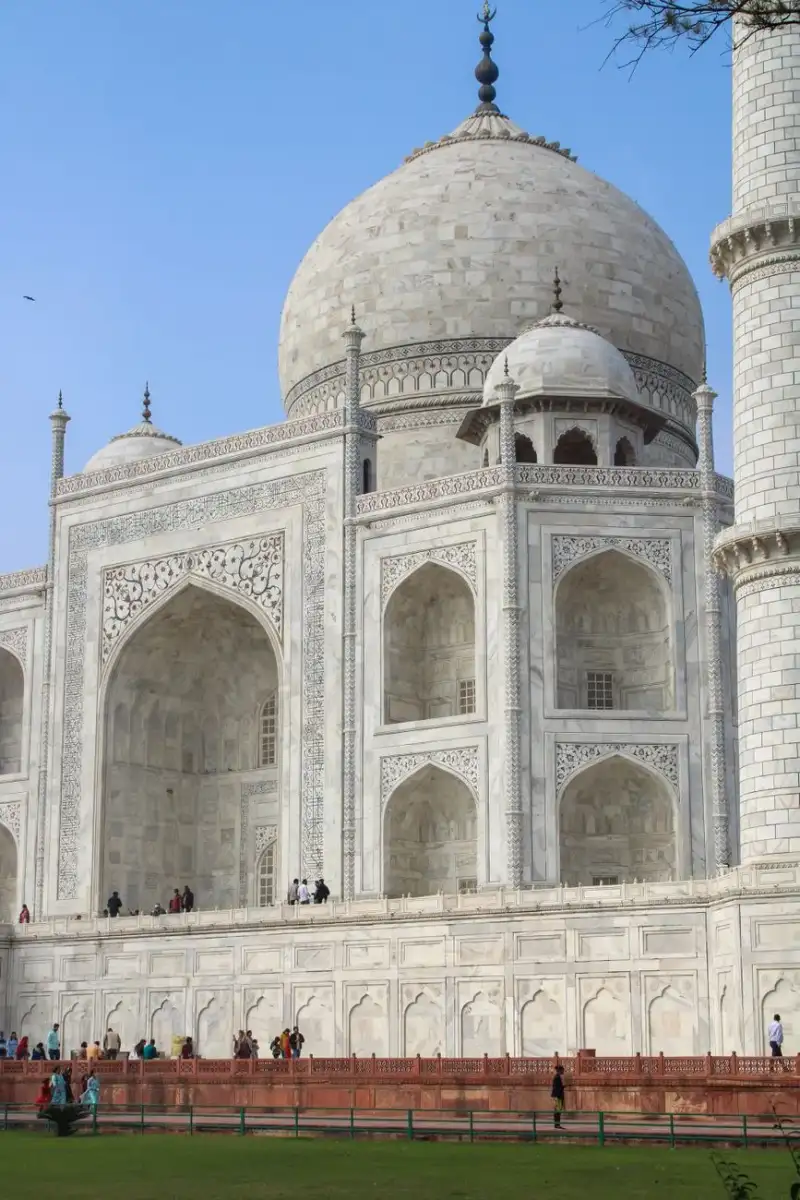

In the crucible of profound sorrow, where an emperor's love defied the finality of death, a vision of ethereal beauty was conceived. Rising from the banks of the sacred Yamuna River, carved in luminous ivory-white marble, stands the Taj Mahal – not merely a structure, but a monumental poem, an elegy etched in stone, forever whispering the tale of a timeless devotion. This magnificent mausoleum, arguably India’s most iconic landmark, transcends its architectural brilliance to embody the very essence of human emotion, an enduring testament to love, loss, and the unyielding pursuit of beauty. A Love Etched in Marble: The Genesis of an Immortal Promise The genesis of the Taj Mahal is rooted in the poignant narrative of Emperor Shah Jahan, the fifth Mughal ruler, whose reign (1628–1658) would forever be associated with this unparalleled creation. The year 1631 marked a turning point in his life, and indeed, in the annals of architectural history. It was then that his beloved wife, Mumtaz Mahal, departed from this world during the birth of their fourteenth child, a daughter named Gauhara Begum. Her sudden passing plunged the emperor into a grief so profound that contemporary historians, including Muhammad Amin Qazvini, Abdul Hamid Lahori, and Muhammad Saleh Kamboh, meticulously documented its severity. They recounted how Shah Jahan, a man known for his lavish lifestyle and affection, showed no comparable devotion to any other during Mumtaz Mahal's lifetime, and his sorrow after her death was equally singular. For a week, he retreated entirely from royal affairs, overwhelmed by his loss. His grief manifested in a stark transformation of his personal habits, eschewing music and luxurious attire for two years, a stark contrast to the opulence characteristic of the Mughal court. It was from this chasm of despair that the emperor’s resolve to build an incomparable resting place for his queen emerged. He sought a site that would be worthy of her memory, a place reflecting her radiance. His gaze fell upon a picturesque plot of land on the southern side of Agra, overlooking the Yamuna River, which at the time housed a mansion belonging to Raja Jai Singh I. Enchanted by its beauty and strategic location, Shah Jahan chose this spot for Mumtaz’s tomb. Raja Jai Singh I, understanding the emperor’s profound desire and the significance of the project, agreed to exchange his valuable property for a grand palace situated in the very heart of Agra, thus paving the way for the Taj Mahal's construction, which commenced in 1632. The Grand Canvas: Architectural Inspirations and Master Plan The Taj Mahal is not merely a solitary edifice but the centerpiece of an expansive 17-hectare (42-acre) complex, a meticulously planned ensemble that incorporates and significantly expands upon the rich design traditions of Indo-Islamic and Mughal architecture. Its conceptual framework draws deeply from revered Timurid and Mughal precedents, notably the Gur-e Amir in Samarkand—the tomb of Timur, the progenitor of the Mughal dynasty—and Humayun's Tomb in Delhi. These earlier masterpieces provided the inspiration for key elements such as the symmetrical Charbagh (four-part) gardens and the hasht-behesht (eight-paradise) plan, which structures the layout of the site. The entire complex is a symphony of symmetrical constructions, employing a diverse array of geometric shapes and profound symbolic motifs. While the mausoleum itself is famously rendered in resplendent white marble, intricately inlaid with semi-precious stones, the surrounding structures within the complex—including a magnificent mosque and a complementary guest house—are constructed from vibrant red sandstone. This choice of material for the auxiliary buildings was consistent with contemporary Mughal-era architectural practices, creating a striking visual contrast with the ethereal white of the main tomb. The entire monumental ensemble rests upon a colossal platform, measuring 300 meters (980 ft) in length and rising 8.7 meters (28.5 ft) in height, majestically overlooking the Yamuna River. This foundation is built with varying patterns of dark and light-colored sandstone, adding another layer of textural and visual interest to the grand design. The complex is further defined and protected by a crenellated wall, enclosing the formal gardens on three sides, creating a sanctuary of unparalleled beauty and tranquility.Crafting Eternity: The Multinational Assembly of Genius The creation of the Taj Mahal was an undertaking of epic proportions, demanding an extraordinary convergence of talent, skill, and sheer human endeavor. More than 20,000 workers and artisans were mobilized for this colossal project, their hands and minds guided by a dedicated board of architects. At the helm of this visionary team was Ustad Ahmad Lahori, the emperor's esteemed court architect, who served as the principal guiding force. However, the true brilliance of the Taj Mahal lies not just in its singular vision, but in the multinational collaboration that brought it to life. This monumental effort drew upon the finest minds and most skilled hands from across the vast Mughal Empire and beyond. The design and execution were overseen by a diverse assembly of artisans and supervisors, each a master in their respective crafts. Ismail Afandi, an Ottoman dome designer, brought his expertise to the mausoleum's iconic crown. Persian architects Ustad Isa, Isa Muhammad Effendi, and Puru contributed their profound understanding of form and proportion, shaping the structure's elegant lines. The intricate calligraphy that adorns the marble was the exquisite work of Amanat Khan Shirazi, the chief calligrapher. The majestic gilded finial atop the main dome was cast by Qazim Khan, showcasing advanced metalwork. The meticulous masonry was supervised by skilled overseers such as Muhammad Hanif, Mir Abdul Karim, and Mukkarimat. This rich tapestry of international talent, pooling diverse skills and artistic traditions, ensured that the Taj Mahal would be a synthesis of the finest architectural and artistic elements of its age, a truly global masterpiece born from a singular Mughal dream. A Timeline of Triumph: From Commission to Completion The journey from Shah Jahan's profound commission in 1631 to the final realization of the Taj Mahal complex was a testament to Mughal perseverance and engineering prowess. Construction on the mausoleum, the central and most sacred component, was completed in 1648, a remarkable feat given its scale and intricacy. Yet, the broader vision for the encompassing complex, with its accompanying structures, elaborate gardens, and meticulous detailing, continued to unfold for another five years. The entire Taj Mahal complex is believed to have reached its completion in its entirety by 1653, fulfilling Shah Jahan's grand design. A poignant marker in this lengthy construction period was the first ceremony held at the mausoleum. On February 6, 1643, Shah Jahan personally observed the 12th anniversary of Mumtaz Mahal's death within the newly completed tomb, a powerful testament to the emotional heart of the entire project. The financial investment in this unparalleled monument was equally staggering. At the time of its completion, the cost was estimated to be around ₹32 million. To comprehend the magnitude of this expenditure in contemporary terms, this amount would be approximately ₹52.8 billion (equivalent to US$827 million) in 2015, underscoring the immense resources dedicated to this labor of love. The Heart of the Crown: The Mausoleum's Exquisite Exterior The mausoleum building stands as the indisputable focal point of the entire Taj Mahal complex, a vision of sublime beauty crafted from the purest ivory-white marble. It rests gracefully upon a substantial square plinth, a foundation measuring 6 meters (20 ft) in height and with sides extending 95.5 meters (313 ft) in length. The fundamental structure of the mausoleum is a grand multi-chambered cube, its corners artfully chamfered to create an elegant eight-sided form. Each of the four long sides of this octagonal structure stretches approximately 57.3 meters (188 ft), contributing to its impressive scale. The architectural genius of the mausoleum is further showcased by its four identical facades, each a mirror image of the other, ensuring perfect symmetry from every vantage point. These sides are punctuated by magnificent iwans, or arch-shaped doorways, that invite the eye inward. Each iwan is dramatically framed by a colossal pishtaq, a vaulted archway soaring to a height of 33 meters (108 ft), with two similarly shaped arched balconies stacked gracefully on either side. This intricate motif of archways is ingeniously replicated on a smaller, more delicate scale within the chamfered corner areas, reinforcing the design's absolute symmetry and harmony. Access to this elevated sanctuary from ground level is provided by two flights of stairs located on the southern side of the platform, facing the verdant gardens, partially covered to maintain their elegant lines.The Celestial Canopy: Dome, Chattris, and Finial Dominating the mausoleum's skyline, and indeed the entire Agra landscape, is the colossal marble dome, the paramount feature that crowns the tomb. Soaring to an impressive height of 23 meters (75 ft), this iconic dome possesses a distinctive onion shape, a hallmark of Mughal architecture that imbues the structure with a sense of graceful ascension. It rests majestically upon a substantial cylindrical drum, which itself measures 12 meters (39 ft) in height and boasts an inner diameter of 18.4 meters (60 ft). A subtle, almost imperceptible asymmetry lends a unique character to this grand dome, which is exquisitely topped by a 9.6-meter (31 ft) high gilded finial, catching the sunlight and drawing the eye heavenward. The intermediate zone between the drum and the base of the dome is further embellished by an ornamental moulding, featuring an intricate twisted rope design that adds a layer of delicate detail to the colossal form. Complementing the grandeur of the main dome are four smaller domes, known as chattris, strategically placed at each of the mausoleum's corners. These smaller domes elegantly replicate the distinctive onion shape of their larger counterpart, creating a harmonious visual rhythm. Each chattri is supported by slender columns that rise from the main structure, serving not only as decorative elements but also playing a crucial role in allowing natural light to filter into the interior of the building, illuminating the sacred space within. Adding to the exterior's decorative richness, tall spires known as guldastas extend gracefully from the edges of the walls, serving as vertical accents that enhance the overall sense of elevation and intricate design. Both the main dome and its smaller accompanying chattris are further adorned with a delicate design resembling a lotus flower, a symbol of purity and beauty, tying the architectural forms to natural motifs and profound spiritual meaning. The Language of Materials: Marble, Sandstone, and Inlay The choice and application of materials in the Taj Mahal are fundamental to its aesthetic and structural integrity. The mausoleum, the very heart of the complex, is constructed entirely of pristine white marble, a material chosen for its luminous quality and its ability to capture and reflect light, giving the structure an almost ethereal glow. This white marble is not merely a surface but a canvas, meticulously inlaid with thousands of semi-precious stones. This technique, known as pietra dura, transforms the solid stone into a tapestry of intricate floral and geometric patterns, each delicate detail contributing to the mausoleum's unparalleled richness. In deliberate contrast, the other significant buildings within the complex, including the mosque and the guest house, are fashioned from a robust red sandstone. This choice was not arbitrary but reflects a consistent architectural practice prevalent during the Mughal era, where red sandstone was a favored material for grand secular and religious structures. The juxtaposition of the vibrant red sandstone against the brilliant white marble creates a striking visual dialogue across the complex, highlighting the mausoleum's unique prominence. Furthermore, the immense platform upon which the entire complex rests is built with varying patterns of dark and light colored sandstone, adding textural depth and subtle visual interest to the foundation of this magnificent monument, demonstrating a holistic approach to material selection and aesthetic harmony.Unveiling the Name: Etymology and Historical Reference The name "Taj Mahal" itself, resonant with historical and romantic connotations, is of Urdu origin, believed to be derived from a fusion of Arabic and Persian words. The term tāj translates to "crown," while mahall signifies "palace," thus giving us "Crown of the Palace" – a fitting descriptor for a structure of such regal grandeur. An intriguing alternative derivation posits that "Taj" might be a corruption of the second syllable of "Mumtaz," directly linking the monument's name to the beloved empress it commemorates. Adding another layer to its historical identity, Abdul Hamid Lahori, a contemporary chronicler and author of the 1636 book Padshahnama, referred to the Taj Mahal by a different, equally evocative name: rauza-i munawwara. This Perso-Arabic phrase (روضه منواره) translates to "the illumined or illustrious tomb," beautifully capturing the mausoleum's radiant beauty and its profound significance even during its construction phase. These different appellations underscore the multifaceted interpretations and deep cultural resonance the Taj Mahal held from its very inception, reflecting its status as both a royal palace-like monument and a sacred, luminous resting place. An Enduring Global Icon: Legacy and Recognition More than just a historical monument, the Taj Mahal has firmly cemented its place as an enduring global icon, a testament to its universal appeal and profound cultural significance. In 1983, recognizing its unparalleled beauty and historical importance, UNESCO designated the Taj Mahal as a World Heritage Site. This prestigious acknowledgment came with the declaration that it is "the jewel of Islamic art in India and one of the universally admired masterpieces of the world's heritage." This pronouncement underscored its status not just as a national treasure but as a global legacy, celebrated for its unique blend of architectural innovation and profound artistic expression. The Taj Mahal is widely regarded as one of the finest examples of Mughal architecture, representing the zenith of this distinctive style that harmoniously blends Persian, Islamic, and Indian elements. Beyond its architectural brilliance, it stands as a potent symbol of Indian history, embodying an era of imperial grandeur, artistic patronage, and profound human emotion. Its allure is undeniable, making it a major tourist attraction that draws an astonishing number of visitors – more than five million annually – from every corner of the globe. Its international acclaim was further solidified in 2007 when it was declared a winner of the prestigious New 7 Wonders of the World initiative, voted by millions worldwide. Today, the Taj Mahal and its meticulously preserved setting, encompassing grounds, and surrounding structures, are recognized as a Monument of National Importance, vigilantly administered by the Archaeological Survey of India, ensuring its protection and preservation for generations to come.The Taj Mahal stands not merely as a white marble edifice on the Yamuna’s banks, but as a frozen tear, a whispered promise, and an eternal embrace. It is the palpable embodiment of an emperor’s grief transmuted into an architectural marvel, a symphony of stone and light composed from profound loss. From its meticulously planned gardens to its soaring, onion-shaped dome, every element speaks of precision, artistry, and an unwavering commitment to eternal memory. To stand before it is to witness not just a building, but a timeless narrative, continually unfolding the story of a love that built paradise on Earth. It is, unequivocally, a crown jewel of human endeavor, forever reminding us that even from the deepest sorrow, unparalleled beauty can emerge.#TajMahal #MughalHistory #IndiaTravel #WorldHeritageSite #ArchitecturalWonder Related InsightsMyanmar’s Inle Lake: Where Leg-Rowing Fishermen Dance on Water and Floating Gardens Feed a Nation (Part 2) Il Palatino: Il Colle degli Imperatori Echoes of the North Atlantic: Navigating the Untamed Faroe Islands{ "@context": "https://schema.org", "@type": "FAQPage", "mainEntity": [ { "@type": "Question", "name": "What is the main focus of The Ivory Dream: Unveiling the Enduring Majesty of the Taj Mahal?", "acceptedAnswer": { "@type": "Answer", "text": "Journey into the heart of India's most iconic monument, the Taj Mahal, a breathtaking testament to eternal love and unparalleled Mughal artistry, born from an emperor's profound grief." } }, { "@type": "Question", "name": "Who authored the comprehensive guide on The Ivory Dream: Unveiling the Enduring Majesty of the Taj Mahal?", "acceptedAnswer": { "@type": "Answer", "text": "This detailed article and its insights were carefully researched and authored by Cemre Seyyah." } }, { "@type": "Question", "name": "Where can I find more related content about Travel?", "acceptedAnswer": { "@type": "Answer", "text": "You can explore more articles, detailed reviews, and similar insights by browsing the Related Insights section at the bottom of this article or visiting our dedicated Travel category page." } } ] }