Showing Posts From
Wwii history
-
 Emily Page
 - 29 Jun, 2026 08:28
The Unsung Scribes: Unearthing the Clandestine Libraries and Forbidden Texts of World War II
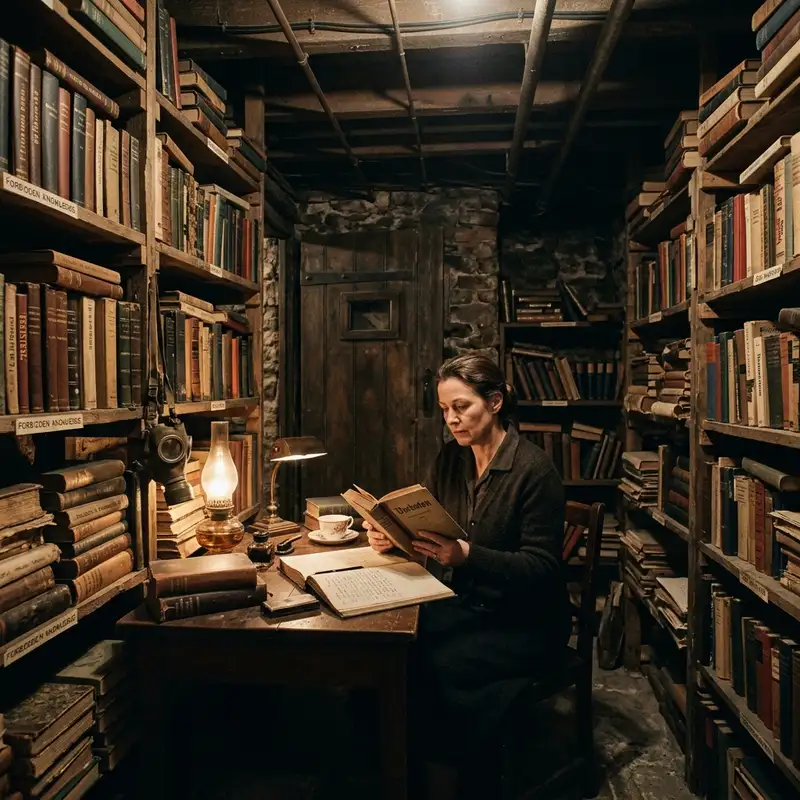
In the crucible of totalitarian regimes and the shadow of occupation, when the written word became a dangerous weapon and intellectual freedom a capital offense, what becomes of the books? When censors burn entire libraries and ideologies dictate thought, where does the human spirit, insatiably curious and defiantly resilient, turn for solace, truth, and rebellion? It turns to the shadows, crafting a universe of hidden shelves, whispered pages, and illicit knowledge: the clandestine libraries of World War II. This is not a tale of grand battles or political intrigue, but of the quiet, profound heroism of individuals who risked everything for the sake of a story, a poem, a scientific treatise, or a philosophy deemed anathema by their oppressors. It's an exploration into the very soul of reading, a testament to the fact that while bodies can be imprisoned, minds, fueled by the freedom found between two covers, can never truly be enslaved. Join me as we #journey into the hidden nooks and intellectual undergrounds where books, like sparks in the dark, kept hope and defiance alive. The Burning of Thought: Why Books Became Weapons The rise of fascism and Nazism in Europe heralded an era where control extended far beyond political boundaries into the very thoughts and beliefs of citizens. Books, as carriers of ideas, #history, and alternative perspectives, were among the first casualties. From the infamous Nazi book burnings of 1933, where works by Einstein, Freud, Marx, and countless others were consigned to flames, to the systematic eradication of 'degenerate' literature across occupied territories, the message was clear: only sanctioned narratives would survive. Censorship became an art form of oppression. Libraries were purged, bookstores raided, and publishers either co-opted or shut down. Owning or distributing forbidden texts, which often included anything not aligning with the regime's ideology, Jewish authors, communist manifestos, democratic ideals, or even certain works of art and fiction, could lead to imprisonment, torture, or death. In such an environment, a book transformed from a mere object into a symbol of resistance, an act of defiance, and a lifeline to a world beyond propaganda. The desire to read, to learn, and to connect with broader human experience became a powerful, albeit silent, act of war. It was this profound hunger that drove the creation of thousands of underground literary networks. Ingenious Concealment: Architects of the Invisible Library The establishment of clandestine libraries was far from simple. It required immense courage, meticulous planning, and often, a network of trusted individuals. These weren't grand, purpose-built structures; they were woven into the fabric of daily life, hidden in plain sight or in ingeniously concealed locations. Individuals hid books under floorboards, behind loose bricks in fireplaces, in false-bottomed suitcases, or buried in gardens. Families would share single copies, tearing out pages to distribute amongst themselves, or reading aloud in hushed tones in dimly lit rooms. But beyond these personal stashes, more organized efforts emerged. In cities like #Paris, Warsaw, and Amsterdam, networks of intellectuals, librarians, and ordinary citizens pooled their resources. Books were smuggled across borders, sometimes disguised as other items, or passed hand-to-hand under the cover of night. Secret reading rooms were established in basements, attics, or behind the unassuming facades of seemingly innocuous shops. These spaces became sanctuaries, not just for the books themselves, but for the readers who found solace and community within their walls. The risks were astronomical; discovery meant severe punishment for everyone involved. Yet, the conviction that knowledge must survive, that cultural heritage must be preserved, outweighed the fear. Echoes from the Ghetto: The Libraries of Warsaw Perhaps one of the most poignant examples of intellectual resistance comes from the Jewish ghettos established by the Nazis, particularly the Warsaw Ghetto. Here, under unimaginable conditions of starvation, disease, and constant terror, the spirit of learning and #culture refused to die. Despite strict prohibitions against Jewish cultural activities and the confiscation of books, clandestine libraries flourished. One of the most remarkable efforts was led by Emanuel Ringelblum, who, with his Oyneg Shabbos archive, aimed to document every aspect of ghetto life. While primarily an archival project, it also included the preservation of books and manuscripts. Beyond this, countless informal reading groups and lending libraries emerged. People would trade meager rations for the chance to read a smuggled novel or a cherished religious text. Children, deprived of formal schooling, gathered in secret to learn from smuggled textbooks and stories. These ghetto libraries were more than just repositories of information; they were beacons of dignity, continuity, and humanity. They offered an escape from the brutal reality, a connection to a past and a future that the Nazis sought to erase. They provided intellectual nourishment and psychological resilience, reminding people of their identity and culture. The power of these texts was not just in their content, but in the sheer act of possessing and reading them under such dire circumstances.The Underground Press: French Resistance and Forbidden Words In occupied #France, the resistance against Nazi rule took many forms, and a significant one was the "presse clandestine" – the underground press. While not strictly "libraries," these operations were instrumental in producing and disseminating forbidden texts, acting as mobile, ephemeral libraries of critical thought and defiance. Writers, journalists, and printers risked their lives to create and distribute newspapers, pamphlets, and even full-length books that challenged German propaganda and rallied the French population. Titles like "Combat," "Libération," and "Témoignage Chrétien" became household names in resistance circles, printed on makeshift presses in cellars, attics, and even moving vehicles. These publications reported unvarnished truths about the war, relayed messages from the Allied forces, and fostered a sense of national unity and resolve. The content wasn't limited to news. Poetry, essays, and literary works that inspired courage or subtly critiqued the occupation were also produced. The printing presses themselves were often hidden in plain sight, disguised as legitimate businesses, or constantly moved to evade detection by the Gestapo. The distribution network was equally perilous, relying on couriers who bravely transported bundles of forbidden literature under their coats, in bicycles, or on public transport, often using elaborate codes and dead drops. These clandestine publications demonstrated that even when official channels were silenced, the human need for authentic information and intellectual exchange would find a way to manifest. Literature in the Abyss: The Concentration Camp Scholar Perhaps the most harrowing and ultimately inspiring instances of literary defiance occurred within the concentration camps. Here, where human dignity was systematically stripped away, the desire for intellectual stimulation and spiritual survival sometimes manifested in astonishing ways. Books were virtually non-existent, and any form of education or cultural expression was strictly forbidden. Yet, stories emerged of prisoners who managed to smuggle in scraps of paper and pencils, meticulously copying down poems or fragments of texts from memory. Others, who had eidetic memories, would recite entire literary works to small groups, acting as living libraries. Makeshift "universities" were sometimes organized in secret, with prisoners who had been academics or professionals sharing their knowledge in hushed tones, teaching history, philosophy, or science to fellow inmates. These acts, seemingly small in the face of industrial-scale extermination, were monumental. They represented a profound assertion of humanity, a refusal to allow the mind to be extinguished even when the body was nearing its end. The shared word became a source of comfort, a reminder of a world beyond the barbed wire, and a silent protest against the dehumanizing machinery of the camps. It underscored that the true essence of a library lies not just in its physical collection, but in the collective human memory and the indomitable will to preserve and share knowledge.The Unwritten Library: Oral Tradition and Memory Beyond physical books and printed materials, the concept of a "clandestine library" during WWII also extended to the realm of oral tradition and memory. When books were impossible to obtain or too dangerous to keep, the human mind itself became a living repository of forbidden knowledge. Individuals would memorize entire poems, novels, or philosophical texts before they were destroyed or confiscated, then share them verbally with others. Teachers would continue their lessons from memory, recounting historical events or scientific principles to small groups of children. Stories, myths, and folklore, often imbued with subtle messages of resistance or hope, were passed down through generations, keeping cultural identity alive. This "unwritten library" highlights the intrinsic, organic #nature of knowledge and storytelling. It demonstrates that censorship, no matter how brutal, can never truly erase ideas as long as human beings exist to remember and transmit them. The spoken word, imbued with the weight of memory and shared experience, became a powerful and untraceable form of resistance, a testament to the fact that ideas are truly immortal. The Enduring Legacy: Lessons from the Shadows The story of WWII's clandestine libraries is a profound reminder of several enduring truths. First, it underscores the intrinsic value of books and the ideas they contain. In times of oppression, literature is not a luxury but a necessity, a tool for survival, resistance, and the preservation of human dignity. It provides context, solace, and a vision of a different future. Second, it celebrates the extraordinary courage and ingenuity of individuals who, against overwhelming odds, chose to champion intellectual freedom. Their silent heroism, often unrecognized, ensured that the flames of knowledge and culture were not extinguished, but merely hidden, ready to flare up again once the tyranny receded. Finally, it serves as a powerful cautionary tale. The burning of books and the suppression of thought are always the first signs of a society spiraling into totalitarianism. The stories of these clandestine libraries compel us to remain vigilant, to defend intellectual freedom fiercely, and to cherish the open access to knowledge that many of us now take for granted. The memory of those who risked everything for a single page reminds us that true freedom begins in the mind, nurtured by the boundless universe found between the covers of a book.#WWIIHistory #ForbiddenBooks #LiteraryResistance #ClandestineLibraries #PowerOfLiterature #books #literature #emilypage #reading #history #WWIIHistory #ForbiddenBooks #LiteraryResistance #ClandestineLibraries #PowerofLiterature Related InsightsAn Auction of Souls (An Auction of Souls, #1) Book Review and Summary The Cursed Carnival and Other Calamities Book Review and Summary Cars on the Road (Disney/Pixar Cars on the Road) Book Review and Summary{ "@context": "https://schema.org", "@type": "FAQPage", "mainEntity": [ { "@type": "Question", "name": "What is the main focus of The Unsung Scribes: Unearthing the Clandestine Libraries and Forbidden Texts of World War II?", "acceptedAnswer": { "@type": "Answer", "text": "Delve into the hidden world of secret libraries and forbidden texts that defied tyranny during World War II, a testament to humanity's enduring hunger for knowledge and freedom." } }, { "@type": "Question", "name": "Who authored the comprehensive guide on The Unsung Scribes: Unearthing the Clandestine Libraries and Forbidden Texts of World War II?", "acceptedAnswer": { "@type": "Answer", "text": "This detailed article and its insights were carefully researched and authored by Emily Page." } }, { "@type": "Question", "name": "Where can I find more related content about Books?", "acceptedAnswer": { "@type": "Answer", "text": "You can explore more articles, detailed reviews, and similar insights by browsing the Related Insights section at the bottom of this article or visiting our dedicated Books category page." } } ] }