Showing Posts From
Young man in a hurry
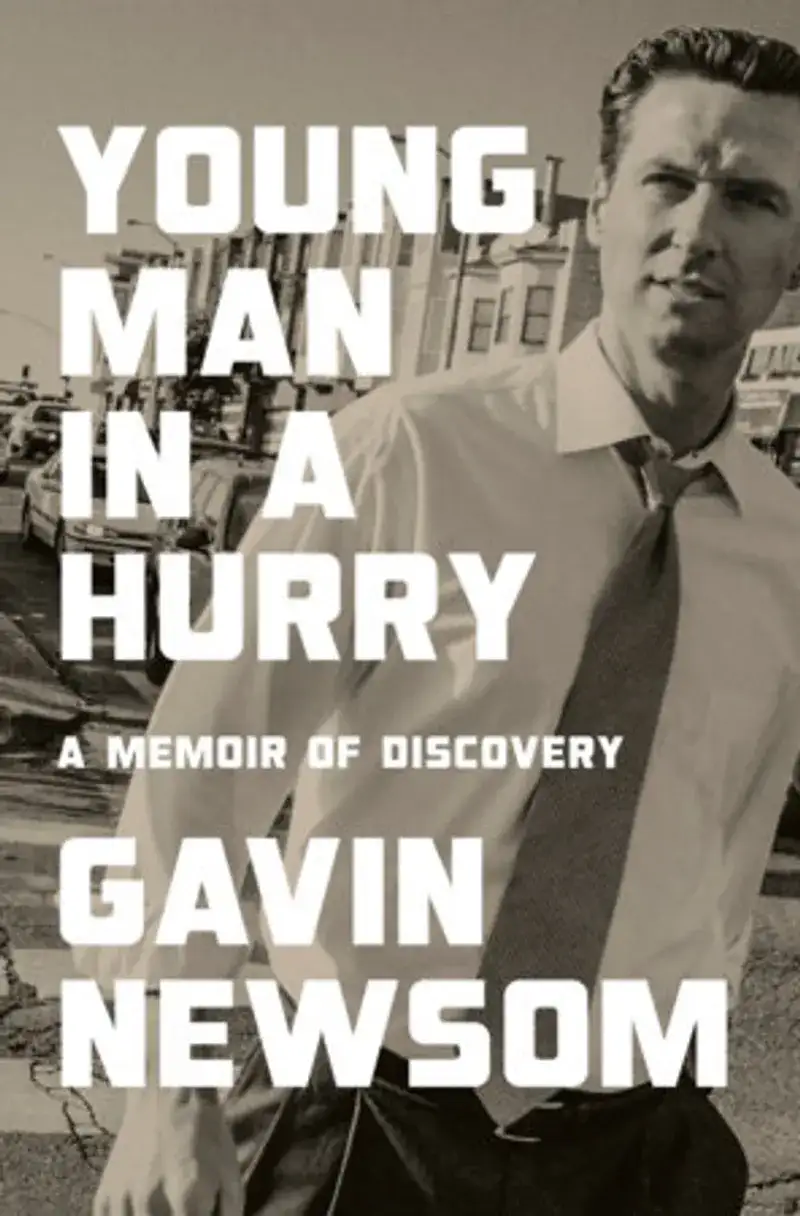

Young Man in a Hurry Author: Gavin NewsomPage Count: UnknownPublication Date: 2026-PRH Gavin Newsom’s Young Man in a Hurry is a political memoir that reads like a sprint—urgent, kinetic, and unapologetically forward-moving—yet beneath its surface speed lies a deeper, more deliberate excavation of identity, legacy, and the quiet forces that shape a life in public service. Published in 2026, the book arrives at a moment when American politics feels both hyper-accelerated and dangerously unmoored, making Newsom’s personal narrative feel less like a retrospective and more like a map of how one man learned to navigate chaos without losing himself. The central theme of the book is speed—literal and metaphorical. Newsom’s life has been defined by it: his breakneck rise from San Francisco mayor to California governor, his early defiance in legalizing gay marriage (a move that shocked the political establishment), and his relentless work ethic, honed by childhood struggles with dyslexia and a fractured family. Yet this book is not just about moving fast; it’s about why he feels compelled to. Newsom frames speed as both a survival mechanism and a form of rebellion. His Irish immigrant ancestors didn’t cross oceans to dawdle, and his family’s California dream wasn’t built on caution. The book suggests that in a country increasingly polarized between stagnation and chaos, speed—even recklessness—can be a tool for progress. Newsom’s writing style mirrors this tension. The prose is direct, almost brisk, with a journalist’s eye for detail and a storyteller’s knack for pacing. He doesn’t linger too long on introspection, preferring to let actions speak louder than reflections. When he describes his mother working three jobs to keep the family afloat, or his father’s distant yet domineering presence, the words feel precise but never overwrought. There’s a disciplined emotional restraint here, as if Newsom, ever the performer in public life, has chosen to let the facts do the heavy lifting. One of the book’s most compelling sections explores his family’s generational saga. Newsom traces his lineage back to County Cork, weaving a tapestry of ambition, ambition thwarted, and ambition reborn in the Golden State. His great-great-grandfather, a San Francisco cop, his grandfather “the Boss” who shaped neighborhoods, and his father, a judge entangled in San Francisco’s elite—each represents a different kind of legacy. Newsom doesn’t glorify this history; he dissects it, showing how privilege and struggle coexisted in his family. His mother’s resilience and his father’s aloofness become dual pillars of his worldview, shaping his politics of empathy and his willingness to take bold risks. The political moments in the book are electric, especially his account of legalizing same-sex marriage in 2004—a decision that made him a national figure and infuriated his own political mentors. Newsom frames it not just as a policy win but as a personal reckoning. He writes about the “discomfort of defiance,” the way going against the grain felt like both a betrayal and a necessity. In an era where political courage is often measured in tweets, Newsom’s willingness to act—despite the political cost—feels almost quaint. Yet it’s this very impulsiveness that has defined his career and, he argues, allowed him to move California forward. As governor, Newsom faced crises that tested both his speed and his resilience: wildfires, pandemics, political upheaval. The book doesn’t shy away from these challenges, but it doesn’t dwell on them either. Instead, they serve as backdrops to a larger question: How does one lead in a state—and a country—where the ground is constantly shifting? Newsom’s answer seems to be a mix of instinct, adaptability, and an unshakable belief in the California Dream. It’s a philosophy that feels both inspiring and, at times, naive in its optimism. What makes Young Man in a Hurry more than just a political memoir is Newsom’s candor about failure and self-doubt. He admits to the strain of balancing family life with public service, the loneliness of leadership, and the personal toll of constant scrutiny. There’s a rare vulnerability in his admission that speed, for all its virtues, can also be a form of avoidance—a way to outrun the past rather than confront it. By the book’s end, Newsom suggests that perhaps the real hurry isn’t about reaching the destination, but about understanding why the journey matters at all. In style and substance, the book feels like a hybrid: part political thriller, part family saga, part manifesto. It’s written for readers who want to understand not just how Newsom became who he is, but why he feels he has to keep moving. In an age of political burnout and cynicism, his unapologetic energy is refreshing, even if it’s exhausting to witness. Young Man in a Hurry doesn’t offer easy answers, but it does offer something rarer—a glimpse into the mind of a leader who believes speed isn’t just a tactic, but a philosophy of life. #GavinNewsom #CaliforniaDream #PoliticalMemoir #LGBTQLegacy #SpeedAndResilience #GovernorLife