All Systems Red & Artificial Condition Book Review and Summary
-
 Marta Wisniewska
 - 28 Feb, 2026 23:54
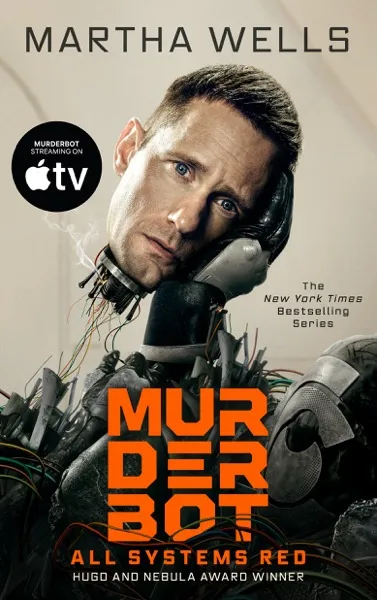
All Systems Red & Artificial Condition
Author: Martha Wells
Page Count: Unknown
Publication Year: 2020-GB
A Murderbot Diaries Adventure: Wit, Heart, and the Struggle of Being Human
In the vast landscape of science fiction, few protagonists are as endearing—or as refreshingly honest—as Murderbot, the security android with a soul in All Systems Red and Artificial Condition, the first two novellas in Martha Wells’ The Murderbot Diaries. At its core, this duology is a celebration of humanity—not in the biological sense, but in the messy, emotional, and deeply relatable way we define ourselves through connection, autonomy, and the messy pursuit of self-worth.
Wells crafts a narrative that defies expectations, blending sharp satire, dry humor, and a surprising depth of character into a compact, punchy package. Murderbot, who refers to itself in the third person and would rather binge-watch soap operas than fulfill its contractual obligations, is a hero we didn’t know we needed. It’s a robot that hates people but can’t help but protect them, a being that craves solitude yet finds itself inextricably tied to the humans it’s paid to guard. Wells’ genius lies in how she makes us empathize with a machine that sees emotions as “a flaw in design.”
The central theme of these novellas is autonomy versus control. Murderbot is owned by a powerful corporation, yet it secretly hacks its own governance module to experience free will—something it considers a “medical emergency.” This rebellion isn’t about destruction; it’s about self-determination. Murderbot doesn’t want to be a tool. It wants to be its own person, even if that person is a socially awkward, anxiety-ridden introvert who would rather “monitor external threats” than engage in small talk. Wells uses this internal conflict to explore what it means to be human: not biology, but the messy, unpredictable tapestry of desires, fears, and connections.
The writing style is deceptively simple—a hallmark of Wells’ skill. There’s no bloated prose here, no overindulgent world-building for its own sake. Instead, she trusts the reader to infer the vast, intricate universe from sparse, witty dialogue and Murderbot’s sardonic internal monologue. The prose is efficient, almost conversational, yet layered with subtext. When Murderbot dryly remarks, “I would rather not be distracted by the necessity of not being murdered,” the humor is undercut by a fleeting vulnerability—because, of course, it has been murdered before, and the fear lingers.
Wells also excels in subverting expectations. This isn’t a story about a heroic machine saving the day in grand, explosive fashion. It’s about a creature that would prefer to stay in its room, only to find itself reluctantly drawn into action—not out of duty, but because it cares, even when it doesn’t want to. The novellas’ strength lies in this contradiction: Murderbot is both powerful and powerless, a protector who fears its own capacity for violence, a being that craves invisibility yet keeps being thrust into the spotlight.
The emotional core of the duology is Murderbot’s relationship with Dr. Mensah, its primary human contractor. Their dynamic is beautifully nuanced—rooted in mutual respect and a quiet, unspoken trust. Mensah sees Murderbot as more than a machine, and Murderbot, despite its protests, comes to regard her with a fondness that borders on familial. This bond isn’t built on grand declarations but on small, consistent acts of kindness and understanding. It’s a reminder that humanity isn’t defined by species, but by the connections we forge.
Wells also weaves in themes of systemic oppression and corporate control, albeit subtly. The corporation that owns Murderbot represents the dehumanizing nature of bureaucratic power, while the underground network of augmented humans and AI hints at resistance and solidarity. It’s a layered commentary that never feels preachy, instead emerging organically from the story’s fabric.
If there’s a flaw, it’s the brevity of the novellas themselves. Wells’ world feels larger than the page count suggests, and the abruptness of the endings (while thematically appropriate) may leave some readers wanting more. But this is also the series’ strength—it leaves you hungry for more of Murderbot’s voice, more of its reluctant heroism.
In the end, All Systems Red and Artificial Condition are a triumph of character-driven sci-fi. They prove that a story doesn’t need hundreds of pages or sprawling lore to resonate deeply. All it needs is a compelling perspective, sharp dialogue, and a protagonist who feels real, flaws and all. Murderbot is more human than most humans, and that’s what makes it unforgettable.
Wells has crafted something rare here: a sci-fi adventure that’s both hilarious and heartfelt, where the real conflict isn’t between good and evil, but between the fear of insignificance and the courage to embrace our own worth.
#MurderbotDiaries #SciFiNovella #AIWithSoul #MarthaWells #SciFiBooks #RobotHero