D: Heavy Water (Bomb Light #2) Book Review and Summary
-
 Diego Lopez
 - 21 Aug, 2026 17:03
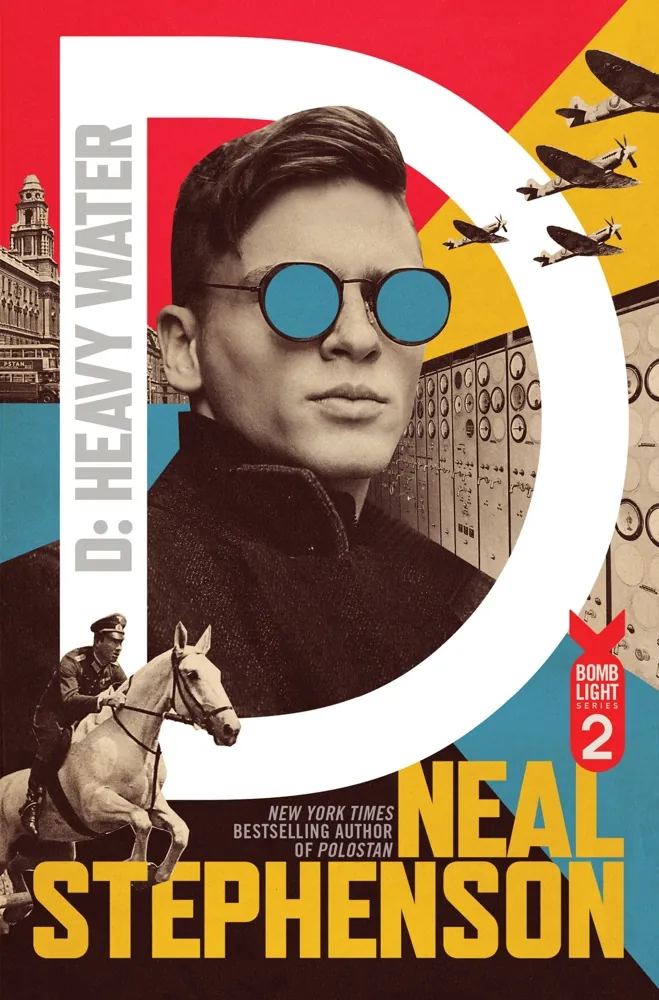
Author: Neal Stephenson
Page Count: Unknown
Publication Date: Expected publication 2026-10-13 APL
Wipe down that sticky counter for the fourth time today and listen up. Another brick of historical fiction is staggering toward us, dragging its chains. D: Heavy Water—the second bleeding chunk of whatever Stephenson calls this Bomb Light marathon—promises the usual geopolitical gymnastics. 1934. Moscow. A British journalist stumbling out of cultural reporting and directly into counter-intelligence because apparently filing copy about Soviet tractors wasn’t soul-crushing enough.
Give me a break.
The synopsis leans hard on the kind of globe-trotting cliché that makes you want to sweep the espresso grounds directly into your own eyes. London drawing rooms! War-torn Barcelona! Icy Norwegian fjords! Oh, the geopolitical tourism. It is the literary equivalent of a stale pastry left out under the heat lamp since Tuesday. We are supposed to care about a guy named Owen Crisp-Upjohn—what a profoundly punchable name—realizing that politics are messy while chasing deuterium. Heavy water. The literal sweat of atomic physics.
Or maybe I love it. Actually, scratch that. I despise it. No, wait—who am I kidding? I will probably sit in a damp corner reading every single word of it while the espresso machine hisses like a dying cobra.
The Aesthetics of Impending Doom
Stephenson used to write books about hackers and Victorian ether-pirates where the footnotes were longer than my patience for small talk. Now we get earnest men confronting “profound questions of honor.” Yawn. Where is the creeping, black panic? Where is the visceral horror of the splitting atom before anyone even knows what an atom actually looks like? Instead, we get a maverick aristocrat and a mysterious woman with a shadowy past—groundbreaking stuff, truly. I can practically smell the fedoras and the cinematic jazz chords playing in the background of this manufactured suspense.
Yet—and this is the irritating part—the man knows how to build a clockwork apparatus. You wind it up in 1934 and you watch Europe slowly lock the doors from the inside. It feels less like a novel and more like a slow-motion car crash filmed in high definition. You just want someone to yank the emergency brake before the whole continent goes up in flames. But history is a spoiler. We already know the ending. That is the real dread hanging over Cryptonomicon and all these related doorstoppers—the inescapable march toward the meat grinder.
The Heavy Metal of History
Let us be completely honest about what is happening here. This isn’t entertainment; it is architectural flexing. We are looking at a thirty-car freight train hauling dense physics jargon across international borders, and Owen is just standing on the caboose looking morally conflicted about his tax bracket. If you liked the cold, academic paranoia of Polostan, you will probably eat this up with a rusted spoon. Think Alan Furst meets The Manhattan Project, filtered through three hundred pages of technical digressions about heavy isotopes.
I just want something that keeps me awake during the graveyard shift. Something with teeth. Instead, I get high-stakes literary suspense for people who own leather-bound atlases.
The steam wand is screaming again. I am going to put on that battered Tom Waits record where every track sounds like it was recorded inside a garbage disposal and completely forget this entire narrative ever existed.
#BombLight #NealStephenson #HistoricalFiction #HeavyWater