Dark Tracks Book Review and Summary
-
 William Clark
 - 02 Mar, 2026 09:40
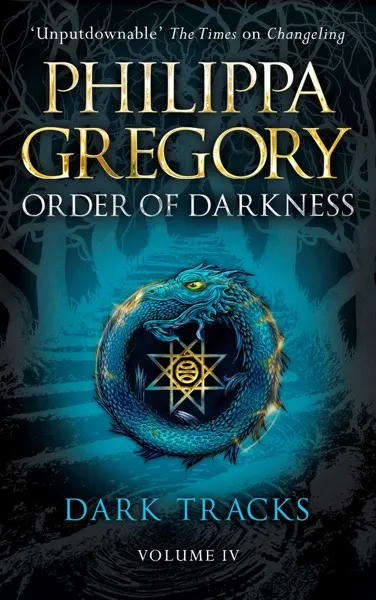
Dark Tracks
Author: Philippa Gregory
Page Count: Unknown
Publication Year: 2018-GB
Philippa Gregory’s Dark Tracks (2018) is a masterful blend of historical intrigue and supernatural suspense, a novel that cements her reputation as a writer who can weave the past and the uncanny into a tapestry both rich and unsettling. Gregory, best known for her Tudor-era sagas, here shifts her lens to a darker, more mystical corner of history—one where folklore and fact collide, and where the line between memory and myth blurs dangerously. The book is less a standalone thriller and more a continuation of her Order of Darkness series, a quartet that explores the superstitions and terrors of 15th-century Europe. Yet Dark Tracks stands apart for its haunting atmosphere and Gregory’s evolving craft, proving that she is not content to rest on the laurels of her earlier successes.
At its core, Dark Tracks is a meditation on the power of stories—how they shape our fears, justify our prejudices, and, ultimately, how they can be weaponized. Set against the backdrop of a plague-ravaged England and a Europe teetering on the edge of the Renaissance, the novel follows Luca Vero, a young inquisitor tasked with rooting out heresy, and his companion, the sharp-witted Isolde, as they investigate a series of bizarre and violent events. The crimes seem supernatural in nature: a woman found drained of blood, a child who speaks in tongues before dying, livestock mutilated in ways that defy explanation. Yet Luca, a man of science and reason, refuses to believe in the occult—until the evidence becomes impossible to ignore.
Gregory’s genius lies in her ability to ground the fantastical in the historical. The plague, religious fervor, and the rise of early modern skepticism are not mere backdrops but active forces shaping the narrative. The fear of witchcraft, for instance, is not a relic of the past but a living, breathing threat, one that Luca’s own institution—an early form of the Inquisition—both exploits and fears. Gregory doesn’t shy away from the brutality of the era; the violence is visceral, the superstitions visceral, and the moral dilemmas just as sharp. The reader is left questioning: Is the supernatural real, or is it a construct of a society primed to see evil in every shadow? Gregory refuses to give easy answers, instead letting the tension simmer until it boils over in a climax that is as shocking as it is inevitable.
What sets Dark Tracks apart from Gregory’s other works is her willingness to embrace ambiguity. Where her Tudor novels often thrived on the drama of courtly intrigue and clear moral lines, here the lines are deliberately muddy. Isolde, for example, is a woman of science and faith, but her rationality is tested by the unexplained. Luca, meanwhile, is a man of the Church who begins to doubt the very institution he serves. Their partnership is the heart of the novel, a dance of intellect and intuition that makes even the most outlandish events feel grounded. Gregory’s prose is economical but evocative, her descriptions of medieval landscapes—whether the cobbled streets of London or the mist-shrouded forests of Germany—immersive without overwhelming.
The novel’s title, Dark Tracks, is a metaphor that runs deep. These “tracks” are not just footprints in the mud but the lingering traces of the past, both personal and collective. Gregory suggests that history is not a linear path but a labyrinth, where every turn reveals another layer of fear, another story waiting to be misinterpreted. The plague, the witch hunts, the political machinations of the Church—all are part of this dark tapestry, and the characters must navigate it with the same caution they would a physical maze. The result is a book that is as much about the stories we tell ourselves as it is about the horrors we create.
Gregory’s style here is more introspective than in her earlier works, reflecting a maturity in her storytelling. She trusts the reader to sit with the unease, to question alongside her characters, and to find horror not just in the supernatural but in the very human capacity for cruelty. The supernatural elements, when they arrive, are not cheap thrills but revelations—moments where the veil between reason and belief is torn away, often violently. And yet, even in these moments, Gregory refuses to offer catharsis. The ending is bittersweet, leaving the reader with more questions than answers, a hallmark of her most compelling work.
Dark Tracks is not a book for those seeking a neat resolution or a hero’s triumph. It is a book for those who appreciate the weight of history, the fragility of truth, and the way fear can shape a society. Gregory has crafted a novel that lingers, that haunts, and that forces us to confront the darkness not just in the past but in ourselves. It is a testament to her skill as a storyteller that she can make the medieval world feel so immediate, and that she can make the supernatural feel like an extension of the very real terrors of the human experience.
For fans of historical fiction with a twist, or readers who enjoy their thrills seasoned with a dash of the macabre, Dark Tracks is a must-read. It is a book that will leave you looking over your shoulder—not just for ghosts, but for the stories we tell to explain them.
#DarkTracks #PhilippaGregory #HistoricalFiction #SupernaturalThriller #MedievalHorror #DarkFantasy