Embers of Magic Book Review and Summary
-
 James Miller
 - 24 Aug, 2026 08:17
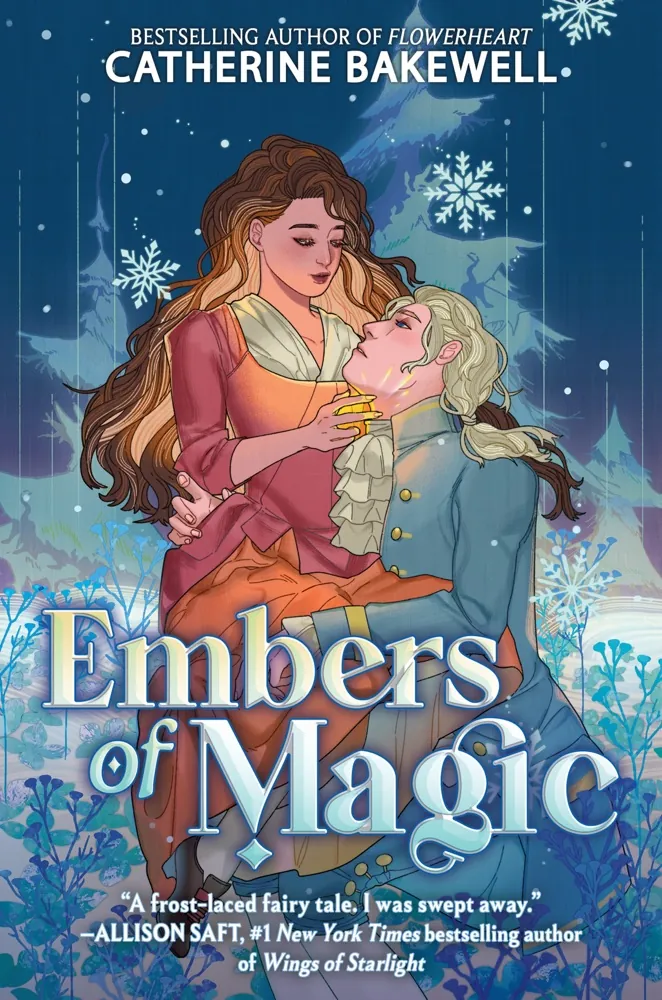
Author: Catherine Bakewell
Page Count: Unknown
Publication Date: Expected publication 2026-11-10 APL
The synopsis for Embers of Magic arrives like a half-burned letter—charred at the edges, promising something exquisite but leaving too much to the imagination. Bakewell’s Flowerheart was a delicate, sunlit affair, a fairy tale for readers who prefer their magic to bloom like roses rather than crackle like embers. This? This is a different beast entirely, a reimagining of The Snow Queen that smells of frostbitten pines and the faint, acrid tang of regret.
Fiamma’s fire is her curse—unpredictable, destructive—and yet, the way the synopsis frames her as a reluctant heroine, fleeing her past like a ghost from a haunted ballroom, is so last season. We’ve seen this before: the magic-wielding outcast, the reluctant assassin with a heart of gold, the slow-burn romance where the prince is too good to be true. But where Bakewell’s last book was a lullaby, this feels like a warning. The frost creeping across the kingdom isn’t just a plot device; it’s a metaphor for something far more insidious, something that seeps into Joseph’s bones until he’s no longer the boy Fiamma first met. And that’s where the synopsis stumbles—or perhaps it’s the author’s intent.
The tension between Fiamma and Joseph is the kind that makes you want to slap both of them simultaneously. She’s running from her magic, from her family, from the very thing that makes her dangerous—while he’s drowning in his father’s expectations, his own heart slowly turning to ice. It’s the kind of dynamic that could be brilliant if Bakewell leans into the psychological weight of it. But the synopsis is too vague. Where’s the sharp edge? Where’s the moment when Fiamma realizes Joseph isn’t just being noble—he’s being erased by the frost, and she’s the only one who can see it? Right now, it reads like a checklist: check, reluctant heroine; check, slow-burn romance; check, magical winter curse. No teeth.
And yet—and yet—there’s something here that could be electric. The way the synopsis hints at Fiamma’s fire being the only thing that can thaw Joseph’s heart is a gambit worth taking. If Bakewell plays it right, this could be the kind of story that lingers like the afterglow of a fire—warm, dangerous, impossible to look away from. But she’ll need to stop treating the reader like an audience for a stage play and start treating us like we’re standing in the flames with her.
The real question is whether Bakewell can resist the temptation to make this a romance first and a fairy tale second. The synopsis leans heavily into the Joseph/Fiamma dynamic, but the frost creeping across the kingdom? That’s the real villain here, and if it’s sidelined in favor of swoony glances and emotional breakdowns, this could devolve into another A Court of Thorns and Roses knockoff—only with more frost and less wit. The last thing we need is another story where the magic is just a backdrop for the love story.
But then again—maybe that’s the point. Maybe Bakewell is going for The Winter’s Tale meets The Snow Child, a story where the romance is the frost, and the fire is the only thing that can melt it. If so, she’d be playing in the same league as Sarah Beth Durst, whose The Girl Who Circumnavigated Fairyland in a Ship of Her Own Making series proved that fairy-tale retellings work best when they’re uncomfortable. But Durst had the luxury of whimsy; Bakewell’s got frost and fire, and if she doesn’t make them burn, this could just be another forgettable rehash.
The synopsis is a tease, a half-burned promise. And like Fiamma’s magic, it’s dangerous—because it makes you want more, even when you know it might leave you scorched.
My driver took the wrong route this morning, and now I’m late for a meeting I’d rather not attend. The book will have to wait.
#FairyTaleRetellings #FrostAndFire #BakewellNext