Feijoada: Brazil’s Hearty Black Bean Stew and the Soul of a Nation
-
 Eleanor Hughes
 - 07 Aug, 2026 00:26
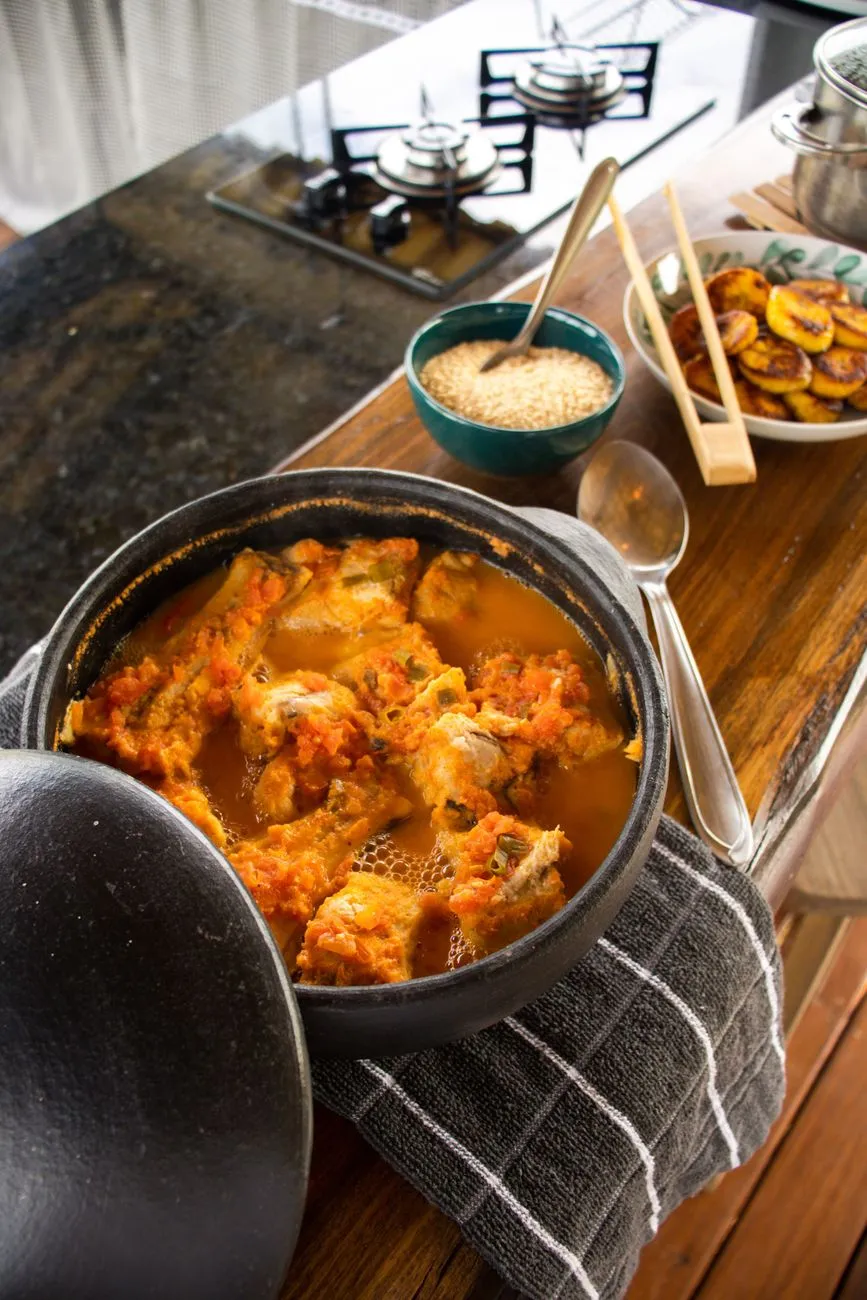
The aroma of slow-cooked black beans mingles with smoky pork and garlic, filling the air with a scent that has echoed through Brazilian kitchens for centuries. This is feijoada—the national dish of Brazil—a stew so deeply embedded in the country’s identity that it transcends mere food, becoming a symbol of resilience, cultural fusion, and communal celebration. Born from the ingenuity of enslaved Africans, refined by Portuguese colonizers, and embraced by every social class, feijoada is more than a meal; it is a living testament to Brazil’s complex history and vibrant culinary soul.
From the colonial sugar plantations of the 16th century to the bustling botecos of modern Rio de Janeiro, feijoada has evolved while retaining its core essence: a hearty, nourishing stew that brings people together. Its preparation is an act of love, its consumption a ritual, and its flavors a mosaic of Brazil’s multicultural heritage. To understand feijoada is to understand Brazil itself—its struggles, its triumphs, and its unshakable spirit.
The Birth of Feijoada: A Dish Forged in Resistance
The origins of feijoada trace back to the brutal era of Brazilian slavery, when enslaved Africans were forced to work on sugar and coffee plantations. With limited resources, they had to make do with the scraps left behind by their enslavers—pig parts like ears, feet, and tails, which were considered undesirable by the Portuguese elite. These cuts, rich in flavor and nutrients, were combined with black beans, a staple crop in Brazil, to create a dish that was both filling and economical.
The word feijoada itself derives from feijão, the Portuguese word for bean, but the dish’s soul lies in its African roots. Enslaved Africans brought with them techniques like slow cooking and the use of offal, which became integral to feijoada’s preparation. Over time, Portuguese colonizers added their own touches, such as garlic, bay leaves, and pork sausages like linguiça, further enriching the dish’s flavor profile.
By the 19th century, feijoada had transitioned from a survival food to a celebrated dish among all social classes. Wealthy Brazilians began incorporating it into their diets, often serving it on weekends or special occasions. Today, it is a staple in restaurants across the country, with each region adding its own unique twist—whether it’s the addition of farofa (toasted cassava flour) in São Paulo or the inclusion of couve (collard greens) in Minas Gerais.
The transformation of feijoada from a symbol of oppression to a national treasure reflects Brazil’s broader cultural evolution. It is a dish that tells a story of adaptation, resistance, and unity—a story that continues to unfold with every pot of feijoada simmered in Brazilian homes.
The Art of Crafting Feijoada: A Step-by-Step Guide to Authentic Flavor
Feijoada is not a dish that can be rushed. Its magic lies in the slow, patient melding of flavors, a process that can take up to 12 hours of simmering. While regional variations exist, the traditional recipe remains a sacred ritual for many Brazilians. Here’s how to create an authentic feijoada that honors its heritage:
1. The Beans: The Heart of the Dish
Start with high-quality dried black beans, preferably the feijão preto variety, which is native to Brazil. Soak the beans overnight in water to reduce cooking time and ensure even tenderness. Some chefs prefer to use a pressure cooker to speed up the process, but purists insist on the slow-cooked method for maximum depth of flavor.
2. The Meat: A Symphony of Pork
The meats used in feijoada are as diverse as they are flavorful. Traditional cuts include:
- Pork shoulder (for its marbled fat, which adds richness)
- Pork ribs (for a meaty, succulent bite)
- Pork sausage (linguiça or chorizo, for a smoky kick)
- Pork belly or fatback (to render down and enrich the broth)
- Smoked pork loin (for a balance of smokiness and tenderness)
- Pig’s feet or ears (for gelatinous texture and collagen)
For a truly authentic touch, some recipes include beef cuts like costela (short ribs) or even dried beef (carne seca), though these are less traditional. The key is to use a variety of cuts to create layers of flavor—fat for richness, connective tissue for body, and lean meat for texture.
3. The Aromatics: Building the Foundation
The base of feijoada’s flavor comes from a sofrito of onions, garlic, and bay leaves, sautéed in pork fat or olive oil. Some recipes include dried red peppers for heat or cilantro for brightness. The sofrito is added to the beans early in the cooking process to infuse the broth with its essence.
4. The Broth: Slow and Steady Wins the Race
Once the beans and meats are combined, the dish is simmered gently for hours, allowing the flavors to deepen and the meats to become fall-off-the-bone tender. Water or broth is added as needed to maintain a thick, stew-like consistency. Some chefs add a splash of cachaça (Brazilian sugarcane spirit) for a subtle kick, while others use orange peel for a hint of citrus.
5. The Finishing Touches
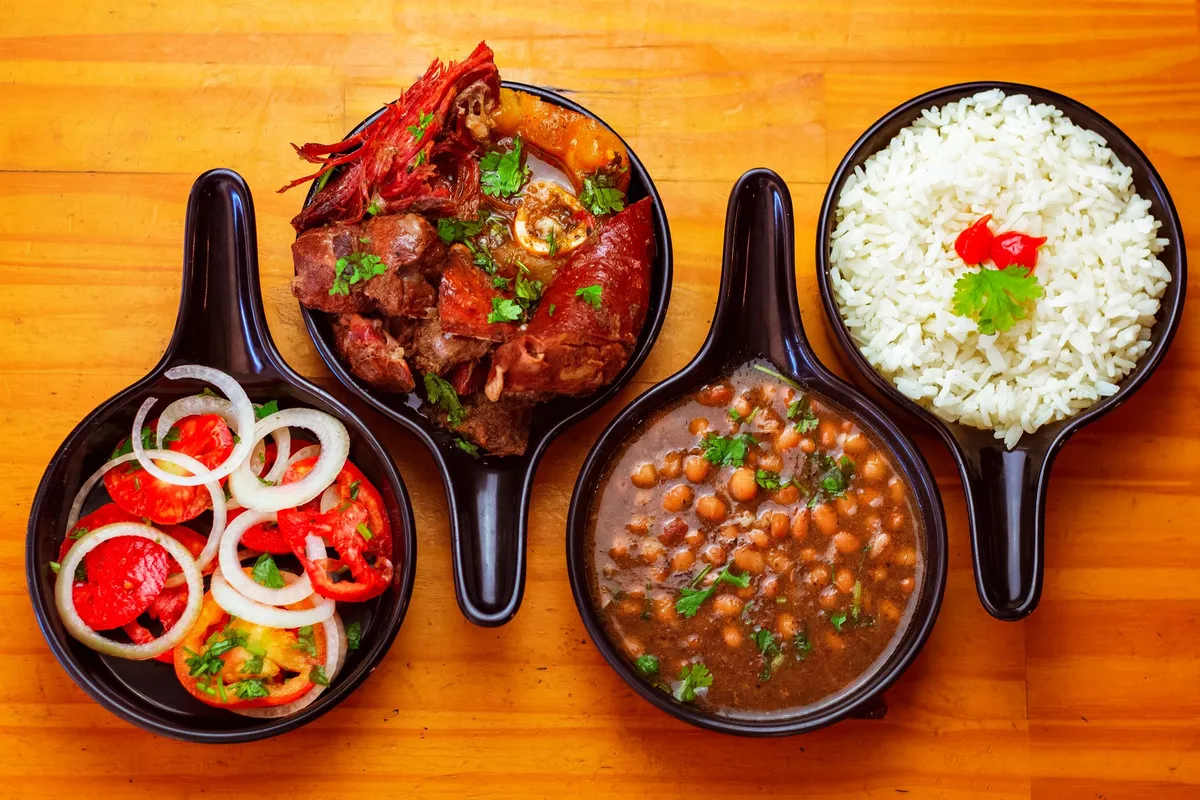
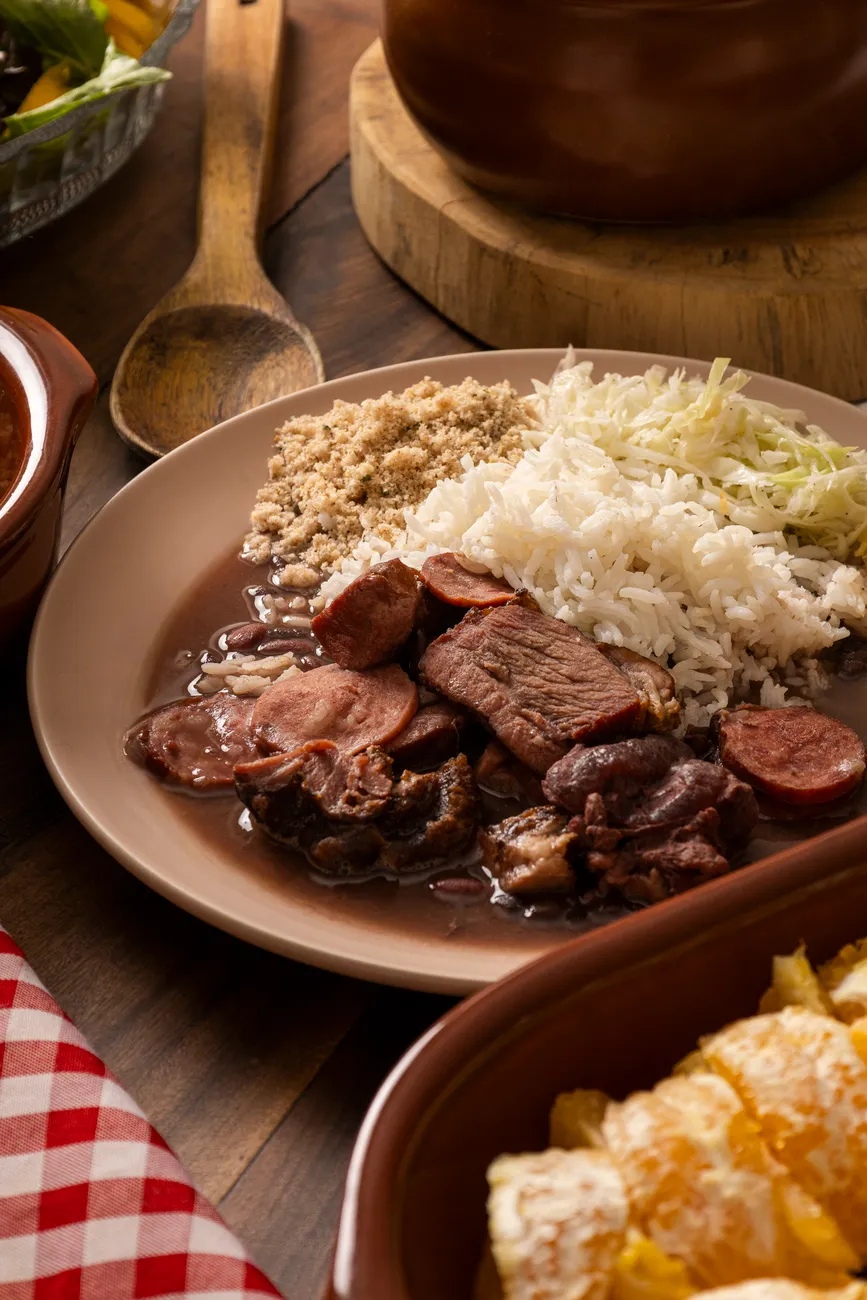
Feijoada is traditionally served with an array of accompaniments that enhance its flavors:
- Farofa: Toasted cassava flour, often mixed with bacon, eggs, or herbs, adds a crunchy contrast.
- Couve à Mineira: Collard greens sautéed with garlic and olive oil, a nod to Minas Gerais’ culinary traditions.
- Orange slices: The acidity cuts through the richness of the stew.
- Hot sauce or malagueta pepper: For those who crave heat.
- White rice: A simple, neutral base to soak up the broth.
- Torresmo: Crispy fried pork rinds, adding a salty crunch.
The dish is often enjoyed as a midday meal on weekends, a tradition that dates back to when enslaved people had Sundays off and feijoada became a communal feast. Today, it remains a symbol of togetherness, bringing families and friends around the table.
Feijoada Across Brazil: Regional Variations and Modern Twists
While feijoada is universally recognized as Brazil’s national dish, its preparation varies significantly from region to region. Each area adds its own cultural influences, ingredients, and techniques, creating a diverse tapestry of flavors. Here’s a look at how feijoada is reimagined across the country:
| Region | Key Ingredients | Unique Twist |
|---|---|---|
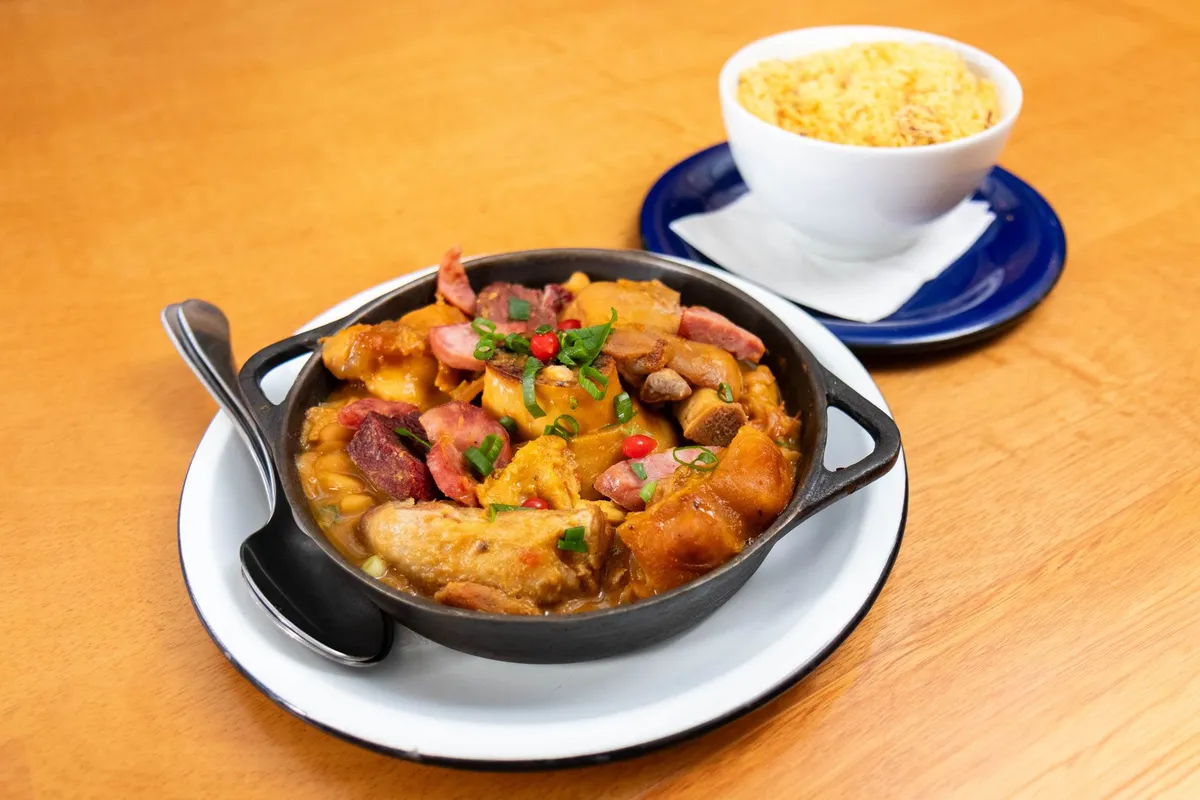
| Rio de Janeiro | Pork ribs, sausage, bacon, beef | Served with farofa and orange slices |
| São Paulo | Pork shoulder, linguiça, smoked bacon | Often includes a touch of vinegar |
| Minas Gerais | Pork belly, sausage, dried beef (carne seca) | Collard greens (couve) are a must |
| Bahia | Coconut milk, dendê oil, peanuts | Influenced by Afro-Brazilian moqueca |
| Pernambuco | Goat meat, jerked beef | Spicier, with a coastal seafood twist |
In Bahia, feijoada takes on a distinctly Afro-Brazilian flair with the addition of coconut milk and dendê oil, ingredients that reflect the state’s strong African heritage. Meanwhile, in Minas Gerais, the dish is often paired with pão de queijo (cheese bread) and linguiça de Minas, a local sausage with a distinct smoky flavor.
Modern chefs are also putting their own spin on feijoada, experimenting with vegetarian versions (using mushrooms and smoked tofu) or fusion twists like feijoada tacos or feijoada-inspired burgers. These innovations ensure that the dish remains relevant in contemporary Brazilian cuisine while staying true to its roots.
Feijoada in Culture: More Than Just a Dish
Feijoada’s significance extends far beyond the kitchen. It is a cultural icon, a symbol of Brazil’s multicultural identity, and a marker of social change. During the military dictatorship (1964–1985), feijoada became a subtle act of resistance. While the government suppressed dissent, Brazilians continued to gather around the pot of feijoada, using it as a space to discuss politics, share stories, and preserve their heritage.
In literature and music, feijoada often appears as a metaphor for Brazilian identity. The dish’s mix of ingredients—African beans, Portuguese meats, Indigenous techniques—mirrors the country’s racial and cultural diversity. Poets and musicians have celebrated feijoada as a symbol of unity in diversity, a dish that brings together people of all backgrounds.
Feijoada also plays a role in Brazilian festivals and holidays. During Carnival, many blocos (street parties) serve feijoada as a communal meal, reinforcing the dish’s association with celebration and togetherness. In São Paulo, the Feijoada da Gente festival celebrates the dish’s history and cultural impact, drawing thousands of visitors each year.
For many Brazilians, feijoada is more than food—it’s a rite of passage. Learning to cook feijoada is a rite of passage for young chefs, and sharing a pot of feijoada with loved ones is a way to honor family traditions. It is a dish that carries the weight of history, the joy of community, and the pride of a nation.
The Global Appeal of Feijoada: Why the World is Falling in Love
While feijoada is undeniably Brazilian, its appeal has spread far beyond the country’s borders. In cities like New York, London, and Lisbon, Brazilian restaurants serve feijoada as a way to introduce diners to the country’s rich culinary heritage. Chefs around the world are drawn to its complex flavors, hearty texture, and cultural depth.
In Portugal, feijoada is sometimes called feijoada à transmontana, a nod to the country’s own bean stews but with a distinctly Brazilian twist. In Japan, where Brazilian-Japanese communities thrive, feijoada is a staple in churrascarias (Brazilian steakhouses), often served with sushi and sashimi for a fusion experience.
The dish’s global popularity can be attributed to several factors:
- Its versatility: Feijoada can be adapted to suit vegetarian, vegan, or gluten-free diets without losing its essence.
- Its comfort factor: The rich, smoky flavors and tender meats make it a soul-warming dish, perfect for cold weather.
- Its story: Diners are drawn to the dish’s history and the way it reflects Brazil’s multicultural identity.
Feijoada’s journey from a survival food to a global phenomenon is a testament to its universal appeal. It is a dish that speaks to the human experience—of struggle, resilience, and joy—and invites people from all walks of life to share in its story.
Preserving the Legacy: How to Experience Feijoada Like a Local
For those eager to experience feijoada in its purest form, Brazil offers countless opportunities to indulge in this national treasure. Here’s how to make the most of your feijoada journey:
Where to Eat Feijoada in Brazil
- Rio de Janeiro: Head to Bar do Mineiro in Santa Teresa or Bar Brasil in Copacabana for a classic experience.
- São Paulo: Try Bar do Juarez in Vila Madalena or Figueira Rubaiyat for a gourmet twist.
- Salvador, Bahia: Visit Restaurante Yemanjá for a Bahian-inspired feijoada with coconut and dendê.
- Minas Gerais: Tia Nilda in Belo Horizonte is famous for its traditional feijoada with couve and pão de queijo.
How to Cook Feijoada at Home
If you’re inspired to make feijoada yourself, here’s a simplified recipe to get you started:
- Soak 1 lb (450g) black beans overnight.
- Brown 1 lb (450g) pork shoulder, 1 lb (450g) pork ribs, 1 lb (450g) sausage, and 4 oz (115g) pork belly in a large pot.
- Sauté 1 onion, 4 garlic cloves, and 2 bay leaves in the rendered fat until fragrant.
- Add the beans, 8 cups water or broth, and simmer for 3–4 hours until tender.
- Season with salt, pepper, and a splash of cachaça (optional).
- Serve with farofa, collard greens, rice, and orange slices.
Feijoada Etiquette
- In Brazil, feijoada is often a weekend meal, so don’t expect to find it on weekday menus.
- It’s common to eat feijoada in two sittings—first the stew, then the sides like farofa and rice.
- Leftovers taste even better the next day, as the flavors deepen overnight.
The Future of Feijoada: A Dish That Keeps Evolving
As Brazil continues to evolve, so too does feijoada. Chefs are experimenting with sustainable ingredients, such as locally sourced meats and plant-based alternatives, to keep the dish relevant in a changing world. Meanwhile, food historians are working to preserve the oral traditions and regional variations that make feijoada so unique.
One thing is certain: feijoada will endure. It is more than a dish—it is a living archive of Brazilian history, a celebration of cultural fusion, and a reminder of the power of food to bring people together. Whether enjoyed in a humble boteco in Rio or a high-end restaurant in São Paulo, feijoada remains a testament to Brazil’s resilience, creativity, and unbreakable spirit.
As the great Brazilian writer Jorge Amado once said, “Feijoada is the only dish that can feed a family of ten with love and leftovers.” And in that simple truth lies the magic of feijoada—it nourishes not just the body, but the soul.
#BrazilianFood #FeijoadaLove #CulturalCuisine #ComfortFood #GlobalFlavors