Heartstopper, Volume 2 Book Review and Summary
-
 Marta Wisniewska
 - 01 Nov, 2025 23:02
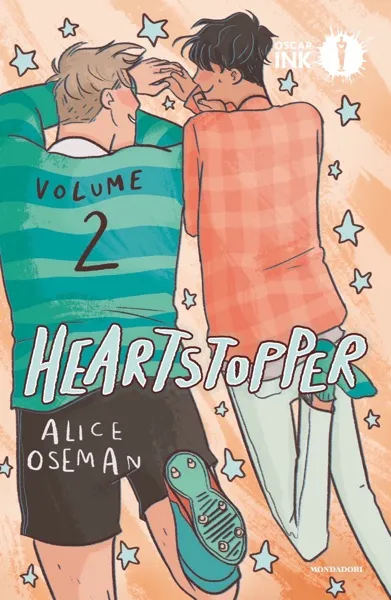
Heartstopper, Volume 2
Author: Alice Oseman
Page Count: Unknown
Publication Year: 2019-GB
Heartstopper, Volume 2 is the kind of book that reminds you why graphic novels can pack such an emotional punch. Alice Oseman’s sequel to Volume 1 doesn’t just expand the world of Charlie and Nick—it deepens it with warmth, authenticity, and a quiet insistence that queer love stories deserve to be told with tenderness rather than drama. In a publishing landscape still catching up to the richness of LGBTQ+ narratives, Oseman’s gentle, unhurried storytelling feels revolutionary.
At its core, Heartstopper, Volume 2 is about the quiet evolution of love—how it starts as a fragile spark and slowly becomes a steady flame. The story picks up where Volume 1 left off, with Nick and Charlie navigating the early days of their relationship, but this time, the focus shifts from the thrill of newfound attraction to the messier, more human work of understanding one another. Oseman excels at capturing those small, almost imperceptible moments that define a relationship: the way Nick hesitates before holding Charlie’s hand in public, the way Charlie overanalyzes a text message, the way both boys struggle to name what they’re feeling because the words haven’t caught up to the emotion yet. It’s a testament to Oseman’s skill that she makes these ordinary moments feel extraordinary.
The book’s strength lies in its ability to balance humor and heartbreak without tipping into melodrama. Oseman’s dialogue is crisp and natural, filled with the kind of banter that feels lifted straight from real teenage conversations. There’s a scene where Nick, overwhelmed by the pressure of his rugby teammates’ expectations, confesses to Charlie that he’s not sure he can be openly gay yet. It’s a moment that could easily veer into heavy-handedness, but Oseman handles it with such delicacy that it feels more like a plea for understanding than a confrontation. Charlie’s response—patient, loving, but also firm—shows the maturity of their relationship, even as it’s still in its infancy. It’s a scene that lingers because it’s not about resolving conflict with grand gestures, but about two people learning to communicate, even when the words are hard to find.
Visually, Oseman’s art is deceptively simple but incredibly effective. Her line work is clean and expressive, with a softness that mirrors the gentleness of the story. The character designs are expressive in the best way—Nick’s awkward, broad-shouldered frame conveys his insecurity just as clearly as Charlie’s slight, wiry build suggests his vulnerability. The use of color is subtle but meaningful; warm tones dominate, reflecting the growing affection between the characters, while cooler shades creep in during moments of doubt or tension. Oseman also uses negative space brilliantly, letting the quiet moments breathe. A single panel of Nick sitting alone on a bench, staring at his phone, speaks volumes about his internal struggle without a single word.
What makes Heartstopper, Volume 2 so special is its refusal to sensationalize queer love. There’s no dramatic coming-out explosion, no explosive confrontation with bigoted family members—just the quiet, persistent reality of two boys figuring out how to love each other in a world that isn’t always kind. Oseman’s world-building is subtle but rich, with supporting characters like Tao, Elle, and the ever-watchful Victoria adding depth and texture to the story. Even minor characters feel fully realized, their own arcs playing out in the background without stealing focus from Charlie and Nick’s journey.
Oseman’s writing shines in its unapologetic focus on the mundane. A scene where Charlie and Nick share a bag of chips on a park bench is as emotionally charged as any grand romantic gesture. It’s a reminder that love isn’t always about grand declarations; sometimes it’s about the quiet, everyday ways we show up for each other. The book also excels in its portrayal of mental health, with Charlie’s anxiety and Nick’s self-doubt handled with a nuance that feels authentic rather than exploitative. Oseman doesn’t offer easy fixes, but she does offer hope—a hope that feels earned because it’s rooted in the characters’ growth, not just plot convenience.
If there’s any criticism to be leveled, it’s that the pacing occasionally stumbles, with some transitions feeling a bit abrupt. A few subplots, like Elle’s adjustment to her new school, feel underdeveloped compared to the main narrative. But these are minor quibbles in an otherwise flawlessly constructed story. Heartstopper, Volume 2 isn’t just a sequel; it’s a testament to the power of slow-burn storytelling. It’s a book that trusts its readers to sit with the quiet moments, to feel the weight of a glance or the significance of a shared silence.
In a world where LGBTQ+ stories are still often reduced to tragedy or struggle, Heartstopper is a breath of fresh air. It’s a story that says queer love can be soft, messy, hopeful, and ordinary—all at once. Alice Oseman has crafted something rare: a graphic novel that feels like a warm hug, a reminder that love, in all its forms, is worth the risk.
#Heartstopper #AliceOseman #GraphicNovel #LGBTQRomance #QueerLiterature #CharlieAndNick