Hope nation Book Review and Summary
-
 Beatriz Costa
 - 23 Jan, 2025 05:28
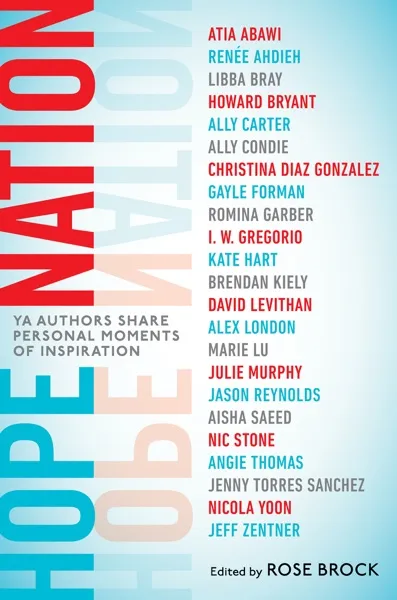
Hope nation
Author: Rose Brock
Page Count: Unknown
Publication Year: 2018-GB
Hope Nation: Where Stories Ignite the Fire Within
In a world that often feels fractured and despairing, Hope Nation arrives not just as a book, but as a quiet revolution of resilience. Compiled and curated by educator and advocate Rose Brock, this powerful anthology brings together voices from across the spectrum of literature—young adult authors, poets, journalists, and survivors—to craft a tapestry of hope that is as urgent as it is uplifting. Published in 2018, Hope Nation quickly ascended to global acclaim, not because it promises easy answers, but because it refuses to look away from hard truths while offering a lantern in the dark.
At its core, Hope Nation is a celebration of stories as lifelines. Brock’s vision is clear: hope is not a passive state but an active practice, forged in struggle and sustained through community. The book challenges the notion that hope is naive or unrealistic—especially in a time when cynicism is often mistaken for sophistication. Instead, it argues that hope is radical, necessary, and deeply human. Each contributor—whether through memoir, essay, or poetry—shares a fragment of their journey: loss, injustice, failure, or fear, and the small, stubborn flame that kept them going. These are not stories of perfect triumph, but of persistent courage. They are windows into private battles made public, not for pity, but for empowerment.
Rose Brock’s curation is masterful. She doesn’t impose a single narrative; rather, she orchestrates a chorus of voices, each resonating with authenticity. The selections are diverse—some luminous, some raw, some defiant—mirroring the multiplicity of human experience. There is no sugarcoating here. Instead, there is raw honesty. For instance, Angie Thomas, author of The Hate U Give, writes about the burden of representation and the courage to speak up even when the world is deaf. David Levithan, in a poignant piece, explores the quiet hope found in everyday connections. And there are voices like those of Francisco X. Stork and Marie Lu, who remind us that hope often lives in the margins, in the unnoticed acts of kindness and the unspoken acts of love.
Brock’s editorial voice is present but unobtrusive—she provides context where needed, but never overshadows the contributors. Her introductions to each section are concise and insightful, framing the themes without dictating meaning. This respect for the reader’s intelligence is refreshing. The book doesn’t lecture; it listens. And in listening, it invites the reader to reflect, to question, and ultimately, to hope alongside these voices.
What makes Hope Nation particularly resonant is its timing. Though published in 2018, its messages feel timeless and urgently relevant. In an era marked by division, climate anxiety, political unrest, and social injustice, the book serves as both balm and battle cry. It doesn’t ask readers to ignore the darkness, but to carry a light through it. Hope, as Brock and her contributors make clear, is not about denying pain, but about refusing to let it have the final word.
The writing style across the anthology is varied—some pieces are lyrical, others conversational, some poetic, others journalistic—but they all share a thread of emotional truth. The book doesn’t rely on grand gestures or easy resolutions. Instead, it offers small sparks: a teacher who stayed after class to listen, a parent who held a child through night terrors, a writer who kept typing even when the words bled. These are the quiet acts that build hope into a movement.
One of the most powerful aspects of Hope Nation is its inclusivity. It features voices from marginalized communities—people of color, LGBTQ+ individuals, immigrants, and those living with disabilities—whose stories of resilience are too often erased or overlooked. By centering these narratives, the book not only broadens the definition of hope but also expands the circle of who gets to claim it. Hope, this anthology declares, is not a privilege—it’s a birthright.
Ultimately, Hope Nation is more than a collection of uplifting stories. It is a call to action. Not action in the grand, dramatic sense, but in the daily practice of showing up—for ourselves and for others. It reminds us that hope is not a feeling that descends upon us, but a choice we make, again and again. And in making that choice, we become part of a larger community of dreamers and doers.
Rose Brock has crafted not just a book, but a movement. Hope Nation doesn’t just tell us to hope—it shows us how. It doesn’t just offer comfort—it demands courage. It doesn’t just speak to the young—it speaks to anyone willing to listen, to anyone willing to believe that the world can be better, not despite the darkness, but because of the light we carry within us.
In a time when despair is often viral, Hope Nation is a necessary antidote—a reminder that hope is contagious, and that stories, when shared with honesty and heart, can change everything.
#HopeNation #StoriesOfResilience #WeNeedDiverseBooks #HopeIsAction #YALitMatters #ReadForHope