I Hope This Email Finds You in Hell Book Review and Summary
-
 Natalia Sokolova
 - 08 Aug, 2026 04:26
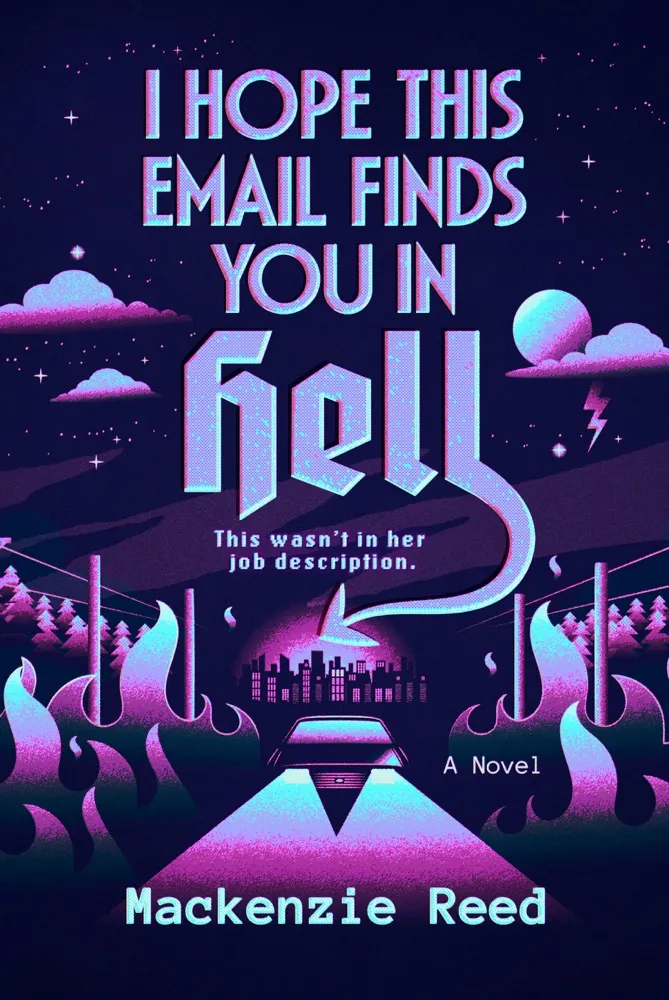
Author: Mackenzie Reed
Page Count: Unknown
Publication Date: Expected publication 2026-09-01 APL
The synopsis for I Hope This Email Finds You in Hell reads like a corporate horror movie where the real monster isn’t the demon—it’s the soul-crushing tedium of a life insurance office. Brie Benson, our protagonist, is the kind of woman who’s spent so long pretending to care about spreadsheets that she’d rather watch a demonic exorcism than admit she’s emotionally dead. And yet—and yet—she stumbles into this mess anyway, like a boxer who finally throws a punch after years of taking hits.
The premise is a masterclass in anti-romance horror, the kind where the love interest isn’t a knight in shining armor but a demon hunter with a very specific skill set—exorcisms, bureaucracy, and a side of brooding. Luke isn’t some rugged hero; he’s the guy who probably files his taxes in Latin and treats hell like a bad customer service call. The dynamic between Brie and Luke feels like the early stages of a Fight Club romance, where the only thing more explosive than their growing feelings is the idea that hell itself might be their undoing. But here’s the kicker: the real tension isn’t just the supernatural stakes—it’s the corporate hell they’re walking into. Times Square as a portal? That’s not just a setting; it’s a metaphor for how Brie’s entire life has been a grind, a loop of meaningless tasks until she finally snaps.
The synopsis leans hard into the workplace horror trope, but with a twist—what if the monsters aren’t just lurking in the break room but are the break room? The idea of a demonic underworld with bureaucratic nightmares is either genius or a sign that Mackenzie Reed has been stuck in a meeting with the devil himself. It’s the kind of premise that makes you wonder if this is going to be a True Detective meets Office Space nightmare, where the real horror isn’t the exorcism but the fact that Brie’s entire life was just a slow descent into hell in a cubicle.
Thematically, this book is a survival story disguised as a supernatural thriller. Brie’s compartmentalization isn’t just a coping mechanism—it’s her armor, and the moment she sees Luke’s exorcism, that armor shatters. The question isn’t whether she can handle the supernatural; it’s whether she can handle the fact that she’s been alive this whole time and didn’t even realize it. And Luke? He’s the kind of character who makes you root for him even when he’s being a jerk—because deep down, he’s just as lost as Brie, just with a much better excuse.
The vagueness here is deliberate, and that’s where the real potential lies. The synopsis doesn’t spell out the rules of hell’s bureaucracy, but that’s the beauty of it—it’s unsettling because we’re left to imagine what kind of hell would make a demon hunter sigh and say, “Yeah, I’ve dealt with worse in HR.” It’s the kind of ambiguity that makes you think of Annihilation meets The Office, where the horror isn’t just external but systemic—and Brie’s entire life was just one long, soul-crushing meeting.
I’d bet my fight gear this book is going to be a slow-burn disaster, the kind where the real horror isn’t the demon but the fact that Brie’s entire world was built on lies—about her job, about her life, about the fact that she ever thought she’d be happy in a cubicle. And Luke? He’s the kind of character who’ll either save her or break her, depending on whether he’s the hero or just another layer of hell.
But here’s the thing—this isn’t just a horror story. It’s a breakup story, a career story, a self-discovery story, all wrapped up in a package that smells like stale coffee and bad decisions. And if Mackenzie Reed pulls this off, it’ll be the kind of book that makes you question everything you thought you knew about hell—and why you ever thought a life insurance job was a good idea in the first place.
Now if you’ll excuse me, I just spilled coffee all over my desk. Again.