The Secrets of the Colosseum: Surviving Rome's Bloody Arena
-
 Mark Dinn
 - 06 Jul, 2026 10:00
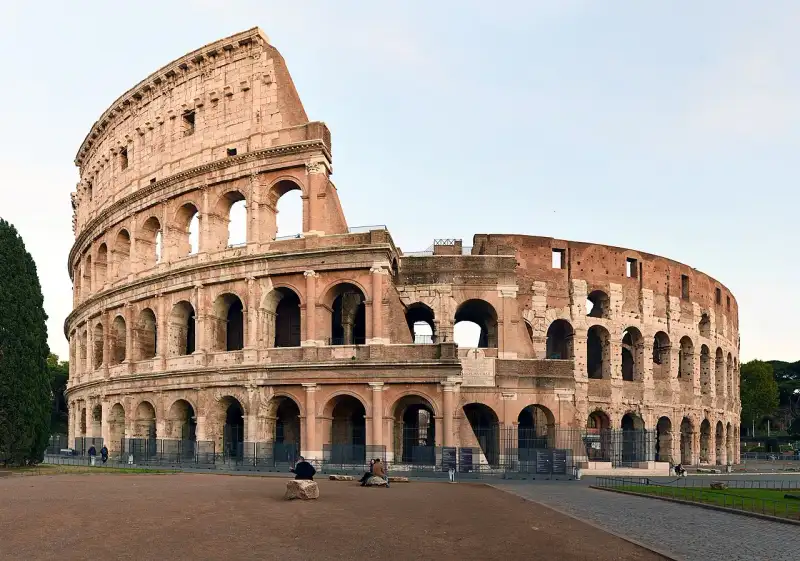
Close your eyes and listen. Can you hear it? Beneath the distant hum of modern traffic in the heart of the Eternal City, there is a phantom roar. It is the deafening, blood-curdling scream of fifty thousand souls, baying for blood under the blazing Mediterranean sun. The air is thick with the copper stench of spilled life, the musky odor of terrified, exotic beasts, and the acrid sting of burning incense meant to mask the smell of death. Welcome to the Flavian Amphitheatre. Welcome to the Colosseum.
As a writer of historical fiction, I have walked the ruins of many ancient monuments, running my hands over cold stones and wondering about the stories they hold. #AncientHistory is not just a collection of dates and names; it is the raw, pulsing narrative of human triumph and depravity. And nowhere is that dichotomy more intensely concentrated than in the blood-soaked sands of Rome’s greatest arena.
Today, we dive deep into the belly of the beast. We will explore not just the architecture of this magnificent slaughterhouse, but the lived experiences of those who fought, bled, and died within its walls. We will uncover the secrets of the Colosseum, peeling back the layers of myth to reveal the terrifying, awe-inspiring reality of surviving Rome’s most infamous stage. #Rome #Colosseum #History
The Roar of the Flavian Amphitheatre: An Introduction to Hell
To understand the Colosseum, one must first understand the political climate of its inception. In the year 69 AD, known as the Year of the Four Emperors, Rome was torn apart by civil war following the suicide of the tyrannical Nero. Emerging from the chaos was Vespasian, a pragmatic and battle-hardened general. To consolidate his power and distance himself from Nero’s legacy of selfish excess, Vespasian made a brilliant political move. He drained the artificial lake of Nero’s opulent Golden House (the Domus Aurea) and decreed that a massive public amphitheater would be built in its place. He gave the land back to the people—in the form of an arena of death.
Opened in 80 AD by Vespasian’s son, Titus, with a staggering hundred days of games, the Colosseum was an architectural marvel and a political weapon. It was a microcosm of Roman society, a place where the social order was strictly enforced through seating arrangements, and where the Emperor could present himself as a god among men, dealing life and death with the flick of a thumb. But for the men and women standing on the sand—the harena, from which we get the word “arena”—the politics meant nothing. For them, the Colosseum was a crucible of survival.
The Architecture of Slaughter: The Secrets of the Hypogeum
When you look at the Colosseum today, you see a labyrinth of brick and stone exposed where the arena floor used to be. This subterranean world is the hypogeum, the beating heart and secret engine of the amphitheater. It was added by the Emperor Domitian, and it transformed the games from mere combat into theatrical spectacles of impossible magic.
- The Trap Doors: The arena floor was dotted with dozens of trap doors. Imagine the terror of standing on the sand, knowing that at any moment, the ground beneath you could spring open, releasing a starving leopard, a pack of wolves, or a heavily armed opponent.
- The Elevators: To bring these beasts and men to the surface, the Romans engineered a complex system of pulleys, capstans, and elevators. Hundreds of slaves worked in the suffocating heat and darkness of the hypogeum, turning massive wooden capstans to lift cages to the arena floor. The timing had to be perfect. A missed cue meant ruining the Emperor’s show—a mistake punishable by death.
- The Aquaducts and Drainage: The Colosseum was connected to Rome’s massive aqueduct system. Not only did this provide drinking water for the spectators and a way to wash away the immense quantities of blood, but it also allowed for one of the most astonishing spectacles of all: the naumachiae, or naval battles, which we will discuss later.
The hypogeum was a place of darkness, stench, and terror. It was a waiting room for the damned, where gladiators listened to the crowd above, knowing that the roar meant someone had just been slaughtered, and that their turn was approaching. #EngineeringMarvel #RomanArchitecture
Forged in Fire: The Making of a Gladiator
Who were the men who fought in the arena? Contrary to popular belief, they were not all condemned criminals thrown to the lions. While criminals (noxii) were certainly executed in the arena, the true gladiators were highly trained, highly valued athletes. They were the rock stars of the ancient world.
Most gladiators were slaves, prisoners of war, or condemned men who had been sold to a lanista (an owner and trainer of gladiators). However, some free men actually volunteered for the arena. Why? For the chance at glory, wealth, and the adoration of the Roman public. A successful gladiator could win his freedom, symbolized by the presentation of a wooden sword, the rudis.
Life in a gladiator school (ludus) was grueling. The training was relentless, focusing on mastering specific styles of combat. Gladiators were investments, and a lanista did not want to see his expensive fighter killed in his first bout. Therefore, they received excellent medical care—arguably better than most common Roman citizens. Their diet, however, would surprise modern athletes.
- The Barley Men: Gladiators were known as hordearii, or “barley men.” Their diet consisted heavily of barley, beans, oatmeal, and dried fruit.
- Building a Shield: Why such a carb-heavy diet? The goal was to build a thick layer of subcutaneous fat. This fat served as a natural armor. A superficial slash across a fat belly would bleed dramatically—pleasing the crowd—but would not damage vital organs, allowing the gladiator to continue fighting.
- Bone Ash Tonics: To strengthen their bones after brutal training sessions, gladiators drank a foul-tasting concoction of water mixed with bone ash, acting as an early calcium supplement.
The Classes of Combat: A Lethal Rock-Paper-Scissors
Gladiatorial combat was not a chaotic free-for-all. It was a highly structured martial art, with specific classes of fighters pitted against one another to ensure a balanced and entertaining fight. The pairings were designed to contrast heavily armed, slow fighters with lightly armed, agile ones.
- The Murmillo: Armed with a large rectangular shield (scutum) and a short sword (gladius), the murmillo wore a heavily plumed helmet shaped like a fish. He was a tank—heavily armored and devastating in close quarters.
- The Thraex: The Thracian fought with a small rectangular shield and a curved sword called a sica, designed to reach around an opponent’s shield and slash at their unarmored back.
- The Retiarius: The net-fighter was perhaps the most iconic and vulnerable gladiator. Armed only with a weighted net, a trident, and a small dagger, he wore no helmet and no leg armor. His only protection was a metal guard (galerus) on his left shoulder. He relied entirely on speed, agility, and the element of surprise.
When a Retiarius faced a heavily armored Secutor (a variant of the murmillo designed specifically to fight the net-man), it was a battle of speed versus strength. The Retiarius had to keep his distance, trying to entangle his opponent, while the Secutor marched forward relentlessly, hoping to trap the lightly armed fighter in a corner. The tension of these mismatched bouts was what kept the Roman crowds coming back. #Gladiator #RomanHistory
The Bestiarii and the Venationes: Nature Unleashed
The mornings of the Roman games were dedicated to the venationes—the wild beast hunts. This was Rome’s way of demonstrating its dominance not just over other nations, but over nature itself. The Empire scoured its provinces, from the deserts of North Africa to the forests of Germania, to capture the most terrifying and exotic creatures imaginable.
Lions, tigers, leopards, bears, rhinos, hippos, crocodiles, and elephants were all brought to the Colosseum. The logistics of transporting these animals alive across the Mediterranean were staggering, a testament to Roman engineering and stubborn cruelty.
The men who fought these beasts were known as bestiarii. Some were trained hunters, armed with spears and bows, putting on a display of skill. Others were simply condemned criminals, thrust into the arena naked and unarmed, expected to die a horrific death for the crowd’s amusement.
The scale of the slaughter is almost incomprehensible to the modern mind. During the inaugural games of the Colosseum in 80 AD, the Roman historian Cassius Dio records that 9,000 animals were killed in just one hundred days. Over the centuries, the Roman appetite for blood led to the localized extinction of several species. The North African elephant and the Atlas bear were wiped from the face of the earth to satisfy the roar of the arena. #AncientWildlife #RomanEmpire
Mythological Executions: Death as Theater
At midday, when the Roman citizens paused to eat their lunches, the arena was turned over to the executions. But the Romans did not simply behead their criminals. In the Colosseum, executions were transformed into elaborate, macabre theatrical productions known as “fatal charades.”
The directors of the games would recreate famous myths and legends, casting condemned criminals in the starring roles. The catch? The criminals actually suffered the horrific fates of the mythological characters.
- The Fate of Icarus: A prisoner might be dressed as Icarus, fitted with wings, and forced to launch himself from a high platform, plummeting to his death on the sand below.
- The Agony of Prometheus: Another might be bound to a rock in the center of the arena, his stomach sliced open, while a starved bear or leopard was released from a trap door to play the role of the eagle tearing out his liver.
- The Fire of Hercules: A man condemned to burn might be forced to wear the “Tunic of Nessus”—a garment soaked in pitch and set ablaze, recreating the agonizing death of Hercules.
These spectacles were designed not just to entertain, but to send a chilling message about the absolute power of Roman justice. The state controlled not only your life, but the narrative of your death.
The Naumachiae: Flooding the Arena
Perhaps the most mind-boggling secret of the Colosseum is the naumachia—the naval battle. Ancient sources, including the poet Martial, claim that in the early days of the Colosseum, before the hypogeum was fully built out with stone walls by Domitian, the arena floor could be flooded.
Through a complex system of sluice gates connected to the aqueducts, the Romans could fill the basin of the arena with several feet of water. Flat-bottomed ships, built to scale, were brought in. These were not mere displays; these were full-scale battles featuring hundreds of combatants. The water would run red with blood as ships rammed each other and men drowned in the artificial lake.
The engineering required to flood and drain the arena rapidly is a subject of intense debate among archaeologists today, but the accounts of the ancients insist that it happened, proving that in Rome, reality was often stranger—and more terrifying—than fiction. #Engineering #AncientRome
The Emperor’s Calculus: Bread, Circuses, and Power
Why did the Roman state go to such astronomical expense to host these games? The answer lies in the famous phrase coined by the satirist Juvenal: panem et circenses—“bread and circuses.”
The population of Rome was massive, approaching one million people at its height. A significant portion of this population was unemployed, relying on the grain dole provided by the state. A bored, hungry, and crowded populace is a recipe for rebellion. The Emperor needed a way to distract them, pacify them, and bind them to him.
The Colosseum was the ultimate political tool. By providing spectacular entertainment and distributing food during the games, the Emperor presented himself as the great provider. Furthermore, the arena was the only place where the Emperor regularly came face-to-face with the masses. It was a terrifying gauge of public opinion. If the crowd cheered, the Emperor was secure. If they rioted or mocked him, his life was in danger.
The Emperor also controlled the ultimate power of life and death. When a gladiator was defeated but not killed, he would raise a finger to beg for mercy. The Emperor would look to the crowd. If they waved their garments and shouted “Mitte!” (Let him go!), he might spare the fighter. If they turned their thumbs and shouted “Iugula!” (Slit his throat!), the Emperor would order the death blow. By incorporating the crowd into this decision, the Emperor made them complicit in his power.
A Day at the Games: From Sunrise to Sunset
To survive a day at the Colosseum—even as a spectator—was an endurance test. The games were a full-day affair, beginning at dawn and ending at dusk.
- The Morning (Venationes): The day began with the beast hunts. The arena was transformed with painted wooden scenery to look like forests or deserts. The scent of exotic animals filled the air.
- The Midday (Executions): As the sun reached its zenith, the respectable citizens might leave to eat, while the poorer classes remained to watch the brutal, theatrical executions. This was the hour of blood and fire.
- The Afternoon (Munera): The afternoon was the main event—the gladiatorial combats (munera). The tension in the stadium would reach a fever pitch. Horns blared, hydraulic organs played, and the gladiators marched in, swearing their oath to the Emperor: “Ave Imperator, morituri te salutant” (Hail Emperor, those who are about to die salute you).
The heat, the noise, the smell of blood and human sweat—it must have been an overwhelming sensory assault. To mitigate the heat, a massive canvas awning called the velarium was deployed over the seating area, operated by sailors of the Roman fleet. Saffron-scented water was sprayed over the crowd to mask the stench of the slaughter below.
The Gladiatrix: Women in the Arena
When we picture gladiators, we imagine hulking men. But there is a hidden secret of the arena: the gladiatrix. Women did fight in the Colosseum.
Though rare and often considered a novelty act by the Roman elite, female gladiators existed. They were usually pitted against each other, or against wild beasts, often in the evening by torchlight to add to the exoticism of the spectacle. Emperor Domitian was particularly fond of staging matches between women and dwarfs.
While male commentators often mocked these women, viewing them as a perversion of Roman gender roles, archaeological evidence suggests they were treated with the same seriousness as male fighters. A marble relief found in Halicarnassus (modern Turkey) depicts two heavily armed female gladiators, named Amazon and Achillia, fighting to a draw. The inscription honors them, proving that in the arena, skill and bravery could sometimes transcend gender. #Gladiatrix #WomenInHistory
The End of an Era: The Silence of the Sand
The bloody spectacle of the Colosseum could not last forever. As the Roman Empire slowly crumbled, and as Christianity took hold as the state religion, attitudes toward the games began to change.
Christianity, with its focus on the sanctity of human life, found the gladiatorial games abhorrent. However, it was not an overnight change. The games continued for decades even after Rome became Christianized. The immense popularity of the spectacles made emperors hesitant to ban them entirely.
The end came gradually. The last recorded gladiatorial fight took place around 404 AD. According to legend, a Christian monk named Telemachus leapt into the arena to stop a fight and was stoned to death by the outraged crowd. Appalled by this event, Emperor Honorius finally banned gladiatorial combat. The wild beast hunts (venationes) continued for another century, but eventually, the immense cost of maintaining the empire and the shifting moral landscape put an end to the bloodshed.
The Colosseum fell into disrepair. It was struck by lightning, damaged by earthquakes, and eventually repurposed. It became a cemetery, a fortress for noble families, and eventually a massive quarry. The beautiful travertine marble that once covered its exterior was stripped away to build palaces and churches, including St. Peter’s Basilica. The arena of death had become a skeleton.
Echoes in Eternity: The Modern Legacy of the Colosseum
Today, the Colosseum stands as a monument to the duality of human nature. It is a masterpiece of engineering and architectural genius, a testament to what human beings can achieve when they work together in pursuit of a grand vision. Yet, it is also a monument to profound cruelty, a place where hundreds of thousands of people and animals were slaughtered for the amusement of the mob.
When we write historical fiction, we must embrace this duality. We cannot sanitize the past. To understand the Romans, we must look into the dark heart of the Colosseum and acknowledge the thrill they felt at the sight of spilled blood. We must acknowledge that the same society that gave us the foundations of modern law, philosophy, and engineering also found joy in the theatrical torture of their fellow human beings.
The secrets of the Colosseum are not just about trap doors and hidden elevators. They are about the secrets of the human soul. The arena forces us to ask uncomfortable questions: What entertains us today? How do we treat the most vulnerable in our society? And if the Colosseum were rebuilt tomorrow, would we buy a ticket?
As the sun sets over Rome, casting long shadows across the ruined arches of the Flavian Amphitheatre, the phantom roar fades into the hum of the modern city. But the ghosts of the arena—the murmillo, the bestiarius, the condemned prisoner, the slaughtered lion—they remain. They are trapped in the stone, echoing in eternity, reminding us of a time when death was the greatest show on earth.
Stay curious, stay brave, and never forget the stories written in the sand.
— Mark Dinn
Did you enjoy this deep dive into Roman history? Let me know your thoughts on the gladiators and the Colosseum in the comments below. For more tales of ancient battles, survival, and historical mysteries, be sure to check out my latest historical fiction novels. #MarkDinn #HistoricalFiction #WriterLife #AncientWorld
#History #Rome