Midnight in the Garden of Good and Evil Book Review and Summary
- 27 Oct, 2025 22:45
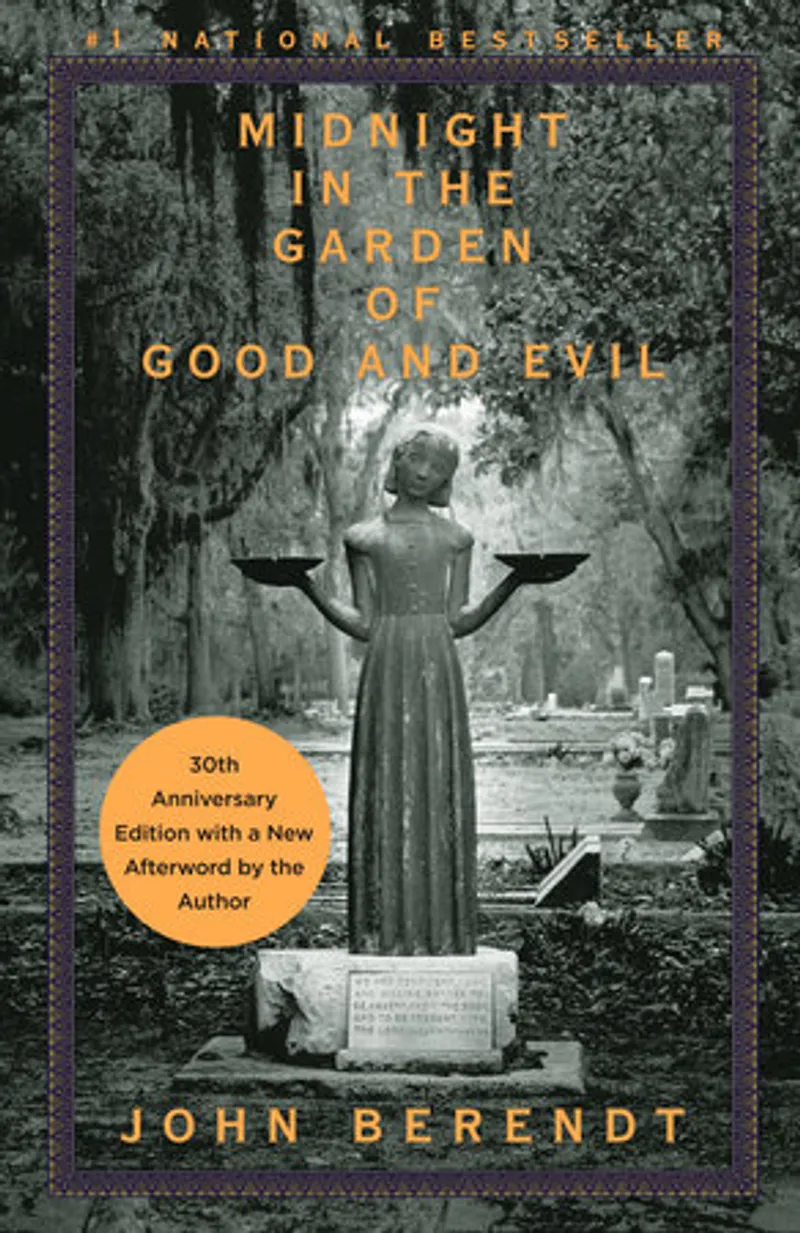
Midnight in the Garden of Good and Evil
Author: John Berendt
Page Count: Unknown
Publication Date: 1999-PRH
John Berendt’s Midnight in the Garden of Good and Evil is a masterclass in narrative nonfiction, a book that transcends its genre to become something far more intoxicating—a Southern Gothic fever dream wrapped in the guise of a true-crime story. Published in 1999, it catapulted Berendt into literary stardom and cemented his reputation as a writer who could turn the mundane into the mesmerizing. At its heart, the book is about Savannah, Georgia—not just as a setting, but as a living, breathing character, a city steeped in history, eccentricity, and secrets. Yet beneath its lush, moss-draped surface, it’s a meditation on the nature of good and evil, the absurdity of human behavior, and the thin line between truth and fiction.
The central event—a murder that rocks Savannah in 1981—serves as the book’s spine, but Berendt is far more interested in the people who orbit around it than in the crime itself. The victim, Danny Hansford, was shot by Jim Williams, a wealthy antiques dealer and Savannah’s unofficial social arbiter. Was it murder or self-defense? The legal saga drags on for years, with Williams acquitted four times before his eventual death, but Berendt isn’t out to solve the case. Instead, he uses it as a lens to examine a city where everyone knows everyone else’s business, where gossip is currency, and where the past lingers like the scent of magnolias in the humid air.
What makes Midnight in the Garden so irresistible is Berendt’s prose, which is as polished as it is playful. He writes with the precision of a novelist but the curiosity of a journalist, blending sharp observation with dry wit. His first-person account immerses the reader in Savannah’s world, where society ladies sip tea while trading barbs, drag queens hold court in dimly lit bars, and voodoo priestesses work their magic under the cover of night. Berendt doesn’t just describe these characters; he lets them reveal themselves through their own words and actions, creating a chorus of voices that are as hilarious as they are unsettling.
Take, for example, the indomitable Minerva, the voodoo priestess who dispenses advice from a graveyard at midnight. Or Joe Odom, the piano-playing con artist who swindles tourists with a smile and a song. Then there’s the Married Woman’s Card Club, a group of proper ladies who gossip with the ferocity of hyenas but maintain the decorum of debutantes. Each of these figures is a study in contradiction, embodying the contradictions of the South itself—a place where hospitality and hostility often go hand in hand, where tradition and transgression coexist in uneasy harmony.
Berendt’s style is deceptively effortless. He has a knack for finding the telling detail—the way a character’s voice cracks when they lie, the way a room smells of old money and newer secrets. His pacing is masterful, balancing suspense with humor, tragedy with farce. The book’s title, borrowed from a local saying about Savannah’s dual nature, reflects its central theme: the city is a paradox, a place where beauty and brutality, grace and grotesquerie, are inseparable. The murder at the heart of the story is just one thread in a larger tapestry of human folly and fascination.
What lingers most, though, is the sense that Savannah itself is the real protagonist. Berendt captures its decaying grandeur, its claustrophobic intimacy, and its stubborn refusal to change. The city is a character that both nurtures and devours its inhabitants, a place where everyone is both insider and outsider, where the past is never truly past. The book’s genius lies in its refusal to simplify. There are no clear heroes or villains here, just flawed, fascinating people navigating a world where morality is as slippery as the Savannah River at dawn.
Midnight in the Garden of Good and Evil is more than a true-crime book; it’s a love letter to a city and its people, a darkly comic exploration of human nature, and a testament to the power of storytelling. Berendt doesn’t just report on Savannah—he seduces the reader into falling in love with it, even as he exposes its underbelly. It’s a book that lingers in the mind long after the last page, like the echo of a piano playing in the distance, or the whisper of a ghost in the graveyard.
#MidnightInTheGardenOfGoodAndEvil #TrueCrime #SouthernGothic #JohnBerendt #SavannahGA #BookReview