The Chain House: A Novel Book Review and Summary
-
 Beatriz Costa
 - 19 Aug, 2026 15:15
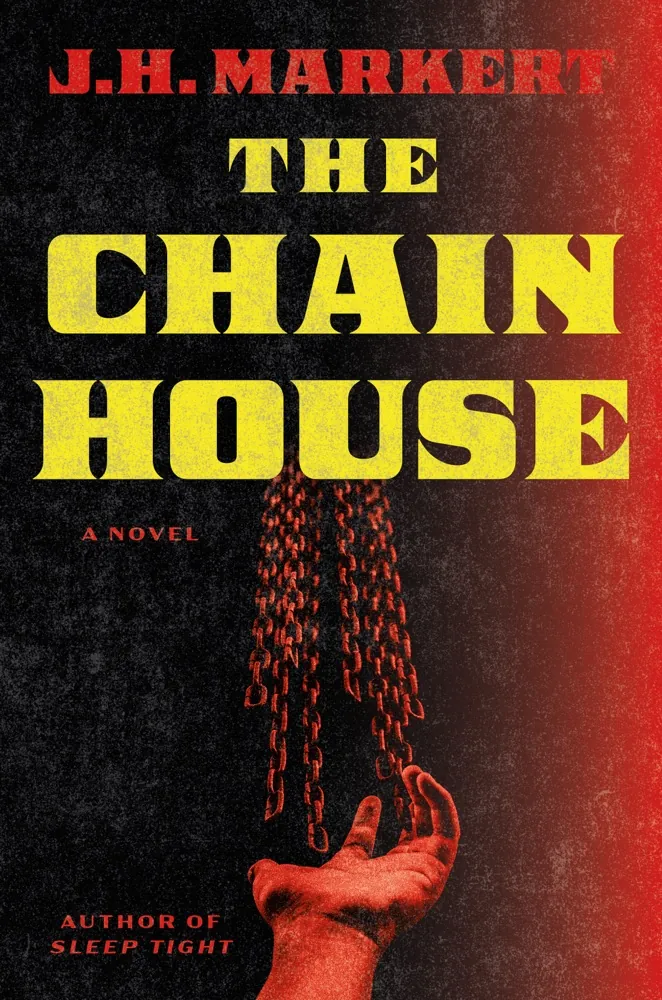
Author: J.H. Markert
Page Count: Unknown
Publication Date: Expected publication 2026-10-06 APL
The synopsis for The Chain House reads like a fever dream someone scribbled in the margins of a true crime magazine—equal parts The Silence of the Lambs’ psychological tension and The X-Files’ conspiracy fatigue, but with the kind of sloppy, desperate energy that makes you wonder if the author was channeling a drunk podcast host at 3 AM.
The core premise—an executed cult leader revealing himself as a bestselling author whose final manuscript could unravel everything—is so close to being a gimmick that it’s almost charming. It’s the kind of setup that would make a True Detective writer nod approvingly, but also pause to ask, “Wait, why hasn’t anyone done this yet?” Because, honestly, the idea of a mass murderer as a ghostwriter for pulp horror? It’s been done—American Psycho’s Bret Easton Ellis vibes, but with the existential dread of a Saw script written by someone who’s never read a single page of Saw. The twist that the manuscript itself is the key to finding the bodies? That’s the kind of lazy but effective hook that sells books in airport bookstores—it’s the literary equivalent of a “What if the killer was also the hero?” trope, but with the added bonus of being literally true.
The multi-POV structure is a safe bet—it’s the kind of framing device that lets the author claim they’re “subverting expectations” while actually just giving themselves an excuse to write from different perspectives without committing to any of them. Sam Harper, the filmmaker, is the classic wide-eyed outsider who stumbles into something bigger than himself—think Zodiac’s Robert Graysmith, but with the emotional range of a Stranger Things fanfic. Jennifer Daley, the cult survivor, is the emotional anchor, the one who’s supposed to ground the story in real stakes. But here’s the thing: the synopsis doesn’t show us how these characters interact, and that’s where the real risk lies. Because if this is just another “chosen one” narrative where the survivor’s trauma is the plot engine, it’ll feel like The Girl on the Train’s cousin, the one that got lost in the editing process.
The ransom note demanding the execution go through? That’s the kind of meta-narrative bullshit that either works brilliantly or falls flat like a poorly timed joke. It’s the literary equivalent of a Breaking Bad twist—“What if the bad guy was right all along?”—but with the emotional payoff of a Law & Order episode. And yet, there’s something deliciously cynical about it, like the author is wink-winking at the reader, saying, “Yeah, I know this is stupid, but stick with me.”
The thematic potential here is huge—the tension between fiction and reality, the idea of a killer’s words becoming the truth, the way cults and cult authors blur into the same kind of obsessive control. But the synopsis doesn’t explore any of it; it just drops it like a plot device. It’s the difference between American Psycho’s razor-sharp dissection of identity and The Da Vinci Code’s sloppy, desperate need to keep the pages turning. The Chain House could be the next Shutter Island—a psychological puzzle box that makes you question everything—or it could be the next The Da Vinci Code, a book that gets praised for its “twists” while secretly just being a really long Lost episode.
The biggest question isn’t whether this book will be good—it’s whether it’ll be smart. Because right now, it feels like it’s trying to be too much at once: a horror thriller, a conspiracy mystery, a character study, and a meta-commentary on fame and violence. That’s a lot for a single book to carry, especially when the synopsis doesn’t even attempt to justify how any of it fits together. It’s like watching a movie where the director keeps cutting to black every five minutes to remind you that “this is all a dream”—eventually, you just want to scream, “NO, IT’S NOT A DREAM, JUST TELL ME THE STORY.”
The fact that it’s being compared to Stephen King is either a bold claim or a desperate one. King’s genius lies in making the mundane terrifying—this, on paper, feels like it’s trying to be King’s Misery meets The Shining’s unreliable narrator, but with the pacing of a 24 episode. And that’s not a knock on King—it’s a knock on the synopsis, which doesn’t show how it’ll avoid feeling like a pastiche of other people’s ideas.
I’m betting this book will be really good at one thing: keeping you up at night, wondering if you’re reading a thriller or a self-aware commentary on how easily fiction can become reality. But I’m also betting it’ll be really bad at one thing: making you care about the characters, because the synopsis doesn’t give us enough to care about them yet. It’s the difference between Gone Girl’s meticulous character work and The Girl with the Dragon Tattoo’s rushed, desperate need to keep the plot moving.
Now, if I’m being honest, I’d probably read it just to see how badly it falls apart—or, more likely, how well it holds together. Because the synopsis is so full of potential that it’s almost painful to imagine it not living up to it. And that’s the real horror: the fear that it’ll be just good enough to be forgettable, like a True Detective season that doesn’t quite hit the mark.
I’m gonna put on A Love Supreme and forget about this book for a while. Maybe it’ll be worth the hype. Maybe it’ll be another House of Leaves-style mess. Either way, I’m not touching it until it’s out. And even then, I’ll probably wait until the last minute, just to see if it’s worth the wait.
#bookstagram #horrorlit #twistfiction #cultclassic #whatif