The Eyre Affair Book Review and Summary
- 13 Nov, 2025 05:43
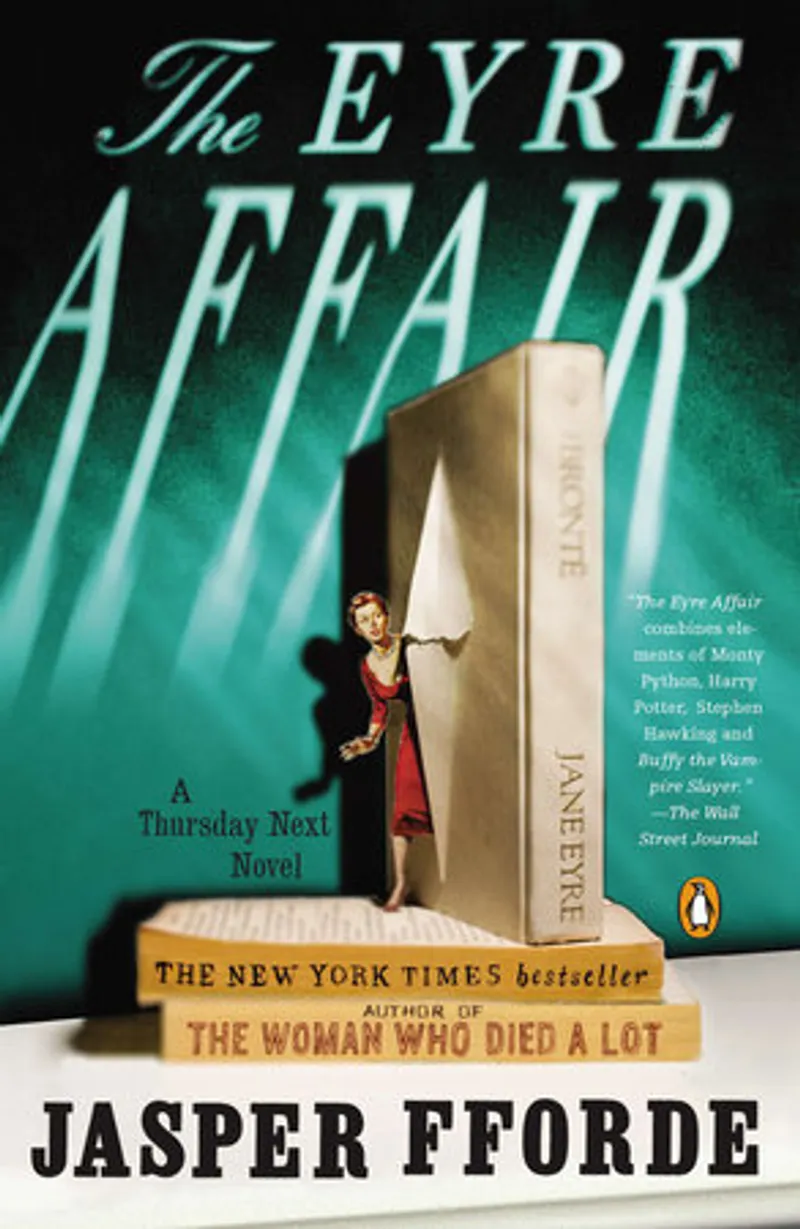
The Eyre Affair
Author: Jasper Fforde
Page Count: Unknown
Publication Date: 2003-PRH
Jasper Fforde’s The Eyre Affair is a literary heist wrapped in a time-bending detective story, a book so inventively bizarre that it feels like a love letter to literature itself—if literature could be kidnapped, cloned, and weaponized. Published in 2003, this first entry in the Thursday Next series doesn’t just bend genres; it folds them into origami swans and sets them loose in a world where Shakespeare is a celebrity and Jane Eyre can be abducted mid-monologue. If you’ve ever wished you could step into a novel—or better yet, rewrite one—this is the book that makes you believe it’s possible.
At its core, The Eyre Affair is a celebration of storytelling, but not in the saccharine way you might expect. Instead, Fforde treats literature as a battleground, a high-stakes arena where authors, critics, and criminals wage war over meaning, authenticity, and the very soul of words. The villain, Acheron Hades, isn’t just a thief—he’s a literary nihilist, stealing characters not for ransom but to erase them from existence, as if their stories never were. This premise alone is a masterstroke: it turns the act of reading into an act of vigilance. Every page crackles with the thrill of a mystery where the stakes aren’t just life and death, but the preservation of art itself.
Thursday Next, our protagonist, is a detective in the Literary Division of the ChronoGuard, a time-traveling police force. She’s equal parts hard-boiled investigator and bookish dreamer, a woman who quotes Chaucer like others quote Shakespeare and carries a gun that fires quills. Fforde’s genius lies in making Thursday’s world feel both absurd and meticulously real. England in 1985 is a dystopia where literature is a religion, and heresy isn’t just blasphemy—it’s a crime punishable by exile into a Wadsworth poem. The absurdity is undercut by Fforde’s deadpan delivery; he describes cloning dodos as casually as we might discuss breeding labradors, and the reader is left nodding along, as if time travel and literary forgery are just Tuesday.
Fforde’s style is a whirlwind of wit, wordplay, and sheer inventiveness. His prose is dense with puns, literary references, and footnotes that are as likely to quote Finnegans Wake as they are to crack a joke about the Ministry of Forgery. The dialogue crackles with the energy of a stand-up comedian who’s just discovered the Oxford English Dictionary. Thursday’s dry humor—“I’m not a hero. I’m a professional”—is balanced by the novel’s darker themes: the fragility of art, the violence of erasure, and the way stories can be twisted into weapons. It’s a tone that’s hard to pin down: part satire, part homage, part madcap adventure. Fforde doesn’t just write a book about literature; he turns the act of reading into an adventure, making the reader complicit in the thrill of discovery.
The plot, while intricate, is secondary to the world-building. Thursday’s mission to rescue Jane Eyre from Hades’ clutches is the MacGuffin that propels us through a landscape where every book is a potential trap and every character a suspect. The real joy comes from the detours: a chase through a Dickensian slum, a confrontation in a surrealist painting, and a climactic showdown in the pages of Jane Eyre itself, where Thursday must navigate the novel’s own logic to outwit her enemy. It’s a meta-narrative that rewards close readers, but even those who skim will be swept up in the sheer exuberance of it all.
What makes The Eyre Affair so enduring is its refusal to take itself too seriously. Fforde’s love for literature is evident, but it’s never cloying. Instead, he treats books as living, breathing entities—vulnerable, powerful, and occasionally in need of a hero. Thursday Next is that hero, but she’s also a stand-in for the reader, a woman who loves books so fiercely that she’s willing to dive into them, guns blazing. In an era where literature is often dismissed as irrelevant, Fforde’s novel is a defiant shout into the void: stories matter. They can be stolen, rewritten, or even killed—but they can also be saved.
If you’ve ever lost yourself in a book and wished you could stay there forever, The Eyre Affair is your invitation. It’s a book that demands to be read aloud, to be shared, to be argued over. It’s a love letter to literature that’s also a heist novel, a detective story that’s also a time-travel adventure. And most importantly, it’s a reminder that the best stories aren’t just escapes—they’re battles.
#ThursdayNext #LiteraryFantasy #JasperFforde #BookNerdsUnite #MetaFiction #TimeTravelAdventures