The Signal and the Noise Book Review and Summary
-
 Natalia Sokolova
 - 13 May, 2026 02:03
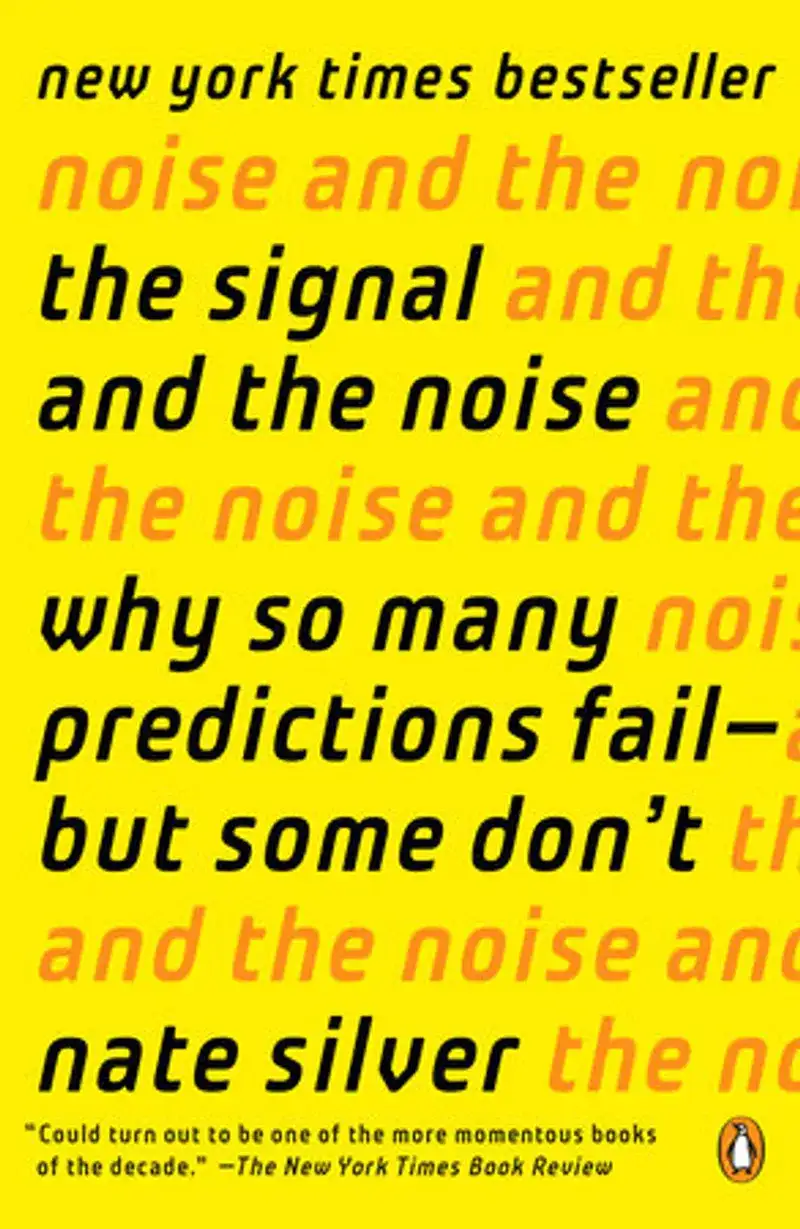
The Signal and the Noise
Author: Nate Silver
Page Count: Unknown
Publication Date: 2015-PRH
Nate Silver’s The Signal and the Noise is not just a book about prediction—it’s a manifesto for thinking clearly in a world drowning in data. Published in 2015, Silver, the statistician and founder of FiveThirtyEight, dismantles the myth of infallible forecasting and champions a humble, probabilistic approach to understanding uncertainty. His argument is both timely and timeless: the more we accept that we don’t know, the better we can prepare for what we do know.
Silver’s central thesis revolves around the “prediction paradox.” In an era where big data and AI promise precision, we often confuse confidence for accuracy. Experts and pundits alike cling to overconfident forecasts, only to be humbled by reality—whether in politics, economics, or public health. Silver’s antidote? A rigorous embrace of uncertainty. He argues that the best forecasters are not those who claim to predict the future with certainty, but those who understand the limits of their knowledge and adjust accordingly.
What makes The Signal and the Noise compelling is Silver’s ability to blend storytelling with hard data. His writing is accessible yet intellectually rigorous, drawing on examples from poker, baseball, weather forecasting, and even the stock market to illustrate his points. He doesn’t just tell us to be humble; he shows us how humility leads to better predictions. For instance, he examines how meteorologists improved hurricane tracking by acknowledging the inherent unpredictability of weather systems, or how poker players use Bayesian reasoning to make better bets.
Silver’s style is both analytical and engaging. He breaks down complex statistical concepts—like Bayes’ theorem or the dangers of overfitting models—into digestible anecdotes. His critique of failed forecasts, from the 2008 financial crisis to political polling errors, is sharp without being cynical. He doesn’t just point out mistakes; he explains why they happen and how to avoid them. This makes the book not just a critique of bad prediction, but a guide to doing it better.
One of the book’s strongest sections explores the role of human bias in forecasting. Silver highlights how our brains are wired to see patterns where none exist—a cognitive flaw that leads to false confidence. He contrasts this with the disciplined approach of successful forecasters, who rely on rigorous models and continuous feedback loops. His discussion of “expert intuition” versus statistical prediction is particularly illuminating, showing how even the most seasoned professionals can be led astray by their own biases.
The Signal and the Noise is also a timely read in today’s world of misinformation and algorithmic echo chambers. Silver’s insights into how data can be misused—whether by journalists cherry-picking statistics or by pundits exploiting uncertainty for drama—feel eerily prescient in an age where truth is increasingly contested. His call for better communication of uncertainty is a necessary corrective to the black-and-white thinking that dominates public discourse.
Silver’s prose is clear and unpretentious, making the book accessible to both casual readers and data enthusiasts. He avoids jargon while still delivering depth, a rare feat in a book about statistics. His voice is authoritative but not condescending, and his examples are drawn from a wide range of fields, ensuring that there’s something for everyone.
At its core, The Signal and the Noise is a book about humility—not just in prediction, but in how we engage with the world. Silver doesn’t promise that his methods will eliminate uncertainty, but he shows that embracing it can lead to more reliable insights. In an era where confidence often masquerades as competence, this is a vital lesson.
In a world where data is everywhere but wisdom is scarce, Nate Silver’s The Signal and the Noise is a beacon. It reminds us that the goal isn’t to eliminate uncertainty, but to navigate it wisely. For anyone who wants to think more clearly about the future, this book is essential reading.
#PredictionParadox #DataScience #BayesianThinking #UncertaintyMatters #BetterForecasting #NateSilver