The Weight of Angels Book Review and Summary
-
 Sofia Bianchi
 - 11 Aug, 2026 10:25
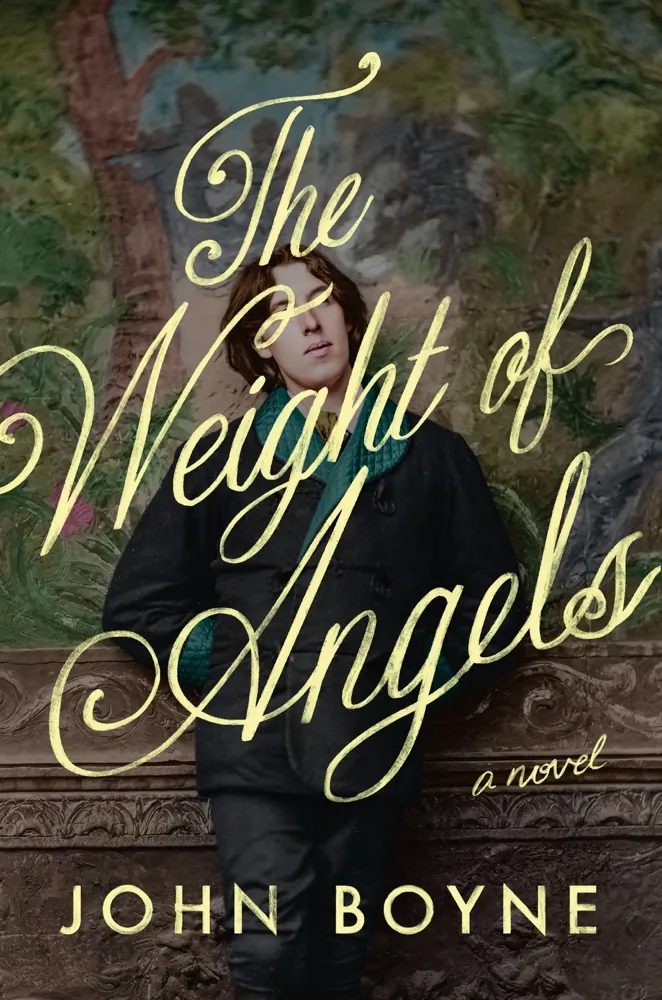
Author: John Boyne
Page Count: Unknown
Publication Date: Expected publication 2026-09-29 APL
The synopsis of The Weight of Angels is so aggressively vague it might as well be a Wildean epigram—elegant on the surface, but hollow beneath. What we’re promised is a speculative reimagining of Oscar Wilde’s life had he ignored the Marquess of Queensberry’s infamous libel, a narrative that unfurls like a Victorian-era Black Swan where the protagonist’s downfall is averted by sheer inertia. But inertia is the enemy of drama, and Boyne’s premise here is less a bold reworking of history and more a lazy thought experiment dressed in the trappings of literary ambition.
The core question—what if Wilde had lived to witness the 20th century?—isn’t just tired; it’s the kind of premise that belongs in a Doctor Who episode where the Doctor casually rewinds time to prevent a tragedy. The problem isn’t the idea itself—it’s that Boyne seems to think Wilde’s genius would’ve been preserved in a vacuum, untouched by the very forces that made him Wilde in the first place. The man was a firebrand, a provocateur, a man who thrived on scandal. To imagine him surviving the 1920s without any of that—without the Salomé scandal, without the De Profundis letters, without the very weight of his own contradictions—is to suggest he was ever anything but a man of his time. And yet, here we are, being asked to believe he could’ve been a mild-mannered observer of history, a ghost at the feast of the century.
The synopsis doesn’t even attempt to grapple with the psychological absurdity of this premise. Wilde’s life was a series of self-inflicted wounds, each one a deliberate act of defiance against the bourgeoisie that had already condemned him. To erase the libel trial is to erase the catalyst for his greatest work—De Profundis, the letter that became his most raw and unfiltered confession. But Boyne seems to think Wilde’s brilliance was a static thing, something that could’ve been bottled and preserved like a fine wine. It wasn’t. It was a flame, and flames require oxygen—preferably the kind that comes from public humiliation, exile, and the kind of existential crisis that turns a man into a legend.
And then there’s the matter of the 20th century itself. Wilde’s survival would’ve required him to navigate the Great War, the Spanish Flu, the rise of fascism—all while somehow retaining his wit, his charm, his weight. It’s the literary equivalent of asking if a man who could’ve outwitted the entire establishment in 1895 could’ve done the same in 1935, when the establishment had learned how to burn books and imprison poets. The synopsis doesn’t even hint at the kind of moral compromises Wilde might’ve had to make to survive, the way The Remains of the Day forces its protagonist to confront the quiet complicity of his own silence. Instead, we’re given the impression that Wilde would’ve been a passive spectator, a man who simply witnessed history rather than shaped it.
The most damning thing about this premise is that it’s not even original. It’s the same tired “what if” that powers every alternate-history novel that’s ever been written, the kind of thought experiment that feels more like an academic exercise than a novel. Where’s the The Man in the High Castle audacity? Where’s the Piranesi surrealism? Where’s even the The Shadow of the Wind sense of a world turned sideways by a single decision? Instead, we’re treated to the kind of speculative fiction that feels like it was cobbled together in a boardroom meeting, where the question wasn’t “What would Wilde’s life have been?” but rather “How can we make this sound like a bestseller?”
And yet—despite all this—there’s a perverse appeal to the idea. Because Wilde was a man who thrived on the edge of destruction, and to imagine him surviving it is to imagine a man who never had to prove himself. It’s the literary equivalent of asking if a hurricane could’ve been a gentle breeze. The answer is no, and Boyne’s premise knows it, which is why the synopsis is so deliberately vague. It’s not a novel waiting to be written; it’s a placeholder for a novel that should’ve been something far more ambitious, something that didn’t settle for the easy path of “what if he’d just ignored it?”
But then again, maybe that’s the point. Maybe The Weight of Angels is just another entry in the canon of books that mistake nostalgia for depth, that confuse the idea of a man surviving his own downfall with the idea of a man living a full life. And if that’s the case, then it’s a book that will be forgotten as quickly as it’s remembered, a blip in the literary landscape, a ghost at the feast of Wilde’s legacy.
I must sign divorce papers today. The paperwork is tedious, but the separation is necessary. #WildeWasRight #AlternateHistoryFail #SpeculativeFictionFails