Showing Posts From
Books
-
 Aylin Okur
 - 18 Jul, 2026 20:03
The Architecture of Middle-earth: Decoding the Eternal Legacy of J.R.R. Tolkien's Masterpiece
Shadows lengthen over the rolling hills of the Shire, and a ring—small, gold, and deceptively simple—carries the weight of an entire world's salvation or ruin. To step into the pages of The Lord of the Rings is not merely to read a story, but to enter a meticulously crafted reality where language is the bedrock of existence and myth is etched into every mountain pass. J.R.R. Tolkien did not simply write a novel; he breathed life into a lost mythology, weaving together the threads of philology, ancient history, and a profound understanding of the human spirit. #TheLordOfTheRings #HighFantasy #Tolkien The Genesis of a Legend: From The Hobbit to Middle-earth What began as a modest children's tale in 1937, The Hobbit, evolved into an intellectual odyssey that spanned over a decade of composition. Between 1937 and 1949, Tolkien expanded the horizons of his world, transforming a whimsical adventure into an epic high fantasy that would redefine the genre. This transition was not merely a change in scale but a shift in tone and purpose. Where The Hobbit was a story of discovery, The Lord of the Rings became a meditation on power, corruption, and the resilience of the small against the monolithic. Tolkien's approach was scholarly and exhaustive. As a professor of language, he viewed the creation of Middle-earth as a vessel for his constructed languages. The world was built to give his languages a place to live, rather than the languages being mere ornaments for the world. This depth is evident in the internal structure of the work—divided into six books and supplemented by extensive appendices featuring complex genealogies and linguistic data.Though widely recognized today as a trilogy, it is essential to understand that Tolkien intended the work to be a single volume. The publication as three separate books—The Fellowship of the Ring, The Two Towers, and The Return of the King—was a decision born of economic necessity between 1954 and 1955. This fragmented release, while contrary to the author's original vision, perhaps contributed to the narrative's legendary status, allowing readers to savor the escalating tension over time. The Burden of Power: The One Ring and the Shadow of Sauron At the heart of the narrative lies a singular object of terrifying potency: the One Ring. Forged by the Dark Lord Sauron in the fires of Mount Doom, the Ring was designed as a tool of absolute dominion. By creating the One Ring to rule the other Rings of Power bestowed upon Men, Dwarves, and Elves, Sauron sought to bind the Free Peoples of Middle-earth to his will. The Ring is more than a plot device; it is a symbol of the corruptive nature of power. Its journey from the depths of the Second Age, passing through the hands of Isildur, the wretched Gollum, and finally to the unassuming Bilbo Baggins, serves as a historical bridge. When the Ring finds its way to Frodo, the story shifts from the grand scale of empires to the intimate struggle of a hobbit. #EpicFantasy #DarkLord #LiterarySymbols The choice of hobbits—creatures of comfort, peace, and simple joys—as the protagonists is a masterstroke of thematic contrast. In a world inhabited by powerful wizards like Gandalf and noble heirs like Aragorn, it is the smallest and most overlooked citizens of the Shire who are tasked with the most monumental burden. Frodo, accompanied by the steadfast Sam Gamgee, the spirited Merry Brandybuck, and the loyal Pippin Took, represents the triumph of humility over ambition. The Fellowship: A Coalition of the Free Peoples The narrative takes a pivotal turn at the Council of Elrond in Rivendell, where the necessity of the Ring's destruction is established. This gathering marks the formation of the Fellowship of the Ring, a carefully balanced coalition representing the diverse races of Middle-earth:The Hobbits: Frodo, Sam, Merry, and Pippin—the heart of the quest. The Wizard: Gandalf, the guiding light and strategist. The Men: Aragorn, the exiled heir of Isildur, and Boromir, the valiant son of the Steward of Gondor. The Elf: Legolas, bringing the grace and keen sight of his people. The Dwarf: Gimli, embodying the stubbornness and strength of the mountain folk.This alliance is a poignant reflection of Tolkien's own experiences, particularly his time in the First World War. The camaraderie and brotherhood forged in the face of overwhelming darkness mirror the bonds formed in the trenches of the Great War. The Fellowship's journey through the treacherous Mines of Moria, their encounter with the Balrog, and their respite in the ethereal forests of Lothlórien all serve to test these bonds.The tension within the Fellowship reaches a breaking point at Amon Hen. Boromir's attempt to seize the Ring highlights the fragility of the alliance and the seductive power of Sauron's creation. This moment of betrayal forces a divergence in the plot: Frodo and Sam venture toward Mordor alone, while Aragorn, Legolas, and Gimli pursue the Orcs to rescue the captured Merry and Pippin. The Intellectual Tapestry: Philology and Influence Tolkien's work is an intersection of multiple intellectual currents. He drew heavily from philology, Norse mythology, and Anglo-Saxon epics, blending these with the moral framework of Christianity. However, he avoided direct adaptation, opting instead to create a "secondary world" with its own internal logic and history. The depth of this world-building is staggering. From the architectural ruins of the Second Age to the precise geography of the Misty Mountains and the river Anduin, Middle-earth feels inhabited. The inclusion of figures like Tom Bombadil—an enigmatic being who resides outside the struggle for power—adds a layer of folklore and mystery that prevents the story from becoming a binary conflict of "good vs. evil." #WorldBuilding #Mythology #Philology The internal division of the story into six books, tucked within three volumes, allows for a rhythmic expansion and contraction of the narrative. We move from the quaint, English-countryside atmosphere of the Shire to the oppressive, ash-choked wastes of Mordor. This geographical transition mirrors Frodo's internal journey from innocence to a weathered, burdened maturity. A Legacy That Shaped Modernity When The Lord of the Rings first met the literary establishment, the reception was mixed. Some critics struggled with its density and its departure from the realism of the era. Yet, the public embraced it with an intensity that has never truly waned. With over 150 million copies sold and translations into at least 38 languages, it has ascended to the status of a global cultural phenomenon. Its influence on the modern fantasy genre cannot be overstated. Nearly every contemporary work of high fantasy owes a debt to Tolkien's establishment of the "secondary world" tropes: the noble elf, the rugged dwarf, and the dark lord. Beyond literature, the work has inspired a vast ecosystem of derivative art, from symphonic music and intricate paintings to award-winning radio and film adaptations.In 2003, the BBC's "The Big Read" poll named The Lord of the Rings as Britain's best-loved novel of all time. This accolade is a testament to the story's universal themes: the fight against inevitable decay, the importance of friendship, and the belief that even the smallest person can change the course of the future. Conclusion: The Eternal Return The journey to Mount Doom is not just a physical trek across a map; it is a pilgrimage of the soul. By the time the Ring is cast into the fire, the characters and the reader have traveled through a landscape of profound loss and hard-won victory. Tolkien's genius lay in his ability to make a fictional world feel more authentic than the real one, providing a sanctuary of myth in an age of industrialization. As we look back at the legacy of J.R.R. Tolkien, we find a work that transcends the boundaries of "genre fiction." The Lord of the Rings remains a towering achievement of human imagination, reminding us that while the shadows may grow, the light—however flickering—is always worth defending.#ClassicLiterature #TolkienUniverse #EpicJourneys #BookReview #MiddleEarth Related InsightsTomorrow, and Tomorrow, and Tomorrow Book Review and Summary For Whom the Bell Tolls Book Review and Summary Daddy Issues: A Memoir Book Review and Summary{ "@context": "https://schema.org", "@type": "FAQPage", "mainEntity": [ { "@type": "Question", "name": "What is the main focus of The Architecture of Middle-earth: Decoding the Eternal Legacy of J.R.R. Tolkien's Masterpiece?", "acceptedAnswer": { "@type": "Answer", "text": "A deep dive into the philological roots, epic narrative, and enduring cultural impact of Tolkien's high fantasy magnum opus." } }, { "@type": "Question", "name": "Who authored the comprehensive guide on The Architecture of Middle-earth: Decoding the Eternal Legacy of J.R.R. Tolkien's Masterpiece?", "acceptedAnswer": { "@type": "Answer", "text": "This detailed article and its insights were carefully researched and authored by Aylin Okur." } }, { "@type": "Question", "name": "Where can I find more related content about Books?", "acceptedAnswer": { "@type": "Answer", "text": "You can explore more articles, detailed reviews, and similar insights by browsing the Related Insights section at the bottom of this article or visiting our dedicated Books category page." } } ] }

-
 Lucas Martin
 - 17 Jul, 2026 16:12
Le Meilleur des Mondes : La Prophétie Glaciale d'une Humanité Calibrée
Dans les annales de la littérature, certaines œuvres ne sont pas de simples récits, mais des miroirs tendus vers l'âme collective, des avertissements murmurés par le passé pour résonner dans l'éternité. « Le Meilleur des Mondes », chef-d'œuvre de l'auteur anglais Aldous Huxley, publié en 1932, est l'un de ces phares sombres, projetant une lumière crue sur les abîmes potentiels du progrès. Écrit en seulement quatre mois fébriles, de mai à août 1931, alors que Huxley résidait à Sanary-sur-Mer, en France, ce roman dystopique n'est pas qu'une histoire ; c'est une interrogation brûlante sur la nature de l'humanité, de la liberté et du bonheur dans un monde où tout est calibré. Le cadre de ce roman fascinant est un État Mondial futuriste, une société où chaque individu est scrupuleusement "conçu" dès sa conception. Les citoyens y sont conditionnés dès leur embryogenèse à intégrer une hiérarchie sociale basée sur l'intelligence et la fonction. Les avancées scientifiques, autrefois promesse d'émancipation, deviennent ici les outils d'une servitude d'un genre nouveau. Huxley, avec une prescience étonnante, anticipe des révolutions biotechnologiques majeures : la technologie reproductive avancée, l'hypnopédie ou l'apprentissage pendant le sommeil, la manipulation psychologique subtile et le conditionnement classique. Ces éléments, loin d'être des vecteurs de liberté, sont fusionnés en un système oppressif, une dystopie douce mais implacable. C'est contre ce mur d'une conformité forcée que le protagoniste de l'histoire ose se dresser, questionnant les fondements mêmes d'un bonheur artificiel. #ScienceFiction #Anticipation #ContrôleSocial Huxley ne s'est pas contenté de ce coup de maître initial. Il a poursuivi sa réflexion avec « Retour au Meilleur des Mondes » (1958), un essai qui réévalue les thèmes de son roman face aux réalités de l'après-guerre, et avec son dernier roman, « L'Île » (1962), qui peut être vu comme son pendant utopique, explorant une vision alternative, plus optimiste, de l'avenir humain. « Le Meilleur des Mondes » est souvent étudié en tandem ou en contraste saisissant avec un autre géant de la littérature dystopique, « 1984 » (1949) de George Orwell, les deux ouvrages formant un dialogue essentiel sur les différentes formes de totalitarisme. Un Miroir Inquiétant et Sa Réception Littéraire La puissance et la pertinence de l'œuvre d'Huxley sont indéniables, comme en témoigne sa place prééminente dans le canon littéraire mondial. En 1998 et 1999, la Modern Library a classé « Le Meilleur des Mondes » au cinquième rang de sa liste des 100 meilleurs romans en anglais du XXe siècle. En 2003, Robert McCrum, plume éminente du journal The Observer, l'a intégré chronologiquement à la 53e place de sa propre liste des « 100 plus grands romans de tous les temps ». Plus récemment, le sondage « The Big Read » de la BBC l'a placé au 87e rang, confirmant son statut d'œuvre incontournable. Ces reconnaissances ne sont pas de simples honneurs ; elles soulignent la capacité du roman à transcender les générations et les cultures, à parler à l'essence de nos peurs et de nos espoirs. Pourtant, cette œuvre visionnaire n'a pas toujours été accueillie à bras ouverts. Depuis sa publication, « Le Meilleur des Mondes » a été fréquemment l'objet de tentatives de censure et de contestations. Il figure régulièrement sur la liste de l'American Library Association des 100 livres les plus contestés et interdits de la décennie, depuis la création de cette liste en 1990. Cet aspect conflictuel de sa réception témoigne de la force dérangeante de son message, de sa capacité à ébranler les certitudes et à provoquer des débats fondamentaux sur la liberté d'expression, l'éducation et l'avenir de nos sociétés. La censure, en elle-même, est souvent la preuve la plus éloquente de la vérité et de la puissance d'un texte.#LittératureAnglaise #ClassiqueLittéraire #LibertéDExpression L'Écho Shakespearien et les Traductions Créatives Le titre même du roman, « Brave New World », est une allusion profondément ironique et pleine de sens, tirée de la pièce de William Shakespeare, « La Tempête ». Dans l'Acte V, Scène I, c'est la jeune et innocente Miranda qui prononce ces mots : « O, wonder! How many goodly creatures are there here! How beauteous mankind is! O brave new world, That has such people in't! » L'usage shakespearien de cette phrase est teinté d'une ironie dramatique. Miranda, dans sa pureté naïve, ne perçoit pas la nature maléfique de certains visiteurs de l'île. C'est son père, Prospero, qui répond à son observation innocente par la déclaration percutante : « 'Tis new to thee » (C'est nouveau pour toi). Huxley s'approprie cette ironie pour la projeter dans son propre récit, dénonçant un monde qui se proclame « brave » et « nouveau », mais qui est en réalité un piège doré, une prison de conformité où la véritable humanité est étouffée. Les traductions du titre ont souvent cherché à capturer cette essence, tout en faisant écho à des expressions littéraires ou philosophiques locales. L'édition française, par exemple, est intitulée « Le Meilleur des mondes », une allusion directe et satirique à l'expression utilisée par le philosophe Gottfried Leibniz (« le meilleur des mondes possibles ») et magistralement parodiée par Voltaire dans son conte philosophique « Candide, ou l'Optimisme » (1759). Cette résonance française enrichit la compréhension du roman, l'ancrant dans une tradition de critique sociale et philosophique. La première traduction standard en chinois, réalisée par la romancière Lily Hsueh et Aaron Jen-wang Hsueh en 1974, est intitulée « 美麗新世界 » (Měilì Xīn Shìjiè), ce qui se traduit littéralement par « Beau Nouveau Monde », citant directement la traduction chinoise de « La Tempête ». Ces variations témoignent de la richesse interculturelle de l'œuvre et de la manière dont les traducteurs s'efforcent de rendre non seulement les mots, mais aussi les couches de signification et d'ironie. #Shakespeare #AllusionLittéraire #Traduction Genèse d'une Vision Dystopique : Entre Satire et Prémonition Au moment d'écrire « Le Meilleur des Mondes », Huxley était déjà un écrivain et satiriste social reconnu. Il avait contribué à des magazines prestigieux tels que Vanity Fair et Vogue, et avait déjà publié un recueil de poésie, « The Burning Wheel » (1916), ainsi que quatre romans satiriques acclamés : « Crome Yellow » (1921), « Antic Hay » (1923), « Those Barren Leaves » (1925) et « Point Counter Point » (1928). « Le Meilleur des Mondes » fut son cinquième roman et, surtout, sa première œuvre dystopique, marquant un tournant décisif dans son exploration des dangers de la modernité. Un court passage de « Crome Yellow », publié dès 1921, révèle que Huxley nourrissait déjà des idées sur un tel avenir. Mr. Scogan, un personnage de ce livre antérieur, y décrit une future « génération impersonnelle » qui « remplacera l'hideux système de la Nature. Dans de vastes incubateurs d'État, des rangées et des rangées de bouteilles gravides fourniront au monde la population dont il a besoin. Le système familial disparaîtra ; la société, sapée à sa base même, devra trouver de nouvelles fondations ; et Éros, magnifiquement et irresponsablement libre, voltigera comme un papillon joyeux de fleur en fleur à travers un monde ensoleillé. » Cette description prémonitoire est une ébauche étonnante du World State, montrant la gestation longue et profonde des concepts qui allaient définir « Le Meilleur des Mondes ». Huxley lui-même a déclaré que son roman avait été inspiré par les romans utopiques de H.G. Wells, notamment « Une Utopie Moderne » (1905), et qu'il en était une parodie, notamment de « Les Hommes comme des Dieux » (1923). La vision optimiste et pleine d'espoir de l'avenir de Wells a incité Huxley à commencer une parodie de ces romans, qui allait devenir « Le Meilleur des Mondes ». Dans une lettre à Mme Arthur Goldsmith, une connaissance américaine, il confiait s'être « amusé à taquiner H.G. Wells », mais s'être ensuite « laissé emporter par l'excitation de [ses] propres idées ». Contrairement aux romans utopiques optimistes les plus populaires de l'époque, Huxley cherchait à offrir une vision effrayante de l'avenir. Il qualifiait « Le Meilleur des Mondes » de « dystopie négative », influencée en partie par « Le dormeur s'éveille » de Wells (qui traite de sujets comme la tyrannie corporative et le conditionnement comportemental) et les œuvres de D.H. Lawrence. Wells, pour sa part, publia, deux ans après « Le Meilleur des Mondes », son œuvre utopique « L'avenir à la traîne » (The Shape of Things to Come). Cherchant à réfuter l'argument de Mustapha Mond – selon lequel les sous-classes abruties étaient un « gyroscope social » nécessaire et qu'une société composée uniquement d'« Alphas » intelligents et affirmés se désintégrerait inévitablement dans des luttes intestines – Wells y dépeint une société égalitaire stable émergeant après plusieurs générations d'une élite réformatrice ayant un contrôle total sur l'éducation dans le monde entier. Dans l'avenir dépeint dans le livre de Wells, la postérité se souvient d'Huxley comme d'un « écrivain réactionnaire ». Le futurisme scientifique présent dans « Le Meilleur des Mondes » est également censé être inspiré de « Daedalus » de J.B.S. Haldane, montrant comment Huxley puisait dans les courants intellectuels et scientifiques de son temps pour forger sa vision. Les événements de la Grande Dépression en Grande-Bretagne en 1931, avec son chômage de masse et l'abandon de l'étalon-or, ont profondément marqué Huxley et l'ont persuadé que la stabilité était le « besoin primordial et ultime » si la civilisation voulait survivre à la crise présente. Cette conviction est palpable dans la philosophie du World State, où la stabilité est la valeur suprême. Le personnage de Mustapha Mond, le Résident Contrôleur Mondial de l'Europe Occidentale, porte le nom de Sir Alfred Mond, un industriel et homme politique britannique. Peu avant d'écrire le roman, Huxley avait visité l'usine de fabrication de Billingham, une usine technologiquement avancée de Mond près de Billingham, dans le nord-est de l'Angleterre, et cela lui avait fait une grande impression, influençant sans doute sa description des processus industriels et de l'efficacité mécanique du World State.#InfluenceLittéraire #Utopie #Dystopie #HistoireLittéraire Un voyage précoce aux États-Unis a également forgé une grande partie du caractère de « Le Meilleur des Mondes ». Huxley fut scandalisé par la culture de la jeunesse, la joie commerciale omniprésente, la promiscuité sexuelle et la nature égocentrique de nombreux Américains qu'il rencontra. Il avait également découvert le livre « Ma vie et mon œuvre » de Henry Ford sur le bateau l'emmenant en Amérique du Nord et il perçut les principes de ce livre appliqués dans tout ce qu'il rencontrait après avoir quitté San Francisco. La figure de Ford, emblème de la production de masse et du consumérisme, devient ainsi une divinité tutélaire dans le World State, mesurant le temps en « Après Ford » (AF), soulignant l'idolâtrie de la technologie et de la production. #SociétéDeConsommation #CritiqueSociale #Philosophie Le Projet du World State : Ingénierie Humaine et Société de Castes Le roman s'ouvre dans la ville de Londres, au sein du World State, en l'an 632 AF (Après Ford), ce qui correspond à l'an 2540 du calendrier grégorien. Dès les premières pages, le lecteur est plongé dans un monde où la vie, telle que nous la connaissons, a été radicalement transformée. Les citoyens ne sont plus le fruit d'une conception naturelle, mais sont conçus dans des utérus artificiels et soumis à des programmes d'endoctrinement dès l'enfance. Ces processus sont conçus pour les intégrer à des castes prédéterminées, définies par leur intelligence et leur rôle social. Dans cette société glaçante, les embryons sont traités avec des produits chimiques spécifiques pour les adapter à leurs rôles futurs. Ceux destinés aux classes supérieures reçoivent des substances optimisant leurs capacités, tandis que ceux des classes inférieures sont volontairement rendus de plus en plus imparfaits, limitant leurs facultés. Le système de castes est rigide et hiérarchisé : les Alphas (les leaders et intellectuels planifiés), les Bêtas, les Gammas, les Deltas et, tout en bas de l'échelle, les Epsilons (les travailleurs manuels à l'intelligence limitée). Chaque caste est conditionnée, principalement par l'hypnopédie, à préférer sa propre classe et à trouver du bonheur dans son rôle assigné. Les Epsilons, par exemple, sont éduqués dès leur plus jeune âge à être heureux de ne pas avoir le fardeau intellectuel des Alphas, trouvant satisfaction dans leur labeur simple et répétitif. Cette acceptation du statut quo est renforcée par un uniforme distinctif pour chaque caste, une matérialisation visible de la division sociale qui élimine toute ambition individuelle de s'élever au-delà de sa destinée programmée. La liberté n'est pas réprimée par la force brute, mais par l'ingénierie du désir et du contentement. #Bioéthique #Conditionnement #SociétéDystopiqueUne Réflexion Éternelle « Le Meilleur des Mondes » demeure une œuvre d'une brûlante actualité. Huxley, en tant que professionnel de la plume et satiriste affûté, a tissé un canevas de peurs et d'interrogations qui dépassent largement son époque. Son roman n'est pas seulement une critique des totalitarismes naissants de son temps, mais une mise en garde contre la dérive potentielle de n'importe quelle société qui privilégierait la stabilité, le confort et l'homogénéité au détriment de la liberté individuelle, de la profondeur émotionnelle et de la complexité de l'expérience humaine. L'exploration de la technologie reproductive, de la manipulation génétique, du conditionnement psychologique et de la recherche d'un bonheur artificiel par le biais de substances psychoactives (le soma) résonne avec des débats contemporains sur l'éthique de l'ingénierie génétique, l'impact des médias de masse et la quête de la perfection. Ce n'est pas un monde de dictature brutale, mais une dictature du bien-être, où la souffrance a été éradiquée, mais où, paradoxalement, la joie authentique et le sens profond de l'existence ont aussi disparu. L'héritage de Lucas Martin, le professionnel que je suis, est de rappeler que les visions d'Huxley ne sont pas de simples fantaisies. Elles sont des défis, des invitations à réfléchir sur les choix que nous faisons collectivement pour notre avenir. « Le Meilleur des Mondes » n'est pas un roman à lire, c'est une question à laquelle répondre, encore et toujours. C'est un appel à préserver la richesse de notre humanité, dans toute sa fragilité, sa complexité et sa capacité à rêver, à désirer, à souffrir et à créer – des éléments qui sont les véritables piliers d'un monde vraiment nouveau et courageux. #AldousHuxley #DystopieClassique #Futurisme #CritiqueSociale #AnalyseLittéraire Related InsightsDon't Let Him In Book Review and Summary To Kill a Mockingbird Book Review and Summary Płonący Bóg Book Review and Summary{ "@context": "https://schema.org", "@type": "FAQPage", "mainEntity": [ { "@type": "Question", "name": "What is the main focus of Le Meilleur des Mondes : La Prophétie Glaciale d'une Humanité Calibrée?", "acceptedAnswer": { "@type": "Answer", "text": "Plongez dans l'œuvre visionnaire d'Aldous Huxley, 'Le Meilleur des Mondes', une exploration glaçante des dangers du progrès scientifique et du contrôle social totalitaire qui résonne encore aujourd'hui." } }, { "@type": "Question", "name": "Who authored the comprehensive guide on Le Meilleur des Mondes : La Prophétie Glaciale d'une Humanité Calibrée?", "acceptedAnswer": { "@type": "Answer", "text": "This detailed article and its insights were carefully researched and authored by Lucas Martin." } }, { "@type": "Question", "name": "Where can I find more related content about Books?", "acceptedAnswer": { "@type": "Answer", "text": "You can explore more articles, detailed reviews, and similar insights by browsing the Related Insights section at the bottom of this article or visiting our dedicated Books category page." } } ] }

-
 Sofia Romano
 - 16 Jul, 2026 16:15
L'Eco del Silenzio e l'Ombra dell'Ingiustizia: L'Eterno Ritorno di 'To Kill a Mockingbird'
L'aria densa e pesante dell'Alabama degli anni Trenta non è solo una cornice geografica, ma un personaggio vivo, un respiro soffocante che avvolge ogni strada polverosa di Maycomb. In questo scenario, dove il pregiudizio è radicato quanto le antiche querce del Sud, sorge l'opera che ha ridefinito l'idea di eroismo morale nel XX secolo. To Kill a Mockingbird non è semplicemente un romanzo; è un grido silenzioso, una lezione di empatia che attraversa le generazioni, trasformando l'innocenza infantile in uno specchio deformante che rivela l'oscurità dell'animo umano. L'Architettura di un Capolavoro: Tra Southern Gothic e Bildungsroman Scritto da Harper Lee e pubblicato l'11 luglio 1960, il romanzo si colloca con precisione chirurgica all'interno del genere Southern Gothic. Questa corrente non si limita a descrivere il Sud degli Stati Uniti, ma ne esplora le contraddizioni, le decadenze e le ombre psicologiche. Attraverso gli occhi di Jean Louise "Scout" Finch, assistiamo a un processo di formazione, un vero e proprio Bildungsroman, dove la crescita non avviene solo attraverso l'età, ma attraverso la comprensione dolorosa della complessità sociale. Il racconto si sviluppa nell'arco di tre anni, dal 1933 al 1935, durante il periodo della Grande Depressione. In questo lasso di tempo, Scout, il fratello Jem e l'amico Dill navigano tra le leggende urbane della loro città, culminando nell'ossessione per il reclusivo Arthur "Boo" Radley. Questo personaggio, che per anni è stato solo un fantasma alimentato dai sussurri degli adulti, rappresenta il tema dell'alterità e del pregiudizio: colui che è diverso viene demonizzato prima ancora di essere conosciuto. #ClassicLiterature #SouthernGothicL'Integrità di Atticus Finch: L'Icona del Coraggio Morale Al centro della tempesta di Maycomb si erge Atticus Finch. Avvocato, padre e guida, Atticus non è solo un personaggio, ma un modello di integrità che ha ispirato generazioni di giuristi in tutto il mondo. La sua missione di difendere Tom Robinson, un uomo nero accusato ingiustamente di aver stuprato Mayella Ewell, una giovane donna bianca, è il fulcro etico del romanzo. La grandezza di Atticus risiede nella sua capacità di insegnare ai figli l'empatia. La sua filosofia è chiara: non si può davvero capire una persona finché non si indossano le sue scarpe e non si cammina attraverso il mondo dal suo punto di vista. Questa lezione di tolleranza si scontra violentemente con la realtà brutale di una società dove il colore della pelle determina la verità in un tribunale. Come sottolineato dallo storico Joseph Crespino, Atticus Finch è diventato l'immagine più duratura dell'eroismo razziale nella narrativa americana. #MoralIntegrity #HumanRights Il Simbolismo del "Mockingbird": L'Innocenza Sacrificata Il titolo stesso, To Kill a Mockingbird (Uccidere un mimo), racchiude l'essenza filosofica dell'opera. Il "mockingbird" è un uccello che non fa altro che cantare per il piacere degli altri, non danneggia i raccolti né disturba nessuno. Ucciderlo sarebbe, dunque, un peccato imperdonabile. Nel romanzo, il mimo rappresenta l'innocenza. Tom Robinson è un mimo: un uomo buono che ha cercato di aiutare una donna in difficoltà, solo per essere distrutto da un sistema legale cieco e razzista. Allo stesso modo, Boo Radley è un mimo: un'anima fragile, traumatizzata, che sceglie il silenzio per proteggersi dalla crudeltà del mondo. La perdita dell'innocenza di Scout e Jem avviene proprio quando comprendono che l'ingiustizia può prevalere sulla verità, e che il mondo non è sempre un luogo giusto.Genesi di un Fenomeno: La Vita e l'Opera di Harper Lee La storia di To Kill a Mockingbird è quasi affascinante quanto il libro stesso. Harper Lee, nata nel 1926 a Monroeville, Alabama, ha attinto a piene mani dalle proprie osservazioni d'infanzia, dai suoi vicini e da eventi realmente accaduti vicino alla sua città natale nel 1936. Il legame con Truman Capote, suo amico d'infanzia, fu fondamentale per il suo percorso letterario. Prima di diventare un successo mondiale, il manoscritto subì una trasformazione radicale. Inizialmente intitolato Go Set a Watchman (che sarebbe stato pubblicato solo nel 2015, decenni dopo), l'opera era inizialmente una serie di aneddoti. Fu l'editrice Therese von Hohoff Torrey a guidare Lee attraverso un faticoso processo di riscrittura durato due anni e mezzo, trasformando quegli appunti in un romanzo strutturato. Lee, tuttavia, rimase sempre schiva. Dopo l'intervista finale del 1964, scelse di proteggere la sua vita privata, lasciando che fosse l'opera a parlare. Quando il libro fu pubblicato, l'editore J. B. Lippincott prevedeva vendite modeste, di poche migliaia di copie. Invece, il romanzo divenne un fenomeno istantaneo, vincendo il Premio Pulitzer un anno dopo l'uscita. La sua diffusione fu accelerata dalla pubblicazione parziale su Reader's Digest Condensed Books, che lo portò nelle case di milioni di lettori. #HarperLee #LiteraryHistory Tensioni Sociali e Critiche: Un Libro Sempre Attuale Nonostante il calore e l'umorismo che permeano la narrazione, il romanzo non è esente da controversie. La sua analisi delle disparità razziali e l'uso di epiteti razziali tipici dell'epoca hanno portato, in diversi periodi, a tentativi di rimozione del libro dalle aule scolastiche pubbliche. Tuttavia, queste resistenze testimoniano proprio la potenza del testo: esso non nasconde la bruttezza del razzismo, ma la espone per condannarla. Il libro affronta temi che vanno oltre la razza:La Classe Sociale: La distinzione tra le famiglie "rispettabili" e gli emarginati come gli Ewell. I Ruoli di Genere: La lotta di Scout per definire la propria identità di bambina in un mondo che le impone una visione rigida di ciò che significa essere "una signora". Il Coraggio: Definito da Atticus non come l'assenza di paura, ma come l'atto di combattere per ciò che è giusto anche quando si sa di essere sconfitti in partenza.L'importanza transgenerazionale di quest'opera è stata confermata nel 2006, quando i bibliotecari britannici lo hanno classificato, superando persino la Bibbia, come uno dei libri che ogni adulto dovrebbe leggere prima di morire. #SocialJustice #EducationDall'Inchiostro allo Schermo: L'Eredità Cinematografica e Teatrale Il successo letterario si tradusse rapidamente in un successo visivo. Nel 1962, il regista Robert Mulligan portò la storia sul grande schermo in un film omonimo, con una sceneggiatura di Horton Foote, che vinse l'Oscar. Il cinema riuscì a catturare l'atmosfera sospesa di Maycomb e a dare un volto iconico ad Atticus Finch, consolidando ulteriormente il personaggio nell'immaginario collettivo. Oltre al cinema, l'opera continua a vivere attraverso il teatro. Dal 1990, una pièce basata sul romanzo viene messa in scena annualmente proprio a Monroeville, la città natale di Harper Lee, trasformando la letteratura in un rituale comunitario di memoria e riflessione. Considerazioni Finali: Perché Leggerlo Oggi? To Kill a Mockingbird resiste al tempo perché non offre soluzioni semplici. Non è un racconto di vittorie trionfali, ma di dignità nella sconfitta. Ci insegna che la vera vittoria non consiste nel vincere una causa persa, ma nel mantenere la propria integrità morale mentre si combatte per gli altri. L'opera di Harper Lee ci ricorda che il pregiudizio è una prigione che chiude fuori l'altro, ma che imprigiona soprattutto chi lo detiene. In un'epoca ancora scossa da divisioni e intolleranze, la voce di Scout e la saggezza di Atticus risuonano come un monito necessario: l'unico modo per sconfiggere l'odio è l'educazione, l'empatia e il coraggio di guardare l'altro senza il filtro del pregiudizio. L'eredità di Harper Lee, svanita nel febbraio 2016, rimane scolpita in ogni pagina di questo romanzo. Un'opera che, nonostante i decenni, continua a chiederci: siamo capaci di difendere il nostro "mimo" in un mondo che desidera solo abbatterlo?#Books #Literature #HarperLee #SocialJustice #ClassicReads Related InsightsThe Sun and the Star Book Review and Summary The Only One Left Book Review and Summary Alma Vampires (The Icarus University, #1) Book Review and Summary{ "@context": "https://schema.org", "@type": "FAQPage", "mainEntity": [ { "@type": "Question", "name": "What is the main focus of L'Eco del Silenzio e l'Ombra dell'Ingiustizia: L'Eterno Ritorno di 'To Kill a Mockingbird'?", "acceptedAnswer": { "@type": "Answer", "text": "Un viaggio letterario tra l'innocenza perduta e l'integrità morale nel capolavoro di Harper Lee, un'icona del Southern Gothic." } }, { "@type": "Question", "name": "Who authored the comprehensive guide on L'Eco del Silenzio e l'Ombra dell'Ingiustizia: L'Eterno Ritorno di 'To Kill a Mockingbird'?", "acceptedAnswer": { "@type": "Answer", "text": "This detailed article and its insights were carefully researched and authored by Sofia Romano." } }, { "@type": "Question", "name": "Where can I find more related content about Books?", "acceptedAnswer": { "@type": "Answer", "text": "You can explore more articles, detailed reviews, and similar insights by browsing the Related Insights section at the bottom of this article or visiting our dedicated Books category page." } } ] }

-
 Emily Page
 - 16 Jul, 2026 12:19
The Architecture of Alienation: Unmasking the Eternal Angst of Holden Caulfield
The world is a fractured mirror, and for some, the reflection is nothing but a distorted masquerade of insincerity. There is a specific, haunting frequency of loneliness that resonates not in the absence of people, but in the presence of "phonies." This is the visceral landscape of J.D. Salinger’s 1951 magnum opus, The Catcher in the Rye. It is not merely a story of a boy who failed out of school; it is a searing manifesto of the displaced soul, a poetic scream against the inevitable erosion of innocence. To enter the mind of Holden Caulfield is to step into a storm of contradiction where the desire for human connection wars eternally with a profound disgust for the superficiality of the adult world. The Genesis of a Rebel: From Serial Fragments to Cultural Icon The journey of The Catcher in the Rye to the global canon was not a sudden explosion but a gradual crystallization. Before it became the definitive novel of adolescent angst in 1951, Salinger toyed with the essence of his protagonist across various shorter works. Between 1945 and 1946, the narrative appeared in serial form, hinting at the fragmented, episodic nature of the final book. Salinger’s fascination with this archetype of the disillusioned youth began even during his time at Columbia University, where he penned a story titled "The Young Folks"—featuring a character who served as a thinly penciled prototype for the cinematic Sally Hayes. The fingerprints of Holden Caulfield were visible as early as November 1941 in "Slight Rebellion off Madison," though the tides of World War II delayed its publication in The New Yorker until December 1946. Even "I'm Crazy," published in Collier's in 1945, contributed raw material to the eventual novel. Salinger’s process was one of refinement and residue; he stripped away the artifice to leave behind the raw nerve of Holden. The setting of Pencey Preparatory Academy in the fictional Agerstown, Pennsylvania, likely drew inspiration from the Valley Forge Military Academy and College, grounding the fictional alienation in a recognizable, rigid institutional reality. #Literature #ClassicBooks #JDSalinger The Descent into the Urban Void: A Narrative Odyssey The plot unfolds not as a linear progression but as a retrospective recollection. Holden speaks from a place of recovery—perhaps a sanatorium—looking back at a long weekend shortly before Christmas in 1949. The catalyst is his expulsion from Pencey Prep. Having failed every subject except English, Holden finds himself an outcast even among outcasts. His internal turmoil reaches a boiling point when he is tasked with writing an English composition for his roommate, Ward Stradlater. Holden’s act of writing for Stradlater is not an act of friendship, but an accidental exposure of his own soul. He writes about the baseball glove of his late brother, Allie, who perished from leukemia years prior. This glove is not just sporting equipment; it is a relic of purity, a testament to a love that was honest and uncomplicated. When Stradlater dismisses the emotional weight of this composition and refuses to disclose the details of his date with Jane Gallagher—a girl Holden holds in a state of idealized purity—the tension snaps. The resulting physical altercation, which Holden loses decisively, serves as the final push he needs to flee.Holden’s flight to New York City is a descent into a psychological wilderness. His encounters are a series of failed connections that only deepen his isolation. He engages in a surreal and unpleasant encounter with a prostitute named Sunny and her pimp, Maurice, culminating in a physical clash that leaves Holden feeling more vulnerable than ever. He seeks refuge in the familiar, inviting Sally Hayes to run away with him—a desperate, impulsive plea for a shared fantasy that is swiftly rejected. Even his intellectual pursuits fail him; his interrogation of the former classmate Carl Luce regarding sexual intimacy only highlights the gap between Holden's innocence and the adult world's clinical or casual approach to sex. As he wanders the city, running out of money and sinking into drunkenness, Holden’s narrative becomes a dizzying loop of longing and repulsion. He is a ghost haunting his own life, searching for a meaningful anchor in a city of millions. The Rye Field and the Preservation of Innocence The emotional heart of the novel beats fastest in the scenes between Holden and his younger sister, Phoebe. Phoebe represents the only remaining bastion of truth in Holden's world. When he sneaks into his parents' apartment, their interaction is a poignant clash of perspectives. Phoebe, with the intuitive clarity of a child, sees through Holden's cynicism, chastising him for his aimlessness. It is here that Holden reveals his defining fantasy. Mishearing a line from Robert Burns' poem "Comin' Thro' the Rye," Holden imagines a field of rye where thousands of children play. He envisions himself as the "catcher"—the sole guardian standing at the edge of a cliff, catching children before they fall into the abyss of adulthood. This metaphor is the crux of the novel: the cliff is the loss of innocence, and the fall is the inevitable transition into the "phony" world of adults. When Phoebe corrects him, noting that the actual poem speaks of two people meeting, the realization shatters him, leading to a breakdown in tears. #ComingOfAge #MentalHealth #Identity The Final Fall and the Paradox of Maturity Holden’s trajectory toward a "terrible fall" is explicitly prophesied by his former teacher, Mr. Antolini. In a moment of genuine mentorship, Antolini warns Holden that his current path leads toward total collapse. However, the sanctuary Antolini provides is short-lived. When Holden awakens to find his teacher patting his head, he interprets the gesture as a sexual advance. Whether this was a misunderstanding or a genuine encroachment, it serves as the final severance of Holden's trust in the adult world. The climax of Holden's emotional journey occurs at the Central Park Zoo. After a failed attempt to convince Phoebe to run away with him to a cabin in the West—where he dreamed of living as a deaf-mute gas station attendant—Holden finds a rare moment of peace. As he watches Phoebe ride the carousel, he experiences a surge of happiness. The carousel is a circle, a repetitive motion that keeps the children in a state of play, safe from the linear progression of time and the "cliff" of maturity. In allowing Phoebe to reach for the golden ring, Holden implicitly accepts that children must take risks and that growth, while terrifying, is inevitable.The Linguistic Architecture of a Generation Salinger’s brilliance lies not just in the theme, but in the execution of the subjective narrative style. The novel is a masterclass in colloquialism, capturing the specific rhythmic cadence of 1950s teenage speech. The prose is intentionally disjointed, mirroring the scattered thoughts of a mind fractured by depression and grief. Minor actions—picking up a book, glancing at a table—seamlessly bloom into expansive ruminations on life and loss. The lexicon of the novel is essential to understanding Holden's worldview. The word "Phony" is the central pillar of his vocabulary, used to categorize anyone who performs a social role rather than existing authentically. Other terms like "flitty," "necking," "rubbernecks," and "shooting the bull" provide a vivid sonic texture to the era. When Holden speaks of "snowing" someone, he is describing the very art of deception that he detests in others but occasionally employs himself. A Legacy of Controversy and Canonization Since its publication, The Catcher in the Rye has oscillated between being a banned book and a mandatory classroom staple. Originally intended for an adult audience, it was adopted by adolescents who recognized their own alienation in Holden's voice. With over 65 million copies sold and roughly one million sold annually, its reach is staggering. The critical interpretation of the novel remains divided. Some scholars, like Bruce Brooks, argue that Holden does not actually mature by the end of the story, suggesting that the novel resists the traditional "coming-of-age" arc. Others see the ending—Holden's admission that he is in a sanatorium and his consideration of returning to an academy—as a sign of acceptance and recovery. Regardless of the interpretation, its place in history is secure. It was listed among the 100 best English-language novels of the 20th century by the Modern Library and ranked 15th in the BBC's "The Big Read" survey in 2003. The Catcher in the Rye remains timeless because the struggle it depicts is universal. The transition from the purity of childhood to the compromised reality of adulthood is a cliff every human must face. Holden Caulfield is not just a character; he is the eternal sentinel of our lost innocence, reminding us that while we cannot stop the fall, there is a profound, aching beauty in the attempt to catch those who are falling. #BookReview #LiteraryClassics #PsychologyInLiterature#Books #ClassicLiterature #ComingOfAge #JDSalinger #LiteraryAnalysis Related InsightsReturn Book Review and Summary City of Last Chances Book Review and Summary James and the Giant Peach Book Review and Summary{ "@context": "https://schema.org", "@type": "FAQPage", "mainEntity": [ { "@type": "Question", "name": "What is the main focus of The Architecture of Alienation: Unmasking the Eternal Angst of Holden Caulfield?", "acceptedAnswer": { "@type": "Answer", "text": "A deep dive into J.D. Salinger's masterpiece, exploring the fragility of innocence, the plague of phoniness, and the timeless rebellion of Holden Caulfield." } }, { "@type": "Question", "name": "Who authored the comprehensive guide on The Architecture of Alienation: Unmasking the Eternal Angst of Holden Caulfield?", "acceptedAnswer": { "@type": "Answer", "text": "This detailed article and its insights were carefully researched and authored by Emily Page." } }, { "@type": "Question", "name": "Where can I find more related content about Books?", "acceptedAnswer": { "@type": "Answer", "text": "You can explore more articles, detailed reviews, and similar insights by browsing the Related Insights section at the bottom of this article or visiting our dedicated Books category page." } } ] }
-
 Clara Schmidt
 - 16 Jul, 2026 10:56
Zwischen gesellschaftlicher Maskerade und wahrhaftiger Liebe: Die Anatomie von Jane Austens 'Stolz und Vorurteil'
In einer Welt, in der die Etikette die Seele fesselte und ein einziger falscher Schritt den sozialen Abgrund bedeutete, webte Jane Austen ein Meisterwerk, das weit über die bloße Erzählung einer Romanze hinausgeht. Es ist ein Tanz auf dem schmalen Grat zwischen gesellschaftlicher Erwartung und individueller Wahrheit. "Stolz und Vorurteil", geschrieben in der jungen Blüte ihrer Jahre zwischen ihrem 20. und 21. Lebensjahr, ist kein bloßes Zeitzeugnis, sondern ein sezierender Blick auf die menschliche Natur. Die Architektur der Abhängigkeit: Das Erbe von Longbourn Um die Dynamik der Familie Bennet zu verstehen, muss man die kalte Logik der damaligen englischen Besitzverhältnisse betrachten. Im Zentrum steht das Anwesen Longbourn in Hertfordshire. Doch dieses Haus ist kein sicherer Hafen, sondern ein fragiles Konstrukt. Durch ein strenges rechtliches Arrangement – die sogenannte „Entailment“ – ist es festgelegt, dass das Anwesen ausschließlich in männlicher Linie vererbt werden kann. Für die fünf Bennet-Töchter bedeutet dies eine existenzielle Bedrohung: Mit dem Tod ihres Vaters verlieren sie nicht nur ihr Zuhause, sondern ihre gesamte soziale Sicherheit. Die finanzielle Situation der Familie ist ein präzises Uhrwerk der Verzweiflung. Während Mrs. Bennet eine Mitgift von 5.000 Pfund in die Ehe einbrachte und später weitere 4.000 Pfund durch das Erbe ihres Vaters erhielt, ist dieser Betrag in der Welt des frühen 19. Jahrhunderts kaum mehr als ein Tropfen auf den heißen Stein. Die Frauen sind darauf angewiesen, von den Zinsen dieser Summen zu leben. Mr. Bennet, so sehr er seine Töchter liebt, versäumte es, aus den Einkünften von Longbourn zusätzliche Mitgiften anzusparen. #ClassicLiterature #JaneAusten #SocialHierarchy Hieraus ergibt sich die treibende Kraft des Plots: Die dringliche Notwendigkeit, dass mindestens eine der Töchter eine vorteilhafte Ehe eingeht, um die anderen mitzutragen. Was für den modernen Leser wie eine obsessive Jagd nach Reichtum wirken mag, war in der Ära der Napoleonischen Kriege eine Strategie des Überlebens.Die Masken des ersten Eindrucks: Darcy und Elizabeth Der Eintritt von Mr. Bingley in die Gemeinschaft von Meryton wirkt wie ein Sonnenstrahl in einer grauen Landschaft. Ein wohlhabender Junggeselle, der das benachbarte Netherfield mietet, ist für Mrs. Bennet die Antwort auf all ihre Gebete. Doch während Bingley mit seiner freundlichen und heiteren Art sofort die Herzen gewinnt, tritt Mr. Darcy als Antagonist der Sympathie auf. Darcy, dessen Vermögen das von Bingley bei weitem übertrifft, verkörpert den Hochmut der Oberschicht. Seine Weigerung, mit Elizabeth Bennet zu tanzen, begleitet von der herablassenden Bemerkung, sie sei „nicht schön genug“, setzt den Grundstein für den zentralen Konflikt des Romans: das Vorurteil. Elizabeth, die sich für klug und unabhängig hält, lässt sich von dieser Kränkung leiten. Sie baut eine Mauer aus Verachtung auf, die sie blind für Darcys wahre Natur macht. Doch Austen spielt hier ein brillantes Spiel mit den Perspektiven. Während Elizabeth an Darcys Arroganz leidet, beginnt dieser, sich heimlich von ihrem Witz und ihrer Offenheit angezogen zu fühlen. Es ist ein Paradoxon der Anziehung: Je mehr sie ihn ablehnt, desto mehr bewundert er ihren Geist, der sich nicht den gesellschaftlichen Konventionen beugt. Die Verführung durch Lügen und die Falle der Vorurteile Die Einführung von George Wickham, einem charmanten Milizoffizier, beschleunigt Elizabeths Abstieg in das Irrtumreich. Wickham präsentiert sich als Opfer von Darcys Grausamkeit. Da Elizabeth bereits eine vorgefasste Meinung über Darcy hat, schluckt sie Wickhams Erzählungen ungefiltert. Hier zeigt Austen die gefährliche Synergie zwischen Stolz (bei Darcy) und Vorurteil (bei Elizabeth). Parallel dazu tritt Mr. Collins in Erscheinung, ein Geistlicher und ferner Cousin, der als rechtmäßiger Erbe von Longbourn die Familie besucht. Seine Absicht, eine der Töchter zu heiraten, ist weniger von Liebe als von Gehorsam gegenüber seiner Patronin, Lady Catherine de Bourgh, getrieben. Elizabeths entschiedene Ablehnung von Collins’ Heiratsantrag ist ein Akt der Rebellion gegen die ökonomische Logik ihrer Zeit. Es ist ein Moment des Triumphs der persönlichen Integrität über die materielle Sicherheit, auch wenn er den Zorn ihrer Mutter auf sich zieht. #RegencyEra #LiteraryAnalysis #RelationshipDynamics Die Wende: Ein Brief, eine Wahrheit, eine neue Sicht Der Wendepunkt des Romans vollzieht sich in einer Serie von Enthüllungen, die Elizabeths Weltbild erschüttern. Nachdem Darcy ihr einen zweiten, ungebetenen und fast schon arroganten Heiratsantrag unterbreitet hat – in dem er seine Liebe trotz ihrer „niedrigen sozialen Verbindungen“ betont –, folgt ein Brief, der alles verändert. Darcy legt darin die Wahrheit über Wickham offen. Wickham, der Sohn des ehemaligen Verwalters, hatte das ihm zugedachte Pfarramt abgelehnt und stattdessen Geld für eine juristische Karriere verlangt, welches er schnell verschwendete. Schlimmer noch: Er versuchte, die erst 15-jährige Georgiana Darcy aus Habgier zu entführen. Gleichzeitig erklärt Darcy, warum er Bingley von Jane trennte: Er hielt Janes Zuneigung für gleichgültig und war abgestoßen von der mangelnden Anständigkeit der Bennet-Familie.In diesem Moment erkennt Elizabeth die bittere Ironie ihrer eigenen Position. Sie, die sich für eine scharfe Beobachterin der Menschen hielt, war blind gegenüber den Manipulationen eines Schmeichlers und den verborgenen Tugenden eines Einzelgängers. Sie schämt sich für das räuberische Verhalten ihrer Mutter und für ihr eigenes vorschnelles Urteil. Pemberley: Wo das Herz die Wahrheit findet Die Reise nach Derbyshire und der Besuch von Pemberley, Darcys prächtigem Landsitz, markieren die finale Phase der emotionalen Entwicklung. In der Stille und Pracht von Pemberley begegnet Elizabeth einem Darcy, der nicht mehr durch die Maske des gesellschaftlichen Stolzes spricht. Er ist zuversichtlich, gütig und entwaffnend höflich gegenüber Elizabeth und ihren Verwandten, den Gardiners. Die Erkenntnis, dass Darcys äußere Härte nur ein Schutzschild gegen die Welt war, führt zu einer tiefen emotionalen Verschiebung. Elizabeth beginnt, die Ablehnung seines ersten Antrags zu bereuen. Die Liebe zwischen den beiden ist nun nicht mehr auf einer oberflächlichen Attraktion oder sozialen Berechnung aufgebaut, sondern auf gegenseitigem Respekt und der Anerkennung der Fehler des anderen. Doch die letzte Prüfung steht noch aus: Die Flucht von Lydia Bennet mit Wickham droht den Ruf der gesamten Familie zu vernichten. In einer Zeit, in der der Ruf einer Schwester den Marktwert aller anderen Schwestern minderte, wäre dies ein gesellschaftliches Todesurteil gewesen. Die Tatsache, dass Darcy im Geheimen interveniert, Wickham besticht und die Hochzeit der beiden erzwingt, ohne dass seine Tat öffentlich bekannt wird, ist der ultimative Beweis seiner Aufrichtigkeit. Er handelt nicht für den Ruhm, sondern aus Liebe zu Elizabeth. Das Vermächtnis einer zeitlosen Erzählung "Stolz und Vorurteil" ist weit mehr als eine Geschichte über zwei Menschen, die sich ineinander verlieben. Es ist eine Untersuchung darüber, wie wir Menschen wahrnehmen und wie leicht wir uns von ersten Eindrücken täuschen lassen. Jane Austen zeigt uns, dass sowohl Stolz als auch Vorurteil Barrieren sind, die uns daran hindern, die wahre Güte eines Menschen zu sehen. Mit über 20 Millionen verkauften Exemplaren und unzähligen Verfilmungen und Adaptionen hat der Roman einen Status erreicht, der ihn zu einem Pfeiler der englischen Literatur macht. Er lehrt uns, dass wahre Liebe die Fähigkeit erfordert, das eigene Ego zu überwinden und den Mut zu besitzen, die eigene Meinung zu revidieren. Die Charaktere – von der hysterischen Mrs. Bennet bis zum stoischen Mr. Darcy – bleiben in unserer kollektiven Erinnerung lebendig, weil sie archetypische menschliche Züge verkörpern. Die Spannung zwischen Individualität und gesellschaftlichem Zwang ist heute, Jahrhunderte später, immer noch aktuell.Am Ende steht nicht nur die Vereinigung zweier Liebender, sondern die Versöhnung von Geist und Herz. Elizabeth und Darcy finden zueinander, weil sie beide bereit waren, zu lernen und zu wachsen. Es ist die triumphale Botschaft von Austen: Wahre Güte ist selten oberflächlich, und wahre Liebe erfordert die Bereitschaft, die Masken zu fallen zu lassen. #BookLover #EnglishLiterature #PrideAndPrejudice #JaneAustenFans #ClassicNovels Related InsightsA Most Decadent Curse Book Review and Summary Ahora yo decido. El poder de elegir lo mejor para tu vida / Now I Decide: The Power to Choose What's Best for Your Life Book Review and Summary Savages Book Review and Summary{ "@context": "https://schema.org", "@type": "FAQPage", "mainEntity": [ { "@type": "Question", "name": "What is the main focus of Zwischen gesellschaftlicher Maskerade und wahrhaftiger Liebe: Die Anatomie von Jane Austens 'Stolz und Vorurteil'?", "acceptedAnswer": { "@type": "Answer", "text": "Eine tiefgehende Analyse von Stolz und Vorurteil – über soziale Hierarchien, missverstandene Urteile und die zeitlose Suche nach echter Zuneigung." } }, { "@type": "Question", "name": "Who authored the comprehensive guide on Zwischen gesellschaftlicher Maskerade und wahrhaftiger Liebe: Die Anatomie von Jane Austens 'Stolz und Vorurteil'?", "acceptedAnswer": { "@type": "Answer", "text": "This detailed article and its insights were carefully researched and authored by Clara Schmidt." } }, { "@type": "Question", "name": "Where can I find more related content about Books?", "acceptedAnswer": { "@type": "Answer", "text": "You can explore more articles, detailed reviews, and similar insights by browsing the Related Insights section at the bottom of this article or visiting our dedicated Books category page." } } ] }

- Aylin Okur
- 15 Jul, 2026 14:47
The Gilded Mirage: Unmasking the Tragedy of the American Dream in The Great Gatsby
The green light flickers across the dark water of the bay—a pulsing, rhythmic beacon of hope and heartache. It is not merely a lamp on a dock; it is the physical manifestation of a dream that refuses to die, a shimmering promise of a past that can be reclaimed if only one possesses enough gold. In the opulent, champagne-soaked atmosphere of 1922 Long Island, Jay Gatsby stands as a monument to the audacity of longing. He is a man who attempted to rewrite his own history, believing that wealth could erase the stains of a modest origin and bridge the chasm between "new money" and the inherited prestige of the socio-economic elite. F. Scott Fitzgerald’s The Great Gatsby, published in 1925, is far more than a story of lost love. It is a surgical dissection of the American psyche during the Jazz Age—a period defined by a frantic pursuit of pleasure, a rebellion against traditional mores, and a desperate attempt to escape the shadows of the Great War. Through the observant eyes of Nick Carraway, we are invited into a world where the music never stops, but the silence beneath the roar is deafening. The Architecture of an Era: The Jazz Age and the Valley of Ashes To understand The Great Gatsby, one must first understand the historical fever dream of the 1920s. This was the era of Prohibition, where the law forbade alcohol, yet the culture thrived on it. The proliferation of speakeasies and the rise of bootlegging created a new class of millionaires—men and women who gained immense wealth through illicit means, bypassing the slow climb of traditional industry. Jay Gatsby is the archetype of this phenomenon. His fortune, while dazzling, is tainted by the very criminality that the era’s libertine mores often overlooked. Fitzgerald paints a stark contrast between the geography of wealth and the geography of despair. On one side, we have the "Eggs"—West Egg, where the nouveau riche like Gatsby build sprawling estates to signal their status, and East Egg, where the "old money" aristocracy, like Tom and Daisy Buchanan, reside in timeless mansions. These two worlds are separated by a bay, but the psychological divide is an ocean. The inhabitants of East Egg view those from West Egg as gaudy and lacking in "class," regardless of how many diamonds they possess.Between these two beacons of wealth lies the "Valley of Ashes." This sprawling refuse dump is a bleak industrial wasteland, where those crushed by the machinery of capitalism reside. It is here that George Wilson struggles to maintain a garage and where Tom Buchanan keeps his mistress, Myrtle Wilson. The Valley of Ashes serves as a grim reminder that the shimmering lights of the Jazz Age are fueled by the exploitation and misery of the lower class. It is the physical manifestation of the moral decay that Fitzgerald suggests lies at the heart of the American Dream. The Ghost of Ginevra King: Fitzgerald’s Personal Echoes The genius of The Great Gatsby lies in how closely it mirrors the scars of F. Scott Fitzgerald’s own life. The novel is not a mere fabrication; it is a refracted reflection of the author's youthful desperation. Like the narrator Nick Carraway, Fitzgerald was a Midwesterner who sought his fortune in the East. His education at Princeton provided him with a window into the Ivy League circles that Gatsby so desperately envies. The core of Gatsby’s obsession with Daisy Buchanan can be traced back to Fitzgerald’s romance with Ginevra King, a socialite he loved in his youth. The tragedy of Gatsby—the realization that wealth alone cannot buy entry into the upper echelons of society—was a lesson Fitzgerald learned firsthand. Ginevra’s father purportedly told the young, poor Fitzgerald that "poor boys shouldn't think of marrying rich girls." This rejection left a permanent mark on Fitzgerald, fueling a lifelong ambivalence toward the wealthy. He admired their grace and power, yet he harbored a smoldering resentment toward the cruelty of their exclusivity. This emotional conflict is mirrored in Fitzgerald's relationship with Zelda Sayre. Much like Gatsby, who sought immense wealth to win back a woman accustomed to a certain lifestyle, Fitzgerald’s marriage to Zelda was postponed until he could achieve financial success. He became a military officer during World War I, longing for a destiny that would elevate him above his station. The parallel is clear: Gatsby is Fitzgerald’s avatar, a man attempting to use money as a bridge to a lost ideal. The Tragedy of the Self-Made Man Jay Gatsby is a figure of profound contradiction. He is a mystery wrapped in a linen suit, a man who hosts the most raucous parties on Long Island yet remains a spectator at his own festivities. His wealth is a tool, a theatrical prop designed to attract the attention of one person: Daisy. Gatsby’s tragedy is not that he failed to acquire wealth, but that he believed wealth could manipulate time. His obsession with Daisy is not merely a love for a woman, but a love for the version of himself he was when he first knew her. He believes that by recreating the external conditions of her life—the mansions, the parties, the silk shirts—he can erase the five years they spent apart.However, the novel suggests that the divide between "inherited" and "self-made" wealth is insurmountable. Tom Buchanan, representing the ancestral aristocracy, views Gatsby not as a peer, but as a "bootlegger." To Tom, Gatsby is a pretender, a man whose wealth is an imitation of true status. This clash highlights Fitzgerald's cynical attitude toward the American Dream. The dream promises that anyone, regardless of their origin, can ascend to the top through hard work and ambition. Yet, Gatsby discovers that the top is a closed circle, and those within it will protect their borders with a ruthlessness that leaves the "self-made" man broken. From Commercial Failure to Literary Masterpiece It is a cruel irony that The Great Gatsby was not recognized as a masterpiece during Fitzgerald's lifetime. Published by Scribner's in April 1925, the novel received generally favorable reviews, but it was a commercial disappointment. Compared to his earlier works, This Side of Paradise and The Beautiful and Damned, Gatsby sold fewer than 20,000 copies by October. Fitzgerald, who had hoped for a monetary windfall that would secure his future, felt the sting of failure. When Fitzgerald passed away in 1940, he died believing that his work had been forgotten and that he was a literary failure. He could not have known that his exploration of the American psyche would soon become a cornerstone of global education. The resurrection of the novel occurred during an unlikely period: World War II. The Council on Books in Wartime distributed free copies of The Great Gatsby to American soldiers serving overseas. In the trenches and on far-off shores, soldiers found resonance in Gatsby’s longing and the novel's critique of a hollow society. This surge in popularity sparked a scholarly re-examination that elevated the book from a "period piece" to a universal tragedy. The Enduring Legacy: Why Gatsby Still Matters Today, The Great Gatsby is frequently cited as a contender for the title of the "Great American Novel." Scholars continue to mine its pages for insights into social class, gender roles, and the environmental decay symbolized by the Valley of Ashes. The novel’s treatment of race and the "American Dream" remains strikingly relevant in a modern world still obsessed with the performance of wealth. The imagery of the novel—the celestial eyes of the dust jacket art by Francis Cugat, the green light, the yellow car—has seeped into the very fabric of popular culture. The book teaches us that the pursuit of a phantom past is a recipe for disaster. Gatsby’s tragedy is the tragedy of optimism in a world devoid of morality.In the end, Nick Carraway’s final reflections remind us that we are all, in some way, like Gatsby. We are "boats against the current, borne back ceaselessly into the past." We strive for a horizon that constantly recedes, chasing a green light that promises a perfection that does not exist. Fitzgerald’s masterpiece endures because it captures the human condition: the eternal struggle to reconcile who we are with who we wish we could be. The Great Gatsby serves as a timeless warning against the seduction of the mirage. It tells us that when we build our lives on the shifting sands of materialism and obsession, the collapse is inevitable. Yet, there is a haunting beauty in Gatsby's capacity for hope—a "heightened sensitivity to the promises of life"—that ensures his story will be read as long as there are dreamers chasing lights across the water. #Literature #ClassicBooks #FScottFitzgerald #TheGreatGatsby #AmericanDream Related InsightsGoing the Distance: Stallone, Philly, and the Story of Rocky Book Review and Summary Del cosmos a la vida / From the Cosmos to Life Book Review and Summary By Breath (The Call of Dark Water #1) Book Review and Summary{ "@context": "https://schema.org", "@type": "FAQPage", "mainEntity": [ { "@type": "Question", "name": "What is the main focus of The Gilded Mirage: Unmasking the Tragedy of the American Dream in The Great Gatsby?", "acceptedAnswer": { "@type": "Answer", "text": "A deep dive into F. Scott Fitzgerald's Jazz Age tragedy, exploring the collision of wealth, obsession, and the elusive American Dream." } }, { "@type": "Question", "name": "Who authored the comprehensive guide on The Gilded Mirage: Unmasking the Tragedy of the American Dream in The Great Gatsby?", "acceptedAnswer": { "@type": "Answer", "text": "This detailed article and its insights were carefully researched and authored by Aylin Okur." } }, { "@type": "Question", "name": "Where can I find more related content about Books?", "acceptedAnswer": { "@type": "Answer", "text": "You can explore more articles, detailed reviews, and similar insights by browsing the Related Insights section at the bottom of this article or visiting our dedicated Books category page." } } ] }
- Lucas Martin
- 15 Jul, 2026 09:00
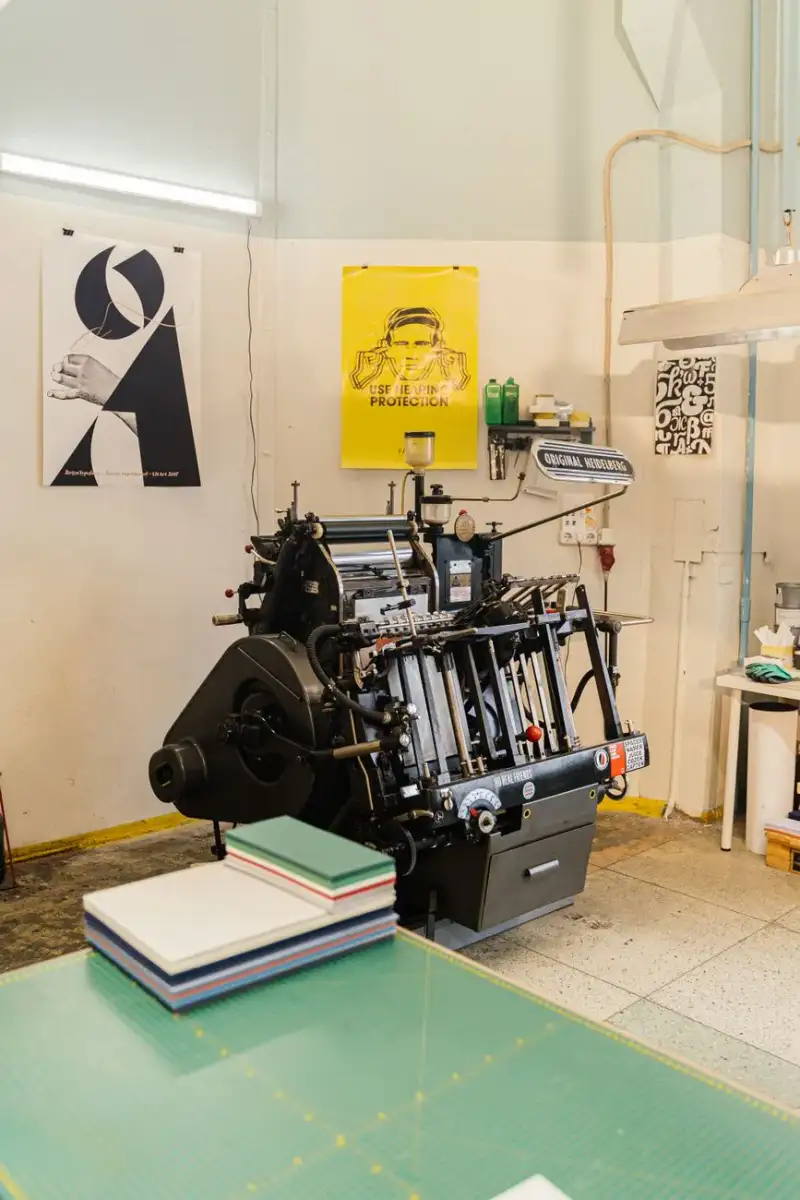
The Invention That Shook the World: The Gutenberg Bible and the Dawn of the Printed Era
The Echo of Movable Type: When Gutenberg Made Silence Speak The history of humanity is punctuated by moments when a single invention is enough to redefine the course of civilizations. Among them, the invention of movable type printing by Johannes Gutenberg in the 15th century stands as a beacon, illuminating Europe with a new light. The Gutenberg Bible, or 42-line Bible, is not simply a book: it is the first printed monument of the modern era, a masterpiece where technical genius, artisanal rigor, and spiritual ambition intersect. Between 1452 and 1455, in the shadow of the Mainz workshops, an object was born that would forever transform the dissemination of knowledge, shake the foundations of the Church, and lay the groundwork for the Renaissance. But what does this tome of leather and paper contain, whose surviving copies are worth fortunes today? How did a simple Latin Bible become the symbol of a revolution? And above all, what mystery still surrounds these pages printed over five centuries ago, where every letter seems to whisper the future of a changing world?A Work of Books: Gutenberg's Genius and the Alchemy of Printing In a legal document written after the completion of his project, Johannes Gutenberg modestly evokes Das Werk der Bücher – "The Work of Books". However, behind this phrase lies a titanic undertaking, the result of years of research and colossal investments. Contrary to popular belief, Gutenberg did not immediately jump into printing the Bible. The first projects of his workshop, financed by loans and partnerships, were much more modest: papal indulgences, German poems, and especially editions of Aelius Donatus's Ars Grammatica, an essential Latin grammar manual in medieval schools. The idea of producing an entire Bible probably germinated around 1450, when Gutenberg perfected his system of metal movable type, a radical innovation. Unlike xylography (woodcuts) used until then, where each page had to be carved by hand, his characters made of a lead, tin, and antimony alloy could be reused infinitely. But the invention didn't stop there: to ensure clear and durable printing, Gutenberg developed an oil-based ink, much more resistant than the water-based inks used by copyists. This ink, rich in metallic particles (copper, lead), penetrated deeply into the paper, ensuring exceptional readability.What If Gutenberg Had Failed? A World Without Printing Imagine for a moment a world where printing had never seen the light of day. Without the Gutenberg Bible, the dissemination of texts would have depended on copyists, drastically limiting access to knowledge. Universities would have remained bastions reserved for an elite, and the Protestant Reformation might never have taken place. Science, too, would have progressed at a much slower pace due to the lack of massive dissemination of discoveries. Gutenberg didn't just invent a machine: he gave birth to a new form of power – that of information. And we are still the heirs to this power today, in the digital age.Conclusion: A Book That Changed History, and Continues to Speak to Us The Gutenberg Bible is not just a museum object. It is a symbol of human ingenuity, a bridge between the Middle Ages and modernity. In its pages, one can guess the anxiety of the copyists facing the end of an era, but also the excitement of the first readers discovering identical, perfect texts at their fingertips. Five centuries later, as we hold a book in our hands or scroll on a screen, we sometimes forget the miracle that each printed page represents. The Gutenberg Bible reminds us that behind every word, every letter, hides a story – that of men and women who dared to defy the limits of their time. So the next time you open a book, remember: it all started here, in the smoky workshop of Mainz, where a visionary goldsmith made silence speak.#HistoryOfTheBook #MedievalInnovation #GutenbergBible #AncientPrinting #CulturalHeritage #History #Books #Reading Related InsightsThe White Tiger Book Review and Summary The Lies of Locke Lamora Book Review and Summary The Match Book Review and Summary{ "@context": "https://schema.org", "@type": "FAQPage", "mainEntity": [ { "@type": "Question", "name": "What is the main focus of The Invention That Shook the World: The Gutenberg Bible and the Dawn of the Printed Era?", "acceptedAnswer": { "@type": "Answer", "text": "Discover how the Gutenberg Bible, the first mass-printed book in Europe, marked a turning point in cultural and religious history." } }, { "@type": "Question", "name": "Who authored the comprehensive guide on The Invention That Shook the World: The Gutenberg Bible and the Dawn of the Printed Era?", "acceptedAnswer": { "@type": "Answer", "text": "This detailed article and its insights were carefully researched and authored by Lucas Martin." } }, { "@type": "Question", "name": "Where can I find more related content about Books?", "acceptedAnswer": { "@type": "Answer", "text": "You can explore more articles, detailed reviews, and similar insights by browsing the Related Insights section at the bottom of this article or visiting our dedicated Books category page." } } ] }
- Emily Page
- 13 Jul, 2026 22:53
The Anatomy of the Written Word: Unraveling the Sacred and Secular History of Literary Criticism
To read is to embark on a journey of silent communion with the dead and the living, but to critique is to map the cartography of that journey. Literature does not exist in a vacuum; it requires an analytical gaze to decipher its structural labyrinth, to evaluate its aesthetic weight, and to interpret its hidden patterns. This intellectual pursuit—known broadly as literary criticism or literary studies—serves as the ultimate bridge between the raw creation of the artist and the conscious comprehension of the audience. At its core, it is the systematic study, evaluation, and interpretation of literature, a discipline that has evolved from ancient philosophical inquiry into a highly sophisticated sphere of modern scholarship. Modern literary criticism does not walk this path alone. It is deeply entangled with, and often influenced by, literary theory—the philosophical analysis of literature’s fundamental goals and methods. Yet, a delicate tension persists between these two realms. While closely related, the literary critic and the literary theorist are not always identical. Some scholars argue whether literary criticism should be treated as a separate field of inquiry altogether. For instance, the renowned The Johns Hopkins Guide to Literary Theory and Criticism draws no real distinction between the two, choosing instead to use the terms together to describe a singular, unified concept. In contrast, other thinkers view literary criticism as the practical, hands-on application of literary theory. Under this view, criticism is always bound to the specific, breathing flesh of particular literary works, whereas theory remains floating in the realm of the general, the abstract, and the speculative. Whether practiced in the quiet halls of academia or within the pages of widely circulating periodicals, literary criticism has found diverse homes. Academic critics dissect texts within university literature departments, publishing their dense, peer-reviewed findings in specialized academic journals. Meanwhile, a more popular, public-facing critical tradition thrives in intellectual publications. Readers searching for insightful evaluations turn to esteemed platforms such as The Times Literary Supplement, The New York Times Book Review, The New York Review of Books, the London Review of Books, the Dublin Review of Books, The Nation, Bookforum, and The New Yorker. To understand how we arrived at this vibrant landscape of critical discourse, we must look backward, tracing the long historical lineage that shaped the modern analytical mind. The Threshold of Interpretation: Theory versus CriticismTo explore literary criticism is to confront the historic division between the abstract framework and the practical reading of a text. While literary theory constructs the lens through which we view a narrative, literary criticism is the act of looking through that lens at a specific page. The ongoing debate regarding their separation highlights a fundamental truth: criticism cannot easily escape theory, nor can theory prove its utility without the text. This dynamic manifests clearly in the venues where criticism is consumed. In the academic sphere, the dialogue is rigorous, focusing on structural methodologies and ideological decodings. In the public sphere, however, the essay and the review reign supreme. The transition of criticism from elite academic circles to publications like The New Yorker or the London Review of Books demonstrates that evaluating a book is both a scholarly science and a public art form, designed to guide the cultural taste of an era. From Antiquity to the Medieval Hermeneutic: The Genesis of CritiqueThe roots of this analytical impulse stretch deep into the soil of the classical period. In the 4th century BC, the Greek philosopher Aristotle penned the Poetics, a seminal treatise that offered the first formal typology and explanation of literary forms. Aristotle did not merely theorize in the abstract; he provided specific, acute criticisms of the contemporary artworks of his era. Through this work, he developed foundational concepts that remain central to literary studies to this day: mimesis (the imitative representation of nature and human action) and catharsis (the purging of pity and fear through art). As the classical world transitioned into the medieval period, the focus of critical inquiry shifted dramatically. Much of classical and medieval criticism became deeply intertwined with religious texts. The long, rigorous traditions of hermeneutics and textual exegesis, developed to unlock the spiritual truths of sacred scriptures, began to exert a profound influence on how scholars approached secular texts. This cross-pollination was especially evident within the rich literary traditions of the three Abrahamic religions: Jewish literature, Christian literature, and Islamic literature. In the medieval Islamic world, literary criticism flourished beyond strictly religious commentary, embedding itself in the study of Arabic literature and poetry from the 9th century onward. Intellectuals developed sophisticated methodologies to analyze poetic structures and rhetorical devices. Among the most notable figures of this Golden Age was Al-Jahiz, who explored style, presentation, and language in his landmark works al-Bayan wa-'l-tabyin and al-Hayawan. Similarly, Abdullah ibn al-Mu'tazz made pioneering contributions to Arabic poetic theory with his Kitab al-Badi, laying down systematic rules for the analysis of the modern poetic style. The Renaissance and the Classicist Revival The dawn of the Renaissance brought a dramatic intellectual rebirth, characterized by the recovery of classical texts and a desire to harmonize ancient wisdom with contemporary culture. This era developed classical ideas regarding the absolute unity of form and content into a rigid literary neoclassicism. Literature was proclaimed as the very beating heart of culture, and the poet or author was entrusted with a sacred duty: the preservation of a long, unbroken literary tradition. The true birth of Renaissance criticism can be traced precisely to the year 1498. This was the pivotal moment when Giorgio Valla published his Latin translation of Aristotle’s Poetics, reintroducing the foundational text to Western Europe. From this recovery onward, Aristotle’s ideas dominated the critical landscape, remaining the single most potent influence upon literary criticism until the close of the eighteenth century. Critics across the continent sought to interpret and apply these ancient rules to modern vernacular writing. Among the most influential of these Renaissance commentators was Lodovico Castelvetro, who in 1570 wrote extensive, highly debated commentaries on Aristotle’s Poetics, codifying the rigid rules of dramatic structure that would govern European theater for generations. The Baroque Transgression and the Metaphor of WonderBy the seventeenth century, the serene order, proportion, and harmony championed by Renaissance neoclassicism began to fracture. The Western world witnessed its first full-fledged crisis in modernity, as the core critical-aesthetic principles inherited from classical antiquity—such as proportion, unity, decorum, and harmony—were fundamentally challenged. For centuries, these values had stabilized Western thinking about the creation and evaluation of artworks. While Classicism remained a potent cultural force, it was gradually forced to share the stage with a rival movement: the Baroque. This new aesthetic favored the transgressive, the irregular, and the extreme. The Baroque did not seek to replicate the balanced unity or decorum that supposedly distinguished both nature and its greatest imitator, ancient art. Instead, it sought to startle, to destabilize, and to inspire awe. The theoretical framework for this radical Baroque aesthetic was not fully articulated until 1654, with the publication of Emanuele Tesauro’s seminal treatise, Il Cannocchiale aristotelico (The Aristotelian Telescope). Deeply inspired by the grand scale of Giambattista Marino’s epic poem Adone and the intellectual depth of the Spanish Jesuit philosopher Baltasar Gracián, Tesauro developed an innovative theory of metaphor. He argued that metaphor was not merely an ornamental poetic device, but a universal language of images. In Tesauro's view, the construction of a metaphor was a supreme intellectual act—an artifice that served as an epistemologically privileged path to accessing ultimate truth. Key Baroque concepts such as the "conceit" (concetto), "wit" (acutezza, ingegno), and "wonder" (meraviglia) became the new criteria by which great literature was measured. The Commercial Ink: Enlightenment and the Democratic PrintThe eighteenth century ushered in the Enlightenment, a period in which literary criticism transformed from an elite scholarly pursuit into a highly popular, public-facing phenomenon. This shift was driven by a dramatic rise in public literacy rates; reading was no longer an exclusive luxury reserved solely for the wealthy or the highly educated scholarly class. Accompanied by the rapid speed of the printing press and the intense commercialization of literature, a massive reading public emerged. For this new class of readers, literature was no longer viewed exclusively as an educational tool or a sacred source of religious instruction; it became a primary source of entertainment. Consequently, literary criticism arose as an essential guide for the consumer. The style of criticism in this era reflected the broader values of the Enlightenment, favoring clear, bold, and precise writing. However, it was also highly controversial, with critics frequently judging literary works based on the author’s religious beliefs. These critical reviews found a home in the rapidly multiplying newspapers, magazines, and journals of the day. Yet, the mass production and commercialization of literature had a distinct downside in the eyes of intellectuals. The emerging literary market, which Enlightenment theoreticians had hoped would educate the public and eradicate superstition and prejudice, began to slip away from their idealistic control. The noble business of the Enlightenment quickly transformed into a lucrative business with the Enlightenment. To combat the rise of sensational and low-quality entertainment literature, critics intensified their scrutiny. Highly celebrated authors were not spared from this fierce critical climate. For instance, the works of Jonathan Swift faced severe judgment; his masterpiece Gulliver's Travels was famously dismissed by one contemporary critic who described it as nothing more than "the detestable story of the Yahoos." Romantics, Rebels, and the Path to Modernity As the nineteenth century dawned, the British Romantic movement mounted a fierce rebellion against the rigid, rational constraints of Enlightenment thought. The Romantics introduced revolutionary aesthetic ideas to literary studies. They argued that the object of literature did not always have to be beautiful, noble, or formally perfect. Instead, they believed that literature possessed the power to enlighten the reader, elevating even the most common, mundane subject to the level of the sublime. In Germany, the Romantic movement followed closely on the heels of late German classicism. German Romanticism emphasized a deep understanding and appreciation of fragmentation—a concept that appears startlingly modern to contemporary readers. Furthermore, the German thinkers placed an immensely high value on Witz—a specific kind of intellectual "wit" or "humor"—elevating it far above the more solemn, serious tone that characterized much of Anglophone Romanticism. As the nineteenth century drew to a close, the cultural authority of the critic reached unprecedented heights. This era produced figures who achieved immense renown not for their poetry or fiction, but primarily for their contributions to literary criticism. Chief among them was Matthew Arnold, whose critical essays helped define the cultural standards of the Victorian era and established the critic as a vital guardian of societal values. While these historical movements each left an indelible mark, the modern landscape of literary criticism owes its direct existence to the radical shifts of the early twentieth century. It was during this period that criticism began to break away from historical and biographical analysis, turning its focus entirely toward the text itself. This transition was spearheaded first by the rigorous school of Russian Formalism, and shortly thereafter, by the rise of the New Criticism in Britain and the United States, forever changing how we read, interpret, and understand the written word.#LiteraryCriticism #BookHistory #Aristotle #LiteraryTheory #ClassicLiterature Related InsightsThe Summer We Crossed Europe in the Rain Book Review and Summary Please Enjoy Your Stay Book Review and Summary The Code Breaker Book Review and Summary{ "@context": "https://schema.org", "@type": "FAQPage", "mainEntity": [ { "@type": "Question", "name": "What is the main focus of The Anatomy of the Written Word: Unraveling the Sacred and Secular History of Literary Criticism?", "acceptedAnswer": { "@type": "Answer", "text": "Trace the rich intellectual journey of literary criticism from Aristotle's foundational concepts to the experimental shifts of the twentieth century." } }, { "@type": "Question", "name": "Who authored the comprehensive guide on The Anatomy of the Written Word: Unraveling the Sacred and Secular History of Literary Criticism?", "acceptedAnswer": { "@type": "Answer", "text": "This detailed article and its insights were carefully researched and authored by Emily Page." } }, { "@type": "Question", "name": "Where can I find more related content about Books?", "acceptedAnswer": { "@type": "Answer", "text": "You can explore more articles, detailed reviews, and similar insights by browsing the Related Insights section at the bottom of this article or visiting our dedicated Books category page." } } ] }
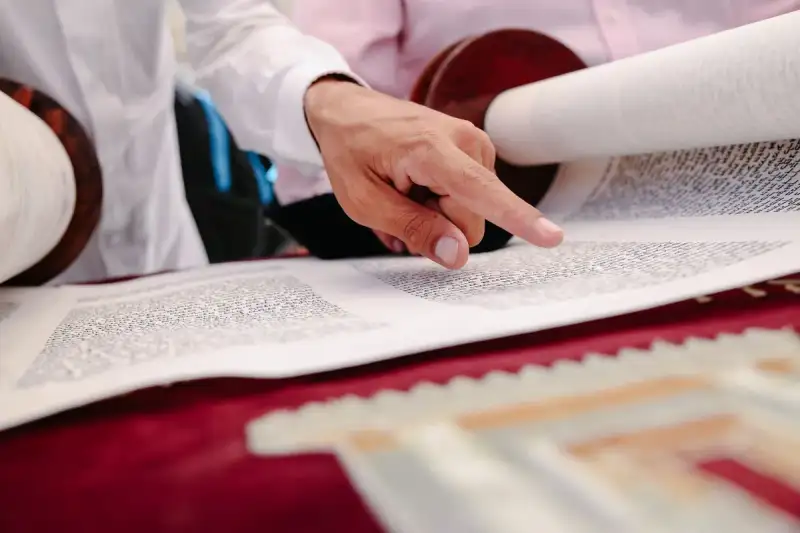
- Clara Schmidt
- 13 Jul, 2026 21:53
Die Melodie der Unsterblichkeit: Warum das Epos die DNA unserer Geschichten in sich trägt
Bevor die erste Feder das Pergament berührte, bevor Tinte die flüchtigen Gedanken der Menschheit in starre Fesseln legte, gab es das gesprochene Wort, getragen vom Atem der Barden und dem Rhythmus des Herzschlags. In jener fernen Epoche, als Götter noch direkten Einfluss auf das Schicksal der Sterblichen nahmen, formte eine besondere Kunstform das Universum für die nachfolgenden Generationen: das Epos. Diese monumentalen Erzählgedichte sind weit mehr als bloße Geschichten über außergewöhnliche Charaktere und ihre übermenschlichen Taten; sie sind das Fundament, auf dem die Kathedrale der Weltliteratur errichtet wurde. Als Clara Schmidt möchte ich Sie heute auf eine tiefgründige Reise durch die Jahrtausende mitnehmen. Wir werden die feinen Fäden der oralen Tradition entwirren, die mathematische Präzision antiker Metren analysieren und verstehen, warum die ältesten Gesänge der Menschheit noch heute in unseren modernen Filmen und Büchern nachhallen. Die Etymologie des Unvergänglichen: Was ist ein Epos? Um das Wesen des Epos zu begreifen, müssen wir zu seinen sprachlichen Wurzeln zurückkehren. Das deutsche Wort „Epos“ leitet sich über das lateinische epicus von dem altgriechischen Adjektiv epikos (ἐpικός) ab. Dieses wiederum entspringt dem Substantiv epos (ἔπος), was schlicht „Wort“, „Geschichte“ oder „Gedicht“ bedeutet. Im antiken Griechenland war der Begriff jedoch weitaus umfassender und zugleich spezifischer, als wir ihn heute verwenden. Ursprünglich bezog sich „Epos“ auf jegliche Dichtung, die im daktylischen Hexameter verfasst war. Unter diese Definition, die als epea bekannt war, fielen nicht nur die heroischen Erzählungen Homers, sondern auch die weisheitliche Lehrdichtung eines Hesiod, die rätselhaften Aussprüche des Orakels von Delphi und jene mystischen, theologischen Verse, die dem legendären Sänger Orpheus zugeschrieben wurden. Erst im Laufe der späteren literarischen Tradition verengte sich der Begriff auf das heroische Epos – jene monumentalen Erzählungen von Helden und Götterkämpfen, die wir heute mit dem Genre verbinden.Die Wiege der Schrift und das älteste Lied der Welt Die Geschichte des geschriebenen Epos beginnt nicht in Europa, sondern im staubigen Sand Mesopotamiens. Das älteste anerkannte Epos der Menschheitsgeschichte ist das Gilgamesch-Epos, dessen Ursprünge auf die Zeit zwischen 2500 und 1300 vor Christus zurückgehen. Aufgezeichnet im antiken Sumer während des Neusumerischen Reiches, erzählt dieses Werk von den Taten des Königs Gilgamesch von Uruk. Obwohl Gilgamesch historisch als reale Figur verbürgt ist, zeichnet ihn das Epos als eine mythische, halbgöttliche Gestalt, die sich den Mächten des Schicksals und der Suche nach Unsterblichkeit stellt. Wenn wir den Blick nach Osten richten, stoßen wir auf das volumenmäßig gigantischste Denkmal der antiken Epik: das indische Mahabharata. Entstanden etwa zwischen dem 3. Jahrhundert vor Christus und dem 3. Jahrhundert nach Christus, umfasst dieses in Sanskrit verfasste Monumentalwerk sage und schreibe 100,000 Ślokas (Doppelverse), was über 200,000 Verszeilen entspricht. Hinzu kommen lange Prosa-Passagen. Mit rund 1,8 Millionen Wörtern ist das Mahabharata etwa doppelt so lang wie das persische Schahnameh, viermal so lang wie das Ramayana und ungefähr zehnmal so lang wie Homers Ilias und Odyssee zusammen. Es zeigt, mit welcher erzählerischen Ausdauer die alten Kulturen ihre kosmischen und moralischen Ordnungssysteme in poetische Formen gossen. Mündliche Überlieferung: Die Kunst des Erinnerns ohne Schrift Bevor Epen auf Tontafeln, Papyrus oder Pergament fixiert wurden, existierten sie ausschließlich im Gedächtnis illiterate Gesellschaften. Diese primären Epen wurden von professionellen Sängern und Barden vorgetragen. Doch wie war es möglich, zehntausende Verse fehlerfrei im Gedächtnis zu behalten und über Generationen hinweg weiterzugeben? Der Schlüssel liegt im Unterschied zwischen Alltagssprache und formeller poetischer Sprache. Während Alltagserzählungen (ob faktisch oder fiktional) anfällig für ständige sprachliche Variationen sind, zeichnen sich Epen durch eine hochgradig formalisierte Sprache aus. Sie wurden im Rahmen der oralen Tradition oft Wort für Wort gelernt.Im frühen 20. Jahrhundert revolutionierten die Forscher Milman Parry und Albert Lord unser Verständnis dieser Kunstform. Durch ihre Studien an noch lebenden oralen Epentraditionen auf dem Balkan wiesen sie das sogenannte parataktische Modell nach. Sie demonstrierten, dass orale Epen in kurzen Episoden konstruiert sind. Jede dieser Episoden besitzt den gleichen Status, das gleiche Interesse und die gleiche Bedeutung. Dies erleichterte dem Sänger die Memorierung ungemein: Er musste sich während des Vortrags lediglich an die Abfolge der einzelnen Episoden erinnern und rekonstruierte das gesamte Epos während der Aufführung neu, indem er auf formelhafte Wendungen und rhythmische Schablonen zurückgriff. Parry und Lord argumentierten schlüssig, dass auch die Homerischen Epen – die Ilias und die Odyssee, welche das Fundament der westlichen Literatur bilden – im Kern rein orale Dichtungsformen waren. Die uns heute vorliegenden schriftlichen Texte sind aller Wahrscheinlichkeit nach das Resultat der Diktatnahme während einer solchen mündlichen Performance. Die Anatomie des Epos nach Aristoteles In seiner bahnbrechenden Schrift Poetik unternahm es der griechische Philosoph Aristoteles, das Epos systematisch zu definieren und es von anderen literarischen Gattungen wie der Lyrik und dem Drama (Tragödie und Komödie) abzugrenzen. Aristoteles stellte fest, dass das Epos insofern mit der Tragödie übereinstimmt, als es eine Nachahmung (Mimesis) von Charakteren gehobenen Standes in versifizierter Form darstellt. Doch er arbeitete auch wesentliche Unterschiede heraus:Das Metrum: Während die Tragödie verschiedene Metren nutzt, lässt das Epos nur eine einzige Versform zu (den heroischen Hexameter). Die Form: Das Epos ist rein erzählend (narrativ) gestaltet, nicht dramatisch schauspielerisch. Die zeitliche Dimension: Die Tragödie versucht sich laut Aristoteles nach Möglichkeit auf einen einzigen Sonnenumlauf zu beschränken oder diesen nur geringfügig zu überschreiten. Die epische Handlung hingegen kennt keine zeitlichen Grenzen.Interessanterweise betonte Aristoteles, dass alle konstituierenden Elemente eines Epos auch in der Tragödie zu finden sind, aber nicht alle Elemente der Tragödie im Epos existieren. Wer also eine gute von einer schlechten Tragödie zu unterscheiden weiß, versteht auch die Qualität eines Epos. Die zehn Säulen des heroischen Epos Die Literaturwissenschaftler Harmon und Holman definierten das Epos im Jahr 1999 als ein langes erzählendes Gedicht in gehobenem Stil. Es präsentiert Charaktere von hohem gesellschaftlichem Rang in Abenteuern, die durch ihre Beziehung zu einer zentralen Heldenfigur und durch die Entwicklung von Episoden, die für die Geschichte einer Nation oder Rasse von Bedeutung sind, ein organisches Ganzes bilden. Dabei lassen sich zehn charakteristische Merkmale und Konventionen identifizieren, die fast jedem klassischen Epos eigen sind:In medias res: Die Erzählung beginnt nicht am absoluten chronologischen Anfang, sondern mitten im Geschehen, im Dickicht der Ereignisse. Ein gigantischer Schauplatz: Die Bühne der Handlung ist weitreichend und umfasst oft viele Nationen, die gesamte bekannte Welt oder gar das Universum. Die Anrufung der Muse: Das Werk beginnt mit einer feierlichen Bitte um göttliche Inspiration (epische Invokation). Das Thema: Gleich zu Beginn wird das zentrale Thema der Dichtung explizit formuliert. Epitheta: Der Einsatz von formelhaften, schmückenden Beiwörtern (wie „der listenreiche Odysseus“ oder „die rosenfingrige Eos“). Der epische Katalog: Lange, detaillierte Listen von Schiffen, Kriegern, Armeen oder Ahnenreihen. Formelle Reden: Die Charaktere halten lange, rhetorisch ausgefeilte und formelle Reden. Göttliche Intervention: Höhere Mächte und Götter greifen aktiv in die Angelegenheiten der Sterblichen ein. Der repräsentative Held: Die Hauptfigur verkörpert in ihren Taten und moralischen Entscheidungen die fundamentalen Werte ihrer gesamten Zivilisation. Katabasis: Der tragische Abstieg des Helden in die Unterwelt oder die Hölle und seine anschließende Rückkehr.Der epische Held durchläuft dabei typischerweise eine zyklische Reise oder Suche (Quest). Er sieht sich Widersachern gegenüber, die ihn vernichten wollen, überwindet diese Prüfungen und kehrt schließlich tiefgreifend verändert in seine Heimat zurück.Eine literarische Weltreise durch die Epochen Die Tradition, die mit Homer und den namenlosen sumerischen Barden begann, setzte sich über die Jahrhunderte fort. Spätere Dichter wie Vergil (Äneis), Apollonios von Rhodos, Dante Alighieri (Göttliche Komödie), Luís de Camões (Die Lusiaden) und John Milton (Paradise Lost) adoptierten und adaptierten Homers Stil und seine Sujets. Doch im Gegensatz zu ihren antiken Vorläufern nutzten sie die spezifischen stilistischen Werkzeuge, die nur der schriftlichen Komposition zur Verfügung stehen. Wenn wir den Globus umrunden, sehen wir, dass fast jede große Kultur ihr eigenes Epos hervorgebracht hat, um ihre Identität zu stiften:Sanskrit-Tradition: Das Mahabharata und das Ramayana. Tamilische Klassik: Das Silappatikaram und das Manimekalai. Persien: Das monumentale Schahnameh (Buch der Könige). Altenglisch: Das anonyme, heroische Beowulf. Germanischer Raum: Das mittelhochdeutsche Nibelungenlied. Romanischer Raum: Das französische Rolandslied, das spanische Cantar de mio Cid und das portugiesische Os Lusíadas. Osteuropa und Asien: Das altrussische Lai vom Fürsten Igor, das kirgisische Manas, Die Geheime Geschichte der Mongolen und das armenische Epos Die Tollkühnen von Sassun. Afrika: Das westafrikanische Sundiata-Epos aus Mali. Finnland: Das aus Volksliedern zusammengestellte Nationalepos Kalevala.Selbst in der Moderne ist das Genre nicht ausgestorben, sondern hat sich transformiert. Moderne Epen wie Derek Walcotts karibisches Meisterwerk Omeros, Mircea Cărtărescus Die Levante oder Adam Mickiewiczs polnisches Nationalepos Pan Tadeusz zeigen die anhaltende Vitalität dieser Form. Auch William Carlos Williams’ fünfbändiges Werk Paterson (veröffentlicht zwischen 1946 und 1958) atmet diesen Geist, teilweise inspiriert von einem anderen gigantischen modernen Epos: den berühmten Cantos von Ezra Pound. Das Epos bleibt somit der majestätische Fluss der Literaturgeschichte, in dem die Mythen der Vergangenheit und die Reflexionen der Gegenwart in einem unendlichen Rhythmus zusammenfließen. Es erinnert uns daran, wer wir sind, woher wir kommen und welche monumentalen Kämpfe die menschliche Seele auszufechten bereit ist.#EpischeDichtung #Weltliteratur #KlassischeBuecher #Literaturwissenschaft #Klassiker Related InsightsThe Thirteenth Tale Book Review and Summary Merciful is the Dark (Cruel is the Light, #2) Book Review and Summary Love Arranged Book Review and Summary{ "@context": "https://schema.org", "@type": "FAQPage", "mainEntity": [ { "@type": "Question", "name": "What is the main focus of Die Melodie der Unsterblichkeit: Warum das Epos die DNA unserer Geschichten in sich trägt?", "acceptedAnswer": { "@type": "Answer", "text": "Eine literarische Reise durch die monumentale Welt der Epik, von den mündlichen Gesängen Homers bis zu den komplexen Strukturen antiker Heldenlieder." } }, { "@type": "Question", "name": "Who authored the comprehensive guide on Die Melodie der Unsterblichkeit: Warum das Epos die DNA unserer Geschichten in sich trägt?", "acceptedAnswer": { "@type": "Answer", "text": "This detailed article and its insights were carefully researched and authored by Clara Schmidt." } }, { "@type": "Question", "name": "Where can I find more related content about Books?", "acceptedAnswer": { "@type": "Answer", "text": "You can explore more articles, detailed reviews, and similar insights by browsing the Related Insights section at the bottom of this article or visiting our dedicated Books category page." } } ] }
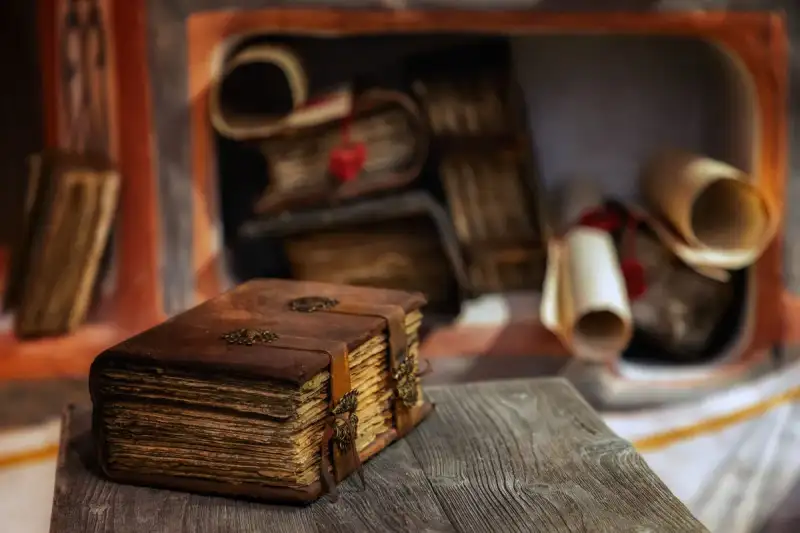
- Sofia Romano
- 13 Jul, 2026 17:53
Sussurri Proibiti e Voci Che Non Muoiono: L'Eterno Viaggio dei Libri Banditi
C'è una vibrazione silenziosa che risuona tra le pagine ingiallite di libri dimenticati, un'eco di voci soffocate e di pensieri negati. È il lamento sommesso di un'idea che ha osato sfidare lo status quo, una narrazione ritenuta troppo pericolosa, troppo scomoda, troppo vera per essere liberamente diffusa. Questa è la storia dei libri banditi, non semplicemente di volumi negati alla vista, ma di opere strappate dalle mani dei lettori, confinate nell'ombra, la cui esistenza stessa è stata una sfida audace contro le correnti dominanti del loro tempo. Fin dall'alba della civiltà, quando la parola scritta iniziò a plasmare il pensiero umano, emerse anche il timore ancestrale del suo potere dirompente, il suo potenziale di innescare rivoluzioni non solo nelle menti, ma anche nelle strade e nelle piazze. Il bando di un libro non è mai un atto neutro; è una dichiarazione di guerra intellettuale, un tentativo di controllare la conoscenza, di modellare la realtà secondo un'unica, inequivocabile verità. È un atto che rivela più sulle paure di chi censura che sul presunto pericolo del testo stesso. Questa è un'odissea che attraversa secoli, culture e ideologie, un'eterna lotta tra la fiamma della curiosità e il gelo dell'ortodossia, tra la libertà di esplorare e il desiderio di imporre. Con ogni pagina strappata, con ogni tomo bruciato, nasce una nuova scintilla di resistenza, un ricordo che la verità, come la fenice, risorge sempre dalle sue ceneri, trovando nuove vie per sussurrare la sua storia. L'Ombra della Censura: Radici Storiche di una Pratica Antica La pratica di bandire i libri non è una peculiarità dell'età moderna, né un'aberrazione di regimi totalitari. Le sue radici affondano profondamente nella storia, accompagnando l'evoluzione della scrittura e la diffusione della conoscenza. Già nell'antichità, il controllo sui testi era visto come uno strumento essenziale per mantenere l'ordine sociale e religioso. Nell'antica Roma, ad esempio, opere considerate sovversive o immorali venivano talvolta bruciate in pubblico per ordine delle autorità. La distruzione della Biblioteca di Alessandria, sebbene attribuita a vari eventi nel corso dei secoli, simboleggia in parte la vulnerabilità della conoscenza di fronte alla distruzione e alla censura. Con l'avvento del Cristianesimo e la sua consolidazione in Europa, la censura assunse una veste più strutturata e sistematica. La Chiesa cattolica, in particolare, divenne una forza dominante nel regolare ciò che poteva essere letto e ciò che doveva essere proibito. Il culmine di questo controllo fu la creazione dell' Index Librorum Prohibitorum (Indice dei Libri Proibiti) nel 1559, un elenco di pubblicazioni che i cattolici non potevano leggere, possedere o distribuire senza il permesso ecclesiastico. Questo Index rimase in vigore per oltre quattro secoli, fino al 1966, e incluse opere di scienziati come Copernico e Galileo Galilei, filosofi come Cartesio e John Locke, e innumerevoli autori che osarono sfidare i dogmi religiosi o morali dell'epoca.Il potere della stampa, una volta introdotto da Gutenberg, non fece che amplificare sia la capacità di diffondere idee che la paura di tale diffusione incontrollata. Le autorità civili, non solo quelle religiose, compresero presto il potenziale rivoluzionario delle parole stampate. I monarchi e i governi iniziarono a imporre licenze e censure preventive per sopprimere la sedizione, la critica politica o qualsiasi contenuto ritenuto destabilizzante. Le rivoluzioni, sia politiche che scientifiche, furono spesso precedute da un fiorire di scritti clandestini, stampati e distribuiti con grande rischio, dimostrando che la censura, lungi dal sopprimere completamente le idee, spesso le costringeva a mutare forma e a trovare percorsi sotterranei, rendendole talvolta ancora più potenti. Le Molteplici Facce del Divieto: Perché un Libro Viene Bandito? Le ragioni dietro il bando di un libro sono variegate e complesse, riflettendo le ansie, i valori e le ideologie dominanti di una società in un dato momento storico. Non esiste una singola motivazione, ma piuttosto un mosaico di paure e desideri di controllo. Blasfemia e Morale Religiosa Fin dall'inizio della storia della censura, le accuse di blasfemia, eresia o immoralità religiosa sono state tra le più comuni. Opere che mettevano in discussione i dogmi consolidati, le narrazioni sacre o l'autorità religiosa venivano rapidamente etichettate come pericolose. Il caso di Salman Rushdie e il suo romanzo "I versi satanici" (1988) è un esempio moderno e tragico di come una presunta blasfemia possa scatenare una reazione violenta e globale, con una fatwa che ne decretava la condanna a morte. Allo stesso modo, libri come "L'origine delle specie" di Charles Darwin sono stati a lungo osteggiati da movimenti creazionisti per la loro presunta contraddizione con i testi sacri. Persino la popolare serie di "Harry Potter" di J.K. Rowling ha affrontato sfide e tentativi di bando in alcune comunità religiose per presunta promozione della stregoneria e dell'occultismo. Obscenità e Standard Morali Un'altra categoria comune di censure riguarda i contenuti sessualmente espliciti o ritenuti "osceni". Gli standard di ciò che è considerato osceno sono notevolmente cambiati nel tempo e variano ampiamente tra le culture, ma la lotta per definire i limiti della rappresentazione sessuale è stata una costante. Romanzi come "Ulysses" di James Joyce (1922), con le sue descrizioni dettagliate della vita interiore di un uomo a Dublino e la famosa scena del monologo di Molly Bloom, fu bandito negli Stati Uniti e nel Regno Unito per molti anni con l'accusa di oscenità, prima di essere riconosciuto come un capolavoro della letteratura modernista. Anche "L'amante di Lady Chatterley" di D.H. Lawrence (1928) e "Lolita" di Vladimir Nabokov (1955) hanno subito pesanti censure e processi per oscenità, aprendo dibattiti fondamentali sulla libertà di espressione e sulla definizione stessa di pornografia in relazione all'arte. "Il giovane Holden" di J.D. Salinger (1951), un classico della letteratura adolescenziale, è stato spesso contestato nelle scuole per il suo linguaggio volgare, le tematiche sessuali e il ritratto della ribellione giovanile. Sovversione Politica e Critica Sociale Forse le ragioni più pericolose per i censori sono quelle legate alla sovversione politica e alla critica sociale. I regimi autoritari, ma anche le democrazie in tempi di crisi o paura, hanno spesso cercato di sopprimere le voci che mettevano in discussione l'autorità, denunciavano ingiustizie o proponevano alternative allo status quo. "La fattoria degli animali" (1945) e "1984" (1949) di George Orwell sono esempi lampanti di opere che, attraverso la satira e la distopia, criticano i totalitarismi e la manipolazione del linguaggio e del pensiero. Questi libri, pur essendo diventati pilastri della letteratura mondiale, sono stati banditi in diversi paesi e in diverse epoche, dalla Russia sovietica agli Stati Uniti durante la Guerra Fredda, per la loro presunta natura "anti-governativa" o "anti-statunitense". Anche opere che espongono le crude realtà sociali e le ingiustizie sono state bersaglio di censura. "Furore" di John Steinbeck (1939), che racconta la difficile vita di una famiglia di agricoltori durante la Grande Depressione, fu bandito in alcune contee della California per la sua critica alle condizioni di lavoro e alla disuguaglianza sociale. "Le avventure di Huckleberry Finn" di Mark Twain (1884), pur essendo un'opera fondamentale della letteratura americana, è stato oggetto di sfide continue per l'uso di linguaggio razziale e per la rappresentazione stereotipata di personaggi neri, nonostante il suo messaggio complessivo sia profondamente anti-razzista. Allo stesso modo, "Il buio oltre la siepe" di Harper Lee (1960), pur essendo un inno alla giustizia e alla tolleranza, è stato spesso messo in discussione per le stesse ragioni.Il Paradosso della Censura: La Vita Eterna del Proibito Uno degli aspetti più affascinanti e spesso ironici della censura è il suo paradosso intrinseco: nel tentativo di sopprimere un'idea, il bando può in realtà conferirle maggiore visibilità, un alone di mistero e una potenza amplificata. Questo fenomeno è noto anche come "effetto Streisand" in contesti moderni, ma la sua essenza è antica quanto la censura stessa. Quando un libro viene bandito, esso attira inevitabilmente l'attenzione, trasformandosi da semplice testo in simbolo di resistenza, in frutto proibito che molti desiderano assaggiare proprio per la sua inaccessibilità. La storia è piena di esempi di opere che hanno raggiunto la fama e l'immortalità proprio grazie al tentativo di soffocarle. Il "Decameron" di Boccaccio, nonostante le ripetute messe all'indice, è sopravvissuto e prosperato. Le opere di Dostoevskij, bandite in Unione Sovietica per un certo periodo, sono state poi riscoperta e valorizzata, dimostrando la resilienza dell'arte di fronte alla repressione. La proibizione non annulla il desiderio umano di conoscenza e di comprensione; al contrario, può rafforzarlo, spingendo i lettori a cercare vie alternative per accedere alle idee proibite. Le copie clandestine, la circolazione sotterranea, il passaparola: tutte queste vie hanno permesso a innumerevoli libri di sopravvivere e di raggiungere il loro pubblico, talvolta con un impatto persino maggiore di quanto avrebbero avuto se fossero stati liberamente disponibili fin dall'inizio. Il divieto, in sostanza, conferisce al libro un'aura di importanza, segnalando che il suo contenuto è così potente da essere temuto. La Censura Oggi: Nuove Battaglie in Vecchi Territori Anche nel XXI secolo, l'era dell'informazione e dell'accesso illimitato alle conoscenze, la censura continua a manifestarsi, sebbene con nuove forme e in nuovi contesti. Se l'Indice non esiste più e i roghi di libri sono fortunatamente rari in molte parti del mondo, le sfide alla libertà di lettura persistono, specialmente nelle scuole e nelle biblioteche pubbliche. Negli Stati Uniti, ad esempio, gli ultimi anni hanno visto un'impennata nelle richieste di rimozione di libri dalle biblioteche scolastiche e pubbliche, spesso guidate da gruppi di genitori o associazioni con preoccupazioni riguardanti temi LGBTQ+, la Critical Race Theory (teoria critica della razza), la sessualità o la violenza. Libri come "Gender Queer: A Memoir" di Maia Kobabe, "The Hate U Give" di Angie Thomas e persino classici moderni come "The Handmaid's Tale" di Margaret Atwood, continuano a essere bersaglio di tentativi di bando. Queste sfide, sebbene non portino a un divieto legale su scala nazionale, creano zone di esclusione e privano gli studenti e i lettori di risorse preziose per sviluppare una comprensione critica e sfumata del mondo.La minaccia della censura si estende anche all'ambiente digitale. Con la diffusione di piattaforme online e social media, nuove forme di controllo sulla parola scritta emergono. Algoritmi che filtrano contenuti, politiche di moderazione che possono essere interpretate come censure, e la pressione da parte di governi o gruppi di interesse per rimuovere determinate informazioni, rappresentano le moderne sfide alla libertà di espressione. Sebbene il contesto sia diverso, la motivazione di fondo rimane la stessa: controllare le narrazioni per mantenere un certo ordine o per imporre una particolare visione del mondo. Difendere la Parola Scritta: L'Eredità Indomita della Letteratura Il dibattito sui libri banditi è, in ultima analisi, un dibattito sulla libertà: la libertà di pensare, di interrogare, di dissentire e di esplorare le molteplici sfumature dell'esperienza umana. Ogni tentativo di censura è un attacco alla diversità del pensiero, alla complessità delle idee e alla capacità dell'individuo di formarsi una propria opinione. I libri, anche quelli che ci mettono a disagio o che sfidano le nostre convinzioni, sono strumenti essenziali per la crescita intellettuale e per la costruzione di una società democratica e inclusiva. Le biblioteche, le librerie e gli educatori sono in prima linea in questa battaglia silenziosa, spesso difendendo strenuamente il diritto dei lettori all'accesso a una vasta gamma di prospettive. Essi sono i custodi non solo dei libri fisici, ma anche dei principi di libertà intellettuale che quei libri rappresentano. Promuovere la lettura, incoraggiare il pensiero critico e resistere alle pressioni per limitare l'accesso alla conoscenza non sono semplici atti culturali, ma veri e propri atti di cittadinanza attiva. I libri banditi, con le loro storie di resistenza e sopravvivenza, ci ricordano che le idee hanno una forza intrinseca che nessun divieto può spegnere completamente. Essi sono fari che illuminano le paure e i pregiudizi di ogni epoca, ma anche testimonianze eterne della capacità umana di creare, di sognare e di lottare per la verità. Ogni pagina strappata è un grido, ma ogni pagina letta è una vittoria, un atto di sfida e di speranza, un sussurro che si trasforma in un coro, ricordandoci che le voci che non vogliono morire, alla fine, troveranno sempre un modo per essere ascoltate.#LibriBanditi #CensuraLetteraria #LibertàDiParola #StoriaDellaCensura #ResistenzaCulturale Related InsightsThe Healing Self Book Review and Summary In One Brief Moment All Eternity Book Review and Summary Girl with a Pearl Earring Book Review and Summary{ "@context": "https://schema.org", "@type": "FAQPage", "mainEntity": [ { "@type": "Question", "name": "What is the main focus of Sussurri Proibiti e Voci Che Non Muoiono: L'Eterno Viaggio dei Libri Banditi?", "acceptedAnswer": { "@type": "Answer", "text": "Un'esplorazione profonda del fenomeno dei libri banditi, dalla culla della civiltà alle sfide contemporanee, per comprendere il potere indomito delle parole." } }, { "@type": "Question", "name": "Who authored the comprehensive guide on Sussurri Proibiti e Voci Che Non Muoiono: L'Eterno Viaggio dei Libri Banditi?", "acceptedAnswer": { "@type": "Answer", "text": "This detailed article and its insights were carefully researched and authored by Sofia Romano." } }, { "@type": "Question", "name": "Where can I find more related content about Books?", "acceptedAnswer": { "@type": "Answer", "text": "You can explore more articles, detailed reviews, and similar insights by browsing the Related Insights section at the bottom of this article or visiting our dedicated Books category page." } } ] }

Language, in its essence, is a tapestry woven from sound, symbol, and soul – a unique lens through which humanity perceives and articulates its existence. But what happens when these intricate tapestries, each rich with the dyes of a specific culture and history, must be re-woven into a foreign fabric? This is the profound, often invisible, alchemy of literary translation: not merely a transfer of words, but a transmigration of spirit, intent, and artistic resonance from one linguistic cosmos to another. It is an endeavor that demands not only linguistic mastery but also a profound empathy, a critical ear, and the soul of a poet. The act of translation, particularly within the realm of literature, transcends a simplistic word-for-word conversion. It is an interpretive art, a delicate balance struck between fidelity to the source and resonance with the target. The literary translator is neither a stenographer nor a usurper, but a bridge-builder, a cultural cartographer, and ultimately, a co-creator. They embark on a perilous yet exhilarating journey, navigating the treacherous waters of syntax, metaphor, and cultural nuance, striving to deliver not just the narrative, but the very heartbeat of the original work to a new readership. Without these tireless architects of understanding, the vast, shimmering wealth of global literature would remain confined within its birthplace, inaccessible and unheard. The Translator as Alchemist: Beyond Mere Words To understand literary translation, one must first dismantle the common misconception that it is a mechanical process. Imagine attempting to render a complex musical score into a new key, not just note-for-note, but preserving its emotional arc, its thematic development, its subtle modulations of tempo and timbre. This analogy barely scratches the surface of the translator's task. Each word in a literary text is not an isolated unit but a node in a vast, interconnected network of meaning, association, and cultural baggage. It carries echoes of its etymology, whispers of its common usage, and often, specific connotations unique to its linguistic environment. The translator, therefore, must possess a formidable arsenal of skills. Foremost is an impeccable command of both the source and target languages, extending far beyond dictionary definitions to embrace idiom, colloquialism, dialect, and register. Yet, linguistic prowess is merely the foundation. What truly elevates a literary translator is their deep literary sensibility: an acute awareness of style, rhythm, cadence, imagery, and the author's unique voice. They must be able to discern the subtle irony hidden in a phrase, the poetic echo of an alliteration, the deliberate ambiguity of a chosen word, and then, crucially, find an equivalent expression that evokes a similar effect in the new language. Consider the challenge of translating humor, which is often deeply rooted in linguistic play, cultural references, or social conventions. A pun that sparkles brilliantly in French might fall utterly flat in English, requiring the translator to invent a new pun that captures the spirit and comedic timing, even if it deviates structurally from the original. Similarly, cultural allusions, historical context, or specific social hierarchies depicted in the source text must be subtly conveyed to a target audience that may lack the same shared knowledge. This requires not just linguistic transfer, but cultural mediation and, at times, judicious explanation or adaptation.The Fidelity Paradox: An Impossible Perfection One of the central dilemmas in literary translation is the concept of "fidelity." To what or whom should the translator be faithful? To the literal meaning of the words? To the author's original intent? To the cultural context? To the aesthetic effect? Or to the sensibilities and expectations of the new reader? The truth is, perfect fidelity across all these dimensions is often an impossible dream, a tantalizing paradox. Every translation is, by its very nature, an interpretation, a new creation born from the original. The translator walks a tightrope between domestication and foreignization. Domestication seeks to make the foreign text familiar and accessible to the target reader, potentially smoothing out cultural rough edges or adapting references to suit local understanding. Foreignization, conversely, aims to preserve the "foreignness" of the original, challenging the reader to cross cultural boundaries and experience the text on its own terms, even if it means confronting unfamiliar concepts or linguistic structures. Both approaches have their merits and their critics, and the choice often depends on the specific text, the translator's philosophy, and the intended audience. For poetry, the challenge intensifies exponentially. Here, meaning is often inseparable from form – from meter, rhyme, alliteration, assonance, and the very sound of the words. To translate a poem is to attempt to rebuild a sonic and semantic edifice with entirely different materials. A literal translation might capture the prose meaning but utterly destroy the poem's musicality and emotional impact. Conversely, a translator might prioritize rhythm and rhyme, potentially sacrificing some literal meaning. The translator of poetry must be a poet in their own right, capable of recreating not just the poem's content but its very essence, its unique aesthetic force. This is where the translator’s creativity truly shines, transforming words into echoes that resonate with similar power. The Invisible Labor: Shaping World Literature Despite the immense skill and artistry required, the literary translator often remains an unsung hero. Their name, if present, is usually relegated to a small print on the title page, while the author's name takes center stage. This "invisibility" belies their profound impact. Each translated work opens a window to a different world, a different way of thinking, feeling, and articulating. It enriches the target language, introducing new ideas, literary forms, and narrative techniques. Without translation, our literary landscape would be barren, devoid of the vibrant colors contributed by Kafka, García Márquez, Tolstoy, or Murasaki Shikibu. Literary translation is not merely an act of linguistic conversion; it is an act of cultural diplomacy. It fosters understanding, breaks down barriers, and allows different cultures to converse, debate, and empathize with one another. It introduces readers to narratives that challenge their perspectives, expand their empathy, and reveal the shared human experience that transcends geographical and linguistic divides. In an increasingly interconnected yet often fragmented world, the role of the literary translator becomes not just important, but imperative. They are the conduits through which global consciousness is shaped and enriched. The process itself is rigorous, often involving multiple drafts, extensive research into historical periods, cultural contexts, and authorial biographies. A translator might spend months, even years, immersed in a single work, grappling with its complexities, consulting experts, and refining every phrase until it feels just right. This iterative process of reading, interpreting, writing, and revising is the crucible in which a compelling translation is forged. It demands patience, meticulous attention to detail, and an unwavering commitment to both the source author and the target reader.The Future of Translation: Beyond the Algorithm In an era increasingly dominated by artificial intelligence, questions inevitably arise about the future of human literary translation. While machine translation tools have made astounding progress in processing vast amounts of text and providing rudimentary translations, they are fundamentally limited in their capacity to grasp the nuanced subtleties of literary art. AI can process syntax and lexicon; it struggles profoundly with irony, metaphor, cultural connotation, aesthetic effect, and the author's unique voice – elements that are the very lifeblood of literature. A machine can translate the words of a poem, but it cannot translate its music, its emotional resonance, or the complex interplay of sound and meaning that makes it art. It lacks the human capacity for empathy, cultural intuition, and the creative leap required to find an equivalent that works artistically in another language. Literary translation remains a deeply human endeavor, requiring a consciousness that understands not just what is said, but what is implied, what is felt, and what is intended to be evoked. The future of literary translation, therefore, will likely see human translators leveraging AI tools for initial drafts or research, but the ultimate act of crafting a truly resonant and faithful literary work will remain firmly in the hands of skilled human artists. These translators will continue to be the essential guides who lead us across linguistic chasms, allowing us to walk in the footsteps of characters from distant lands and times, to grapple with ideas born in foreign minds, and to revel in the universal beauty of human expression, regardless of its original tongue. Their work is a testament to literature's boundless power and humanity's unceasing quest for connection. The enduring magic of a beautifully translated book lies in its ability to transcend its foreign origins and resonate as profoundly as if it were conceived in one's native tongue. It is a testament to the translator's profound artistry and the enduring human spirit's desire to share, to understand, and to be understood across all barriers. Each translated word is a thread, painstakingly re-spun, adding to the rich, interconnected tapestry of global human storytelling, ensuring that no voice, no story, is ever truly lost to the winds of time or the boundaries of language.#LiteraryTranslation #BookTranslation #CulturalExchange #Literature #ArtOfTranslation Related InsightsThe Long Walk Book Review and Summary The Isle of Lonely Monsters Book Review and Summary The Chinese Lady Book Review and Summary{ "@context": "https://schema.org", "@type": "FAQPage", "mainEntity": [ { "@type": "Question", "name": "What is the main focus of Echoes Across Chasms: The Art and Imperative of Literary Translation?", "acceptedAnswer": { "@type": "Answer", "text": "Delve into the profound artistry and critical importance of literary translation, exploring its challenges, triumphs, and the invisible labor that reshapes worlds across languages." } }, { "@type": "Question", "name": "Who authored the comprehensive guide on Echoes Across Chasms: The Art and Imperative of Literary Translation?", "acceptedAnswer": { "@type": "Answer", "text": "This detailed article and its insights were carefully researched and authored by Aylin Okur." } }, { "@type": "Question", "name": "Where can I find more related content about Books?", "acceptedAnswer": { "@type": "Answer", "text": "You can explore more articles, detailed reviews, and similar insights by browsing the Related Insights section at the bottom of this article or visiting our dedicated Books category page." } } ] }
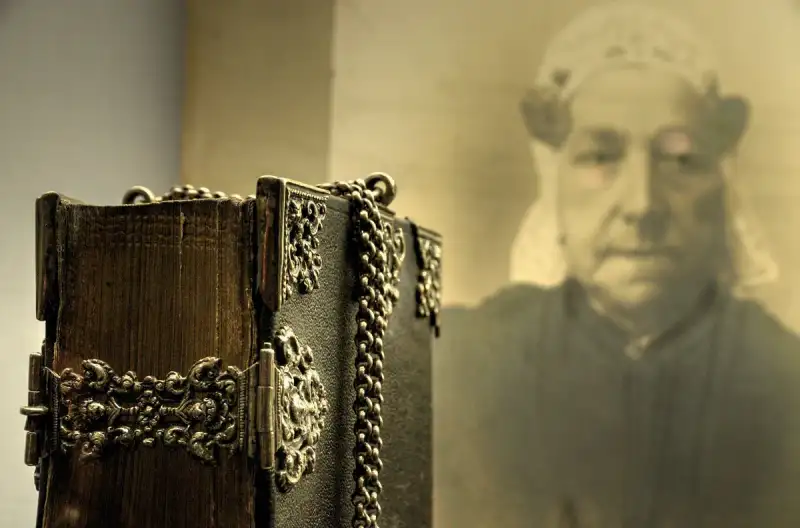
- Lucas Martin
- 11 Jul, 2026 12:03
Les Échos Muets : Quand les Mots Sont Bâillonnés et l'Esprit Enchaîné
Dans le sanctuaire silencieux des bibliothèques, où chaque volume porte le souffle d'une âme, d'une époque, d'une idée, il existe des pages qui n'ont jamais été écrites, des voix qui n'ont jamais porté, des vérités qui ont été délibérément étouffées. L'histoire de l'humanité est aussi celle de ses narrations empêchées, de ses connaissances réprimées, de ses expressions muselées. Nous parlons ici de la censure, cette force omniprésente, tantôt discrète, tantôt brutale, qui s'immisce dans le flux de la communication, de la pensée et de la création, érigeant des murs invisibles autour de l'esprit. La censure est la suppression de la parole, de la communication publique ou de toute autre information, exercée sous prétexte que ce matériel est jugé répréhensible, nuisible, sensible ou tout simplement "incommode". Elle peut émaner de gouvernements puissants ou d'institutions privées, tissant sa toile à travers divers médias : discours, livres, musique, films, arts, presse, radio, télévision et, à présent, l'Internet. Ses justifications invoquées sont multiples et souvent complexes : sécurité nationale, contrôle de l'obscénité, de la pornographie ou du discours de haine, protection des enfants ou des groupes vulnérables, promotion ou restriction de vues politiques ou religieuses, ou encore prévention de la calomnie et de la diffamation. Mais lorsque l'auteur lui-même, ou tout autre créateur, s'engage dans une telle rétention de ses propres œuvres ou paroles, on parle alors d'autocensure, une ombre peut-être plus insidieuse encore, car elle est intériorisée. Les règles et réglementations spécifiques concernant la censure varient considérablement d'une juridiction légale ou d'une organisation privée à l'autre, dessinant une mosaïque complexe de libertés et d'interdits à travers le monde. Les Multiples Visages de l'Ombre : Typologies de la Censure La censure n'est pas un bloc monolithique ; elle se manifeste sous une multitude de formes, chacune ayant ses propres motivations et ses propres cibles. Comprendre ces distinctions est crucial pour saisir l'étendue de son impact. La censure morale vise le retrait des matériaux jugés obscènes ou moralement discutables. La pornographie, par exemple, est souvent soumise à cette forme de censure, en particulier la pédopornographie, illégale et censurée dans la plupart des juridictions mondiales. Cette catégorie soulève des questions profondes sur la subjectivité des valeurs. L'éminent romancier anglais E. M. Forster, fervent opposant à la censure pour des raisons d'obscénité ou d'immoralité, a brillamment mis en lumière la mouvance constante de ces valeurs. Lors du procès de 1960 concernant le roman L'Amant de Lady Chatterley (publié en 1928), Forster avait déclaré : « L'Amant de Lady Chatterley est une œuvre littéraire d'importance… Je ne pense pas qu'elle puisse être jugée obscène, mais je suis en difficulté ici, car je n'ai jamais été capable de suivre la définition légale de l'obscénité. La loi me dit que l'obscénité peut dépraver et corrompre, mais autant que je sache, elle n'offre aucune définition de la dépravation ou de la corruption. » Ses mots résonnent encore aujourd'hui, soulignant la fragilité des fondements sur lesquels la censure morale est souvent bâtie. La censure militaire est un processus visant à maintenir confidentielles les informations et tactiques militaires afin de sauvegarder la sécurité nationale et de maintenir le soutien public. Elle est principalement utilisée pour contrecarrer l'espionnage, verrouillant l'accès à des données qui, tombées entre de mauvaises mains, pourraient compromettre des opérations, des vies ou même l'issue d'un conflit. Quant à la censure politique, elle survient lorsque les gouvernements retiennent des informations de leurs citoyens. Ce mécanisme est souvent employé pour exercer un contrôle sur la population et empêcher toute expression libre susceptible de fomenter une rébellion ou une opposition. C'est l'un des outils les plus redoutés de l'autoritarisme, cherchant à modeler la perception collective de la réalité. La censure religieuse est le moyen par lequel tout matériel jugé répréhensible par une religion donnée est supprimé. Cela implique souvent une religion dominante imposant des limites à des confessions moins répandues. Alternativement, une religion peut rejeter les œuvres d'une autre lorsqu'elle estime que le contenu n'est pas approprié pour ses propres fidèles, dressant des barrières idéologiques et culturelles. Enfin, la censure corporative décrit le processus par lequel les rédacteurs au sein des médias d'entreprise interviennent pour perturber la publication d'informations qui dépeindraient leur entreprise ou leurs partenaires commerciaux sous un jour négatif, ou pour empêcher que des offres alternatives n'atteignent le grand public. C'est une forme de censure économique, où les intérêts financiers peuvent primer sur l'intégrité de l'information. Le Chœur des Arguments : Raisons et Réfutations de la Censure La censure est un sujet controversé, ses défenseurs invoquant des nécessités morales, sécuritaires ou sociales, tandis que ses détracteurs mettent en garde contre les dangers qu'elle représente pour la liberté et le progrès. Elle est fréquemment utilisée pour imposer des valeurs morales à la société, comme c'est le cas avec la censure de matériel jugé obscène. Cependant, comme l'a souligné E. M. Forster avec une acuité remarquable, cette approche se heurte à la question de la subjectivité morale et à la nature constamment changeante de ces valeurs. Ce qui est considéré comme intolérable à une époque peut devenir acceptable, voire classique, à une autre. Dans un essai de 1997, le commentateur social Michael Landier a articulé une critique fondamentale, expliquant que la censure est intrinsèquement contre-productive, car elle empêche la discussion du sujet censuré. Il a approfondi son argument en affirmant que ceux qui imposent la censure doivent, au fond, considérer que ce qu'ils censurent est vrai. En effet, des individus se croyant dans le vrai accueilleraient l'opportunité de réfuter ceux qui défendent des opinions opposées, plutôt que de les faire taire. Le silence imposé est souvent un aveu implicite d'une faille dans l'argumentation du censeur. L'histoire de la pensée a vu des figures majeures prendre des positions radicalement opposées sur cette question. Platon, dans son essai sur La République, aurait préconisé la censure, en opposition au concept de démocratie qu'il critiquait. Pour lui, la vérité et l'ordre de la cité idéale devaient être protégés, même au prix de la restriction de la libre expression. En contraste frappant avec cette vision, le dramaturge grec Euripide (480-406 av. J.-C.) défendait la véritable liberté des hommes nés libres, y compris le droit de parler librement, posant les jalons d'un idéal démocratique. Il est à noter que la Suède, en 1766, est devenue le premier pays à abolir la censure par la loi, marquant un jalon historique dans la quête de la liberté d'expression. Cet acte audacieux a ouvert la voie à une réflexion plus large sur les droits fondamentaux des citoyens et le rôle de l'État.L'écho silencieux des pages interdites à travers l'histoire. Géographies de la Répression : Exemples Notables de Censure Politique La censure politique, dans sa quête de contrôle et d'uniformité idéologique, a laissé des traces indélébiles à travers l'histoire et les continents. Les exemples sont nombreux et chacun illustre une facette particulière de cette tentative de maîtriser le récit collectif. Durant l'occupation alliée du Japon après la Seconde Guerre mondiale, une censure massive fut mise en place. Toute critique des politiques d'avant-guerre des Alliés, du SCAP (Commandant suprême des puissances alliées), du Tribunal militaire pour l'Extrême-Orient, des enquêtes contre les États-Unis, ainsi que toute référence directe ou indirecte au rôle du Haut Commandement Allié dans la rédaction de la nouvelle constitution japonaise ou à la censure des publications, films, journaux et magazines, était strictement interdite. Pendant les quatre années d'activité du CCD (Civil Censorship Detachment, 1945-1949), 200 millions de lettres et 136 millions de télégrammes furent ouverts, et les téléphones furent mis sur écoute 800 000 fois. La critique des forces d'occupation pour des crimes tels que le largage de la bombe atomique, les viols et les vols par les soldats américains était proscrite. Une vérification stricte était effectuée, et ceux qui étaient pris étaient inscrits sur une « watchlist » (liste de surveillance), faisant l'objet d'enquêtes détaillées sur leurs personnes et leurs organisations, ce qui facilitait leur licenciement ou leur arrestation. Cet épisode souligne la complexité des dynamiques de pouvoir, même après la fin d'un conflit. En Irlande du Nord, le parti politique républicain irlandais Sinn Féin fut interdit de participation aux élections de 1956 à 1974. Plus tard, de 1988 à 1994, le Royaume-Uni a empêché les médias de diffuser les voix (mais pas les paroles) des membres du Sinn Féin et de dix autres groupes républicains irlandais et loyalistes d'Ulster. Cette mesure, visant à délégitimer ces groupes, est un exemple frappant de censure de la présence et de l'identité vocale. En Inde, les Règles de la Technologie de l'Information de 2011 définissent le contenu répréhensible comme tout ce qui « menace l'unité, l'intégrité, la défense, la sécurité ou la souveraineté de l'Inde, les relations amicales avec les États étrangers ou l'ordre public ». Cette formulation large ouvre la porte à une interprétation étendue et potentiellement restrictive de la liberté d'expression, laissant une marge considérable pour la suppression d'informations sous diverses justifications. L'Irak sous le régime baasiste de Saddam Hussein, tout comme la Roumanie sous Ceauşescu, utilisait des techniques de censure de la presse très similaires, mais avec une menace de violence potentiellement beaucoup plus grande, transformant la parole en un acte de bravoure et le silence en une stratégie de survie. L'Article 299 du Code Pénal Turc illustre une autre forme de censure politique, rendant illégal d'« insulter le Président de la Turquie ». Une personne condamnée pour une violation de cet article peut être emprisonnée pour une durée d'un à quatre ans, et si la violation est commise en public, la peine peut être augmentée d'un sixième. Ces poursuites ciblent souvent les critiques du gouvernement, les journalistes indépendants et les caricaturistes politiques. Entre 2014 et 2019, 128 872 enquêtes ont été lancées pour cette infraction et les procureurs ont ouvert 27 717 affaires pénales, démontrant la portée et l'impact de cette législation sur le paysage médiatique et politique. Enfin, en Belgique francophone, les politiciens considérés comme d'extrême droite sont interdits d'apparitions médiatiques en direct, telles que des interviews ou des débats. Cet exemple met en lumière la complexité des démocraties qui tentent de concilier la liberté d'expression avec la protection contre des discours jugés dangereux ou subversifs. Lorsque le Silence est une Arme : Secrets d'État et Détournement d'Attention La censure n'est pas toujours motivée par la répression idéologique ou morale ; elle est parfois mise en œuvre dans le but d'aider les autorités ou de protéger des individus. C'est le cas, par exemple, dans certaines affaires d'enlèvement, où une attention médiatique trop intense sur la victime peut être jugée contre-productive, voire dangereuse pour sa sécurité. Dans ces situations, le silence médiatique est une stratégie délibérée pour ne pas entraver les opérations de sauvetage ou alerter les ravisseurs. En temps de guerre, la censure explicite est couramment pratiquée avec l'intention d'empêcher la divulgation d'informations qui pourraient être utiles à l'ennemi. Cela implique généralement de garder secrets les heures ou les lieux d'opérations, ou de retarder la publication d'informations (par exemple, un objectif opérationnel) jusqu'à ce qu'elles ne soient plus d'aucune utilité pour les forces ennemies. Les questions morales qui se posent ici sont souvent perçues différemment, car les partisans de cette forme de censure soutiennent que la divulgation d'informations tactiques présente généralement un risque accru de pertes parmi les propres forces et pourrait potentiellement conduire à la perte du conflit global. L'exemple des lettres envoyées par les soldats britanniques de retour au Royaume-Uni pendant la Première Guerre mondiale, soumises à une censure rigoureuse, illustre parfaitement cette réalité. Chaque mot était passé au crible pour s'assurer qu'aucune information stratégique, même involontaire, ne puisse filtrer.La censure à l'ère numérique : un défi persistant pour la libre circulation des idées. Les fils invisibles de la censure se tissent à travers l'histoire, touchant toutes les sphères de la vie humaine, du privé au public, de l'art à la politique. Qu'elle soit morale, militaire, politique, religieuse ou corporative, qu'elle émane d'un État autoritaire ou d'une entité privée, elle représente toujours une tentative de contrôler les récits, de modeler les pensées et, en fin de compte, de circonscrire l'imaginaire collectif. Les arguments en sa faveur, souvent drapés dans les voiles de la protection ou de l'ordre, se heurtent invariablement à l'impératif de la liberté d'expression, ce moteur fondamental du progrès humain. L'histoire nous a montré que la vérité, même lorsqu'elle est bâillonnée, finit par trouver un chemin, et que le silence imposé ne fait qu'attiser la soif de connaissance. Des philosophes de la Grèce antique aux penseurs contemporains, la bataille pour la liberté de pensée est une lutte perpétuelle. À l'heure où l'information circule à la vitesse de la lumière, où chaque individu peut potentiellement être un émetteur, les mécanismes de censure se sont sophistiqués, mais leur essence demeure la même : contenir le flux libre des idées. La vigilance, l'esprit critique et l'engagement à défendre l'espace de la discussion ouverte et des points de vue diversifiés restent nos meilleures armes contre cette ombre persistante qui cherche à bâillonner les mots et à enchaîner l'esprit. Car en fin de compte, chaque livre sauvé de l'autodafé, chaque parole prononcée malgré l'interdiction, chaque idée qui refuse de mourir dans le silence est une victoire pour la lumière de la connaissance.#CensureLittéraire #LibertéDePenser #HistoireDeLaCensure #LucasMartin #PouvoirDesMots Related InsightsCatch-22 Book Review and Summary Heidi Book Review and Summary Isles of the Emberdark Book Review and Summary{ "@context": "https://schema.org", "@type": "FAQPage", "mainEntity": [ { "@type": "Question", "name": "What is the main focus of Les Échos Muets : Quand les Mots Sont Bâillonnés et l'Esprit Enchaîné?", "acceptedAnswer": { "@type": "Answer", "text": "De Platon aux régimes modernes, la censure des livres déforme la vérité, étouffe la pensée libre et façonne le récit collectif. Explorez ses manifestations et ses conséquences insidieuses." } }, { "@type": "Question", "name": "Who authored the comprehensive guide on Les Échos Muets : Quand les Mots Sont Bâillonnés et l'Esprit Enchaîné?", "acceptedAnswer": { "@type": "Answer", "text": "This detailed article and its insights were carefully researched and authored by Lucas Martin." } }, { "@type": "Question", "name": "Where can I find more related content about Books?", "acceptedAnswer": { "@type": "Answer", "text": "You can explore more articles, detailed reviews, and similar insights by browsing the Related Insights section at the bottom of this article or visiting our dedicated Books category page." } } ] }

- Clara Schmidt
- 10 Jul, 2026 17:24
Der Schatten der Zukunft: Eine Tiefenanalyse der Dystopischen Literatur als Spiegel und Warnruf
Die menschliche Seele hegt eine unaufhörliche Faszination für das Unbekannte, das Morgen, das jenseits des Horizonts liegt. Während die Utopie – jener strahlende Inseltraum einer perfekten Gesellschaft – einst als Leuchtfeuer der Hoffnung diente, hat sich die moderne Vorstellungskraft zunehmend einem dunkleren Terrain zugewandt: der Dystopie. Es ist ein Genre, das nicht schmeichelt, nicht tröstet, sondern schonungslos die Abgründe menschlicher Fehlbarkeit, die Tyrannei der Systeme und die Erosion der Freiheit enthüllt. Es sind keine Märchen, die uns in den Schlaf wiegen, sondern scharfe, präzise Mahnungen, die uns wachrütteln und zwingen, die Schatten, die sich über unsere Gegenwart legen, genau zu betrachten. Dystopische Literatur ist der Schrei der Vorsicht, ein Spiegel, der die hässlichen Züge unserer Ängste und unserer potenziellen Fehler unverblümt zurückwirft. Sie ist die Chronik der schlimmsten Möglichkeiten, die sich aus den Samen der Gegenwart entwickeln könnten, und damit eine der wichtigsten literarischen Formen unserer Zeit. Die Essenz der Dystopie: Eine Welt, die aus den Fugen gerät Im Kern ist die Dystopie die Antithese zur Utopie. Wo die Utopie eine ideale, perfekte Gesellschaft entwirft, zeichnet die Dystopie das Bild einer zutiefst fehlerhaften, oft grausamen und repressiven Gesellschaft. Ihr Name, abgeleitet vom Griechischen "dys" (schlecht, schwierig) und "topos" (Ort), bedeutet wörtlich "schlechter Ort". Diese Welten sind oft das Ergebnis vermeintlich wohlmeinender Absichten, die katastrophal schiefgelaufen sind, oder der logischen Konsequenz extremer Ideologien. Die Gemeinsamkeiten dystopischer Gesellschaften sind frappierend: Meist herrscht ein totalitäres oder autoritäres Regime, das individuelle Freiheiten unterdrückt, abweichendes Denken kriminalisiert und die Bevölkerung durch Überwachung, Propaganda und psychologische Manipulation kontrolliert. Das Individuum ist in diesen Erzählungen oft bedeutungslos, ein Rädchen in einem großen, unerbittlichen Mechanismus. Der Protagonist oder die Protagonistin findet sich fast immer in einer verzweifelten Suche nach Wahrheit, Freiheit oder Menschlichkeit, oft gegen übermächtige und undurchdringliche Mächte. Die Dystopie ist nicht nur ein Schreckensszenario; sie ist eine Lupe, die die Bruchlinien in unseren eigenen Gesellschaften, die Gefahren von Machtkonzentration, technologischem Missbrauch und ideologischem Fanatismus gnadenlos vergrößert. Sie fragt uns: Was, wenn die Versprechen von Sicherheit, Fortschritt oder Einheit einen exorbitanten Preis fordern – den Preis unserer Menschlichkeit? Die Ursprünge einer düsteren Vision: Von den Anfängen bis zum 20. Jahrhundert Obwohl die Wurzeln dystopischer Elemente bis in die Antike zurückverfolgt werden können – Platons Politeia könnte man ironischerweise als Blaupause für eine streng kontrollierte Gesellschaft lesen, und Thomas Morus' Utopia selbst birgt bereits dystopische Züge, wenn man die extreme Kontrolle und den Verlust der Individualität kritisch betrachtet –, so formte sich das Genre in seiner modernen Form erst im 20. Jahrhundert heraus. Die traumatischen Erfahrungen des Ersten Weltkriegs, die bolschewistische Revolution und der Aufstieg totalitärer Regime in den 1920er und 1930er Jahren schufen einen fruchtbaren Boden für diese pessimistischen Zukunftsvisionen. Als einer der ersten und prägendsten Romane des Genres gilt Jewgeni Samjatins "Wir" (1924). Samjatin, ein russischer Schriftsteller, der selbst die Schrecken der Revolution miterlebt hatte, schuf eine Welt, in der Individualität vollständig ausgelöscht ist. Die Menschen haben keine Namen, sondern Nummern, leben in Glasgebäuden unter ständiger Überwachung des "Wohltäters" und der Geheimpolizei, des "Büros der Wächter", und ihre Leben sind durch ein "Stundentafel" minutiös geplant. Selbst die Sexualität ist reguliert. "Wir" ist eine direkte Auseinandersetzung mit der Entmenschlichung durch den Staatsapparat und eine prophetische Warnung vor den Gefahren des Totalitarismus, die noch vor der vollen Entfaltung des Stalinismus und des Nationalsozialismus geschrieben wurde. Samjatins Werk beeinflusste maßgeblich spätere Giganten des Genres und legte den Grundstein für die literarische Erkundung von Zwang und Konformität. Die Architekten der Angst: Meisterwerke und ihre zeitlosen Warnungen Nach Samjatins Pionierarbeit blühte das dystopische Genre in der Mitte des 20. Jahrhunderts förmlich auf, getragen von den Ängsten der Nachkriegszeit, des Kalten Krieges und des technologischen Fortschritts. Aldous Huxleys "Schöne neue Welt" (1932): Die Tyrannei des Konsums und der Glückseligkeit Aldous Huxleys "Schöne neue Welt" ist eine brillante und erschreckende Vision einer Gesellschaft, die nicht durch Zwang, sondern durch Konditionierung und Befriedigung kontrolliert wird. In dieser Zukunft werden Menschen im Reagenzglas geboren und genetisch für ihre vordefinierte Kaste – von den intellektuellen Alphas bis zu den körperlich arbeitenden Epsilons – vorbestimmt. Jede Abweichung von der Norm wird durch das synthetische Glück der Droge "Soma" unterdrückt. Die Geschichte kritisiert eine Gesellschaft, die durch übermäßigen Konsum, Promiskuität und technologische Eingriffe in die menschliche Natur ihre Seele und Freiheit verloren hat. Das Buch warnt davor, dass eine scheinbar perfekte, schmerzfreie Welt auch eine zutiefst unfreie und entmenschlichte sein kann, in der Authentizität und tiefere menschliche Erfahrungen geopfert werden. George Orwells "1984" (1949): Der Albtraum der totalitären Kontrolle Wenn Samjatins "Wir" die Blaupause lieferte, so perfektionierte George Orwells "1984" das dystopische Szenario des Totalitarismus. Orwells Meisterwerk ist eine erschütternde Darstellung einer Welt, die vom "Großen Bruder" und der "Partei" vollständig kontrolliert wird. Die Gedankenpolizei, die Überwachung durch "Teleschirme" in jedem Heim und die ständige Umschreibung der Geschichte ("Wahrheitsministerium") sind Mechanismen, die dazu dienen, jeden Funken von Individualität und Widerstand zu ersticken. Die Entwicklung von "Neusprech", einer reduzierten Sprache, die kritisches Denken unmöglich machen soll, ist eine besonders beängstigende Facette. Orwells Roman ist eine zeitlose Warnung vor der Gefahr der staatlichen Allmacht, der Manipulation von Sprache und Wahrheit und der psychologischen Zerstörung des Individuums.Ray Bradburys "Fahrenheit 451" (1953): Die Flammen der Ignoranz Ray Bradburys "Fahrenheit 451" entführt uns in eine Welt, in der Feuerwehrleute nicht Brände löschen, sondern Bücher verbrennen, denn Wissen gilt als Quelle von Unzufriedenheit und Traurigkeit. Die Menschen sind in einer Dauerberieselung von seichtem Fernsehen gefangen, ihre Gedanken sind flach und konform. Bradburys Werk ist eine eindringliche Kritik an Zensur, Anti-Intellektualismus und der Passivität einer Gesellschaft, die freiwillig ihre Fähigkeit zum kritischen Denken aufgibt. Es erinnert uns daran, dass die Freiheit nicht nur in der Abwesenheit von Unterdrückung besteht, sondern auch in der Möglichkeit, zu lernen, zu hinterfragen und sich intellektuell zu entfalten.Margaret Atwoods "Der Report der Magd" (1985): Wenn die Freiheit der Frau zerbricht Margaret Atwoods "Der Report der Magd" (im Original "The Handmaid's Tale") schockierte die Welt mit seiner beklemmenden Vision einer patriarchalischen, theokratischen Dystopie namens Gilead, die auf dem Territorium der ehemaligen Vereinigten Staaten errichtet wurde. In einer Welt, in der Umweltkatastrophen und Sterilität die Geburtenrate drastisch reduziert haben, werden die wenigen noch fruchtbaren Frauen zu "Mägden" degradiert, deren einziger Zweck es ist, Kinder für die herrschende Elite zu gebären. Der Roman ist eine scharfe Kritik an religiösem Fundamentalismus, der Objektivierung von Frauen und dem schleichenden Verlust von Rechten, der oft unter dem Deckmantel von Sicherheit und Tradition geschieht. Er zeigt, wie schnell gesellschaftliche Freiheiten erodieren können, wenn die Wachsamkeit nachlässt. Wiederkehrende Themen und ihre zeitlose Relevanz Die dystopische Literatur bedient sich einer Reihe von wiederkehrenden Themen, die ihre anhaltende Relevanz und ihre Fähigkeit, aktuelle Ängste zu reflektieren, untermauern:Totalitäre Regime und Überwachung: Fast alle Dystopien zeigen Gesellschaften, die von einer allmächtigen, autoritären Macht kontrolliert werden. Die Überwachung – sei es durch physische Kameras, Teleschirme, die Gedankenpolizei oder sogar soziale Medien – ist ein zentrales Element, das die Privatsphäre auslöscht und Konformität erzwingt. Verlust der Individualität und Konformität: Das Individuum wird oft zu einem austauschbaren Teil eines Kollektivs degradiert. Abweichendes Verhalten oder Denken wird bestraft, und die Menschen werden gezwungen, sich den Normen des Systems anzupassen. Technologischer Übergriff und Kontrolle: Obwohl Technologie oft als Fortschritt gepriesen wird, zeigen Dystopien ihre dunkle Seite: Sie kann zur totalen Kontrolle, zur Manipulation der Biologie oder zur Schaffung einer entmenschlichten Umgebung missbraucht werden. Umweltzerstörung und Ressourcenknappheit: Viele dystopische Szenarien spielen in Welten, die durch Klimawandel, Kriege oder rücksichtslosen Konsum verwüstet wurden, was oft zu extremen gesellschaftlichen Strukturen führt. Zensur und Informationskontrolle: Die Kontrolle über Informationen und die Manipulation der Wahrheit sind mächtige Werkzeuge in dystopischen Staaten. Bücher werden verbrannt, Geschichte umgeschrieben und Propaganda ersetzt Fakten, um die Gedanken der Bevölkerung zu lenken. Die Rolle der Sprache: Von Orwells Neusprech bis hin zu der begrenzten Ausdrucksmöglichkeit in anderen Dystopien wird Sprache oft als Mittel der Kontrolle und Gedankenbeschneidung eingesetzt. Eine reduzierte Sprache führt zu einem reduzierten Denkvermögen.Dystopie als Spiegel unserer Zeit: Die prophetische Kraft der Literatur Die unheimliche Fähigkeit dystopischer Werke, Jahrhunderte nach ihrer Entstehung immer noch schmerzlich relevant zu sein, ist frappierend. Sie sind keine bloßen Fiktionen, sondern vielmehr gedankliche Experimente, die auf realen Trends und Ängsten basieren. Orwells "1984" wurde zu einem Synonym für Massenüberwachung und "Fake News", lange bevor diese Begriffe unseren Alltag beherrschten. Huxleys Vision einer durch Genetik und Konsum gelenkten Gesellschaft scheint in Anbetracht der Fortschritte in Biotechnologie und der Allgegenwart des Marketings beängstigend nah. Atwoods Gilead-Staat findet erschreckende Parallelen in Debatten um Frauenrechte und religiösen Extremismus weltweit. Das Genre dient als ein seismographisches Instrument der Gesellschaft, das frühzeitig auf Risse und Verwerfungen hinweist. Es beleuchtet die dunklen Potenziale menschlicher Machtgier, die Gefahren unkontrollierter Technologie und die Konsequenzen von Gleichgültigkeit gegenüber Freiheitsrechten. Jede neue dystopische Erzählung, ob in Buchform, Film oder Serie, ist eine Reaktion auf die spezifischen Ängste und Herausforderungen ihrer Entstehungszeit – sei es die Klimakrise, die Digitalisierung des Lebens, die Zunahme von Autoritarismus oder die soziale Ungleichheit. Sie halten uns einen Zerrspiegel vor, der unsere Gegenwart so verzerrt darstellt, dass wir die verborgenen Fratzen in ihr erkennen können. Der Aufruf zur Reflexion: Die Bleibende Macht der Dystopie Letztlich ist die dystopische Literatur mehr als nur Unterhaltung; sie ist ein dringender Aufruf zur Reflexion, zur Wachsamkeit und zum Handeln. Sie zwingt uns, die philosophischen und ethischen Fragen zu stellen, die wir im hektischen Alltag oft beiseiteschieben: Was bedeutet Freiheit wirklich? Wo liegen die Grenzen der Macht? Welche Opfer sind wir bereit, für Sicherheit oder Fortschritt zu bringen? Indem sie uns die Konsequenzen eines falschen Weges drastisch vor Augen führt, ermutigt sie uns, die Gegenwart kritisch zu hinterfragen und die Zukunft aktiv mitzugestalten. Sie ist ein ständiger Reminder daran, dass die Freiheit keine Selbstverständlichkeit ist, sondern ein zerbrechliches Gut, das stets verteidigt und gepflegt werden muss. Die Dystopie lehrt uns, dass das wahre Grauen nicht in fantastischen Monstern liegt, sondern in den Entscheidungen, die Menschen treffen, und den Systemen, die sie erschaffen. Sie ist eine Mahnung, nie aufzuhören, zu denken, zu fühlen und für das einzustehen, was uns menschlich macht. In einer Welt, die immer komplexer und unübersichtlicher wird, bleibt die dystopische Literatur ein unverzichtbarer Kompass, der uns hilft, die drohenden Schatten zu erkennen und, vielleicht, einen anderen, helleren Weg zu finden.#DystopischeLiteratur #Gesellschaftskritik #Zukunftsvisionen #Buchklassiker #FreiheitUndKontrolle Related InsightsThe Haunting of Hill House Book Review and Summary Heroes of Olympus, Book Three : the Mark of Athena Book Review and Summary The Invention That Shook the World: The Gutenberg Bible and the Dawn of the Printed Era{ "@context": "https://schema.org", "@type": "FAQPage", "mainEntity": [ { "@type": "Question", "name": "What is the main focus of Der Schatten der Zukunft: Eine Tiefenanalyse der Dystopischen Literatur als Spiegel und Warnruf?", "acceptedAnswer": { "@type": "Answer", "text": "Dystopische Literatur enthüllt die dunkelsten Ängste der Menschheit vor Kontrolle, Verlust der Freiheit und technologischem Übergriff. Ein tiefer Einblick in ihre Ursprünge, ihre Meisterwerke und ihre unheimliche Relevanz in unserer modernen Welt." } }, { "@type": "Question", "name": "Who authored the comprehensive guide on Der Schatten der Zukunft: Eine Tiefenanalyse der Dystopischen Literatur als Spiegel und Warnruf?", "acceptedAnswer": { "@type": "Answer", "text": "This detailed article and its insights were carefully researched and authored by Clara Schmidt." } }, { "@type": "Question", "name": "Where can I find more related content about Books?", "acceptedAnswer": { "@type": "Answer", "text": "You can explore more articles, detailed reviews, and similar insights by browsing the Related Insights section at the bottom of this article or visiting our dedicated Books category page." } } ] }

- Sofia Romano
- 10 Jul, 2026 17:13
L'Eco delle Stelle e i Sussurri del Futuro: Un Viaggio Profondo nell'Anima della Scienza Fiction
Nell'immensità silenziosa dell'ignoto, dove i confini della realtà si fondono con le cangianti sfumature dell'immaginazione, l'uomo ha sempre osato spingere lo sguardo oltre il velo del presente. È in questo spazio sacro tra ciò che è e ciò che potrebbe essere che germoglia la scienza fiction, un genere che non si limita a narrare, ma a profetizzare, a interrogare, a farci sentire il battito pulsante di futuri possibili, e a volte, inquietanti. Non è solo un intrattenimento, ma una lente attraverso cui esaminare la nostra stessa umanità di fronte all'inarrestabile marcia del progresso, alle sue promesse e alle sue ombre più profonde. La Scienza Fiction: Un Universo di Definizioni e Sfumature La scienza fiction, spesso abbreviata in sci-fi o semplicemente SF, rappresenta un genere di narrativa speculativa che si avventura nel regno delle trasformazioni avanzate e futuristiche della tecnologia, della conoscenza scientifica o dei sistemi biologici. La sua essenza risiede nella capacità di anticipare e riflettere sulle conseguenze che tali avanzamenti proiettati o immaginati possono avere sull'esistenza umana e sulla società. Con il passare del tempo, gli elementi costitutivi della scienza fiction si sono moltiplicati e diversificati, partendo da temi classici come l'esplorazione spaziale, l'incontro con forme di vita extraterrestri, i viaggi nel tempo e la robotica. Questa tessitura narrativa si è poi arricchita includendo universi paralleli, la descrizione di società distopiche e intricate manipolazioni biologiche, fino ad arrivare, nei tempi più recenti, a esplorazioni della tecnologia dell'informazione, del transumanesimo, del post-umanesimo e delle urgenti sfide ambientali che la nostra epoca si trova ad affrontare. La definizione precisa di scienza fiction, tuttavia, è stata a lungo oggetto di dibattito tra autori, critici, accademici e lettori. Nonostante la sua ubiquità culturale, stabilire confini netti per questo genere sfuggente si è rivelato un compito arduo. È un universo in costante espansione, un caleidoscopio di idee e visioni che si adatta e si evolve con la comprensione umana del mondo e del cosmo. Il genere abbraccia una moltitudine di sottogeneri, ognuno con le sue peculiarità distintive. Tra questi, spicca la "hard science fiction", che pone un'enfasi rigorosa sull'accuratezza scientifica e sulla plausibilità delle sue premesse, spesso attingendo a principi fisici, chimici e biologici consolidati. Al polo opposto, la "soft science fiction" si concentra maggiormente sulle scienze sociali, esplorando l'impatto psicologico, sociologico e culturale delle innovazioni scientifiche e tecnologiche sull'individuo e sulla collettività. Altri sottogeneri degni di nota includono la "space opera", che enfatizza l'avventura pura e le narrazioni epiche ambientate in un universo dove il viaggio spaziale è una realtà comune e consolidata, spesso con conflitti interstellari e personaggi eroici. Il "cyberpunk", d'altra parte, si immerge nell'interfaccia complessa e spesso distopica tra tecnologia e società, esplorando temi di controllo, ribellione e l'erosione dei confini tra uomo e macchina in mondi futuristici dominati da megacorporazioni e reti informatiche. Infine, la "climate fiction", o "cli-fi", affronta le pressanti questioni ambientali, proiettando scenari futuri in cui gli effetti del cambiamento climatico e dell'intervento umano sulla natura sono al centro della narrazione, spesso con intenti di critica sociale e di sensibilizzazione. La scienza fiction non è meramente una forma di evasione; è un potente strumento culturale. Attraverso le sue narrazioni, può criticare aspramente la società contemporanea, esplorare alternative radicali al nostro modo di vivere e pensare, fornire intrattenimento puro e, cosa forse più importante, ispirare un senso di meraviglia e di stupore di fronte all'ignoto e al potenziale illimitato dell'ingegno umano. La sua influenza si è estesa ben oltre la letteratura, permeando il cinema, la televisione e la cultura in generale, modellando la nostra percezione del futuro e il nostro rapporto con la scienza e la tecnologia. L'Enigma della Definizione: Una Galassia di Pensieri La difficoltà di circoscrivere il genere della scienza fiction è un tema ricorrente tra gli esperti. L'Encyclopedia of Science Fiction, curata da John Clute e Peter Nicholls nel 1993, dedica un'ampia trattazione al problema della sua definizione, evidenziando la complessità e la fluidità dei suoi confini. Non esiste un consenso univoco, e ogni tentativo di fornire una spiegazione esaustiva finisce per rivelare la ricchezza e la vastità di un campo che si resiste a essere imbrigliato in categorie rigide. Diversi luminari hanno offerto le proprie prospettive, ciascuna illuminando un aspetto fondamentale del genere. Isaac Asimov, scrittore americano e professore di biochimica, propose una definizione concisa e potente: "La scienza fiction può essere definita come quel ramo della letteratura che tratta della reazione degli esseri umani ai cambiamenti della scienza e della tecnologia." Questa prospettiva pone l'accento sull'elemento umano, sulla nostra capacità di adattamento, di paura o di esaltazione di fronte all'ignoto tecnologico e scientifico. Robert A. Heinlein, un altro gigante della scienza fiction, offrì una definizione altrettanto perspicace: "Una comoda e breve definizione di quasi tutta la scienza fiction potrebbe recitare: speculazione realistica su possibili eventi futuri, solidamente basata su un'adeguata conoscenza del mondo reale, passato e presente, e su una profonda comprensione della natura e del significato del metodo scientifico." Heinlein enfatizza la plausibilità e la rigorosità intellettuale, ancorando la speculazione futuristica alla logica e ai principi della ricerca scientifica. Lester del Rey, autore ed editore di scienza fiction, ammetteva candidamente la difficoltà: "Anche l'appassionato o il fan più devoto ha difficoltà a spiegare cos'è la scienza fiction," e nessuna "definizione pienamente soddisfacente" esiste, perché "non ci sono limiti facilmente delineabili per la scienza fiction." La sua osservazione sottolinea la natura intrinsecamente aperta e dinamica del genere, che resiste a ogni tentativo di contenimento. Un'altra prospettiva è fornita da The Literature Book, pubblicato da DK: "scenari che, al momento della scrittura, sono tecnologicamente impossibili, estrapolando dalla scienza attuale... [,]... o che trattano di qualche forma di concetto speculativo basato sulla scienza, come una società (sulla Terra o su un altro pianeta) che si è sviluppata in modi completamente diversi dal nostro." Questa definizione evidenzia il ruolo dell'estrapolazione e della speculazione su premesse scientifiche non ancora realizzabili. David Seed suggerisce che potrebbe essere più utile parlare di scienza fiction come dell'intersezione di altri sottogeneri più concreti, un'idea che riconosce la sua natura ibrida e la sua capacità di inglobare e rielaborare elementi provenienti da altre forme narrative. Damon Knight, autore, editore e critico americano di scienza fiction, ha riassunto magistralmente la difficoltà, affermando: "La scienza fiction è ciò che indichiamo quando diciamo che lo è." Questa frase, apparentemente tautologica, cattura la natura consensuale e per certi versi intuitiva della classificazione del genere tra i suoi stessi fruitori. Termini Alternativi: L'Evoluzione di un Linguaggio L'evoluzione del genere ha portato anche all'emergere di termini alternativi per descriverlo, ciascuno con le proprie connotazioni. Forrest J Ackerman, editore di riviste americane, scrittore di fantascienza e agente letterario, è accreditato di aver coniato il termine "sci-fi" intorno al 1954, richiamando la moda dell'epoca del termine "hi-fi". Il primo uso noto in stampa fu una descrizione di Donovan's Brain da parte del critico cinematografico Jesse Zunser nel gennaio 1954. Man mano che la scienza fiction entrava nella cultura popolare, tuttavia, scrittori e fan del settore iniziarono ad associare il termine "sci-fi" a opere di bassa qualità, come le pulp magazine economiche e i film di serie B a basso budget e bassa tecnologia. Negli anni '70, critici del settore come Damon Knight e Terry Carr iniziarono a usare "sci-fi" per distinguere il lavoro scadente dalla scienza fiction più seria e cerebrale. Peter Nicholls, studioso e critico letterario australiano, scrisse intorno al 1993 che "SF" (o "sf") è "l'abbreviazione preferita all'interno della comunità di scrittori e lettori di sf." Questa preferenza riflette un desiderio di distanziarsi dalle connotazioni negative acquisite da "sci-fi". Robert Heinlein, sentendo il termine "science fiction" insufficiente per descrivere certi tipi di opere più "serie" o "riflessive" all'interno del genere, suggerì l'uso del termine "speculative fiction" (narrativa speculativa). Questa proposta mirava a elevare la percezione del genere, mettendo in evidenza la sua capacità di esplorare idee complesse e di impegnarsi in un'analisi profonda delle possibilità umane e sociali.Le Radici Antiche di un Futuro Immaginato Seppur moderno nella sua forma canonica, alcuni studiosi sostengono che la scienza fiction abbia avuto le sue origini in tempi antichi, quando la distinzione tra mito e fatto era ancora labile e porosa. Queste narrazioni primordiali, pur non essendo "scientifiche" nel senso moderno, contenevano germi di quella curiosità speculativa che avrebbe poi caratterizzato il genere. Il romanzo Una Storia Vera, scritto nel II secolo d.C. dal satirico Luciano di Samosata, è spesso citato come un precursore notevole, se non il primo vero romanzo di scienza fiction. Quest'opera audace e fantastica contiene molti temi e tropi che sono diventati caratteristici della scienza fiction moderna, inclusi viaggi verso altri mondi, incontri con forme di vita extraterrestri, guerre interplanetarie e persino la creazione di vita artificiale. La sua capacità di immaginare l'inimmaginabile, pur con un tono ironico e parodistico, lo rende un punto di riferimento cruciale. Anche alcune storie della raccolta di racconti popolari Le Mille e una Notte, insieme alla finzione del X secolo Il Racconto del Tagliabambù (The Tale of the Bamboo Cutter) e al romanzo del XIII secolo di Ibn al-Nafis, Theologus Autodidactus, sono considerate contenere elementi di scienza fiction. Questi testi, sebbene immersi in contesti culturali e narrativi molto diversi, mostrano una tendenza a esplorare il mondo oltre la percezione comune, a immaginare tecnologie o scenari fantastici con implicazioni che risuonano con le tematiche futuristiche. L'Età dei Lumi e la Nascita del Fantastico Scientifico Con la Rivoluzione Scientifica e successivamente l'Età dell'Illuminismo, il terreno divenne ancora più fertile per la fioritura di opere che possiamo considerare veri e propri lavori di scienza-fantasy. Il pensiero razionale e l'esplorazione scientifica cominciarono a fornire nuovi schemi concettuali per la speculazione.Nuova Atlantide (1627) di Francis Bacon, benché incompleta, descrive una società utopica incentrata sul progresso scientifico e sull'organizzazione della ricerca, prefigurando le comunità scientifiche e la loro importanza per il futuro. Somnium (1634) di Johannes Kepler, è un'opera di particolare rilievo. Sia Isaac Asimov che Carl Sagan consideravano questo romanzo il primo racconto di scienza fiction. Descrive un viaggio verso la Luna e come da lì viene percepito il movimento della Terra, un'intuizione che fonde la conoscenza astronomica con la narrazione fantastica. Kepler è stato perciò definito il "padre della scienza fiction", un riconoscimento che sottolinea il suo ruolo pionieristico nell'unire l'indagine scientifica rigorosa con la narrazione immaginativa. Itinerarium extaticum (1656) di Athanasius Kircher, altro viaggio immaginario attraverso il cosmo. Le opere di Cyrano de Bergerac, Storia Comica degli Stati e Imperi della Luna (1657) e Gli Stati e Imperi del Sole (1662), rappresentano esplorazioni audaci di mondi extraterrestri, popolate da esseri fantastici e governate da logiche diverse. "Il Mondo Splendente" (1666) di Margaret Cavendish, un'altra opera pionieristica che fonde filosofia, utopia e avventura in un regno immaginario. I Viaggi di Gulliver (1726) di Jonathan Swift, con le sue isole volanti e le sue società bizzarre, sebbene una satira sociale, sfrutta elementi di viaggio e di scoperta di civiltà aliene che richiamano la speculazione del genere. Nicolai Klimii Iter Subterraneum (1741) di Ludvig Holberg, un viaggio nel mondo sotterraneo che esplora società e leggi fantastiche. Micromégas (1752) di Voltaire, un racconto filosofico in cui esseri giganteschi provenienti da altri pianeti visitano la Terra, offrendo una prospettiva cosmica sull'insignificanza e le assurdità delle dispute umane.Queste opere, emerse in un'epoca di fervore intellettuale e di scoperte scientifiche, hanno gettato le basi per la scienza fiction moderna, dimostrando come l'immaginazione potesse interagire con la crescente comprensione scientifica del mondo. L'Alba del Romanzo Sci-Fi Moderno: Il XIX Secolo Il XIX secolo segna la vera e propria nascita del genere moderno, un periodo in cui gli scrittori popolari iniziarono a guardare al progresso tecnologico come fonte inesauribile di ispirazione e speculazione. La rivoluzione industriale e le rapide scoperte scientifiche alimentarono un senso di meraviglia e di ansia, fornendo il contesto ideale per nuove forme di narrazione.Frankenstein (1818) di Mary Shelley, è spesso accreditato come il primo vero romanzo di scienza fiction. Brian Aldiss ha sostenuto con forza questa tesi. L'opera di Shelley non è solo un racconto gotico, ma una profonda esplorazione delle implicazioni etiche e morali della creazione scientifica, dell'arroganza umana di fronte alla natura e delle conseguenze dell'abbandono. Il romanzo ha contribuito a definire la forma e le tematiche del romanzo di scienza fiction, mettendo in luce l'interazione tra scienza, tecnologia e l'esperienza umana. L'Ultimo Uomo (1826), sempre di Mary Shelley, proietta l'umanità in un futuro distopico, affrontando temi di apocalisse e sopravvivenza in un mondo devastato. Edgar Allan Poe, maestro del macabro e del fantastico, scrisse anche diversi racconti considerati scienza fiction, tra cui "L'Avventura Incomparabile di Un Hans Pfaall" (1835), che narra un viaggio alla Luna, un tema che sarebbe diventato centrale nel genere.Jules Verne e H. G. Wells sono figure pivotali nello sviluppo del genere, anche se le loro opere specifiche oltre a quelle già menzionate non sono dettagliate nel testo fornito, la loro influenza è innegabile. Hanno contribuito a codificare molti dei tropi e delle strutture narrative che avrebbero definito la scienza fiction per decenni a venire, portando il lettore in viaggi straordinari verso mondi sconosciuti o futuri incerti. L'Età d'Oro e l'Espansione Cosmica Nel XX secolo, la scienza fiction conobbe un'espansione straordinaria, in particolare durante l'Età d'Oro della Scienza Fiction. Questo periodo fu caratterizzato da una proliferazione di opere che esploravano con entusiasmo le possibilità offerte dalla scienza e dalla tecnologia. Le "pulp magazine", riviste economiche stampate su carta di bassa qualità, giocarono un ruolo cruciale nella diffusione del genere, rendendolo accessibile a un vasto pubblico e fungendo da banco di prova per innumerevoli autori e idee. In questo periodo, il genere si arricchì ulteriormente con l'introduzione e la codificazione di nuovi sottogeneri e tematiche. Le "space opera" diventarono un pilastro, offrendo avventure galattiche su vasta scala, con astronavi, imperi stellari e battaglie epiche. La letteratura distopica, che aveva radici in opere precedenti, fiorì, esplorando futuri in cui la società è oppressiva e il controllo totale è la norma, spesso come ammonimento sui pericoli del totalitarismo e del progresso tecnologico incontrollato. Questi sviluppi hanno cementato la scienza fiction come una forza culturale e letteraria di primo piano.Sottogeneri: Un Kaleidoscopio di Visioni Futuristiche Come abbiamo visto, la scienza fiction non è un monolite, ma un ecosistema vibrante di sottogeneri, ciascuno con il suo focus specifico e il suo stile distintivo. La hard science fiction è un tributo alla mente scientifica. Qui, la verosimiglianza scientifica è sovrana. Gli autori si impegnano a costruire mondi e scenari che aderiscano il più fedelmente possibile alle leggi della fisica, della chimica e della biologia conosciute. Ogni tecnologia, ogni fenomeno, deve essere plausibile e spiegabile, spesso con note esplicative o appendici scientifiche. L'enfasi è posta sulla scoperta e sull'ingegneria, sull'intelletto umano che risolve problemi complessi attraverso il metodo scientifico. Questo sottogenere non solo intrattiene, ma spesso educa, fornendo uno spaccato delle potenzialità e dei limiti della scienza. Al contrario, la soft science fiction sposta l'attenzione dalla precisione scientifica all'esplorazione delle scienze sociali. Le sue narrazioni si concentrano sull'impatto psicologico, antropologico, politico e culturale delle innovazioni tecnologiche e scientifiche. Come cambia la società quando i robot diventano compagni quotidiani? Quali sono le implicazioni etiche della manipolazione genetica sull'identità umana? Questi sono i tipi di domande che la soft SF cerca di affrontare, utilizzando la cornice del futuro per riflettere sulla condizione umana e sulle dinamiche sociali. La space opera è l'incarnazione dell'avventura cosmica. Caratterizzata da ampi spazi, personaggi eroici e trame che si estendono attraverso galassie, è pura evasione. I viaggi spaziali sono un dato di fatto, le civiltà aliene popolano la scena e i conflitti interstellari determinano il destino di intere federazioni. Nonostante le sue radici nella scienza fiction, la space opera spesso privilegia la grandezza della narrazione e il dramma epico sulla rigorosa accuratezza scientifica, offrendo un'esperienza di lettura grandiosa e coinvolgente. Il cyberpunk è un sottogenere più cupo e introspettivo, che emerge dalle paure e dalle ansie del mondo digitale. Esplora l'interfaccia complessa e spesso inquietante tra tecnologia e società, ambientato in futuri distopici dove la tecnologia è onnipresente ma spesso ha un costo elevato per l'umanità. Società governate da megacorporazioni, reti informatiche onnipotenti e l'integrazione di componenti cibernetiche nel corpo umano sono temi comuni. Il cyberpunk critica il capitalismo sfrenato, la disumanizzazione e la perdita di privacy, proiettando una visione pessimistica ma profondamente rilevante del progresso. Infine, la climate fiction, o cli-fi, è un sottogenere relativamente più recente ma di crescente importanza. Affronta direttamente le questioni ambientali, immaginando futuri in cui gli effetti del cambiamento climatico, dell'inquinamento e della crisi ecologica hanno trasformato il nostro pianeta. Queste storie possono essere ammonimenti distopici, narrazioni di sopravvivenza o esplorazioni di soluzioni innovative (o disperate) ai problemi ambientali. La cli-fi non è solo una riflessione sul futuro del nostro pianeta, ma anche un potente veicolo per la sensibilizzazione e l'attivismo ambientale. Questi sottogeneri, pur diversi, condividono un filo comune: la capacità della scienza fiction di fungere da specchio e da finestra. Uno specchio in cui riflettere le nostre preoccupazioni, i nostri sogni e i nostri incubi sul progresso; una finestra attraverso la quale sbirciare in futuri possibili, invitandoci a riflettere sul presente e a immaginare un domani. L'Eredità Immortale della Scienza Fiction L'impatto della scienza fiction si estende ben oltre le pagine dei libri e i confini del genere letterario, permeando e modellando la cultura in modi profondi e spesso sottili. Fin dalla sua ascesa, il genere ha influenzato non solo la letteratura, ma anche il cinema, la televisione e la cultura in generale, diventando un catalizzatore per l'immaginazione collettiva e un veicolo per l'esplorazione delle sfide umane. Nel cinema e nella televisione, la scienza fiction ha trovato un terreno fertile per visualizzare i suoi mondi futuristici e le sue tecnologie fantastiche, portando sullo schermo visioni di astronavi interstellari, robot intelligenti, città distopiche e viaggi nel tempo che hanno catturato l'immaginazione di milioni di persone. Film e serie TV hanno non solo intrattenuto, ma anche stimolato discussioni significative su etica, filosofia e il futuro della nostra specie. Ma l'influenza della scienza fiction va oltre il puro intrattenimento. Essa possiede una capacità unica di criticare la società attuale, presentando scenari futuri come metafore o amplificazioni delle problematiche e delle ingiustizie del presente. Attraverso mondi distopici o utopici, il genere offre un terreno fertile per esplorare alternative sociali, politiche ed economiche, spingendoci a interrogare il nostro status quo e a considerare percorsi diversi. È un genere che non ha paura di porre domande scomode, di esplorare le conseguenze estreme delle nostre azioni collettive e individuali. Allo stesso tempo, la scienza fiction continua a fornire intrattenimento puro, offrendo fughe in universi fantastici dove tutto è possibile. E, forse il suo contributo più duraturo, è la capacità di ispirare un senso di meraviglia e di stupore. Di fronte all'immensità dell'universo, alla complessità della vita e al potenziale illimitato della mente umana, la scienza fiction ci invita a sognare in grande, a immaginare l'impossibile e a confrontarci con le domande fondamentali sulla nostra esistenza e sul nostro posto nel cosmo. Dal viaggio di Luciano verso la Luna all'ansia di Shelley per la creazione artificiale, dalle avventure esplorative di Kepler alle complesse interazioni uomo-macchina del cyberpunk, la scienza fiction continua a essere un faro che illumina il nostro cammino verso il futuro. È una narrazione senza fine, uno specchio in cui l'umanità si riflette mentre si proietta verso l'ignoto, sempre in cerca di risposte, ma soprattutto, sempre in cerca di nuove domande. Un genere che, in fondo, celebra la curiosità inesauribile dell'essere umano e il suo inarrestabile desiderio di esplorare, di comprendere e di immaginare ciò che ancora deve venire.#Fantascienza #LetteraturaSpeculativa #FuturoImmaginato #StoriaDellaFantascienza #Robotica Related InsightsThe Angel Experiment Book Review and Summary Love Theoretically Book Review and Summary Alien Clay Book Review and Summary{ "@context": "https://schema.org", "@type": "FAQPage", "mainEntity": [ { "@type": "Question", "name": "What is the main focus of L'Eco delle Stelle e i Sussurri del Futuro: Un Viaggio Profondo nell'Anima della Scienza Fiction?", "acceptedAnswer": { "@type": "Answer", "text": "Dalle antiche leggende alle visioni transumaniste, la scienza fiction è lo specchio in cui l'umanità esplora le proprie paure e speranze nel progresso scientifico e tecnologico." } }, { "@type": "Question", "name": "Who authored the comprehensive guide on L'Eco delle Stelle e i Sussurri del Futuro: Un Viaggio Profondo nell'Anima della Scienza Fiction?", "acceptedAnswer": { "@type": "Answer", "text": "This detailed article and its insights were carefully researched and authored by Sofia Romano." } }, { "@type": "Question", "name": "Where can I find more related content about Books?", "acceptedAnswer": { "@type": "Answer", "text": "You can explore more articles, detailed reviews, and similar insights by browsing the Related Insights section at the bottom of this article or visiting our dedicated Books category page." } } ] }
- Emily Page
- 10 Jul, 2026 10:36
The Unfurling Tapestry: Tracing the Epochal Journey of the Graphic Novel
In the grand chronicle of human expression, where words dance with images to forge meaning, there exists a unique medium that defies simplistic categorization. It is a form that commands attention not merely with prose, but with the orchestrated symphony of line, color, and panel, weaving narratives that resonate with profound depth and complexity. This is the graphic novel – a literary force that has wrestled with its own definition, celebrated its rich lineage, and ultimately carved an indelible space within the hearts and minds of readers worldwide. Far more than mere comics, graphic novels represent a self-contained, book-length journey through sequential art, a testament to the boundless possibilities of visual storytelling. Yet, to truly appreciate its contemporary stature, one must delve into the intricate layers of its contested identity and its fascinating, often surprising, historical trajectory. The Elusive Essence: Defining a Dynamic Medium The term "graphic novel" itself, while now ubiquitous, remains a subject of considerable debate, a chameleon-like descriptor that adapts to the context in which it is used. At its core, Merriam-Webster provides a concise, functional understanding: "a fictional story that is presented in comic-strip format and published as a book." This definition offers a vital starting point, anchoring the concept to its dual nature – sequential art as its format and book-length storytelling as its ambition. However, as is often the case with evolving art forms, practice often outpaces rigid definitions. Industry professionals and comics scholars frequently find themselves at odds over the term's broad application. While its purest interpretation might suggest a single, continuous narrative crafted specifically for the book format, the market, and indeed, many libraries and bookstores, embrace a far more inclusive understanding. Here, the umbrella of "graphic novel" often extends to encompass collections of comic books that, while perhaps not forming one continuous story in their original serialization, are compiled into book form. This includes anthologies, collections of loosely related pieces, and even works of non-fiction, mirroring a flexibility seen in traditional literature where dramatic stories might find their way into broader "comic" book classifications. The distinction, particularly in the United States, often lies in its contrast with "comic book," a term typically reserved for periodicals – the monthly or bi-weekly issues that comprise ongoing series – and their compiled "trade paperbacks." The graphic novel, in this context, aims for a perceived higher literary ground, a standalone artistic statement designed from the outset for an expansive, uninterrupted reading experience. Indeed, some have succinctly, if controversially, described it as primarily a marketing term, a label designed to elevate the perception of sequential art beyond its pulp origins and into the realm of respected literature. Across continental Europe, the landscape has long presented a different paradigm. Since the late 19th century, both original book-length narratives and collections of serial comics have been commonly published in sturdy hardcover volumes, often affectionately known as "albums." This tradition predates much of the American formalization of the graphic novel, with iconic Franco-Belgian series like The Adventures of Tintin, beginning in the 1930s, embodying this approach. Stories like Hugo Pratt's The Ballad of the Salty Sea (1967) and Guido Buzzelli's La rivolta dei racchi (1967) are prime examples of original, extensive sequential art narratives born directly into the European album format, demonstrating a long-standing appreciation for the book-length comic as a distinct and respected art form.Echoes of Antiquity: The Genesis of Sequential Art Given the fluidity of its definition, tracing the exact genesis of the graphic novel inevitably leads to a discussion of its precursors – the early, often overlooked, experiments in sequential art that laid the groundwork for what was to come. Its origins are, like many artistic evolutions, open to interpretation, a gradual blossoming rather than a singular invention. One of the earliest recognized American examples of comics utilized for a self-contained narrative purpose is The Adventures of Obadiah Oldbuck. This work, originally published as Histoire de Mr. Vieux Bois in 1828 by the Swiss caricaturist Rodolphe Töpffer, found its way into English translation in 1841 via London's Tilt & Bogue, building upon an 1833 Paris pirate edition. The first American edition followed swiftly in 1842, published by Wilson & Company in New York City, utilizing the original printing plates. Töpffer's influence was palpable, inspiring other early works such as Journey to the Gold Diggins by Jeremiah Saddlebags by brothers J. A. D. and D. F. Read, further cementing the idea of extended narratives told through a series of images. The concept of a "drawn novel" had even captivated the imagination of artists like Caran d'Ache, who in 1894 penned a letter to the newspaper Le Figaro, outlining his vision for such a work. He embarked on a monumental 360-page wordless book, though sadly, it was never published. These early stirrings demonstrate a persistent yearning among creators to tell expansive stories through the interplay of image and sequence. In the United States, a parallel tradition emerged: the reissuing of previously published comic strips in book form. This practice, a commercial precursor to the modern collected edition, saw significant success with the Hearst Syndicate's 1897 collection of The Yellow Kid by Richard Outcault, which quickly soared to bestseller status. While not original book-length narratives, these collections habituated audiences to the idea of sequential art bound between covers, priming the cultural consciousness for the deeper forms that would eventually emerge. The Twentieth Century's Canvas: Experimentation and Evolution The early to mid-20th century proved to be a fertile ground for experimentation, as artists and publishers pushed the boundaries of sequential art, often without the specific terminology we now employ. The 1920s witnessed a notable revival of the medieval woodcut tradition, a stark, powerful form of visual storytelling. Belgian artist Frans Masereel is rightfully lauded as "the undisputed king" of this resurgence, with works like his seminal Passionate Journey (1919) captivating audiences. American artist Lynd Ward followed suit, publishing his iconic Gods' Man in 1929 and continuing to produce similar works throughout the 1930s, showcasing the profound narrative potential of wordless sequential imagery. Other prototypical examples from this vibrant period continued to challenge conventional notions of narrative:Milt Gross's He Done Her Wrong (1930): A wordless comic, published in hardcover, further demonstrating the power of purely visual storytelling in a book format. Max Ernst's Une semaine de bonté (1934): A surrealist painter's venture into a novel composed of sequential collage images, blurring the lines between fine art and narrative sequence. Charlotte Salomon's Life? or Theater? (composed 1941–43): A profoundly personal work that integrated images, narrative text, and captions, creating a powerful autobiographical record.The 1940s introduced Classics Illustrated, a comic-book series that adapted notable, public domain novels into standalone comic books primarily for young readers. While these were individual issues, they represented a conscious effort to present complete stories derived from literary sources within a comic format. Alongside this, Citizen 13660 (1946) emerged as an illustrated, novel-length retelling of the deeply poignant Japanese internment during World War II, a powerful example of non-fiction sequential narrative. Fawcett Comics also contributed with Comics Novel #1: "Anarcho, Dictator of Death" (1947), a 52-page comic dedicated to a single, unbroken story. The 1950s marked a significant step forward in adult-oriented sequential art. St. John Publications unleashed It Rhymes with Lust (1950), a digest-sized, 128-page "picture novel" that proudly proclaimed itself "an original full-length novel" on its cover. This film noir-influenced tale of "steeltown life," starring the manipulative redhead Rust, by pseudonymous writer "Drake Waller" (Arnold Drake and Leslie Waller), penciler Matt Baker, and inker Ray Osrin, was a commercial success, prompting an unrelated follow-up, The Case of the Winking Buddha. In the same year, Gold Medal Books released Mansion of Evil by Joseph Millard. Presaging Will Eisner's later multi-story structure, cartoonist Harvey Kurtzman offered Harvey Kurtzman's Jungle Book (1959), a four-story mass-market paperback, showcasing diverse narratives under one cover. By the late 1960s, American comic book creators were becoming increasingly audacious. Gil Kane and Archie Goodwin independently published His Name Is... Savage (1968), a 40-page, magazine-format comics novel. In the same year, Marvel Comics experimented with a similar format for two issues of The Spectacular Spider-Man. Critical voices began to identify early examples of what might now be termed graphic novels within ongoing serials: columnist Steven Grant argued that Stan Lee and Steve Ditko's Doctor Strange story in Strange Tales #130–146 (1965–1966), despite its serial publication, functioned as "the first American graphic novel." Similarly, critic Jason Sacks pointed to the 13-issue "Panther's Rage" arc in Marvel's Black Panther series (Jungle Action, 1973–1975) as "Marvel's first graphic novel," recognizing it as comics' inaugural titled, self-contained, multi-issue story arc. Meanwhile, on the European continent, the established tradition of collecting popular serials, such as The Adventures of Tintin or Asterix, continued to flourish, fostering long-form narratives that were initially serialized but destined for collected, hardcover album editions. In a poignant example from Argentina, Vida del Che (1968), a graphic novel penned by Héctor Germán Oesterheld and illustrated by Alberto Breccia, recounted the story of Che Guevara. Its powerful narrative, however, led to its confiscation and destruction by the military dictatorship, though it was later re-released in corrected versions – a testament to the medium's capacity for political and historical commentary. The growing recognition of sequential art's narrative power was even noted in broader literary circles. In 1969, the acclaimed author John Updike, who had harbored youthful aspirations of becoming a cartoonist, addressed the Bristol Literary Society on "the death of the novel." In his discourse, Updike presciently offered examples of new avenues for novelists, declaring that he saw "no intrinsic reason why a doubly talented man, or group of men, could not produce a book now and then, if not a steady output, of a length and thickness to be called a novel, that would be a total artistic triumph." He was, perhaps unknowingly, articulating the precise potential that the graphic novel was beginning to realize.A Name and a Revolution: The Graphic Novel's Ascendancy The term "graphic novel" did not spontaneously emerge into the public consciousness fully formed. Its journey from an academic suggestion to a widely accepted literary category is marked by specific moments and landmark publications that irrevocably altered its trajectory. The phrase itself was first explicitly coined by fan historian Richard Kyle in an essay published in the November 1964 issue of the comics fanzine Capa-Alpha. This was a crucial intellectual step, providing a specific label for an emerging, yet unnamed, form of sequential art storytelling. However, it would take more than a decade for the term to truly gain traction within the broader comics community and, eventually, with the general public. The pivotal moment arrived with the publication of Will Eisner's A Contract with God in 1978. Eisner, a legendary figure in comics, delivered a powerful, poignant collection of four loosely interconnected stories centered around a tenement building, presenting it as a cohesive literary work. Its artistic merit and the sheer audacity of its presentation significantly propelled the term "graphic novel" into wider discourse, lending it an air of serious literary intent. The momentum continued to build in the early 1980s. Marvel Comics, recognizing the burgeoning potential and the need for a distinct format, launched its "Marvel Graphic Novel" line in 1982. These were original, self-contained stories presented in a larger format, further cementing the concept of a book-length comic as a commercial and artistic entity separate from monthly periodicals. However, it was the latter half of the 1980s that witnessed the true commercial and critical explosion, catapulting the graphic novel into public familiarity. Three titles, in particular, stand as monumental achievements that redefined the landscape:Art Spiegelman's Maus (first volume published in 1986): A harrowing and profoundly personal account of the Holocaust, told through anthropomorphic animals, Maus shattered preconceptions about what comics could achieve. Its unflinching historical narrative and deeply emotional storytelling earned it a special Pulitzer Prize in 1992, marking an unprecedented literary recognition for the medium. Frank Miller's The Dark Knight Returns (collected editions published in 1986): This gritty, dystopian reimagining of Batman showcased the mature and complex storytelling capabilities of superheroes, pushing the boundaries of the genre and appealing to a sophisticated adult audience. Alan Moore and Dave Gibbons' Watchmen (1987): A deconstructionist masterpiece, Watchmen challenged the very tropes of the superhero genre, offering a nuanced, philosophical, and morally ambiguous narrative that redefined storytelling in comics. Its intricate structure and literary depth garnered widespread critical acclaim.These works, each groundbreaking in its own right, demonstrated the immense narrative potential, artistic sophistication, and emotional resonance that sequential art could command. Their commercial successes were undeniable, leading to a profound shift in perception. By 2001, the institutional recognition arrived when the Book Industry Study Group (BISG) officially began using "graphic novel" as a distinct category in bookstores. This formal classification marked the ultimate triumph of the term, signaling the medium's full integration into the mainstream literary world, no longer an anomaly but a vital and celebrated form of book-length visual storytelling. The journey of the graphic novel is a testament to perseverance, artistic vision, and the evolving nature of literary definition. From its debated origins in early sequential art to its formal categorization, it has proven itself a robust and versatile medium, capable of exploring the full spectrum of human experience with unparalleled depth and artistry. It continues to expand its boundaries, inviting readers into worlds where words and images intertwine, creating narratives that are both intensely personal and universally resonant.#GraphicNovels #SequentialArt #ComicHistory #LiteraryEvolution #VisualStorytelling Related InsightsReign Book Review and Summary Mockingjay Book Review and Summary Fried Green Tomatoes at the Whistle Stop Cafe Book Review and Summary{ "@context": "https://schema.org", "@type": "FAQPage", "mainEntity": [ { "@type": "Question", "name": "What is the main focus of The Unfurling Tapestry: Tracing the Epochal Journey of the Graphic Novel?", "acceptedAnswer": { "@type": "Answer", "text": "Uncover the rich, debated history and evolving definition of the graphic novel, from its contested origins to its modern literary ascendancy and cultural impact." } }, { "@type": "Question", "name": "Who authored the comprehensive guide on The Unfurling Tapestry: Tracing the Epochal Journey of the Graphic Novel?", "acceptedAnswer": { "@type": "Answer", "text": "This detailed article and its insights were carefully researched and authored by Emily Page." } }, { "@type": "Question", "name": "Where can I find more related content about Books?", "acceptedAnswer": { "@type": "Answer", "text": "You can explore more articles, detailed reviews, and similar insights by browsing the Related Insights section at the bottom of this article or visiting our dedicated Books category page." } } ] }

- Aylin Okur
- 08 Jul, 2026 21:39
From Whispers to Worlds: Charting the Timeless Odyssey of Children's Literature
In the quiet hum of a child's imagination, fueled by pages turned and words whispered, lies an entire cosmos. It is a universe built brick by brick with tales, poems, and vivid illustrations, designed not merely to entertain, but to instruct, to inspire, and to sculpt the nascent mind. This realm, which we broadly categorize as children's literature, is far more complex than its seemingly simple premise suggests. It is a dynamic, evolving landscape, a vibrant echo chamber of human history, philosophy, and societal shifts, reflecting how cultures have perceived, nurtured, and communicated with their youngest members across millennia. To chart the course of children's literature is to embark on an intellectual odyssey, traversing epochs where its very existence was undefined, through periods of moralistic fervor, philosophical enlightenment, and finally, into a richly diverse contemporary form. What begins as a shared oral tradition, indistinct from adult narratives, slowly crystallizes into a distinct genre, shaped by the very idea of childhood itself. It is a testament to the enduring power of story, a force that transcends the boundaries of age, yet paradoxously defines entire segments of it. The Elusive Definition: Boundaries Beyond Pages Defining children's literature is akin to catching mist; it is everywhere, yet nowhere precisely fixed. There is no single, universally accepted demarcation that cleanly separates it from the broader ocean of written works. Broadly conceived, it encompasses stories, books, magazines, and poems specifically created for children, its primary purpose being to entertain or instruct young people. This vast body of work is incredibly diverse, ranging from acknowledged classics that resonate across generations to the simplest picture books, from easy-to-read stories crafted exclusively for nascent readers to ancient fairy tales, lullabies, fables, and folk songs that spring from the very wellspring of oral traditions. One might attempt to narrow its scope, categorizing it as fiction, non-fiction, poetry, or drama expressly intended for and used by children and young people. However, even this precision introduces new ambiguities. One scholar, in an effort to delineate, posits that children's literature includes "all books written for children, excluding works such as comic books, joke books, cartoon books, and non-fiction works that are not intended to be read from front to back, such as dictionaries, encyclopedias, and other reference materials." Yet, this exclusionary stance immediately invites debate, with others rightfully arguing for the inclusion of comics, acknowledging their global significance and deep association with children's culture, despite their often superficial treatment in traditional children's literature studies. The inherent fluidity of these classifications is underscored by the observation in The International Companion Encyclopedia of Children's Literature, which notes that "the boundaries of genre... are not fixed but blurred." This blurring often leads to a delightful conundrum: is a particular work best suited for adults or children? Some literary creations defiantly resist easy categorization, finding homes in the hearts of readers of all ages. The monumental success of J. K. Rowling's Harry Potter series serves as a prime contemporary example. Explicitly written and marketed for children, its profound themes, intricate world-building, and compelling characters captivated an adult audience to such an extent that The New York Times was compelled to create a separate bestseller list solely for children's books, a vivid illustration of how a work can transcend its intended demographic. Moreover, the widespread contemporary association of children's literature with glossy picture books belies its deeper, more ancient roots. Long before the printing press revolutionized dissemination, spoken narratives were the primary vehicle for transmitting stories. As Seth Lerer profoundly states in Children's Literature: A Reader's History from Aesop to Harry Potter, his work presents "a history of what children have heard and read.... The history I write of is a history of reception." This perspective reminds us that the essence of children's literature lies not just in the written word, but in the echoes of ancient storytellers, in the very act of a tale being received and absorbed by a young mind, a tradition far predating the physical book.Whispers from Antiquity: The Unwritten Prologue The genesis of what we now recognize as children's literature is a journey into the mists of time, deeply interwoven with the broader oral traditions of humanity. Before the advent of widespread printing, before the very concept of a distinct childhood genre emerged, stories, songs, and poems were shared across generations, serving multiple functions: to educate, to instruct, and certainly, to entertain. These early expressions, part of a collective cultural heritage, were not exclusively "for children" in the modern sense, but were absorbed by all members of a community, including its youngest. Fairy tales, for instance, a cornerstone of contemporary children's literature, were only consciously identified as such in the seventeenth century, having existed for centuries prior as part of a shared narrative landscape. The development of this nascent literature, preceding the invention of printing, is notoriously difficult to trace, leaving us with fragments and inferences about its form and content. Even once printing became a transformative force, the lines remained blurred. Many narratives now considered classic "children's" tales were initially crafted for an adult audience, only later to be adapted and refined for younger sensibilities. This adaptation process highlights a continuous historical trend: the reinterpretation and repurposing of narratives to suit evolving perceptions of childhood and its needs. From the fifteenth century onwards, however, a noticeable shift occurred. Literature began to be specifically aimed at children, often imbued with a didactic purpose, carrying a strong moral or religious message. This deliberate targeting marked a crucial step in the genre's evolution, reflecting societal concerns about guiding and molding the young. Religious sources, such as the austere Puritan traditions, played a significant role in shaping this early literature, alongside more philosophical and scientific standpoints, influenced by thinkers like John Locke and Charles Darwin, whose ideas, though not directly literary, fundamentally altered how children and their development were perceived. The Dawn of Childhood: A Separate Realm Emerges The modern concept of childhood, as a distinct phase of life requiring unique attention and tailored experiences, is a relatively recent construct. French historian Philippe Ariès, in his seminal 1962 work Centuries of Childhood, provocatively argued that this modern notion only truly emerged in recent centuries. Historically, he posited, children were often not viewed as fundamentally different from adults and consequently did not receive significantly differentiated treatment or, by extension, literature. Ariès's evidence for this position included the notable scarcity of genuine literature specifically aimed at children before the 18th century, save for instructional and didactic texts penned by clerics like the Venerable Bede and Ælfric of Eynsham, which were more theological or educational than purely recreational. However, subsequent scholarship has nuanced Ariès's viewpoint, recognizing that while explicit "children's literature" might have been absent, cultures did produce narratives and performances designed to transmit essential values, attitudes, and information necessary for children's integration into their societies. The twelfth-century Play of Daniel, for instance, served this purpose. Thus, pre-modern children's literature, though not a standalone genre in the contemporary sense, tended to be profoundly didactic and moralistic, its primary function being to impart lessons related to conduct, education, and religious observance. It was in the eighteenth century, concomitant with the burgeoning concept of childhood as a unique and vulnerable stage, that a truly separate genre of children's literature began to crystallize, acquiring its own divisions, expectations, and a nascent literary canon. The earliest manifestations of this emerging genre were primarily educational books, guides on proper conduct, and simple ABCs, often adorned with charming illustrations of animals, plants, and anthropomorphic letters, making learning more palatable. Philosophers, Puritans, and Picture Books: Shaping the Modern Genre The seventeenth century witnessed a profound shift in European thought regarding childhood, a paradigm change that would irrevocably influence the trajectory of children's literature. Adults began to perceive children as distinct beings—innocent, malleable, and crucially, in need of protection and deliberate training by their elders. This evolving perception provided fertile ground for new pedagogical philosophies, most notably articulated by the English philosopher John Locke. In his groundbreaking 1690 work, An Essay Concerning Human Understanding, Locke introduced his influential theory of tabula rasa. According to Locke's philosophy, the human mind at birth is a "blank slate," devoid of innate rules for processing data. All knowledge and understanding, therefore, are derived solely from sensory experiences. A powerful corollary of this doctrine was the conviction that a child's mind was born unscribed, placing a paramount duty on parents and educators to imbue the child with correct notions, guiding their development from a state of innocence into responsible adulthood. Locke himself, advocating for gentle persuasion over punitive force, emphasized the critical importance of providing children with "easy pleasant books" to foster their mental growth. He famously asserted, "Children may be cozen'd into a knowledge of the letters; be taught to read, without perceiving it to be anything but a sport, and play themselves into that which others are whipp'd for." Significantly, Locke was also an early proponent of picture books, recognizing their power to engage young minds and make learning a joyous experience rather than a coercive one. His ideas laid a foundational stone for an approach to children's education and literature that prioritized engagement and delight. Concurrently, another powerful ideological force was shaping the literary landscape for children: Puritanism. This religious movement, emphasizing individual salvation and spiritual introspection, spurred a deep concern for the spiritual welfare of children. The Puritans believed that children, like adults, were inherently sinful and therefore in dire need of moral and religious instruction from an early age. This conviction led to a significant proliferation of "good godly books" aimed squarely at children. These works, often stern and admonitory, sought to guide young readers towards piety and righteousness. While many Puritan authors were popular in their time, such as James Janeway, few achieved the enduring legacy of John Bunyan. His allegorical masterpiece, The Pilgrim's Progress (1678), though initially written for adults, proved so compelling that it eventually became, and remains, one of the most enduring books from this movement, adapted and read by children today, often in modernized versions that retain its spiritual core.The nineteenth century marked another significant period of consolidation and innovation. A handful of children's titles, many with roots stretching back centuries, became canonical as classroom reading texts. Among these were the timeless fables of Aesop, the elegant verses of Jean de la Fontaine, and the enchanting Tales of Mother Goose, first published by Charles Perrault in 1697. The widespread popularity and instructional utility of these texts sparked a creative explosion in the 19th century, leading to the creation of a wealth of new fantasy and fairy tales specifically for children. These narratives delighted young readers with their inclusion of magic objects, talking animals, and fantastical realms, moving beyond purely didactic aims to embrace wonder and imagination. Adding to this diverse tapestry were chapbooks, small, inexpensive, pocket-sized publications that made stories and moral lessons accessible to a wider audience, including children, often sold by itinerant peddlers. These brief, often crudely printed booklets played a crucial role in disseminating popular tales and simple educational content, bridging the gap between elaborate published works and the oral tradition. The Golden Age and Ever Beyond The late nineteenth and early twentieth centuries are collectively revered as the "Golden Age of Children's Literature." This period witnessed an unparalleled outpouring of creativity and the publication of many books that are now considered classics, beloved by generations. The cumulative influences—the philosophical foundations laid by Locke, the moral earnestness of Puritanism, the rich heritage of oral traditions and adapted adult tales, and the growing recognition of childhood as a distinct and cherished phase—converged to create an environment ripe for literary genius. During this era, authors began to craft stories that respected children's intelligence, nurtured their imaginations, and addressed their emotional lives with unprecedented depth and empathy. This era, therefore, was not merely a sudden flourishing but the culmination of centuries of evolving thought about children and their place in the world, expressed through the timeless medium of story. From its ancient, unwritten origins to its contemporary, multifaceted forms, children's literature stands as a dynamic and enduring testament to humanity's perpetual endeavor to communicate, to guide, and to delight its youngest members. It is a genre that continuously reinvents itself, adapting to new social contexts, technological advancements, and evolving understandings of the child's mind. Yet, at its core, it retains its primal purpose: to open worlds, whisper wisdom, and ignite the boundless possibilities of imagination within every child who turns a page.#ChildrensLiterature #LiteraryHistory #StorytellingEvolution #JuvenileFiction #BookHistory Related InsightsThe Boxcar Children 100th Anniversary Edition Book Review and Summary Franny and Zooey Book Review and Summary King Bullet Book Review and Summary{ "@context": "https://schema.org", "@type": "FAQPage", "mainEntity": [ { "@type": "Question", "name": "What is the main focus of From Whispers to Worlds: Charting the Timeless Odyssey of Children's Literature?", "acceptedAnswer": { "@type": "Answer", "text": "Unravel the intricate tapestry of children's literature, from ancient oral traditions to the nuanced genre distinctions of today, and discover how this vital realm of storytelling has shaped young minds for centuries." } }, { "@type": "Question", "name": "Who authored the comprehensive guide on From Whispers to Worlds: Charting the Timeless Odyssey of Children's Literature?", "acceptedAnswer": { "@type": "Answer", "text": "This detailed article and its insights were carefully researched and authored by Aylin Okur." } }, { "@type": "Question", "name": "Where can I find more related content about Books?", "acceptedAnswer": { "@type": "Answer", "text": "You can explore more articles, detailed reviews, and similar insights by browsing the Related Insights section at the bottom of this article or visiting our dedicated Books category page." } } ] }
- Lucas Martin
- 08 Jul, 2026 16:19
Le Pulitzer de la Fiction : Une Odyssée Littéraire au Cœur de l'Âme Américaine
Dans le vaste panthéon des distinctions littéraires, certaines étoiles brillent d'un éclat particulier, guidant les lecteurs à travers les constellations des récits les plus marquants. Parmi elles, le Prix Pulitzer de la Fiction s'impose comme un phare inaltérable, non seulement en tant que gardien de l'excellence narrative américaine, mais aussi comme le miroir d'une nation en constante redéfinition de son identité littéraire. Plus qu'un simple prix, c'est une saga, un testament vivant des évolutions de la pensée, des mœurs et des frontières de l'imaginaire américain, dont les chapitres se sont écrits et réécrits au fil des décennies. Son histoire est celle d'une quête perpétuelle, d'une ambition sans cesse renouvelée pour honorer les voix qui, avec audace et perspicacité, osent explorer les profondeurs de l'expérience humaine. Les Fondations d'une Légende : Du Roman à la Fiction Le Prix Pulitzer, institution vénérable fondée par Joseph Pulitzer, n'est pas qu'un simple ensemble de récompenses ; il est l'incarnation d'une aspiration à reconnaître les plus hautes formes d'accomplissement dans les domaines des lettres, du théâtre et de la musique aux États-Unis. Parmi les vingt-trois catégories qui le composent, celle dédiée à la fiction occupe une place centrale et historiquement significative. Initialement connu sous le nom de "Prix Pulitzer pour le Roman" (Pulitzer Prize for the Novel), il fut l'un des prix originaux inaugurés en 1917. Bien que le programme ait été lancé cette année-là avec sept récompenses, le prix du roman fut le seul à ne pas être décerné en 1917, sa première attribution ayant eu lieu en 1918. Cette distinction primitive était conçue avec une intention claire, presque prescriptive, telle que définie dans le Plan de Récompense original : honorer "annuellement, le roman américain publié au cours de l'année qui présentera le mieux l'atmosphère saine de la vie américaine, et le plus haut niveau de manières et de masculinité américaines". Il est fascinant de noter que, dès ses prémices, une nuance sémantique majeure fit l'objet de discussions : fallait-il employer le mot "wholesome" (sain, salutaire) ou "whole" (entier, complet) – le mot que Pulitzer aurait inscrit dans son testament ? En 1927, le conseil consultatif, dans un geste discret mais décisif, institua le choix de Pulitzer, remplaçant "wholesome" par "whole". Cette substitution n'était pas anodine ; elle signalait une première ouverture, une reconnaissance implicite de la complexité inhérente à la vie américaine, qui ne pouvait être réduite à une simple dimension "salutaire". Cette période initiale, qui dura trente-et-une années sous l'appellation "Roman", vit le prix être décerné à vingt-sept reprises, marquant les premières pierres d'un édifice littéraire destiné à devenir monumental. Ces premières années ont posé les jalons d'une tradition d'excellence, tout en amorçant un dialogue perpétuel sur ce qui constitue véritablement l'essence du roman "américain" et la manière dont il doit refléter la société qui l'engendre. L'Évolution des Critères : Une Odyssée vers l'Universalité L'histoire du Prix Pulitzer de la Fiction est profondément marquée par l'évolution de ses propres critères, témoignant d'une institution capable de s'adapter et de se réinventer face aux réalités mouvantes de la création littéraire. Cette adaptabilité fut mise à l'épreuve de manière spectaculaire en 1928, lorsque le jury du Pulitzer recommanda à l'unanimité Le Pont de San Luis Rey de Thornton Wilder pour le prix. L'œuvre, incontestablement magistrale, présentait un défi de taille aux définitions établies : elle traitait de Péruviens au Pérou, et non d'Américains en Amérique. Richard Burton, président du jury de l'Université Columbia, insista sur la valeur morale du livre dans son rapport au conseil consultatif, louant "non seulement un admirable exemple de compétence littéraire dans l'art de la fiction, mais aussi une portée philosophique et une élévation spirituelle qui augmentent considérablement sa valeur littéraire." Malgré cette ferveur, Robert Morss Lovett exprima son désaccord, affirmant qu'il serait une "simple supercherie de dire que cela a quoi que ce soit à voir avec le plus haut niveau de manières et de masculinité américaines". Cependant, il s'aligna sur le jury, trouvant "moins de mérite littéraire" dans les autres romans en lice. Cette tension aboutit à une première redéfinition significative. Le conseil consultatif, ayant opté pour Le Pont, modifia les conditions, passant de "atmosphère entière de la vie américaine, et le plus haut niveau de manières et de masculinité américaines" à "de préférence celui qui présentera le mieux l'atmosphère entière de la vie américaine". Bien que cette modification n'ait pas directement abordé la question du cadre étranger, elle marqua une première étape vers une flexibilité accrue.Une autre illustration emblématique de cette évolution fut le cas de La Bonne Terre de Pearl S. Buck en 1932. Ce roman, qui explorait la vie villageoise chinoise dans l'Anhui, en Chine orientale, un cadre résolument étranger, fut également couronné. Cette victoire précipita un nouvel affinement des critères, qui devinrent simplement "le meilleur roman publié cette année par un auteur américain". Cette reformulation élimina tout obstacle lié au cadre géographique, ouvrant la voie à une appréciation de la littérature américaine au-delà de ses frontières immédiates. Parallèlement à ces ajustements sur la géographie et les mœurs, d'autres changements substantiels prirent effet. En 1929, le conseil modifia le libellé pour stipuler "de préférence celui qui présentera le mieux l'atmosphère entière de la vie américaine", supprimant l'exigence que le roman dépeigne "le plus haut niveau de manières et de masculinité américaines". Cette suppression fut cruciale, libérant les auteurs des contraintes d'une représentation idéalisée et parfois restrictive de l'identité américaine, et reconnaissant la richesse des nuances et des ambiguïtés de l'expérience humaine. En 1936, l'accent fut une nouvelle fois modifié, le prix étant désormais attribué à "un roman distingué publié au cours de l'année par un auteur américain, traitant de préférence de la vie américaine". Ces révisions successives montrent une quête constante pour définir une distinction qui, tout en honorant l'excellence littéraire, refléterait une compréhension de plus en plus sophistiquée et inclusive de ce que signifie être un écrivain américain. L'Ère de la Fiction : Une Vision Élargie et Inclusive Le tournant le plus significatif dans l'histoire de ce prix survint en 1948. Cette année-là, le Prix Pulitzer pour le Roman fut officiellement rebaptisé "Prix Pulitzer de la Fiction" (Pulitzer Prize for Fiction). Ce changement de nom n'était pas une simple formalité linguistique ; il signalait une expansion fondamentale de la portée du prix. Le conseil consultatif élargit la définition de l'admissibilité à "Pour la fiction distinguée publiée sous forme de livre au cours de l'année par un auteur américain, traitant de préférence de la vie américaine." Cette reformulation permit au prix de récompenser pour la première fois une collection de nouvelles, défiant ainsi l'exigence implicite d'un roman complet. L'opportunité de couronner Contes du Pacifique Sud (Tales of the South Pacific) de James A. Michener fut le catalyseur de cette évolution. Pour pouvoir honorer cette œuvre acclamée, il devint nécessaire d'élargir les critères de la catégorie et de lever l'interdiction de récompenser des recueils de nouvelles. Cette décision fut un jalon majeur, reconnaissant la valeur intrinsèque et l'impact de la forme courte et d'autres types de fiction, au-delà du roman traditionnel. Elle ouvrit la porte à une plus grande diversité de formes narratives, enrichissant le paysage littéraire du Pulitzer. Depuis 1980, le processus de sélection a gagné en transparence avec l'annonce publique des finalistes, généralement au nombre de trois. Cette pratique offre non seulement un aperçu des délibérations du jury, mais met également en lumière d'autres œuvres méritantes qui ont failli remporter la prestigieuse récompense, contribuant à façonner le discours littéraire de l'année. Palmarès et Légendes : Les Étoiles Éternelles du Pulitzer Au fil de son histoire, le Prix Pulitzer, sous ses deux appellations, a tissé une toile riche de la littérature américaine. Durant les trente-et-une années où il fut désigné comme le prix du "Roman", la distinction fut décernée à vingt-sept reprises. Par la suite, sur les soixante-seize années écoulées jusqu'en 2024 sous le nom de "Fiction", il a honoré soixante-dix œuvres. Ces chiffres révèlent une reconnaissance régulière de l'excellence, mais aussi une sélectivité rigoureuse. Onze années ont vu le prix ne pas être attribué, soulignant l'exigence intransigeante du comité, préférant parfois l'absence de lauréat plutôt que de compromettre ses standards. Une innovation récente est survenue en 2023, lorsque le prix fut partagé pour la première fois par deux auteurs, un événement rare qui témoigne d'une reconnaissance mutuelle de l'excellence irréfutable de deux œuvres distinctes. La diversité des voix primées est également notable : depuis sa création en 1918, trente-trois femmes ont été honorées, preuve d'une reconnaissance croissante de leur contribution fondamentale au canon littéraire américain. Certaines figures se sont distinguées par leur capacité à captiver et à émouvoir le jury à plusieurs reprises, rejoignant ainsi un cercle très restreint de lauréats multiples. Quatre auteurs, véritables titans de la fiction, ont remporté deux prix chacun dans la catégorie Fiction, ou dans sa forme antérieure :Booth Tarkington : Couronné en 1919 et 1922. Son œuvre, ancrée dans la vie américaine du début du 20e siècle, a su capturer l'essence d'une époque. William Faulkner : Un géant de la littérature américaine, il a été récompensé en 1955 et, à titre posthume, en 1963, pour ses explorations profondes et complexes du Sud américain. John Updike : Sa plume incisive lui a valu le prix en 1982 et 1991, marquant son empreinte indélébile sur la fiction contemporaine. Colson Whitehead : Plus récemment, il a rejoint ce club exclusif avec des victoires en 2017 et 2020, démontrant sa capacité à aborder des thèmes sociaux cruciaux avec une maîtrise narrative exceptionnelle.Il est intéressant de noter que le nom d'Ernest Hemingway aurait pu figurer plus tôt sur cette liste prestigieuse. Sélectionné par le jury en 1941, sa récompense fut malheureusement annulée cette année-là sans attribution. Il fut finalement couronné en 1953, confirmant sa place dans l'histoire littéraire. Ces lauréats multiples incarnent la pérennité de l'excellence, la capacité à maintenir un niveau de création exceptionnel sur des décennies.Les Noms Pluriels : Nominations et Reconnaissances Multiples Au-delà des lauréats, l'histoire du Pulitzer est également jalonnée de noms d'auteurs dont le travail a été salué à plusieurs reprises par des nominations, témoignant d'une reconnaissance constante de leur contribution remarquable à la littérature. Si remporter le prix est un exploit immense, être régulièrement sur la liste des finalistes est une preuve de persévérance, d'innovation et d'une qualité d'écriture qui marque les esprits des jurés année après année. Certains auteurs ont notamment accumulé un nombre impressionnant de nominations, soulignant une carrière d'une excellence rare :Quatre nominations : Seuls deux écrivains d'envergure ont atteint ce sommet, attestant d'une influence durable et d'une œuvre constamment pertinente.Joyce Carol Oates : Sa prolificité et sa capacité à explorer une multitude de genres et de thèmes en font une figure incontournable de la littérature américaine contemporaine. Philip Roth : Maître de la fiction psychologique et sociale, Roth a marqué son époque par son exploration sans concession de l'identité américaine, recevant à maintes reprises les éloges du jury.Trois nominations : Un groupe restreint de talents dont la constance et la profondeur ont été maintes fois soulignées.Alice McDermott Anne Tyler Colson Whitehead (qui a d'ailleurs remporté le prix deux fois, ce qui rend ses trois nominations encore plus significatives).Deux nominations : Une liste étendue d'auteurs qui, par la richesse et l'impact de leurs récits, ont laissé une empreinte indélébile sur le jury du Pulitzer. Cette catégorie inclut des noms prestigieux qui ont façonné le paysage littéraire moderne :Russell Banks Raymond Carver Don DeLillo Hernan Diaz E. L. Doctorow Louise Erdrich Percival Everett Richard Ford Adam Haslett Oscar Hijuelos Ha Jin Denis Johnson Gayl Jones Barbara Kingsolver Richard Powers Annie Proulx Marilynne Robinson Robert Stone John Updike (double lauréat également, ce qui témoigne de l'exceptionnalité de sa reconnaissance) David Levering LewisCes listes de nominations multiples ne sont pas de simples statistiques ; elles racontent l'histoire de la persévérance, de la quête inlassable de la perfection stylistique et de la pertinence thématique. Elles illustrent la manière dont certains auteurs réussissent à rester à la pointe de la création littéraire pendant des décennies, leurs œuvres continuant de résonner et d'être considérées comme essentielles par les arbitres de l'excellence. Ces reconnaissances répétées confèrent à ces écrivains un statut particulier, celui de phares éclairant les sentiers de la fiction américaine, année après année. L'Héritage d'une Institution Vivante Le Prix Pulitzer de la Fiction, de ses débuts ancrés dans une définition stricte du roman "américain et wholesome" à sa forme actuelle, plus englobante et ouverte à la "fiction distinguée sous forme de livre", incarne un voyage remarquable. Ce parcours n'est pas seulement celui d'une distinction honorifique ; c'est le reflet en miroir des transformations profondes de la littérature américaine elle-même. Chaque modification de ses critères, chaque débat sur l'éligibilité d'une œuvre, chaque lauréat controversé ou unanimement célébré, a contribué à sculpter non seulement l'identité du prix, mais aussi la compréhension collective de ce qu'est et devrait être la grande fiction américaine. De la rigidité initiale concernant le cadre national et les mœurs à l'acceptation de récits se déroulant à l'étranger ou sous forme de recueils de nouvelles, le Pulitzer a prouvé sa capacité à évoluer sans jamais compromettre son engagement envers l'excellence. Il a reconnu les voix fondatrices et les innovateurs, les conteurs de la condition humaine et les critiques de la société. Le prix continue de susciter l'anticipation, le débat et, surtout, la lecture. Il reste une boussole essentielle pour les lecteurs et les écrivains, un rappel vibrant que la fiction, sous toutes ses formes, détient le pouvoir unique de nous faire voir le monde, de nous comprendre et, in fine, de nous transformer. L'odyssée du Pulitzer de la Fiction est loin d'être achevée ; elle continue de s'écrire, un chapitre distingué après l'autre, au rythme de l'imagination américaine.#PulitzerFiction #Littérature #PrixLittéraireAméricain #Écriture #HistoireDuLivre Related InsightsFallow Book Review and Summary Things We Left Behind Book Review and Summary To All the Boys I've Loved Before Book Review and Summary{ "@context": "https://schema.org", "@type": "FAQPage", "mainEntity": [ { "@type": "Question", "name": "What is the main focus of Le Pulitzer de la Fiction : Une Odyssée Littéraire au Cœur de l'Âme Américaine?", "acceptedAnswer": { "@type": "Answer", "text": "Plongez dans l'histoire fascinante du Prix Pulitzer de la Fiction, une distinction littéraire qui a su s'adapter, se redéfinir et célébrer l'excellence de la narration américaine à travers les époques." } }, { "@type": "Question", "name": "Who authored the comprehensive guide on Le Pulitzer de la Fiction : Une Odyssée Littéraire au Cœur de l'Âme Américaine?", "acceptedAnswer": { "@type": "Answer", "text": "This detailed article and its insights were carefully researched and authored by Lucas Martin." } }, { "@type": "Question", "name": "Where can I find more related content about Books?", "acceptedAnswer": { "@type": "Answer", "text": "You can explore more articles, detailed reviews, and similar insights by browsing the Related Insights section at the bottom of this article or visiting our dedicated Books category page." } } ] }

- Emily Page
- 08 Jul, 2026 04:49
The Bound Guardians of Knowledge: Unlocking the Enduring Legacy of Chained Libraries
In an age where knowledge flows as freely as air, where the wisdom of centuries is but a click away, it is easy to forget a time when a single book was a treasure beyond measure, a beacon of light in an often-dark world. Imagine halls steeped in silence, where the very air hums with the whispers of antiquity, and each tome, rather than resting freely, is tethered – a sentinel bound to its post, guarding the precious cargo within. These are the chained libraries, an architectural and philosophical testament to a bygone era’s profound reverence for the written word, a practice that transformed custodians into guardians and scholars into pilgrims. From the twilight of the Middle Ages, stretching into the dawn of the 18th century, the chained library was not merely a curious anomaly but the standard for reference collections across Europe. This ingenious, albeit visually striking, method of safeguarding intellectual heritage speaks volumes about the value placed on books and the lengths to which societies would go to preserve them. Each chain, each secure ringlet, tells a story of scarcity, vulnerability, and an unyielding commitment to the dissemination of learning, even while acknowledging its fragility. The Genesis of Chains: Guarding Sacred Knowledge In the medieval period, the creation of a book was an arduous, meticulous, and expensive endeavor. Before the advent of the printing press, every volume was a handwritten masterpiece, often adorned with intricate illuminations, the product of countless hours of monastic or scholarly labor. Materials themselves were costly; pages were crafted from the robust durability of cowhide, or the more delicate yet prone-to-destruction papyrus, alongside wood, leaves, clay, cloth, bark, and metal. These weren't just books; they were artifacts, repositories of collective memory, theological dogma, scientific observation, and philosophical inquiry. The inherent value of these manuscripts made them prime targets. Thieves, driven by greed, and impoverished students, desperate for knowledge or a means to survive, saw books as readily convertible assets. Libraries, often housed within monasteries, cathedrals, or burgeoning universities, were therefore faced with a critical dilemma: how to make these invaluable resources accessible for study and reference while simultaneously protecting them from pilferage. The solution, born of necessity and ingenuity, was the chain. Beyond mere physical deterrents, librarians of the Middle Ages frequently invoked powerful curses, penned directly into the books themselves, a spiritual safeguard intended to deter any would-be thief with the threat of eternal damnation. These twin strategies – the tangible restraint of metal and the intangible dread of divine retribution – underscored the extraordinary measures taken to preserve these irreplaceable treasures. Anatomy of a Bound Sentinel: The Mechanics of Chaining The practice of chaining was far from arbitrary; it was a meticulously considered system designed for both security and functionality. The chain itself was never haphazardly attached. Standard practice dictated that the chain be fitted to the corner or the cover of a book, a deliberate choice with practical implications. Attaching it to the spine, though perhaps seemingly intuitive, would subject the book to excessive wear and tear from the constant stress of being moved on and off the shelf, compromising its integrity. This precise placement of the chain, typically connected via a ringlet, also dictated how the books were shelved. In a chained library, volumes are uniquely housed with their spine facing away from the reader. What visitors encounter first are the fore-edges of the pages. This arrangement was not merely aesthetic; it was profoundly functional. It allowed each book to be removed from its shelf and opened for reading without needing to be turned around, thus preventing the chain from tangling, a minor but crucial detail in the daily operation of such a library. Should a book need to be fully removed from its tether for repair, inventory, or specialized study, only the librarian, wielding a specific key, held the power to unlock its bonds. This sophisticated system of access and security highlights the preciousness of each volume and the controlled environment in which knowledge was both guarded and shared.Early Bastions of Public Intellect: Pioneering Libraries While many chained libraries were institutional, serving the clergy or scholars within specific colleges, some heralded a nascent vision of public access. The Francis Trigge Chained Library in Grantham, Lincolnshire, established in 1598, stands as England's earliest example of a library endowed for use outside a closed institution. This remarkable collection, still preserved today, can justly claim to be a precursor to the modern public library system, offering a glimpse into a future where knowledge would be accessible to a broader populace. Another pivotal example, Marsh's Library in Dublin, constructed in 1701, also transcended institutional boundaries. What makes Marsh's unique, however, is that its security measures shifted from the books to the readers. Here, it was not the precious volumes that were chained, but rather the scholars themselves were, on occasion, locked into cages. This unusual practice was a testament to the library's vast collection of rare and invaluable books, and the extreme lengths taken to prevent these cherished volumes from 'wandering' beyond its hallowed walls. These early examples underscore the evolving understanding of access, ownership, and preservation in the context of burgeoning intellectual curiosity. Echoes Through Time: Surviving European Treasures Despite the decline of the practice, a handful of chained libraries have miraculously survived, offering contemporary visitors a tangible link to medieval scholarship. Worldwide, only five such libraries retain their original furniture, chains, and books, making each a rare and invaluable window into the past. Hereford Cathedral: In Hereford, England, stands the undisputed titan among surviving chained libraries. With books dating predominantly from the 12th century, largely predating the printing press, this collection comprises handwritten manuscripts, including the seminal Hereford Gospels, written in the eighth century. It boasts an astonishing 229 chained books, making it the largest surviving chained library with its chains and books perfectly intact. For over 900 years, this magnificent library served its purpose, but like many ancient structures, it eventually faced disrepair. A decade-long, monumental restoration effort, fueled by massive monetary donations, brought it back from the brink, transforming it into a vibrant public tourist attraction and museum, also housing the famous Mappa Mundi. Its pages, crafted from various materials including unbleached animal skin, whisper stories in the languages of the people who penned them. Zutphen and Cesena: The Church of Saint Walpurga in Zutphen, Netherlands, built in 1564, houses one of these precious five. Now part of a museum, it allows visitors to step back in time, viewing original books, furniture, and, of course, the chains. Similarly, the Malatestiana Library in Cesena, Italy, a jewel of the Italian Renaissance, dating back to the 15th century, also preserves its chained collection, a testament to the era's dedication to learning and beauty. Both sites have undergone significant restoration work, ensuring their legacy endures. Wimborne Minster: Dorset, England, is home to the UK's second-largest chained library, at Wimborne Minster. Dating from 1686, though often cited as 1868, this library holds 150 titles, some wrapped in protective lambskin. Its origins are particularly illustrative of the mixed motives behind chained libraries. An initial donation of theological books from Revd William Stone was deemed primarily for clergy use and thus remained unchained. However, a subsequent gift of 90 books in 1695 from Roger Gillingham came with a stringent stipulation: the books must be chained, but crucially, the library was to be opened freely to the town's people, albeit "shopkeepers or the better class of person," reflecting lingering social hierarchies even in acts of public philanthropy. Florence's Laurentian Library: Designed by the unparalleled Michelangelo in the sixteenth century for Lorenzo de' Medici, this Florentine masterpiece represents a blend of architectural genius and the enduring practice of chaining. While its grandeur speaks of power and enlightenment, the chains subtly remind us of the immense value placed on its contents. Other notable examples dot the European landscape, including the Royal Grammar School in Guildford, Bolton School, and Wells Cathedral, which notably re-chained a number of its books, underscoring a renewed appreciation for this historical method of preservation. The list of surviving examples paints a diverse picture, from parish churches to grand cathedrals and prestigious schools, each a unique chapter in the story of books.The Decline of the Chain: A New Era of Accessibility The necessity of chaining books began to wane with one of the most transformative inventions in human history: the printing press. As printing technology advanced and proliferated, the cost of producing books plummeted dramatically. What was once a prohibitively expensive, hand-crafted rarity became more accessible, if not yet truly commonplace. This surge in availability reduced the individual value of many books, making theft less appealing and widespread loss less catastrophic. As books became less expensive, the elaborate and costly process of chaining them to shelves became economically unfeasible and, ultimately, redundant for the vast majority of new acquisitions. The shift marked a turning point from a culture of extreme scarcity and meticulous guardianship to one of increasing dissemination and, eventually, mass literacy. While the chain had served its purpose brilliantly in an age of handwritten manuscripts, its role diminished as the democratic power of print began to reshape the landscape of knowledge and information. Reviving the Past: Modern Preservation and Fascination In recent decades, there has been a significant resurgence of interest in these historical repositories, fueling extensive efforts to reconstruct and preserve chained libraries. This renewed fascination stems not only from their historical significance but also from their unique ability to transport visitors to another era. The realization that only a handful of these libraries have survived intact – with their original furniture, chains, and books – has galvanized conservationists and historians worldwide. The comprehensive restoration of Hereford Cathedral's Mappa Mundi and Chained Library museum serves as a prime example of this dedication. The painstaking work, spanning over a decade and involving substantial financial contributions, saved this 900-year-old institution from further decay, ensuring its legacy for future generations. These sites are not merely static collections; they are living museums, inviting the public to engage with history in a profoundly tangible way. They offer a rare glimpse into the practicalities of medieval scholarship, the value placed on learning, and the ingenious solutions devised to protect it. Chains in Contemporary Imagination: Pop Culture's Enduring Allure The enduring mystique of chained libraries has permeated far beyond historical archives, captivating the modern imagination and finding a firm footing in popular culture. Their evocative imagery, suggesting forbidden knowledge, ancient power, or guarded secrets, makes them a compelling backdrop for fantasy and mystery. Terry Pratchett, in his beloved Discworld series of comic fantasy novels, famously features the library of the Unseen University, where many books are chained. However, in a whimsical Pratchettian twist, these chains serve a more fantastical purpose: to prevent the more vicious magical books from escaping or, indeed, attacking unsuspecting passers-by. This playful subversion highlights the inherent intrigue of the chained book concept. The allure extends to more serious narrative forms as well. David Williams' mystery novel, Murder in Advent, specifically centers around a chained library, leveraging its historical context and confined nature for dramatic effect. In the cinematic realm, chained books make memorable appearances, immediately signaling a sense of ancient, often dangerous, knowledge. The Restricted Section of the library in Harry Potter and the Philosopher's Stone features prominently chained books, reinforcing their status as sources of powerful, potentially perilous magic. Similarly, in the season six finale of Game of Thrones, Samwell Tarly gains access to the vast Citadel Library, where many volumes are securely chained, symbolizing the deep, guarded knowledge of Westeros. Even in the Marvel Cinematic Universe, Doctor Strange depicts the library of Kamar-Taj with some forbidden ancient books on chains, meticulously watched over by the librarian, Wong, underscoring their immense power and the need for their containment. Charlie Lovett's fiction book, The Lost Book of t (presumably "The Lost Book of the Earth" or similar, from the truncated text), further attests to this ongoing fascination, showing how these historical artifacts continue to inspire new stories and fuel our collective imagination. The chained library, therefore, is more than just a relic of historical library science. It is a potent symbol: a guardian of fragile wisdom, a testament to human ingenuity, and a bridge between an arduous past and an enlightened present. These quiet halls, with their bound volumes, continue to challenge and enchant, reminding us of the profound journey of knowledge itself, secured, preserved, and eternally waiting to be unlocked.#ChainedLibraries #BookHistory #MedievalBooks #LibraryScience #HistoricSites #LiteraryHeritage Related InsightsTo the Lighthouse Book Review and Summary Life Out of Order (The Time Traveler's Wife, #2) Book Review and Summary Crash Book Review and Summary{ "@context": "https://schema.org", "@type": "FAQPage", "mainEntity": [ { "@type": "Question", "name": "What is the main focus of The Bound Guardians of Knowledge: Unlocking the Enduring Legacy of Chained Libraries?", "acceptedAnswer": { "@type": "Answer", "text": "Journey into the intriguing world of chained libraries, where ancient volumes were secured to their shelves, revealing a profound history of knowledge, preservation, and human ingenuity." } }, { "@type": "Question", "name": "Who authored the comprehensive guide on The Bound Guardians of Knowledge: Unlocking the Enduring Legacy of Chained Libraries?", "acceptedAnswer": { "@type": "Answer", "text": "This detailed article and its insights were carefully researched and authored by Emily Page." } }, { "@type": "Question", "name": "Where can I find more related content about Books?", "acceptedAnswer": { "@type": "Answer", "text": "You can explore more articles, detailed reviews, and similar insights by browsing the Related Insights section at the bottom of this article or visiting our dedicated Books category page." } } ] }
- Clara Schmidt
- 08 Jul, 2026 03:12
Das Hornbuch: Vom Fibelbrett zum Mythos – Eine Reise durch Jahrhunderte der Bildung
In einer Zeit, in der das gedruckte Wort noch ein rares Gut war und die Welt der Buchstaben für die meisten Menschen ein undurchdringliches Geheimnis bildete, existierte ein bescheidenes Artefakt, das zur stillen Wiege der Alphabetisierung wurde. Es war nicht prunkvoll gebunden oder reich verziert, doch seine schlichte Gestalt barg die Schlüssel zu Wissen und Erkenntnis. Die Rede ist vom Hornbuch – einem Relikt, das aus der tiefsten Vergangenheit emporsteigt, um uns eine Geschichte von Ausdauer, Einfallsreichtum und dem unstillbaren Durst des Menschen nach Bildung zu erzählen. Ein einzelnes, unscheinbares Blättchen, geschützt unter einer dünnen Hornschicht, diente über Jahrhunderte hinweg als unverzichtbarer Wegbereiter für Generationen von Lernenden und formte das Fundament unserer modernen Lesekompetenz. Es ist eine Saga vom Aufstieg und Fall eines Gegenstandes, dessen physische Präsenz fast vollständig verblasst ist, dessen Echo jedoch bis in die entlegensten Winkel unserer Kultur hallt. Das Hornbuch: Die Anatomie eines Pioniers der Bildung Das Hornbuch, oft auch als Hornfibel bezeichnet, war im Wesentlichen eine einseitig bedruckte oder beschriebene Alphabettafel, die als elementares Lehrbuch diente. Seine Konstruktion war ebenso genial wie pragmatisch: Ein Blatt Pergament oder später Papier, das das Alphabet, religiöse Verse oder gelegentlich auch Ziffern enthielt, wurde auf ein Paddel aus Holz, Knochen, Leder, Silber, Blei-Legierung oder Stein montiert. Der eigentliche Clou jedoch war seine Schutzschicht – eine dünne, durchscheinende Platte aus Horn oder Glimmer, die durch schmale Messingstreifen, sogenannte Latten, am Paddel befestigt wurde. Diese Messingstreifen waren durch das Horn hindurch genagelt und sicherten das empfindliche Blatt darunter vor den Widrigkeiten des kindlichen Gebrauchs und der Zeit. Dieses Meisterwerk der frühen Pädagogik ist tief in der Geschichte Englands verwurzelt, wo es um 1450 weit verbreitet war, obwohl seine Ursprünge möglicherweise noch ein Jahrhundert weiter zurückreichen. Die Bezeichnung „Hornbook“ selbst, obwohl später in verschiedenen Bereichen für unterschiedliche Lehrmaterialien verwendet, verdankt ihren Ursprung der Kindererziehung. Sie beschreibt die Essenz dieses Werkzeugs: ein Blatt mit grundlegenden Lerninhalten, geschützt durch eine durchsichtige Hornschicht und oft mit einem Griff versehen. Dieser Griff wies meist eine Bohrung auf, durch die eine Schnur oder ein Band gezogen werden konnte, um das Hornbuch am Gürtel des Kindes zu befestigen – ein praktisches Detail, das seine Rolle als ständiger Begleiter des jungen Schülers unterstreicht und zugleich seine Allgegenwart im Alltag jener Epoche bezeugt. Jahrhunderte des Lernens: Eine Chronik des Hornbuchs Die Geschichte des Hornbuchs ist untrennbar mit der Entwicklung der Elementarbildung verbunden, insbesondere mit der des Abecedariums – jener elementaren Lehrmethode, die von der Antike bis ins Mittelalter genutzt wurde, um die Buchstaben des Alphabets durch Auswendiglernen zu vermitteln. Schon im Jahre 1326 findet sich in einem reich illuminierten Pergamentmanuskript, dem "Liber de Officiis Regum" von Walter de Wilemete, eine Abbildung eines Hornbuchs, was die tiefe historische Verankerung dieses Lehrmittels unterstreicht. Die erste schriftliche Erwähnung eines "boke of horn" datiert auf das Jahr 1450, was den Beginn seiner dokumentierten Verbreitung markiert. Von der Mitte des 15. Jahrhunderts bis zum späten 18. Jahrhundert waren hölzerne Hornbuch-Fibelbretter ein weit verbreitetes und unverzichtbares Werkzeug für Kinder. Sie entwickelten sich später zu den sogenannten Battledore-Büchern (Mitte des 18. bis Mitte des 19. Jahrhunderts) und Crisscross-Büchern weiter, bevor sie im 19. Jahrhundert endgültig von den heute bekannten ABC-Büchern aus Karton abgelöst wurden. Diese evolutionäre Kette zeugt von einem kontinuierlichen Bemühen, die Elementarbildung zu vereinfachen und zugänglicher zu machen, wobei das Hornbuch den entscheidenden ersten Schritt darstellte. Die physische Beschaffenheit dieser frühen Fibeln war bemerkenswert robust und auf Langlebigkeit ausgelegt, was angesichts der ständigen Beanspruchung durch Kinderhände unerlässlich war. Die Materialien variierten, von edlem Silber für wohlhabende Familien bis hin zu praktischem Holz oder Knochen für die breite Masse. Die winzigen Messingstreifen, die das schützende Horn über dem Pergament hielten, waren nicht nur funktional, sondern auch ein Zeugnis der Handwerkskunst jener Zeit. Jedes Hornbuch war somit ein kleines Wunder der Ingenieurskunst, das die ersten Schritte auf dem Weg zur Alphabetisierung schützte und begleitete.Die Didaktik des Hornbuchs: Mehr als nur Buchstaben Der Inhalt des Hornbuchs war sorgfältig strukturiert, um den jungen Lernenden eine umfassende Einführung in die Welt der Buchstaben und des frühen Wissens zu bieten. Typischerweise begann das Blatt mit einem großen Kreuz, das nicht nur eine religiöse Bedeutung hatte, sondern auch als symbolischer Startpunkt für die Lernreise diente. Darauf folgten die Buchstaben des Alphabets, sowohl in Klein- als auch in Großbuchstaben, und oft auch Zahlen. In späteren Versionen wurden zudem kurze Verse hinzugefügt, die nicht nur moralische Lektionen vermittelten, sondern auch die Lesepraxis förderten. Ein zentrales Element, das die pädagogische Effektivität des Hornbuchs maßgeblich steigerte, war das sogenannte Syllabarium oder die Silbentabelle. Dieses Syllabarium, das wahrscheinlich um 1596 in die Hornbücher aufgenommen wurde, lehrte die Aussprache von Vokal- und Konsonantenkombinationen. Typische Beispiele waren Silbenreihen wie "ab eb ib ob ub" oder "ba be bi bo bu". Andrew Tuer, ein bekannter Antiquar, beschrieb ein typisches Hornbuch, das eine Linie aufwies, welche die Klein- und Großbuchstaben vom Syllabarium trennte. Diese Methode der Silbenbildung kann als ein möglicher Vorläufer der modernen Lehrmethoden angesehen werden, bei denen neue Leser mit Anlauten und Reimen in Wortfamilien arbeiten. Durch das alphabetische Format des Hornbuchs wurde der Lernfortschritt von Silben zu ganzen Wörtern fest verankert, was eine logische und effektive Lernprogression ermöglichte. Die Art der Inschrift auf dem Hornbuch variierte ebenfalls, je nachdem, ob der Fokus auf dem Lesen oder dem Schreiben lag. Blockschrift, die sich am besten zum Lesenlernen eignete, wurde oft verwendet, während handschriftliche Inschriften eher dem Schreibunterricht dienten. Diese Flexibilität im Design unterstreicht die Anpassungsfähigkeit des Hornbuchs an unterschiedliche pädagogische Bedürfnisse und macht es zu einem bemerkenswert fortschrittlichen Lehrmittel seiner Zeit. Es war ein umfassendes Paket, das nicht nur das Alphabet präsentierte, sondern auch die grundlegenden Bausteine der Sprache, Gebete für Anfänger und, in einigen Fällen, sogar die ersten Schritte im Rechnen. Ein Relikt im Schatten der Zeit: Das Hornbuch heute Die Erinnerung an das Hornbuch in der modernen Kultur ist weitestgehend verblasst, ein Schicksal, das eng mit der extremen Seltenheit originaler Exemplare verknüpft ist. Als pädagogisches Werkzeug für Kinder waren Hornbücher naturgemäß einem hohen Verschleiß ausgesetzt. Kinder hatten oft andere Verwendungszwecke für ihre Lernhilfen, die nicht immer ihrer Erhaltung dienten, was zusätzlich zu ihrem spärlichen Überleben beitrug. Gegenstände des täglichen Gebrauchs, die von kleinen Händen oft unsanft behandelt wurden, zerfielen, gingen verloren oder wurden absichtlich zerstört. Als Antiquare im 19. Jahrhundert die Lücke in der historischen Überlieferung dieser elementaren Lehrmittel erkannten, war es bereits zu spät. Die meisten Hornbücher waren unwiederbringlich verloren oder zerstört. Die wenigen authentischen Exemplare, die heute noch existieren, sind entweder aufgrund ihres intrinsischen Wertes erhalten geblieben – weil ihre Besitzer reich und berühmt waren, wie etwa Königin Elisabeth I. – oder durch glückliche Zufälle, da sie von ihren Besitzern verlegt und an ungewöhnlichen Orten vergessen wurden: unter Dielen, hinter Vertäfelungen, in strohgedeckten Dachsparren verborgen oder sogar, erst kürzlich, vergraben, wo sie in verschiedenen Erhaltungszuständen wiederentdeckt wurden. Die Seltenheit echter Hornbücher steigerte ihren Wert im 19. Jahrhundert exponentiell. Gepaart mit den Wissenslücken über ihre genaue Beschaffenheit und Geschichte, öffnete dies Tür und Tor für Fälschungen. Heute gibt es sicherlich weit mehr "unechte" Hornbücher im Umlauf als echte, und ohne verifizierte Originale ist es selbst für Experten oft schwierig, geschickte Fälschungen eindeutig zu erkennen. Der Name selbst, "Hornbook", hat eine bemerkenswerte Metamorphose durchgemacht und wurde in der modernen Kultur auf vielfältige Weise angeeignet. Er ist zum Synonym für Kindererziehung geworden, wie im Titel "The Horn Book Magazine" ersichtlich. Er dient als Maßstab für grundlegende Bildung, beispielsweise im angelsächsischen Rechtswesen, wo ein "Hornbook (law)" ein juristisches Übersichtswerk bezeichnet. Ironischerweise wird der Begriff manchmal auch abfällig verwendet, um jemanden als "schlecht ausgebildet" zu charakterisieren. Diese vielfältige Nachwirkung zeugt von der tiefen kulturellen Prägung, die dieses kleine Lernmittel einst hinterlassen hat.Im Gedächtnis der Kunst: Das Hornbuch in Literatur und Malerei Obwohl das Hornbuch physisch fast verschwunden ist, lebt seine Erinnerung in den Annalen der Kunst und Literatur fort. Bilder von Hornbüchern sind in den Randspalten alter Manuskripte überliefert, dienen als Requisite in Porträts, die junge Lernende oder Gelehrte darstellen, und finden Erwähnung in der Poesie und Dramatik. Diese Darstellungen bieten wertvolle Einblicke in seine Verwendung und seine kulturelle Bedeutung. Selbst William Shakespeare, der größte Dramatiker der englischen Sprache, würdigte das Hornbuch in seiner Komödie "Love's Labour's Lost" (entstanden Mitte der 1590er Jahre), in Akt 5, Szene 1. Dort spielt die Figur Moth auf das "ba", die Vokale a, e, i, o, u und das Horn an. In einem amüsanten Wortwechsel zwischen Armado, Holofernes und Moth wird das Hornbuch als grundlegendes Lehrmittel für Jungen herangezogen: ARMADO. [Zu HOLOFERNES] Monsieur, seid Ihr nicht gelehrt? MOTH. Ja, er lehrt Jungen das Hornbuch. Was ist a, b, rückwärts buchstabiert mit dem Horn auf seinem Kopf? HOLOFERNES. Ba, pueritia, mit einem Horn hinzugefügt. MOTH. Ba, du dümmstes Schaf mit einem Horn. Ihr hört seine Gelehrsamkeit. HOLOFERNES. Quis, quis, du Konsonant? MOTH. Der dritte der fünf Vokale, wenn Ihr sie wiederholt; oder der fünfte, wenn ich. HOLOFERNES. Ich werde sie wiederholen: a, e, i – MOTH. Das Schaf; die anderen zwei schließen es ab: o, u. Diese Szene zeigt auf humorvolle Weise die Alltäglichkeit und die Rolle des Hornbuchs im Bildungsalltag der elisabethanischen Ära. Auch Ben Jonson, ein Zeitgenosse Shakespeares, beschreibt das Hornbuch in seinem Stück "Volpone" (1605–06), Akt 4, Szene 2, wo Corvino darauf anspielt, die Buchstaben durch das Horn zu lesen, die eine Geschichte "perfekt machen". Ein zugeschriebenes Gedicht von William Hornby aus dem Jahr 1622 erwähnt das Hornbuch ebenfalls, was seine anhaltende Präsenz in der literarischen Vorstellungswelt bestätigt. Später, im Jahr 1785, bezieht sich Robert Burns in seinem Gedicht "Death and Doctor Hornbook" auf einen lokalen Schulmeister, der nebenbei als Apotheker tätig war, und nennt ihn "Doctor Hornbook". Diese Anspielung verdeutlicht, wie der Begriff "Hornbuch" sich auch auf Personen übertragen konnte, die mit Bildung und Heilkunde in Verbindung gebracht wurden – eine Verschmelzung von Wissen und Fürsorge, die das Image des Lehrens prägte. Ein unerwartetes Erbe: Das Hornbuch im amerikanischen Rechtswesen Eine der faszinierendsten und zugleich unerwartetsten Entwicklungen in der Geschichte des Begriffs "Hornbook" findet sich im amerikanischen Rechtswesen. Hier hat der einst bescheidene Name für eine Kindertafel eine gänzlich neue, aber im Kern doch verwandte Bedeutung angenommen. Im US-amerikanischen Recht ist ein "Hornbook" ein Lehrbuch, das einen umfassenden Überblick über ein bestimmtes Rechtsgebiet gibt. Es handelt sich um eine spezielle Art von Abhandlung, die typischerweise in einem einzigen Band erscheint und oft eine prägnantere Version eines längeren, mehrbändigen Fachwerks darstellt. Jurastudenten an amerikanischen Universitäten nutzen Hornbooks häufig als Ergänzung zu ihren Fallbüchern ("casebooks"), die primär Gerichtsurteile und deren Analysen enthalten. Die Parallele zum ursprünglichen Hornbuch ist frappierend: Auch hier dient es als eine grundlegende, übersichtliche Einführung in ein komplexes Fachgebiet, ein "Primer" für angehende Rechtsgelehrte. Es destilliert essenzielles Wissen und bereitet den Boden für tiefere Studien vor, ganz wie das Hornbuch einst die grundlegenden Bausteine der Alphabetisierung vermittelte. Diese Weiterentwicklung des Begriffs zeugt von der tief verwurzelten Idee, dass es für jedes komplexe Wissensgebiet ein elementares, überschaubares und zugängliches Einführungswerk geben sollte – eine Idee, die das Hornbuch vor Jahrhunderten verkörperte und die in der modernen Bildung bis heute nachwirkt. Das Hornbuch ist weit mehr als nur ein historisches Kuriosum. Es ist ein Fenster in die Vergangenheit der Bildung, ein Zeugnis menschlichen Strebens nach Wissen und ein Mahnmal für die oft vergängliche Natur materieller Objekte. Von den einfachen Anfängen auf Pergament und Holz, geschützt durch eine Scheibe Horn, bis hin zu seiner Verklärung in Literatur und seiner Wiedergeburt als juristischer Fachbegriff, hat das Hornbuch eine bemerkenswerte Reise hinter sich. Es lehrt uns, dass die grundlegendsten Werkzeuge oft die tiefgreifendste Wirkung entfalten und dass selbst die bescheidensten Dinge eine unvergängliche Spur in der Geschichte der Menschheit hinterlassen können.#Hornbuch #Bildungsgeschichte #FrüheAlphabetisierung #MittelalterlicheBildung #AlteBücher #LesenLernen Related InsightsLooking for Alaska Book Review and Summary The Two Towers Book Review and Summary A Short History of Nearly Everything Book Review and Summary{ "@context": "https://schema.org", "@type": "FAQPage", "mainEntity": [ { "@type": "Question", "name": "What is the main focus of Das Hornbuch: Vom Fibelbrett zum Mythos – Eine Reise durch Jahrhunderte der Bildung?", "acceptedAnswer": { "@type": "Answer", "text": "Entdecken Sie die faszinierende Geschichte des Hornbuchs, von seiner Rolle als elementares Lehrmittel bis zu seinem rätselhaften Verschwinden und seiner anhaltenden kulturellen Präsenz. Ein Relikt, das Epochen überdauerte." } }, { "@type": "Question", "name": "Who authored the comprehensive guide on Das Hornbuch: Vom Fibelbrett zum Mythos – Eine Reise durch Jahrhunderte der Bildung?", "acceptedAnswer": { "@type": "Answer", "text": "This detailed article and its insights were carefully researched and authored by Clara Schmidt." } }, { "@type": "Question", "name": "Where can I find more related content about Books?", "acceptedAnswer": { "@type": "Answer", "text": "You can explore more articles, detailed reviews, and similar insights by browsing the Related Insights section at the bottom of this article or visiting our dedicated Books category page." } } ] }

- Emily Page
- 07 Jul, 2026 18:29
The Unseen Tapestry: Weaving Wonder into the Fabric of Reality with Magical Realism
In the grand chronicle of human storytelling, there exist realms where the veil between the tangible and the impossible thins, where the prosaic hum of daily life is pierced by the sudden, shimmering intrusion of the miraculous. This is the luminous territory of magical realism—a genre not of escapism into pure fantasy, but of immersion into a reality rendered richer, stranger, and ultimately more profound by the whispers of the supernatural. It is a literary alchemist, fusing the mundane with the marvellous, not to transport us to another world, but to reveal the latent magic within our own. At its core, magical realism is an art form that dares to present a meticulously rendered, realistic view of the world, only to then infuse it with elements that defy logic, scientific explanation, or conventional belief. These magical inclusions are not spectacles to be marvelled at or quest-driving plot devices; rather, they are woven seamlessly into the narrative fabric, accepted by characters and readers alike with a peculiar, almost nonchalant equanimity. It is this quiet integration of the impossible into an otherwise real-world or mundane setting that defines its unique power, distinguishing it markedly from its fantastical cousins. Luis Leal, in his insightful article "Magical Realism in Spanish American Literature," articulates a crucial distinction. He asserts that magical realism is not merely "magic literature" but possesses a deeper aim: "Its aim, unlike that of magic, is to express emotions, not to evoke them." This profound difference lies in its literary intent. While fantasy often crafts entirely separate realities governed by their own internal magical laws, magical realism employs its supernatural flourishes to illuminate, critique, or deepen a point about our reality. The fantastical serves as a lens, not a distraction, bringing into sharp focus aspects of the human condition, historical trauma, or societal dynamics that undisturbed realism might miss. It stands closer to literary fiction than to genre fantasy, offering a more inclusive form of writing that transcends the perceived limitations of both pure realism and pure fantasy. The Elusive Definition: An Inventory of Wonder The very term "magical realism" itself, and its close variants "magic realism" or "marvellous realism," are broadly descriptive rather than rigidly defined. Matthew Strecher (1999) succinctly captures its essence as "what happens when a highly detailed, realistic setting is invaded by something too strange to believe." This inherent fluidity in definition often leads to a wide array of writers being categorized under its expansive umbrella, making it a stylistic tendency as much as a rigid genre. The term's lineage traces back to a German and Italian painting style of the 1920s, sharing the same name. However, its literary application bloomed into its own vibrant landscape. British novelist and critic David Lodge, in The Art of Fiction, defines magical realism as the phenomenon "when marvellous and impossible events occur in what otherwise purports to be a realistic narrative." Lodge astutely observes its particular association with contemporary Latin American fiction, citing the monumental work of Gabriel García Márquez, among others. Yet, he also acknowledges its presence across continents, in the narratives of Günter Grass, Salman Rushdie, and Milan Kundera. These authors, Lodge posits, have often "lived through great historical convulsions and wrenching personal upheavals, which they feel cannot be adequately represented in a discourse of undisturbed realism." Kundera's 1979 novel, The Book of Laughter and Forgetting, stands as a testament to this, where memory, history, and individual fate intertwine with subtly unsettling, inexplicable occurrences. Michiko Kakutani provides further insight, noting that "the transactions between the extraordinary and the mundane that occur in so much Latin American fiction are not merely a literary technique, but also a mirror of a reality in which the fantastic is frequently part of everyday life." This suggests that for many cultures, particularly those shaped by complex histories, mythologies, and spiritual traditions, the boundary between the ordinary and the extraordinary is already permeable. Magical realism, in this sense, is not an invention but an authentic reflection of a lived experience where the fantastic is an undeniable dimension of reality. Salman Rushdie's Midnight's Children perfectly exemplifies this, where children born at the precise moment of India's independence on August 15, 1947, are telepathically linked, their individual fates inextricably tied to the destiny of a burgeoning nation. History and fantasy merge, not as separate entities, but as two sides of the same compelling coin.A Global Chorus: Voices Across Continents While Irene Guenther (1995) meticulously traces the German origins of the term, noting its emergence alongside "Neue Sachlichkeit" or "New Objectivity," and exploring the relationship between early magic realist art and its later literary manifestation, magical realism has undeniably become most famously intertwined with Latin American literature. This connection is so profound that many consider its foundational authors to hail from this region, including the towering figures of Gabriel García Márquez, Isabel Allende, Jorge Luis Borges, Juan Rulfo, Miguel Ángel Asturias, Elena Garro, Carrión Grimes, Mireya Robles, Rómulo Gallegos, Alejo Carpentier, and Arturo Uslar Pietri. Their works collectively form a rich tapestry where colonial legacies, political turmoil, vibrant cultures, and deep-seated mythologies coalesce with the extraordinary. Yet, the genre's appeal and expressive power are not confined to a single continent. Its chief exponents in English literature include acclaimed authors such as Neil Gaiman, Salman Rushdie, Alice Hoffman, Louis De Bernieres, Nick Joaquin, Joanne Harris, and Nicola Barker. These writers demonstrate the genre's adaptability, using its unique framework to explore diverse cultural contexts and human experiences. In Russian literature, the intricate narratives of Mikhail Bulgakov, particularly The Master and Margarita, stand as a testament to magical realism's capacity for political commentary and spiritual exploration. Soviet dissident Andrei Sinyavsky and playwright Nina Sadur also contribute to this tradition, infusing their work with the unsettling yet profound magic inherent in the Russian literary spirit. The genre's global reach extends further still. Bengali literature boasts prominent writers like Nabarun Bhattacharya, Akhteruzzaman Elias, Shahidul Zahir, Jibanananda Das, and Syed W. Aliullah, who skillfully blend everyday life with supernatural occurrences, often reflecting the unique socio-cultural landscape of Bengal. In Kannada literature, Shivaram Karanth and Devanur Mahadeva have infused magical realism into their most celebrated works, lending a distinct regional flavor to the universal genre. Haruki Murakami stands as one of the most important authors of this genre in Japanese literature, his dreamlike narratives and enigmatic characters deeply resonating with readers worldwide. Chinese literature finds its most renowned exponent in Mo Yan, the 2012 Nobel Prize laureate, whose "hallucinatory realism" transports readers into a world where the boundaries of perception are constantly shifting. And in Polish literature, Olga Tokarczuk, the 2018 Nobel Prize laureate, masterfully employs magical realism to weave complex narratives that challenge historical understanding and individual identity.Echoes from the Past: Literary Origins and Precursors The roots of magical realism delve deep into the literary past, reaching back to the 19th century and beyond. Romantic writers such as E.T.A. Hoffmann and Nikolai Gogol, particularly through their fairy tales and short stories, are credited with originating a distinctive trend within Romanticism. This trend introduced a "European magical realism where the realms of fantasy are continuously encroaching and populating the realms of the real." Their works laid the groundwork for the seamless integration of the bizarre and the everyday that would later define the genre. Anatoly Lunacharsky, observing Hoffmann's genius, remarked on his duality: "Unlike other romantics, Hoffmann was a satirist. He saw the reality surrounding him with unusual keenness, and in this sense, he was one of the first and sharpest realists." Hoffmann's extraordinary honesty in noticing "the smallest details of everyday life, funny features in the people around him," resulted in works that are "a whole mountain of delightfully sketched caricatures of reality." Yet, he transcended mere realism, crafting "nightmares similar to Gogol's Portrait." Lunacharsky goes on to highlight Gogol's indebtedness to Hoffmann in works like Portrait and The Nose, where "just like Hoffmann, he frightens with a nightmare and contrasts it to a positive beginning." Despite the darkness, Hoffmann's "dream was free, graceful, attractive, cheerful, to infinity," capable of conjuring "pearls of human fantasy" like The Nutcracker or The Royal Bride. This capacity to ground the fantastic in keenly observed reality, even satirically, makes these Romantic pioneers crucial precursors. Venturing further into Russian thought, the philosopher Nikolai Berdyaev and poet Andrei Bely introduced the term "mystical realism" (Russian: мистический реализм) in the foreword to their 1907 work, Philosophical, Social and Literary Experiences (1900-1906). This concept described a genre merging realism with mystical revelation, emphasizing the writer's personal spiritual understanding over established dogma. They pointed to the later works of Fyodor Dostoevsky as prime examples. Dostoevsky's genius for delving into the human psyche, they argued, often transcended conventional reality into a "more abstract and metaphysical realm." Ivan Fyodorovich Karamazov's storyline in The Brothers Karamazov (1879–1880), particularly his tormented relationship with Smerdyakov and the devil, serves as a poignant illustration. Here, the internal struggles manifest with a disturbing, almost tangible presence, blurring the lines between psychological torment and supernatural intervention. Similar divine features, they noted, exist between Stavrogin and Shatov in Demons (1871–1972), the protagonist and Svidrigailov in Crime and Punishment (1866), and the protagonist and Nastasya Filippovna and Rogozhin in The Idiot. In these narratives, Dostoevsky's characters grapple with forces that defy purely rational explanation, making his exploration of faith, morality, and suffering a profound precursor to the later development of magical realism, where the spiritual and the inexplicable are not mere metaphors but integral, felt presences within the narrative's architecture. The enduring allure of magical realism lies in its profound ability to hold a mirror to our world, not by simply reflecting what is, but by revealing what could be, what might be felt, or what has been overlooked. It reminds us that reality is far more porous, more intricate, and more astonishing than we often allow ourselves to believe. By blurring the lines between speculation and the tangible, between the impossible and the everyday, magical realism does not seek to escape reality, but to render it in its fullest, most wondrous, and most heartbreaking complexity. It is a testament to the boundless human imagination, and its persistent capacity to find the extraordinary within the most ordinary of lives.#MagicalRealism #LiteraryGenres #FictionAnalysis #WorldLiterature #LiteraryInnovation #MagicalRealism #Literature #Fantasy #BookLovers #Magic Related InsightsSeabiscuit Book Review and Summary Kissing Cowboys Book Review and Summary Der Verborgene Kosmos am Buchschnitt: Eine Reise in die Welt der Fore-edge Paintings{ "@context": "https://schema.org", "@type": "FAQPage", "mainEntity": [ { "@type": "Question", "name": "What is the main focus of The Unseen Tapestry: Weaving Wonder into the Fabric of Reality with Magical Realism?", "acceptedAnswer": { "@type": "Answer", "text": "Journey into the captivating realm of magical realism, where the ordinary world is subtly infiltrated by the extraordinary, challenging perceptions and deepening our understanding of reality itself." } }, { "@type": "Question", "name": "Who authored the comprehensive guide on The Unseen Tapestry: Weaving Wonder into the Fabric of Reality with Magical Realism?", "acceptedAnswer": { "@type": "Answer", "text": "This detailed article and its insights were carefully researched and authored by Emily Page." } }, { "@type": "Question", "name": "Where can I find more related content about Books?", "acceptedAnswer": { "@type": "Answer", "text": "You can explore more articles, detailed reviews, and similar insights by browsing the Related Insights section at the bottom of this article or visiting our dedicated Books category page." } } ] }

- Emily Page
- 07 Jul, 2026 18:22
The Unseen Tapestry: Weaving the Fabric of Reality with the Threads of the Impossible in Magical Realism
In the quiet chambers of existence, where the mundane unfolds with predictable cadence, there often lies an exquisite, shimmering membrane separating what is known from what is merely believed. It is along this delicate, luminous boundary that the most compelling narratives are spun, tales where the very air crackles with the potential for the impossible, yet the soil beneath our feet remains undeniably, stubbornly real. This is the paradoxical embrace of magical realism – not a flight from reality, but an intensifier of it, a genre that masterfully blurs the lines between speculation and reality, inviting us to peer deeper into the heart of both. More than a mere literary trick, magical realism is a profound mode of expression. While often conflated with fantasy, its purpose diverges significantly. Luis Leal articulates this distinction with crystalline clarity, stating that "Magical realism is not magic literature either. Its aim, unlike that of magic, is to express emotions, not to evoke them." Herein lies its true power: the supernatural phenomena, the impossible occurrences, are not ends in themselves, but rather catalysts for an emotional truth, a means to illuminate the human condition in a world that, despite its everydayness, is perpetually brimming with unseen currents and unspoken wonders. It is a genre found predominantly in novels and dramatic performances, establishing itself as a narrative form that challenges the rigid boundaries of conventional literary realism while remaining firmly tethered to the tangible world. It is, in essence, an amalgamation of the real and the magical, yielding a writing form far more inclusive than either pure literary realism or unbridled fantasy. The Weaver's Paradox: Where the Mundane Meets the Marvelous Matthew Strecher, in his discerning definition, encapsulates the essence of this genre as "what happens when a highly detailed, realistic setting is invaded by something too strange to believe." This invasion is rarely cataclysmic or world-altering in the way high fantasy might present. Instead, it is an infiltration, a subtle shift in the weave of the everyday, where the extraordinary arrives not with a fanfare, but with the quiet inevitability of a sunrise. The narrative maintains a meticulously realistic view of the world, rich with tangible details and recognisable human experiences, before introducing an element so incongruous, so profoundly magical, that it defies logic yet feels strangely organic to the story's emotional landscape. Consider the distinction from fantasy once more. Fantasy worlds are often entirely separate from our own, constructed from the ground up with their own magical rules, creatures, and histories. Magical realism, conversely, plants its fantastical seeds directly within our shared reality. The magic is not a separate system but an integrated, albeit inexplicable, component of the existing world. This integration serves a pivotal purpose: the magical elements are employed specifically "to make a point about reality." They are metaphors given flesh, anxieties externalized, hopes made manifest. David Lodge, the astute British novelist and critic, reinforces this, defining magical realism as "when marvellous and impossible events occur in what otherwise purports to be a realistic narrative." He notes its strong association with contemporary Latin American fiction, particularly the works of Gabriel García Márquez, but acknowledges its presence across continents, citing authors like Günter Grass, Salman Rushdie, and Milan Kundera. These are writers who have navigated "great historical convulsions and wrenching personal upheavals," experiences they felt could not be adequately captured within the confines of undisturbed realism alone. The fantastic, as Michiko Kakutani observes regarding Latin American fiction, isn't just a literary technique but "a mirror of a reality in which the fantastic is frequently part of everyday life."One cannot speak of magical realism without acknowledging its potent ability to interweave history and fantasy. Salman Rushdie's Midnight's Children offers a stellar example: children born at the precise stroke of midnight on August 15, 1947, the moment of India's independence, are gifted with telepathic links and extraordinary abilities. Here, a pivotal historical event becomes the literal birth ground for the miraculous, the individual destiny intrinsically tied to the grand sweep of a nation's fate. The magic doesn't detract from the historical context; it deepens and personifies it, making the abstract forces of history intimately felt and undeniably real. Echoes from the Canvas: The Term's Genesis Despite its pervasive association with Latin American literature, the term "magical realism" does not originate there. Its roots delve into the fertile ground of early 20th-century European art. Irene Guenther (1995) meticulously traces the term's Germanic origins, noting its emergence alongside the alternative label "Neue Sachlichkeit," or "New Objectivity," a painting style of the 1920s in Germany and Italy. This artistic movement sought to capture the mundane with a sharp, detached clarity, often imbuing ordinary subjects with an unsettling strangeness or a heightened, almost surreal quality, without fully abandoning realism. Guenther’s work explicates the intricate relationship between this earlier art form and the later literary genre, suggesting a conceptual lineage where the visual capture of the mysteriously real transitioned into narrative form. This transatlantic journey of the term is fascinating. While the German art movement provided the nomenclature, it was in the rich cultural soil of Latin America that magical realism truly blossomed into a literary phenomenon, becoming almost synonymous with its literature. Founders and prominent figures such as Gabriel García Márquez, Isabel Allende, Jorge Luis Borges, Juan Rulfo, Miguel Ángel Asturias, Elena Garro, Carrión Grimes, Mireya Robles, Rómulo Gallegos, Alejo Carpentier, and Arturo Uslar Pietri sculpted its literary identity, defining its thematic and stylistic contours for generations of readers worldwide. Their collective works demonstrate how effectively this genre could articulate the complex realities, the interwoven mythologies, and the often-surreal historical experiences of the continent. Beyond Latin America, the genre's influence spread like a rhizomatic network across global literary landscapes. English literature boasts exponents such as Neil Gaiman, Salman Rushdie, Alice Hoffman, Louis De Bernieres, Nick Joaquin, Joanne Harris, and Nicola Barker. In Russia, Mikhail Bulgakov, the dissident Andrei Sinyavsky, and playwright Nina Sadur have infused their narratives with this particular blend of the real and the spectral. Bengali literature finds its magical realists in Nabarun Bhattacharya, Akhteruzzaman Elias, Shahidul Zahir, Jibanananda Das, and Syed W. Aliullah. Kannada literature sees Shivaram Karanth and Devanur Mahadeva weaving magical elements into their profound works. Japan’s Haruki Murakami has become one of the most significant global voices in this genre, crafting worlds where jazz, lost cats, and alternate realities coexist with quiet resignation. China's Mo Yan, the 2012 Nobel laureate, is celebrated for his "hallucinatory realism," a descriptor that perfectly captures the essence of the style. And Poland's Olga Tokarczuk, the 2018 Nobel laureate, further exemplifies its diverse manifestations. This global diffusion underscores the universality of its appeal and its adaptability to varied cultural contexts, proving that the desire to explore reality through the lens of the impossible transcends geographical and linguistic boundaries. Shadows of the Past: Romantic Precursors and Mystical Whispers The literary tapestry of magical realism, though formalized in the 20th century, did not emerge from a vacuum. Its threads can be traced back to earlier forms of storytelling, particularly the 19th-century Romantic tradition. Writers like E. T. A. Hoffmann and Nikolai Gogol, especially in their fairy tales and short stories, are credited with originating a distinct trend within Romanticism—a "European magical realism where the realms of fantasy are continuously encroaching and populating the realms of the real." Their works demonstrate an early fascination with the interplay between the ordinary and the uncanny, laying conceptual groundwork that would later be built upon. Anatoly Lunacharsky's insights into Hoffmann are particularly illuminating: "Unlike other romantics, Hoffmann was a satirist. He saw the reality surrounding him with unusual keenness, and in this sense, he was one of the first and sharpest realists. The smallest details of everyday life, funny features in the people around him, with extraordinary honesty, were noticed by him." Yet, Hoffmann was not confined to mere observation. He transcended it, often creating "nightmares similar to Gogol's Portrait." Gogol, indeed, was profoundly influenced by Hoffmann, particularly evident in works like Portrait and The Nose, where he, like his predecessor, "frightens with a nightmare and contrasts it to a positive beginning." This early mode of storytelling, which married detailed realism with disturbing, fantastical elements, hints at the core paradox that would define magical realism centuries later. Hoffmann's dream was free, graceful, attractive, and cheerful, but also deeply unsettling, reflecting a comprehensive vision of human experience.Further into the wellspring of literary history, the concept of "mystical realism" emerged in early 20th-century Russia. In the foreword to their 1907 collection Philosophical, Social and Literary Experiences (1900-1906), philosopher Nikolai Berdyaev and poet Andrei Bely used this term to describe a genre that consciously merges realism with mystical revelation. Their emphasis lay on the writer's personal spiritual understanding rather than rigid dogma, suggesting a subjective infusion of the divine into the fabric of the discernible. They pointed to the later works of Fyodor Dostoevsky as prime examples, particularly the intricate, psychologically fraught storyline of Ivan Fyodorovich Karamazov in The Brothers Karamazov (1879–1880). Ivan's chilling encounters with Smerdyakov and his infamous dialogue with the devil, they argued, transcend "reality and instead exists within a more abstract and metaphysical realm." Dostoevsky's genius lay in presenting these encounters with an unsettling verisimilitude, making the metaphysical a tangible, tormenting aspect of his characters' inner lives. Similar divine or inexplicable features, they noted, connect Stavrogin and Shatov in Demons (1871–1972), the protagonist and Svidrigailov in Crime and Punishment (1866), and the protagonist with Nastasya Filippovna and Rogozhin in The Idiot. This "mystical realism" thus serves as another profound precursor, demonstrating how the human psyche, when pushed to its limits, often finds its truest reflections in narratives where the boundaries of the ordinary are permeable to the sacred, the demonic, or the simply unexplainable. Beyond the Veil: The Enduring Power of the Improbable Magical realism, in its rich and varied manifestations, continues to captivate and challenge. It is not merely an aesthetic choice but a profound philosophical stance on the nature of perception and reality itself. By integrating the marvellous into the mundane, it subtly questions our assumptions about what is possible, what is true, and what can be adequately represented through conventional narrative forms. It suggests that perhaps the world, as we experience it, is already far stranger and more wondrous than our rational minds permit us to believe. The enduring power of this genre lies in its capacity to articulate the inarticulable, to give form to the formless anxieties and joys that permeate human existence. It gives voice to histories often suppressed, emotions deeply buried, and realities that defy simple explanation. In the hands of a masterful magical realist, a flying carpet is not merely a mode of transport but a symbol of freedom from oppression; a ghost is not just a spectral presence but a lingering echo of unresolved grief; and a man with enormous wings, far from being a fantastical creature, becomes a mirror reflecting society's indifference and wonder. It is a genre that expresses the rawest human emotions through the most improbable means, proving that sometimes, the only way to truly understand reality is to let the impossible whisper its secrets into our waking lives. In the quiet invasion of the strange, magical realism doesn't just entertain; it transforms our understanding of the world, reminding us that the deepest truths often reside in the space where the seen and the unseen dance in an eternal, captivating embrace.#MagicalRealism #LiteraryAnalysis #GabrielGarciaMarquez #WorldLiterature #FantasyVsReality #MagicalRealism #LiteraryAnalysis #Fiction #Art #Storytelling Related InsightsRuined Book Review and Summary Fahrenheit 451 Book Review and Summary Nothing to Fix: The Life-Changing Science of Shifting Your Perspective Book Review and Summary{ "@context": "https://schema.org", "@type": "FAQPage", "mainEntity": [ { "@type": "Question", "name": "What is the main focus of The Unseen Tapestry: Weaving the Fabric of Reality with the Threads of the Impossible in Magical Realism?", "acceptedAnswer": { "@type": "Answer", "text": "Delve into the captivating world of magical realism, where the mundane meets the marvelous, and the extraordinary illuminates the ordinary to profound emotional effect." } }, { "@type": "Question", "name": "Who authored the comprehensive guide on The Unseen Tapestry: Weaving the Fabric of Reality with the Threads of the Impossible in Magical Realism?", "acceptedAnswer": { "@type": "Answer", "text": "This detailed article and its insights were carefully researched and authored by Emily Page." } }, { "@type": "Question", "name": "Where can I find more related content about Books?", "acceptedAnswer": { "@type": "Answer", "text": "You can explore more articles, detailed reviews, and similar insights by browsing the Related Insights section at the bottom of this article or visiting our dedicated Books category page." } } ] }