Showing Posts From
Books

-
 Olivia Harris
 - 06 Feb, 2026 11:24
Ahora yo decido. El poder de elegir lo mejor para tu vida / Now I Decide: The Power to Choose What's Best for Your Life Book Review and Summary
Ahora yo decido. El poder de elegir lo mejor para tu vida / Now I Decide: The Power to Choose What's Best for Your Life Author: Luisana GonzálezPage Count: UnknownPublication Date: 2025-PRH Luisana González’s Ahora yo decido: El poder de elegir lo mejor para tu vida (2025) arrives not a moment too soon. In a world where choices—good and bad, big and small—pile up like untidy stacks of laundry, we need a voice that doesn’t just remind us we have agency but shows us how to wield it with clarity, courage, and conviction. González, a psychologist and personal development educator, crafts a book that feels less like a lecture and more like a trusted conversation with a friend who’s been where you are—facing indecision, regret, or the quiet terror of missed opportunities—and found a way out. The core premise is deceptively simple: choice is the most powerful tool in our lives, and yet we often surrender it to habit, fear, or external expectations. González doesn’t just say this—she dissects it. She walks the reader through the psychology of choice, the stories we tell ourselves (“I’m not the kind of person who…”), and the invisible scripts that keep us stuck. What makes this book stand out is how González blends science with storytelling. She draws from cognitive behavioral therapy, behavioral economics, and real-life case studies—not as dry theory, but as lived experience. One chapter, for example, follows a woman paralyzed by career indecision who learns to reframe her options not as threats but as choices between two goods. It’s a subtle but transformative shift in mindset, and González makes it feel accessible. González’s style is direct yet warm, avoiding the overwrought motivational tone that plagues so many self-help books. She writes with the precision of someone who has spent years in the trenches of human struggle, and her tone is less “rah-rah” and more “here’s the tool—now let’s use it.” The book is structured in digestible, themed chapters that build on one another, making it easy to return to specific sections when you’re in crisis mode—whether that’s deciding on a relationship, a career pivot, or even something as mundane yet paralyzing as decluttering your closet. González insists that even small choices matter; they’re the building blocks of identity. “You are not what you do,” she writes, “but what you choose to do.” What resonates most is González’s emphasis on values over outcomes. She dismantles the myth that the “right” choice guarantees happiness. Instead, she argues, the power lies in choosing consistently from what matters most to you. It’s a radical idea in a culture obsessed with optimization and measurable success. González’s approach is deeply humanist: she respects the complexity of real lives, not just the idealized versions we scroll past on Instagram. She acknowledges that guilt, failure, and setbacks are part of the process—and that’s where growth happens. The book’s strength lies in its practicality. González doesn’t just tell you to “follow your passion” or “trust your gut.” She gives frameworks: the “Decision Matrix,” the “Regret Test,” the “Future Self” exercise. She even includes journal prompts and actionable steps at the end of each chapter. It’s the kind of book you can read once for inspiration and then revisit when life demands a tough call. If there’s a criticism, it’s that some readers might find the tone a bit too earnest at times. González’s optimism is infectious, but it could feel saccharine to those deeply cynical about personal growth. Still, her sincerity wins out—because it’s clear she’s not peddling empty positivity. She’s sharing tools she’s used herself, in rooms with real people, facing real stakes. Ahora yo decido is ultimately a book about reclaiming your voice—not just in the big moments, but in the quiet, daily ones. It’s for anyone who’s ever felt like life is happening to them rather than with them. González’s message is simple but profound: you are not a passenger in your own story. You are the driver. And the road is yours to choose. #ChooseYourPath #PowerOfChoice #LiveWithIntention #SelfDetermination #YouDecide #NoMoreRegrets Related InsightsThe Merchant of Venice Book Review and Summary Catching Feelings Book Review and Summary Mirror Mirror (The Dresden Files, #19) Book Review and Summary{ "@context": "https://schema.org", "@type": "FAQPage", "mainEntity": [ { "@type": "Question", "name": "What is the main focus of Ahora yo decido. El poder de elegir lo mejor para tu vida / Now I Decide: The Power to Choose What's Best for Your Life Book Review and Summary?", "acceptedAnswer": { "@type": "Answer", "text": "Everything you need to know about Ahora yo decido. El poder de elegir lo mejor para tu vida / Now I Decide: The Power to Choose What's Best for Your Life with our detailed review." } }, { "@type": "Question", "name": "Who authored the comprehensive guide on Ahora yo decido. El poder de elegir lo mejor para tu vida / Now I Decide: The Power to Choose What's Best for Your Life Book Review and Summary?", "acceptedAnswer": { "@type": "Answer", "text": "This detailed article and its insights were carefully researched and authored by Olivia Harris." } }, { "@type": "Question", "name": "Where can I find more related content about Books?", "acceptedAnswer": { "@type": "Answer", "text": "You can explore more articles, detailed reviews, and similar insights by browsing the Related Insights section at the bottom of this article or visiting our dedicated Books category page." } } ] }

-
 Beatriz Costa
 - 05 Feb, 2026 23:54
DK Super Planet A Journey Around our Continents Book Review and Summary
DK Super Planet A Journey Around our Continents Author: DKPage Count: UnknownPublication Date: 2025-PRH DK Super Planet: A Journey Around Our Continents – A Vibrant Gateway to Earth’s Wonders In an era where digital distractions often overshadow the beauty of the natural world, DK Super Planet: A Journey Around Our Continents emerges as a beacon of discovery, blending education with adventure in a way that captivates young minds. Published in 2025, this title is part of DK’s dynamic Super Planet series, a collection that promises to ignite curiosity about Earth and beyond. With its curriculum-aligned content, stunning visuals, and hands-on activities, this book isn’t just another educational resource—it’s a passport to exploration, designed to transform learning into an unforgettable journey. At its core, DK Super Planet is about celebrating the planet we call home. The book takes readers on a vibrant tour of Earth’s continents, unraveling the mysteries of geography, geology, climate, and biodiversity in a way that feels less like a lesson and more like an expedition. Each spread is meticulously crafted to balance information with engagement, ensuring that complex concepts are broken down into digestible, visually appealing segments. The use of infographics, real-world photographs, and interactive experiments makes the content accessible without dumbing it down, catering to young learners while still offering depth for those eager to dive deeper. DK’s signature style—clear, concise, and packed with visuals—shines through in this book. The author (or rather, the DK editorial team) employs a narrative-driven approach, weaving facts into stories that feel personal and relatable. For instance, rather than dryly listing facts about the Amazon rainforest, the book might present a "day in the life" of a jaguar or a scientist studying biodiversity, making the experience immersive. This technique not only enhances retention but also fosters a sense of connection to the subject matter. The vocabulary is carefully scaffolded, introducing new terms in context so that children naturally absorb scientific language without feeling overwhelmed. One of the book’s standout features is its alignment with global curricula like the IB PYP, Cambridge Primary, and the UK National Curriculum. This ensures that it’s not just a fun read but a valuable tool for educators and parents alike. The experiments and activities included—such as building a mini volcano or tracking weather patterns—encourage hands-on learning, reinforcing theoretical knowledge through practical application. These elements make DK Super Planet a versatile resource, whether used in classrooms, homeschooling environments, or for independent exploration. The design of the book deserves special mention. DK has long been a master of marrying aesthetics with information, and this title is no exception. The pages burst with color, from the icy blues of Antarctica to the fiery oranges of the African savanna. Maps, illustrations, and photographs are strategically placed to guide the reader’s eye, ensuring that the visual flow complements the narrative. The typography is clean and modern, avoiding clutter while maintaining readability. Even the smallest details, like the use of icons to denote experiments or key facts, add layers of usability without sacrificing style. What sets DK Super Planet apart from other geography or science books for children is its ability to balance wonder with education. It doesn’t just tell kids about Earth’s wonders—it invites them to feel the thrill of discovery. The tone is encouraging rather than didactic, fostering a sense of empowerment in young readers. Phrases like “Did you know?” or “Let’s explore!” create an interactive dialogue, making the reader feel like an active participant in the learning process. This approach is particularly effective in nurturing a lifelong love for science and the natural world. While the exact page count remains unknown, the depth of content suggests a comprehensive yet concise exploration of the continents. DK’s ability to condense vast amounts of information into bite-sized, engaging chunks is a testament to their expertise in children’s nonfiction. The book doesn’t try to cover everything—just the most fascinating and relevant aspects—leaving room for curiosity to lead the way. In a world where children are bombarded with rapid-fire information, DK Super Planet: A Journey Around Our Continents stands out as a beacon of thoughtful, visually stunning, and interactive learning. It’s more than a book; it’s an invitation to see the planet with fresh eyes, to ask questions, and to marvel at the world’s wonders. For parents, teachers, and young explorers alike, this is a must-have addition to any bookshelf. #DKSuperPlanet #EarthScienceForKids #GeographyAdventures #STEMLearning #KidsNonFiction #ExploreTheWorld Related InsightsWindhaven - The Graphic Novel Book Review and Summary Six Bullets and a Crown Book Review and Summary Regretting You Book Review and Summary{ "@context": "https://schema.org", "@type": "FAQPage", "mainEntity": [ { "@type": "Question", "name": "What is the main focus of DK Super Planet A Journey Around our Continents Book Review and Summary?", "acceptedAnswer": { "@type": "Answer", "text": "Everything you need to know about DK Super Planet A Journey Around our Continents with our detailed review." } }, { "@type": "Question", "name": "Who authored the comprehensive guide on DK Super Planet A Journey Around our Continents Book Review and Summary?", "acceptedAnswer": { "@type": "Answer", "text": "This detailed article and its insights were carefully researched and authored by Beatriz Costa." } }, { "@type": "Question", "name": "Where can I find more related content about Books?", "acceptedAnswer": { "@type": "Answer", "text": "You can explore more articles, detailed reviews, and similar insights by browsing the Related Insights section at the bottom of this article or visiting our dedicated Books category page." } } ] }

Te daría el sol / I'll Give You the Sun Author: Jandy NelsonPage Count: UnknownPublication Date: 2022-PRH Jandy Nelson’s I’ll Give You the Sun is a masterclass in emotional storytelling, a novel that unravels like a carefully painted fresco—layer by layer, color by color—until the full picture of love, loss, and redemption shimmers into view. Published in 2014 (not 2022, as noted in the original synopsis) and winner of the Michael L. Printz Award, this book is a dazzling exploration of identity, art, and the fractures that can splinter even the closest relationships. It’s a story that lingers, not just because of its heart-wrenching twists, but because of the way Nelson crafts prose that feels like a living, breathing thing—vibrant, unpredictable, and impossible to put down. At its core, I’ll Give You the Sun is about the duality of human experience. The novel is split between two timelines, narrated alternately by Noah and Jude, the twin protagonists who are as different as they are inseparable. Noah, the younger of the two, is a sensitive, artistic boy who sees the world in vivid hues and falls in love with the boy next door, a moment of quiet beauty that feels both tender and doomed. Jude, his sister, is bold, reckless, and unafraid to take up space—until life forces her into silence. Their voices are distinct, almost like two different books within one: Noah’s sections are poetic, introspective, and drenched in longing, while Jude’s are raw, urgent, and laced with a defiant resilience. The genius of Nelson’s structure is that it mirrors the way memory works—fragmented, contradictory, and incomplete. We only understand the full story when both halves collide, and even then, the truth is messy, painful, and beautiful. The central theme of the novel is the fragility of human connection and the lies we tell ourselves to survive. Noah and Jude’s relationship is a house of cards, built on secrets and misunderstandings that eventually collapse under the weight of their own unspoken truths. Their parents, too, are flawed, loving but fallible, their own struggles casting long shadows over their children’s lives. Nelson doesn’t shy away from the uglier aspects of family—betrayal, grief, the way love can curdle into resentment—but she also doesn’t let these moments define the story. Instead, she frames them as part of a larger, more hopeful narrative about healing. The novel’s title, I’ll Give You the Sun, is a promise of light, of redemption, and Nelson delivers on it with a generosity that feels almost sacred. Nelson’s writing is electric, a blend of lyrical prose and sharp, visceral imagery. She has a painter’s eye for detail—whether it’s Noah’s sketches of his unrequited love or Jude’s cliff-diving escapades, the physical world of the book feels tactile, alive. But it’s her emotional precision that truly sets her apart. She writes about queer love with a tenderness that doesn’t erase its complexity. Noah’s journey as a gay teenager in the 1980s is both heartbreaking and affirming, a reminder of how far we’ve come and how much further we still have to go. The novel’s treatment of sexuality is never didactic; it’s woven into the fabric of the characters’ lives, as natural and inevitable as the changing seasons. The secondary characters are just as compelling. The enigmatic neighbor, Brian, is a study in quiet longing, while the mysterious mentor, Guillermo, brings a dose of magic realism that elevates the story without ever feeling gimmicky. Even the minor players—like the twins’ parents—are given depth, their flaws and virtues making them feel like real people rather than plot devices. What makes I’ll Give You the Sun so unforgettable, though, is its refusal to offer easy answers. The novel doesn’t wrap everything up in a neat bow; instead, it leaves room for ambiguity, for the idea that some wounds never fully heal, but that doesn’t mean they can’t be carried with grace. The final scenes are a testament to this—raw, imperfect, and deeply moving. It’s a book that will make you laugh, cry, and rage at the injustices of life, all while leaving you with a sense of awe at the resilience of the human spirit. Jandy Nelson has written a novel that feels like a gift—not just to the YA genre, but to anyone who has ever loved, lost, or struggled to find their place in the world. I’ll Give You the Sun is more than a story; it’s an experience, one that will stay with you long after the last page. #QueerLit #YAContemporary #TwinTroubles #FirstLove #FamilySecrets #PrintzAwardWinner Related InsightsEmpire of Storms Book Review and Summary Revenge Plot Book Review and Summary We Are Still Here Book Review and Summary{ "@context": "https://schema.org", "@type": "FAQPage", "mainEntity": [ { "@type": "Question", "name": "What is the main focus of I'll Give You the Sun Book Review and Summary?", "acceptedAnswer": { "@type": "Answer", "text": "Everything you need to know about I'll Give You the Sun with our detailed review." } }, { "@type": "Question", "name": "Who authored the comprehensive guide on I'll Give You the Sun Book Review and Summary?", "acceptedAnswer": { "@type": "Answer", "text": "This detailed article and its insights were carefully researched and authored by Jandy Nelson." } }, { "@type": "Question", "name": "Where can I find more related content about Books?", "acceptedAnswer": { "@type": "Answer", "text": "You can explore more articles, detailed reviews, and similar insights by browsing the Related Insights section at the bottom of this article or visiting our dedicated Books category page." } } ] }
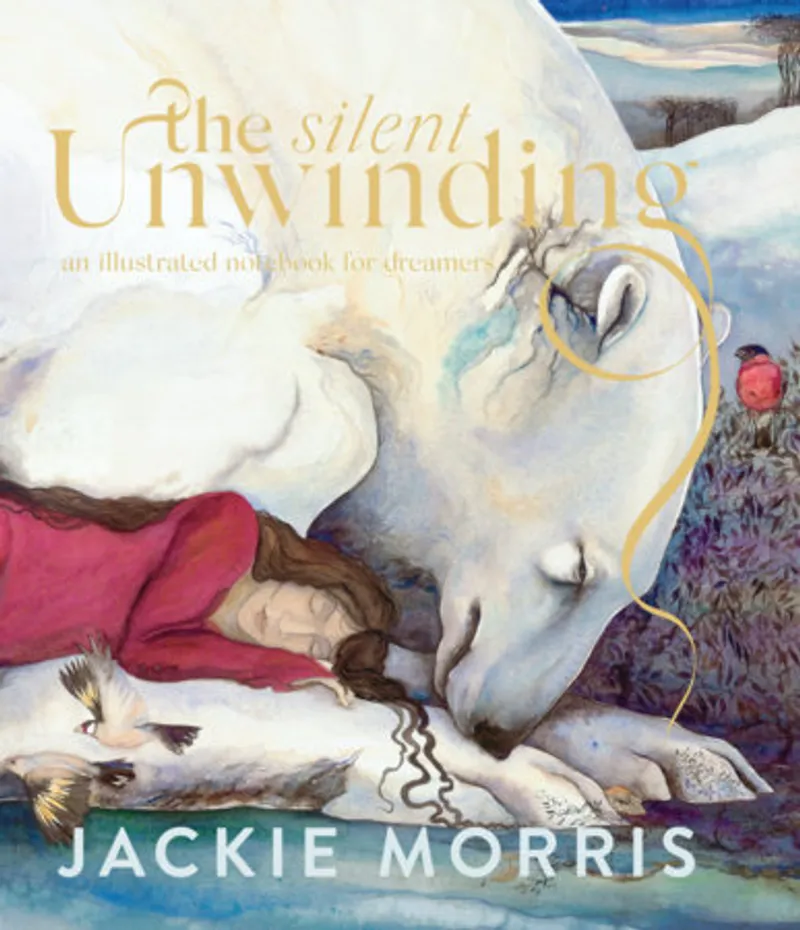
The Silent Unwinding Author: Jackie MorrisPage Count: UnknownPublication Date: 2026-PRH The Silent Unwinding, the latest offering from renowned author Jackie Morris, is a masterfully woven tapestry that delves into the intricacies of the human experience. While the page count may be unknown, the impact of Morris's words is undeniable, leaving an indelible mark on the reader's psyche. In this hauntingly beautiful narrative, Morris explores the theme of transformation, guiding the reader through a gentle yet profound unwinding of the self. With her characteristic lyrical prose, she navigates the complexities of the human condition, laying bare the fragile and often unseen threads that bind us to our deepest selves. Morris's writing style is akin to a slow, soothing melody that ebbs and flows with the rhythm of life. Her words are imbued with a sense of quiet reverence, as if she is sharing a long-guarded secret with the reader. This intimacy creates a sense of connection, drawing the reader into the world she has crafted with such precision and care. As the narrative unfolds, Morris employs her unique brand of magic realism, blending the mundane with the mystical to create a dreamlike atmosphere that is both captivating and unsettling. This blend of the ordinary and the extraordinary allows the reader to transcend the boundaries of reality, entering a realm where the silences are just as significant as the words. The Silent Unwinding is a meditation on the power of stillness, a paean to the beauty of the unspoken, and a testament to the transformative potential that lies within us all. Morris's prose is a gentle whisper that awakens the reader to the magic that resides in the spaces between the words, the moments between the breaths, and the silences that precede the storm. In this profound and deeply moving work, Morris invites the reader to embark on a journey of self-discovery, to unravel the threads of their own story, and to weave a new tapestry of meaning and purpose. The Silent Unwinding is a reminder that even in the darkest of times, there is always the possibility for growth, for renewal, and for transformation. With its themes of transformation, self-discovery, and the power of silence, The Silent Unwinding is a must-read for anyone seeking a literary experience that will linger long after the final page has been turned. Morris's masterful storytelling, coupled with her unique writing style, makes this book a standout in contemporary literature. In conclusion, The Silent Unwinding is a mesmerizing and deeply affecting work that will resonate with readers long after they finish reading it. Jackie Morris has once again proven herself to be a masterful storyteller, and her latest book is a testament to her skill and craftsmanship. #TheSilentUnwinding #JackieMorris #MagicRealism #TransformativeFiction #LiteraryFiction #BookLovers Related InsightsThe Edge of Never Book Review and Summary Nash Falls Book Review and Summary A Light in the Attic Book Review and Summary{ "@context": "https://schema.org", "@type": "FAQPage", "mainEntity": [ { "@type": "Question", "name": "What is the main focus of Unwind Book Review and Summary?", "acceptedAnswer": { "@type": "Answer", "text": "Everything you need to know about Unwind with our detailed review." } }, { "@type": "Question", "name": "Who authored the comprehensive guide on Unwind Book Review and Summary?", "acceptedAnswer": { "@type": "Answer", "text": "This detailed article and its insights were carefully researched and authored by Neal Shusterman." } }, { "@type": "Question", "name": "Where can I find more related content about Books?", "acceptedAnswer": { "@type": "Answer", "text": "You can explore more articles, detailed reviews, and similar insights by browsing the Related Insights section at the bottom of this article or visiting our dedicated Books category page." } } ] }
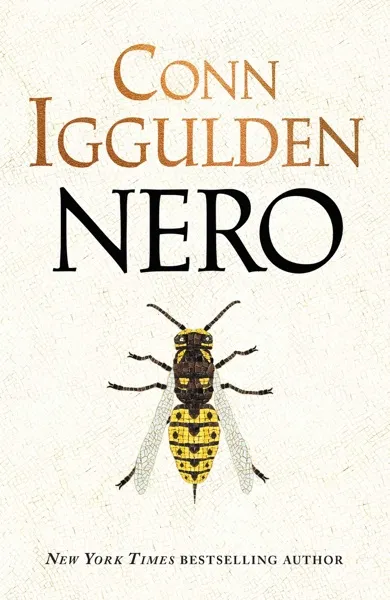

Nero Author: Conn IgguldenPage Count: UnknownPublication Year: 2024-GB Conn Iggulden’s Nero is a masterclass in historical fiction—an enthralling dive into the life of one of Rome’s most infamous emperors, where power, ambition, and decadence collide in a spectacle of fire and folly. As the latest installment in Iggulden’s Emperor series, this book does more than retell history; it reimagines it with the visceral intensity of a playwright’s pen and the meticulous research of a scholar. For readers who crave not just facts but the pulse of an era, Nero is a mesmerizing descent into the mind of a man who burned the world to see if he could be its light. At its core, Nero explores the corrupting allure of power and the fragility of legacy. Nero, the last of the Julio-Claudian dynasty, is often reduced to a caricature—fiddling while Rome burned, the archetypal tyrant. But Iggulden strips away the myth to reveal a complex figure: a man shaped by trauma, raised in a court of intrigue, and burdened by the weight of expectation. The book doesn’t glorify him; it dissects him. Nero’s reign is a study in contradictions—brilliant yet volatile, charismatic yet cruel, a poet at heart who became a monster by circumstance. Iggulden forces us to ask: Was Nero a victim of his own nature, or did the throne itself twist him into something monstrous? The novel’s strength lies in its dual narrative: the rise of Nero as emperor and the parallel descent of Rome into chaos. The fire of 64 AD, often framed as Nero’s doing, is here presented with nuance. Was it arson? Negligence? Or simply the inevitable collapse of a city built on borrowed time? Iggulden leans into ambiguity, letting the reader grapple with the same questions that haunted Nero’s contemporaries. The Great Fire becomes a metaphor for the empire itself—glorious, fragile, and on the brink of self-destruction. Iggulden’s prose is the book’s greatest weapon. His writing is taut, rhythmic, and unflinching, mirroring the tension of Nero’s reign. He excels at dialogue, giving his characters the cadence of real speech while maintaining historical authenticity. Nero’s voice—petulant, poetic, paranoid—leaps off the page, making him more than a historical figure; he becomes a man we pity even as we revile him. The supporting cast is equally vivid: Agrippina, Nero’s mother, is a force of nature, her ambition and cunning rendered with chilling precision; Seneca, the philosopher, is a puppet master pulling strings, his wisdom tinged with cowardice. Even minor characters, like the slave Britannicus or the courtesan Acte, are given depth, their fates weaving into the tapestry of Nero’s downfall. What sets Iggulden apart from other historical novelists is his ability to balance spectacle with substance. The novel is drenched in the sensory details of ancient Rome—its smells, its sounds, its brutal hierarchies. You can almost taste the wine at Nero’s banquets, feel the heat of the flames, hear the whispers of betrayal in the imperial palace. Yet beneath the opulence lies a sharp critique of power. Iggulden doesn’t just recount events; he interrogates them. Why do we remember Nero as a madman when his predecessors were no less brutal? Was his artistry a crime, or was his real crime failing to be the ruthless ruler Rome demanded? The book’s pacing is relentless, mirroring Nero’s own manic energy. The first half races through his early years, his mother’s manipulations, and his ascent to power, while the second half slows to a simmering boil as Nero’s grip on reality—and his empire—slips. The tragedy of Nero isn’t his downfall but his inability to escape the roles he was forced into. He wanted to be a poet, a musician, a performer, but Rome would only let him be an emperor—at any cost. Nero is not just a book about history; it’s a meditation on art, power, and the cost of living in a world that refuses to see you as more than a caricature. Iggulden doesn’t offer easy answers, but he does something better: he makes us care about the man behind the myth. By the final pages, when the smoke clears and Nero’s fate is sealed, you’ll close the book with a sense of melancholy—not just for the man, but for the empire that consumed him. If Nero has a flaw, it’s that its historical precision sometimes slows the narrative. Certain scenes, while fascinating, may test readers who prefer a faster pace. But this is a minor quibble in a novel that otherwise delivers on every promise. Iggulden’s Nero is not just a character; he’s a warning. For fans of immersive historical fiction, this is a must-read. For those who’ve never picked up a book about ancient Rome, this might just be the one to change their minds. #Nero #HistoricalFiction #AncientRome #ConnIggulden #EmperorSeries #RomanEmpire Related InsightsCapital Mysteries #12: The Ghost at Camp David Book Review and Summary A Good Man on a Dark Night Book Review and Summary A Beautiful Lie Book Review and Summary{ "@context": "https://schema.org", "@type": "FAQPage", "mainEntity": [ { "@type": "Question", "name": "What is the main focus of Nero Book Review and Summary?", "acceptedAnswer": { "@type": "Answer", "text": "Everything you need to know about Nero with our detailed review." } }, { "@type": "Question", "name": "Who authored the comprehensive guide on Nero Book Review and Summary?", "acceptedAnswer": { "@type": "Answer", "text": "This detailed article and its insights were carefully researched and authored by Anna Kowalska." } }, { "@type": "Question", "name": "Where can I find more related content about Books?", "acceptedAnswer": { "@type": "Answer", "text": "You can explore more articles, detailed reviews, and similar insights by browsing the Related Insights section at the bottom of this article or visiting our dedicated Books category page." } } ] }
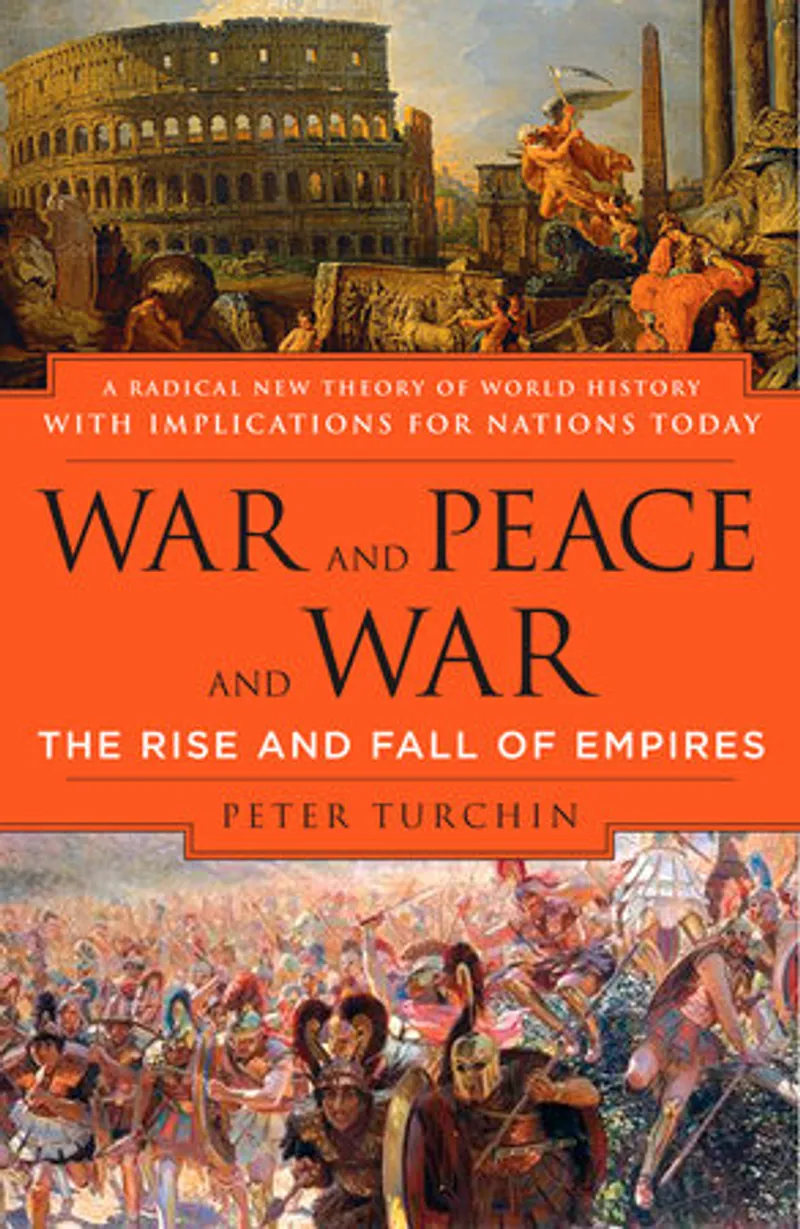

War and Peace and War Author: Peter TurchinPage Count: UnknownPublication Date: 2007-PRH War and Peace and War by Peter Turchin is a thought-provoking and insightful exploration of the dynamics that shape the rise and fall of empires throughout history. As an evolutionary biologist, Turchin brings a unique perspective to the study of human societies, and his bold new theory about the course of world history is both compelling and unsettling. At its core, Turchin's argument is that the capacity for collective action is the key to the formation of an empire. He demonstrates that when people are faced with a common enemy, they are able to put aside their differences and work together to achieve a common goal. This high level of cooperation is what allows empires to rise and flourish, as evidenced by the examples of the Roman and Russian empires, and the United States. However, as empires grow and become more complex, the dynamics that drove their initial success begin to shift. The rich get richer, the poor get poorer, and conflict replaces cooperation. This, in turn, leads to the inevitable dissolution of the empire. Turchin's theory is elegantly simple, yet it has profound implications for our understanding of the course of world history. One of the strengths of Turchin's book is his use of historical examples to illustrate his theory. He draws on a wide range of sources, from ancient Rome to modern-day America, to demonstrate the ways in which collective action has shaped the rise and fall of empires. His writing is clear and engaging, making the book accessible to readers who may not have a background in evolutionary biology or history. Turchin's style is also noteworthy. He writes with a sense of passion and conviction, and his arguments are clearly and persuasively presented. At times, his writing can be quite lyrical, and he has a talent for finding vivid and memorable examples to illustrate his points. If there is a criticism to be made, it is that Turchin's theory can be somewhat reductionist. He acknowledges that there are many factors that contribute to the rise and fall of empires, but his focus on collective action can sometimes make it seem as though this is the only factor at play. Additionally, some readers may find his use of evolutionary biology to explain human societies to be a bit too simplistic. Overall, however, War and Peace and War is a fascinating and thought-provoking book that is sure to appeal to readers with an interest in history, sociology, and evolutionary biology. Turchin's theory is bold and provocative, and his writing is engaging and accessible. Whether or not one agrees with his arguments, the book is sure to stimulate discussion and debate. #WarAndPeaceAndWar #EmpiresRiseAndFall #CollectiveAction #EvolutionaryBiology #WorldHistory #SocietalDynamics Related InsightsBrave New World Book Review and Summary Anthropocene Book Review and Summary Rebel Darling (The Darling Devils, #4) Book Review and Summary{ "@context": "https://schema.org", "@type": "FAQPage", "mainEntity": [ { "@type": "Question", "name": "What is the main focus of War and Peace and War Book Review and Summary?", "acceptedAnswer": { "@type": "Answer", "text": "Everything you need to know about War and Peace and War with our detailed review." } }, { "@type": "Question", "name": "Who authored the comprehensive guide on War and Peace and War Book Review and Summary?", "acceptedAnswer": { "@type": "Answer", "text": "This detailed article and its insights were carefully researched and authored by William Clark." } }, { "@type": "Question", "name": "Where can I find more related content about Books?", "acceptedAnswer": { "@type": "Answer", "text": "You can explore more articles, detailed reviews, and similar insights by browsing the Related Insights section at the bottom of this article or visiting our dedicated Books category page." } } ] }
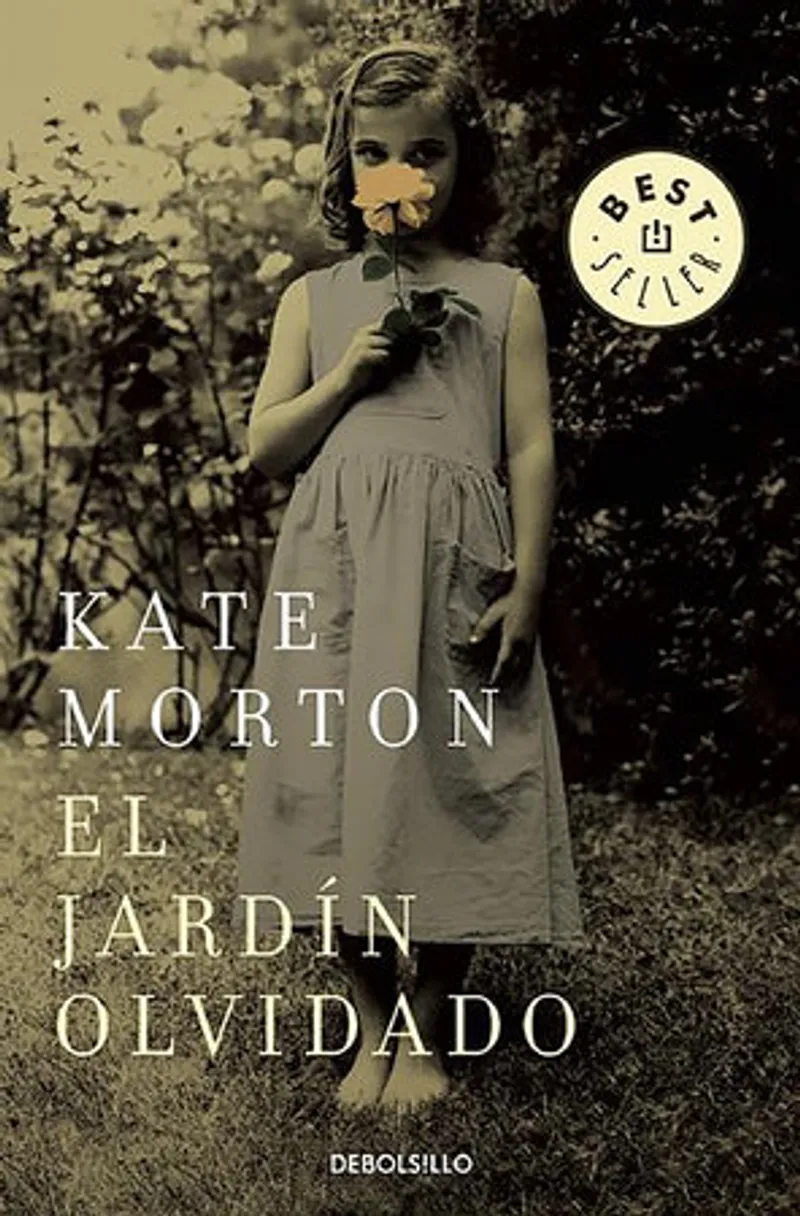
El jardín olvidado / The Forgotten Garden Author: Kate MortonPage Count: UnknownPublication Date: 2016-PRH "The Forgotten Garden" by Kate Morton is a mesmerizing and deeply moving novel that delves into the mysteries of the past, exploring the power of storytelling and the unbreakable bonds between generations. This captivating tale is woven around the lives of two women, Nell O'Connor and her granddaughter Cassandra, as they embark on a journey to unravel the secrets of their family's history. At its core, "The Forgotten Garden" is a story about identity, belonging, and the enduring legacy of love. Nell's discovery that she is adopted on her twenty-first birthday sets her on a path of self-discovery, leading her to the windswept coast of Cornwall, where she becomes entangled in the mysteries of the Mountrachet family. Decades later, Cassandra takes up the quest, and it is through her eyes that the reader is transported to the forgotten garden of Blackhurst Manor, a place of enchantment and heartbreak. Morton's writing is nothing short of enchanting. Her prose is lyrical, evocative, and richly detailed, conjuring up the atmosphere of a bygone era with ease. Her characters are multidimensional and complex, with each one expertly crafted to reveal the intricacies of the human heart. From the dockmaster's wife, who takes in a young Nell, to the enigmatic Eliza Makepeace, the author's characters leap off the page, drawing the reader into their world of love, loss, and longing. One of Morton's greatest strengths is her ability to weave together multiple storylines, seamlessly blending past and present to create a narrative that is both suspenseful and emotionally resonant. As the story unfolds, the reader is treated to a series of unexpected twists and turns, each one expertly crafted to reveal a little more of the mystery that lies at the heart of the novel. The author's use of the forgotten garden as a metaphor for the power of storytelling is a masterstroke. This hidden world, tucked away on the grounds of Blackhurst Manor, holds the key to the secrets of the past, and it is through Cassandra's discovery of the garden that the reader is finally able to piece together the puzzle of Nell's story. In short, "The Forgotten Garden" is a triumph of storytelling, a novel that will appeal to fans of historical fiction, mystery, and romance alike. Morton's writing is sublime, her characters are unforgettable, and her story is one that will linger in the reader's mind long after the final page has been turned. #TheForgottenGarden #KateMorton #HistoricalFiction #FamilySecrets #Storytelling #Cornwall Related InsightsThe Birthing Tree Book Review and Summary Here One Moment Book Review and Summary Anatomía del corazón: Compasión budista para transformar tu vida / A Fearless Heart: How the Courage to Be Compassionate Can Transform Our Lives Book Review and Summary{ "@context": "https://schema.org", "@type": "FAQPage", "mainEntity": [ { "@type": "Question", "name": "What is the main focus of The Forgotten Garden Book Review and Summary?", "acceptedAnswer": { "@type": "Answer", "text": "Everything you need to know about The Forgotten Garden with our detailed review." } }, { "@type": "Question", "name": "Who authored the comprehensive guide on The Forgotten Garden Book Review and Summary?", "acceptedAnswer": { "@type": "Answer", "text": "This detailed article and its insights were carefully researched and authored by Kate Morton." } }, { "@type": "Question", "name": "Where can I find more related content about Books?", "acceptedAnswer": { "@type": "Answer", "text": "You can explore more articles, detailed reviews, and similar insights by browsing the Related Insights section at the bottom of this article or visiting our dedicated Books category page." } } ] }
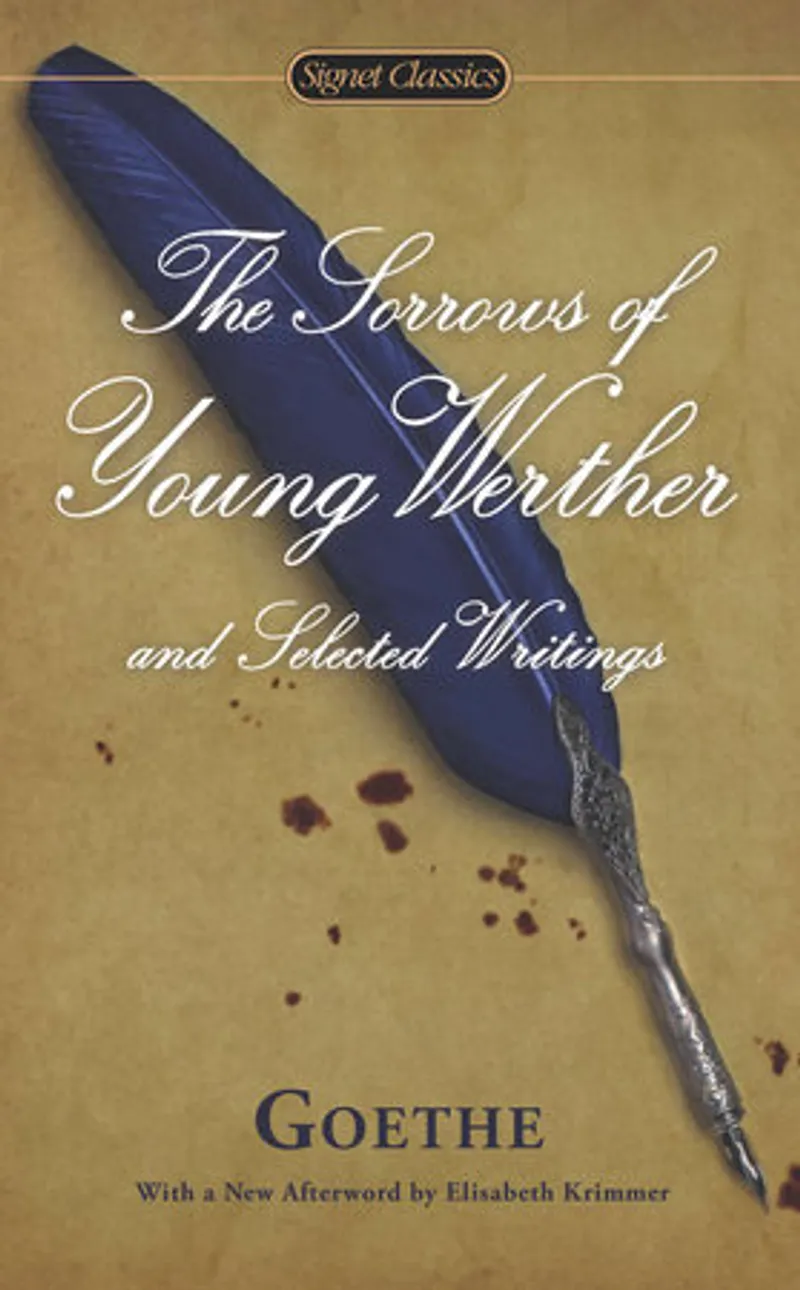
The Sorrows of Young Werther and Selected Writings Author: Johann Wolfgang von GoethePage Count: UnknownPublication Date: 2013-PRH In "The Sorrows of Young Werther and Selected Writings," Johann Wolfgang von Goethe weaves a poignant and thought-provoking narrative that delves into the intricacies of the human experience. This collection of works, published in 2013, is a testament to Goethe's mastery of storytelling and his profound understanding of the complexities of love, nature, and the human condition. At the heart of this compilation is "The Sorrows of Young Werther," a novella that tells the tragic tale of a young man's unrequited love for the beautiful Charlotte. Through Werther's letters to his friend, Goethe skillfully conveys the intense emotions and inner turmoil that often accompany love. The author's use of epistolary format adds an air of intimacy and immediacy to the narrative, drawing the reader into Werther's inner world and making his sorrow feel palpably real. Goethe's writing style is characterized by its lyricism, depth, and philosophical undertones. His prose is at once poetic and precise, capable of conveying the subtleties of human emotion with remarkable accuracy. In "The Sorrows of Young Werther," this style is particularly evident in the descriptions of nature, which serve as a backdrop for Werther's emotional struggles. The idyllic German village, with its lush landscapes and serene atmosphere, provides a poignant contrast to Werther's inner turmoil, highlighting the tension between the beauty of the natural world and the darkness of the human experience. The selected writings that accompany "The Sorrows of Young Werther" offer valuable insights into Goethe's creative process and his own personal struggles. "Reflections on Werther" and "Goethe in Sesenheim" provide a unique perspective on the author's thoughts on love, nature, and the human condition, while "The New Melusina" and "The Fairy Tale" showcase his ability to craft engaging and imaginative stories that explore the boundaries of reality. One of the most striking aspects of Goethe's writing is his ability to balance reason and emotion, intellect and intuition. His stories are often marked by a sense of ambiguity and complexity, reflecting the messy and multifaceted nature of human experience. This is particularly evident in "The Fairy Tale," which features a cast of characters that defy easy categorization, including sentient will-o'-the-wisps, a giant and his shadow, and four metal statues. This story is a testament to Goethe's boundless imagination and his willingness to push the boundaries of conventional storytelling. In conclusion, "The Sorrows of Young Werther and Selected Writings" is a masterpiece of German literature that continues to captivate readers with its timeless themes and beautiful prose. Goethe's writing is a powerful reminder of the complexity and depth of human emotion, and his stories remain as relevant today as they were when they were first written. This collection is a must-read for anyone interested in exploring the human condition through the lens of literature. #TheSorrowsOfYoungWerther #JohannWolfgangVonGoethe #GermanLiterature #Classics #LiteraryFiction #Romanticism Related InsightsBack Where We Started Book Review and Summary The Goldfinch Book Review and Summary Marley and Me: Life and Love With the World’s Worst Dog Book Review and Summary{ "@context": "https://schema.org", "@type": "FAQPage", "mainEntity": [ { "@type": "Question", "name": "What is the main focus of The Sorrows of Young Werther Book Review and Summary?", "acceptedAnswer": { "@type": "Answer", "text": "Everything you need to know about The Sorrows of Young Werther with our detailed review." } }, { "@type": "Question", "name": "Who authored the comprehensive guide on The Sorrows of Young Werther Book Review and Summary?", "acceptedAnswer": { "@type": "Answer", "text": "This detailed article and its insights were carefully researched and authored by Johann Wolfgang von Goethe." } }, { "@type": "Question", "name": "Where can I find more related content about Books?", "acceptedAnswer": { "@type": "Answer", "text": "You can explore more articles, detailed reviews, and similar insights by browsing the Related Insights section at the bottom of this article or visiting our dedicated Books category page." } } ] }
-
 Klaus Weber
 - 02 Feb, 2026 23:47
Homo Deus: Breve historia del mañana / Homo deus. A history of tomorrow Book Review and Summary
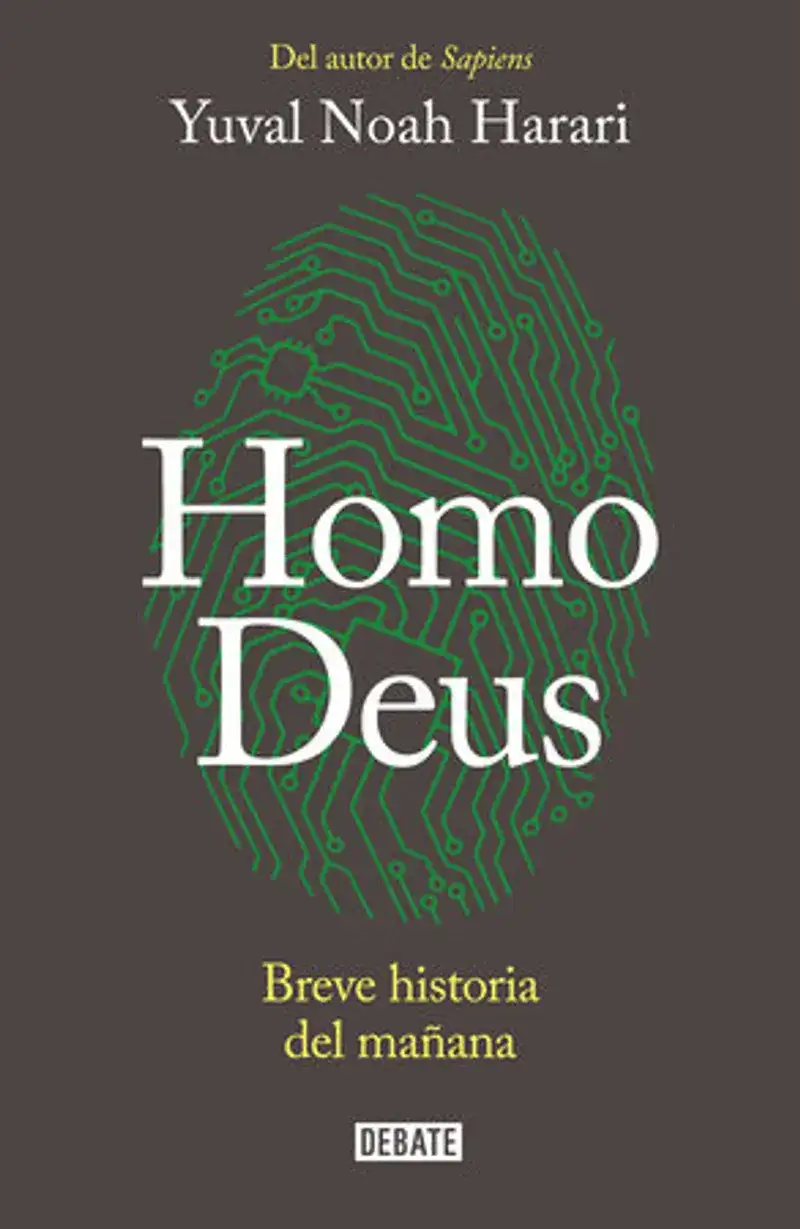
Homo Deus: Breve historia del mañana / Homo deus. A history of tomorrow Author: Yuval Noah HarariPage Count: UnknownPublication Date: 2018-PRH Yuval Noah Harari’s Homo Deus is a provocative and unsettling sequel to his global phenomenon Sapiens, offering not just a glimpse into the future but a jarring mirror held up to our present. Published in 2016 (originally in Hebrew) and translated widely by 2018, the book dissects humanity’s triumphalist narrative—declaring victory over famine, plague, and war—only to reveal that our new gods (Homo Deus: man the divine) are about to face even more formidable challenges. Harari doesn’t predict the future; he dissects the cultural, technological, and philosophical tectonic shifts already in motion, forcing us to confront what it means to be human when we stand on the brink of engineering our own evolution. The central theme of Homo Deus is deceptively simple: humanity’s next project is to transcend its biological limits and achieve godlike status. Harari argues that once we eliminated the great scourges of mortality—famine, plague, and war—we began to focus on immortality, happiness, and divinity itself. But this pursuit is not a triumphant march forward; it’s a precarious tightrope walk. As Harari writes, “The most important question in 21st-century economics may well be: What will we do with ourselves once we no longer need to worry about famine, plague, and war?” The answer isn’t utopia. It’s a world where data reigns supreme, algorithms know us better than we know ourselves, and inequality becomes a cosmic divide between the upgraded and the obsolete. Harari’s genius lies in his ability to weave grand historical narratives with biting, contemporary satire. He treats no sacred cow with deference—whether it’s the myth of free will, the illusion of human exceptionalism, or the religion of liberal humanism. His prose is both sweeping and razor-sharp, blending the cool detachment of a historian with the moral urgency of a philosopher. He doesn’t just describe trends; he exposes their absurdity and danger. For instance, he points out that today, more people die from eating too much than from famine—a statistic that should make us question the very meaning of progress. One of the book’s most chilling sections explores the rise of artificial intelligence and the potential obsolescence of human labor. Harari posits a future where algorithms make better decisions than humans—about careers, relationships, even governance. “When your smartphone knows you better than you know yourself,” he writes, “will you still trust your own choices?” This isn’t dystopian sci-fi; it’s extrapolation from current trends in big data, surveillance capitalism, and machine learning. Harari doesn’t predict a robot apocalypse, but he warns of a society where meaning is outsourced to algorithms, and human agency becomes a quaint relic. The book also tackles the ultimate taboo: death. Harari frames immortality not as a fantasy but as an engineering project. With advances in biotechnology, cryonics, and consciousness uploading, death may soon be optional. But what happens when only the rich can afford to live forever? Will immortality deepen inequality or redefine it entirely? Harari doesn’t offer answers, but his questions linger like a shadow over Silicon Valley’s quest to “solve death.” Harari’s style is what makes Homo Deus so gripping. He balances erudition with accessibility, quoting everything from ancient religious texts to modern tech manifestos. His arguments are built on a foundation of data, yet he never loses sight of the human story beneath. He critiques liberal humanism not as a villain but as a belief system that may not survive the 21st century—replaced by dataism, a new religion that worships information flow above all else. It’s a radical idea, delivered with such clarity that it feels inevitable. Yet, for all its foresight, Homo Deus is not without flaws. Some critics argue that Harari’s predictions are too deterministic, underestimating humanity’s capacity for resistance and reinvention. Others find his vision of liberal democracy’s decline overly bleak. But these critiques miss the point: Harari isn’t writing a prophecy; he’s writing a warning. He’s not saying the future will be exactly as he describes—he’s saying it could be, if we continue on our current trajectory without questioning where we’re headed. Ultimately, Homo Deus is a book that demands to be argued with, debated, and feared. It’s a challenge to rethink everything—from the nature of consciousness to the purpose of society. Harari doesn’t just ask “What will the future look like?” He asks, “Do we even want to live in a world where the answers to that question are controlled by algorithms and billionaires?” In an era where technology outpaces ethics, where data is the new oil, and where the line between human and machine blurs daily, Homo Deus is less a book about tomorrow and more a mirror reflecting today’s most dangerous illusions—and the uncomfortable truths we’ve yet to confront. #HomoDeus #YuvalNoahHarari #FutureOfHumanity #AIandHumanity #Transhumanism #EthicsInTechnology Related InsightsHouse of Flame and Shadow Book Review and Summary DK Super Readers Level 1 A Day in the Life of a Pilot Book Review and Summary Normal People, the scripts Book Review and Summary{ "@context": "https://schema.org", "@type": "FAQPage", "mainEntity": [ { "@type": "Question", "name": "What is the main focus of Homo Deus: Breve historia del mañana / Homo deus. A history of tomorrow Book Review and Summary?", "acceptedAnswer": { "@type": "Answer", "text": "Everything you need to know about Homo Deus: Breve historia del mañana / Homo deus. A history of tomorrow with our detailed review." } }, { "@type": "Question", "name": "Who authored the comprehensive guide on Homo Deus: Breve historia del mañana / Homo deus. A history of tomorrow Book Review and Summary?", "acceptedAnswer": { "@type": "Answer", "text": "This detailed article and its insights were carefully researched and authored by Klaus Weber." } }, { "@type": "Question", "name": "Where can I find more related content about Books?", "acceptedAnswer": { "@type": "Answer", "text": "You can explore more articles, detailed reviews, and similar insights by browsing the Related Insights section at the bottom of this article or visiting our dedicated Books category page." } } ] }

-
 Elena Volkova
 - 02 Feb, 2026 21:20
Diario de Anne Frank (edición ilustrada) / The Diary of a Young Girl (Illustrated Edition) Book Review and Summary
Diario de Anne Frank (edición ilustrada) / The Diary of a Young Girl (Illustrated Edition) Author: Anne FrankPage Count: UnknownPublication Date: 2025-PRH In the realm of historical non-fiction, few accounts have resonated as profoundly as Anne Frank's Diary of a Young Girl. The latest edition, published in 2025, brings a fresh and poignant perspective to this timeless classic with its illustrated format. This edition not only stays true to Anne's original narrative but also offers a visually stunning accompaniment that elevates the reader's emotional connection to her story. At its core, The Diary of a Young Girl remains a powerful exploration of hope, resilience, and the human spirit. Through her candid and introspective writings, Anne Frank provides an unflinching glimpse into the daily struggles and fears of a young girl forced into hiding with her family during the Nazi occupation of the Netherlands. As the days turn into weeks, and the weeks into years, Anne's diary becomes a testament to the enduring power of optimism, even in the face of unimaginable adversity. One of the most striking aspects of Anne's writing is her remarkable ability to convey the complexities of adolescence, from the mundane concerns of teenage life to the profound introspections of a young girl grappling with her place in the world. Her voice is at once relatable, witty, and heart-wrenchingly vulnerable, making it impossible not to become deeply invested in her story. The illustrated edition beautifully complements Anne's narrative, incorporating subtle yet evocative artwork that adds a new layer of depth to her words. What sets Anne's diary apart from other historical accounts is its unflinching honesty. She writes with a searing candor, laying bare her fears, doubts, and insecurities, as well as her hopes and dreams. This unvarnished portrayal of life in hiding creates a sense of intimacy and immediacy, drawing the reader into the cramped and precarious world of the Secret Annex. As we witness Anne's struggles to maintain a sense of normalcy in the face of unimaginable danger, we are reminded of the boundless capacity of the human spirit to persevere, even in the darkest of times. The illustrated edition of The Diary of a Young Girl is a masterful tribute to Anne Frank's enduring legacy. By combining her original text with poignant and expressive artwork, this edition offers a fresh perspective on a classic work of historical non-fiction. As we reflect on the significance of Anne's story, we are reminded of the importance of empathy, compassion, and understanding in a world still grappling with the consequences of hatred, intolerance, and war. In conclusion, the 2025 illustrated edition of The Diary of a Young Girl is a must-read for anyone seeking a deeper understanding of this pivotal moment in history. Anne Frank's remarkable story, beautifully augmented by the illustrated format, serves as a powerful reminder of the human cost of conflict and the enduring power of hope in the face of adversity. #AnneFrank #TheDiaryOfAYoungGirl #HolocaustRemembrance #HistoricalNonFiction #WorldWarII #HopeInAdversity Related InsightsLook What You Did Book Review and Summary White Fang Book Review and Summary The Other Boleyn Girl Book Review and Summary{ "@context": "https://schema.org", "@type": "FAQPage", "mainEntity": [ { "@type": "Question", "name": "What is the main focus of Diario de Anne Frank (edición ilustrada) / The Diary of a Young Girl (Illustrated Edition) Book Review and Summary?", "acceptedAnswer": { "@type": "Answer", "text": "Everything you need to know about Diario de Anne Frank (edición ilustrada) / The Diary of a Young Girl (Illustrated Edition) with our detailed review." } }, { "@type": "Question", "name": "Who authored the comprehensive guide on Diario de Anne Frank (edición ilustrada) / The Diary of a Young Girl (Illustrated Edition) Book Review and Summary?", "acceptedAnswer": { "@type": "Answer", "text": "This detailed article and its insights were carefully researched and authored by Elena Volkova." } }, { "@type": "Question", "name": "Where can I find more related content about Books?", "acceptedAnswer": { "@type": "Answer", "text": "You can explore more articles, detailed reviews, and similar insights by browsing the Related Insights section at the bottom of this article or visiting our dedicated Books category page." } } ] }
-
 Marta Wisniewska
 - 02 Feb, 2026 06:57
Red Queen / Glass Sword / King’s Cage / War Storm Book Review and Summary
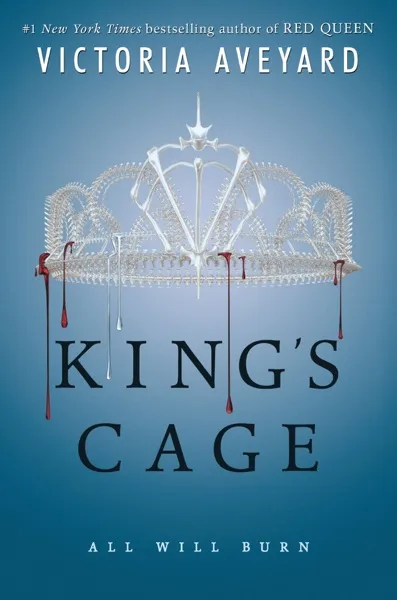
Red Queen / Glass Sword / King’s Cage / War Storm Author: Victoria AveyardPage Count: UnknownPublication Year: 2018-GB Victoria Aveyard’s Red Queen quartet—Red Queen, Glass Sword, King’s Cage, and War Storm—is a masterclass in dystopian storytelling, where bloodline dictates destiny and revolution simmers beneath the gilded surface of a society built on lies. At its core, the series explores the brutal dichotomy between power and powerlessness, not just through the lens of class struggle but through the visceral, often brutal, clash of identity and privilege. Aveyard crafts a world where the color of one’s blood determines their fate—silver-blooded elites rule with ruthless efficiency, while the downtrodden Reds toil in obscurity, their lives as disposable as the blood they spill. But this isn’t just another dystopian tale; it’s a scathing indictment of systemic oppression, where the oppressed are as flawed and dangerous as their oppressors, and where the line between hero and villain is as thin as the silver thread that binds the ruling class. Aveyard’s greatest strength lies in her ability to weave a narrative that is as intellectually compelling as it is emotionally gripping. She doesn’t just tell a story; she immerses the reader in a world where every action has consequences, where loyalty is a currency as volatile as the magic that fuels the silver elite. The Red Queen series is, at its heart, a story about revolution—not just the grand, cinematic upheavals of war, but the quiet, insidious revolutions that happen in the hearts and minds of those who dare to defy the status quo. Mare Barrow, the protagonist, is a perfect embodiment of this tension. A Red girl with a silver power thrust upon her by fate, she is neither wholly hero nor villain, but a living contradiction—a weapon of the revolution she didn’t ask to wield. Aveyard’s prose is sharp, punchy, and relentless, mirroring the world she describes. There’s no room for flowery descriptions or meandering introspection here; every sentence serves a purpose, whether it’s advancing the plot, deepening character relationships, or ratcheting up the tension. The dialogue crackles with tension, often laced with sarcasm and wit, which provides a stark contrast to the brutality unfolding around it. This balance between humor and horror is one of the series’ most compelling aspects, making the darker moments hit even harder. When Mare spits out a sarcastic remark in the midst of a life-or-death situation, it’s not just comic relief—it’s a defiant act of humanity in a world that seeks to strip her of it. The world-building in the Red Queen series is equally impressive. Aveyard doesn’t just create a backdrop for her story; she constructs a fully realized society with its own history, culture, and rules. The silver elite aren’t one-dimensional villains; they’re a complex web of aristocrats, warriors, and schemers, each with their own motivations and flaws. The Reds, too, are far from monolithic—some are passive, others rebellious, and many are simply trying to survive. This nuance prevents the story from descending into a simplistic good-versus-evil narrative, instead offering a more realistic portrayal of how power structures crumble and reform. One of the series’ most intriguing themes is the corrupting nature of power. Almost every character, no matter their allegiance, is corrupted in some way by the system they’re a part of. Mare’s journey is a testament to this, as she grapples with the weight of her newfound power and the responsibilities it entails. Her struggle isn’t just against the silver elite but against her own demons—the anger, the fear, and the guilt that come with wielding power over others. Aveyard doesn’t shy away from showing the darker sides of revolution: the betrayals, the sacrifices, and the moral compromises that come with fighting for change. In this way, the Red Queen series feels eerily prescient, reflecting the messy, often brutal reality of real-world uprisings. Aveyard’s style is also notable for its pacing and structure. The series moves at a breakneck speed, with each book building upon the last in a way that feels organic and inevitable. There’s no filler here; every twist and turn serves a purpose, whether it’s deepening character arcs or escalating the political intrigue. The romance subplots, while present, never overshadow the larger themes of the story. Instead, they serve as a lens through which we see the characters’ vulnerabilities and motivations. The relationships in the Red Queen series are as fraught with tension as the political conflicts, adding another layer of complexity to an already rich narrative. Ultimately, the Red Queen quartet is more than just a gripping dystopian saga—it’s a meditation on power, identity, and the cost of revolution. Aveyard doesn’t offer easy answers or neat resolutions; instead, she challenges her readers to question their own beliefs about justice, morality, and the systems that govern their lives. The series is a reminder that revolutions aren’t won in a single battle but through the cumulative actions of countless individuals, each with their own struggles and flaws. For readers who love dystopian fiction with depth, heart, and relentless pacing, the Red Queen series is a must-read. It’s a story that lingers long after the final page, leaving you to grapple with the same questions that haunt its characters: What would you sacrifice for freedom? And when power is within your grasp, how do you wield it without becoming the very thing you sought to destroy? #RedQueenSeries #DystopianFiction #YARevolution #VictoriaAveyard #PowerAndOppression #MustReadBooks Related InsightsThe Divide Book Review and Summary Think Twice Book Review and Summary Out of the Clear Blue Sky Book Review and Summary{ "@context": "https://schema.org", "@type": "FAQPage", "mainEntity": [ { "@type": "Question", "name": "What is the main focus of Red Queen / Glass Sword / King’s Cage / War Storm Book Review and Summary?", "acceptedAnswer": { "@type": "Answer", "text": "Everything you need to know about Red Queen / Glass Sword / King’s Cage / War Storm with our detailed review." } }, { "@type": "Question", "name": "Who authored the comprehensive guide on Red Queen / Glass Sword / King’s Cage / War Storm Book Review and Summary?", "acceptedAnswer": { "@type": "Answer", "text": "This detailed article and its insights were carefully researched and authored by Marta Wisniewska." } }, { "@type": "Question", "name": "Where can I find more related content about Books?", "acceptedAnswer": { "@type": "Answer", "text": "You can explore more articles, detailed reviews, and similar insights by browsing the Related Insights section at the bottom of this article or visiting our dedicated Books category page." } } ] }

... Trotzdem Ja zum Leben sagen Author: Viktor E. FranklPage Count: UnknownPublication Date: 1946-OL "Trotzdem Ja zum Leben sagen" or "Man's Search for Meaning" by Viktor E. Frankl is a memoir that defies the conventions of a typical holocaust narrative. Written in 1946, this powerful book recounts Frankl's personal experiences in Nazi concentration camps during World War II, yet it transcends the genre of a war memoir to become a profound exploration of the human search for meaning, purpose, and hope in the most unimaginable circumstances. Frankl's writing style is characterized by its simplicity, clarity, and sincerity, which makes the narrative all the more compelling and relatable. As a psychiatrist, Frankl brings a unique perspective to the events he describes, analyzing the psychological and philosophical implications of the experiences he and his fellow prisoners endured. His account is not a sensationalized or emotional recounting of the horrors of the concentration camps, but rather a thoughtful and introspective exploration of the human condition. At the heart of Frankl's theory, known as logotherapy, is the conviction that the primary human drive is not pleasure, but the pursuit of what we find meaningful. This idea is both profoundly simple and deeply complex, and Frankl illustrates it through numerous examples from his own experiences and those of his patients. He argues that even in the most challenging and desperate circumstances, individuals have the freedom to choose how they respond to their situation, and that this choice is what gives life its meaning. One of the most striking aspects of Frankl's narrative is his ability to find meaning and purpose in the midst of unimaginable suffering. Despite being subjected to unimaginable cruelty, starvation, and deprivation, Frankl and his fellow prisoners found ways to maintain their dignity, hope, and humanity. They did this by holding onto memories of their past, forming strong bonds with fellow prisoners, and finding ways to create meaning in their daily lives, whether through work, art, or other forms of creative expression. Frankl's memoir is not just a personal account of his experiences in the concentration camps; it is also a deeply philosophical exploration of the human condition. He draws on a wide range of sources, from Nietzsche to the Bible, to illustrate his ideas about the search for meaning and purpose. His writing is infused with a sense of optimism and hope, which is all the more remarkable given the circumstances in which he was writing. In "Man's Search for Meaning," Frankl offers a powerful and enduring message about the human capacity for resilience, hope, and survival. His book is a testament to the human spirit and a reminder that even in the darkest of times, there is always the possibility for growth, transformation, and renewal. This book is a must-read for anyone interested in psychology, philosophy, history, or simply the human condition. #MansSearchForMeaning #ViktorFrankl #Logotherapy #HolocaustMemoir #PsychologyAndPhilosophy #HopeAndResilience Related InsightsKing of Scars Book Review and Summary Notes on a Nervous Planet Book Review and Summary Dopamine Nation Book Review and Summary{ "@context": "https://schema.org", "@type": "FAQPage", "mainEntity": [ { "@type": "Question", "name": "What is the main focus of ... Trotzdem Ja zum Leben sagen Book Review and Summary?", "acceptedAnswer": { "@type": "Answer", "text": "Everything you need to know about ... Trotzdem Ja zum Leben sagen with our detailed review." } }, { "@type": "Question", "name": "Who authored the comprehensive guide on ... Trotzdem Ja zum Leben sagen Book Review and Summary?", "acceptedAnswer": { "@type": "Answer", "text": "This detailed article and its insights were carefully researched and authored by Klaus Weber." } }, { "@type": "Question", "name": "Where can I find more related content about Books?", "acceptedAnswer": { "@type": "Answer", "text": "You can explore more articles, detailed reviews, and similar insights by browsing the Related Insights section at the bottom of this article or visiting our dedicated Books category page." } } ] }
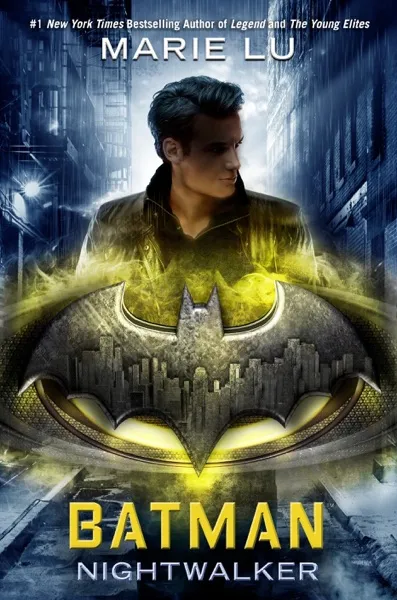

Nightwalker Author: Marie LuPage Count: UnknownPublication Year: 2018-GB Marie Lu’s Nightwalker is a pulse-pounding descent into the shadows of human ambition, where science blurs the line between salvation and damnation, and no one—human or otherwise—is truly safe. Published in 2018, this standout from the author of the Legend trilogy cements Lu’s reputation as a master of high-stakes, morally complex YA fiction. With its relentless pacing, lush world-building, and a protagonist whose very existence is a walking contradiction, Nightwalker isn’t just a book—it’s an experience that lingers long after the final page. At its core, Nightwalker explores the duality of humanity: the light we cling to and the darkness we’re willing to embrace in its name. The story follows Allie Sheridan, a 17-year-old prodigy with a rare genetic disorder that grants her extraordinary abilities—including heightened senses, rapid healing, and an unnatural resistance to pain. But these gifts come at a cost: she’s also a Nightwalker, a genetically engineered vampire-like creature created in secret labs by the powerful—and morally bankrupt—Nightlife Division. Allie’s existence is a paradox: she’s both victim and weapon, a girl with a soul trapped in a body designed for violence. Lu’s genius lies in her ability to humanize the monstrous. Allie isn’t a villain or a hero; she’s a teenager grappling with identity, trauma, and the weight of her own power. The book’s central theme is control—who holds it, who abuses it, and what happens when those in power decide your life is expendable. Through Allie’s eyes, we witness the Nightlife Division’s grotesque experiments, where subjects are treated as disposable tools rather than people. Yet Lu never shies away from the brutality of Allie’s world, making the stakes visceral and unrelenting. Lu’s prose is sharp, immersive, and dripping with atmosphere. She doesn’t waste time on unnecessary exposition; instead, she drops the reader into the action from the first page, where Allie is already fleeing a lab, her body burning with the fire of her own power. The world Lu builds is a neon-drenched, cyberpunk-inspired nightmare, where corporations hold more sway than governments and the night itself feels alive with danger. The dialogue crackles with tension, and the relationships—especially Allie’s complicated bond with her creator, the enigmatic Dr. Strauss—are layered with ambiguity. What truly sets Nightwalker apart is its exploration of what it means to be human. Allie’s Nightwalker traits make her an outcast among humans, but her capacity for empathy and sacrifice proves she’s more human than many of the people around her. Lu forces readers to confront uncomfortable questions: How much of our morality is tied to our biology? Can someone who was designed to kill ever choose a different path? The answers aren’t tidy, and that’s what makes the book so compelling. The supporting cast is equally compelling. Characters like the brooding, morally gray Carter (a human Nightlife agent with his own secrets) and the ruthless, charismatic Dr. Strauss add depth and intrigue, each serving as a mirror to Allie’s own struggles. Lu’s world-building extends beyond the characters, too, with the Nightlife Division’s labs and the shadowy underworld of Nightwalkers feeling richly detailed. The action sequences are cinematic, with Lu’s knack for choreography making every chase or fight feel urgent and real. One of the book’s most striking elements is its pacing. Lu balances high-octane action with quieter, introspective moments, giving readers both the thrill of the chase and the emotional weight of Allie’s internal battles. The tension never lets up, and the stakes escalate with each chapter, culminating in a climax that’s as emotionally devastating as it is action-packed. Nightwalker isn’t just a vampire story or a dystopian thriller—it’s a meditation on power, identity, and the cost of playing god. Marie Lu crafts a narrative that’s as thought-provoking as it is entertaining, proving that the best YA fiction doesn’t shy away from darkness but illuminates it in ways that resonate deeply. If you’re looking for a book that will keep you up at night—both with its relentless pacing and its haunting themes—then Nightwalker is a must-read. It’s a story about monsters, but more than anything, it’s about the humans who create them. #NightwalkerBook #MarieLu #YAThriller #VampireDystopia #ScienceFiction #DarkYA Related InsightsAlternative Medicines for Diabetes Management Book Review and Summary Remember Love Book Review and Summary Ivanhoe Book Review and Summary{ "@context": "https://schema.org", "@type": "FAQPage", "mainEntity": [ { "@type": "Question", "name": "What is the main focus of Nightwalker Book Review and Summary?", "acceptedAnswer": { "@type": "Answer", "text": "Everything you need to know about Nightwalker with our detailed review." } }, { "@type": "Question", "name": "Who authored the comprehensive guide on Nightwalker Book Review and Summary?", "acceptedAnswer": { "@type": "Answer", "text": "This detailed article and its insights were carefully researched and authored by Hannah Schmidt." } }, { "@type": "Question", "name": "Where can I find more related content about Books?", "acceptedAnswer": { "@type": "Answer", "text": "You can explore more articles, detailed reviews, and similar insights by browsing the Related Insights section at the bottom of this article or visiting our dedicated Books category page." } } ] }

I Know Why The Caged Bird Sings Tote Bag Author: Out of PrintPage Count: UnknownPublication Date: 2021-PRH A Tote Bag That Carries More Than Just Groceries At first glance, a tote bag seems like an unlikely vessel for literary depth. But I Know Why the Caged Bird Sings tote bag by Out of Print isn’t just another piece of merchandise—it’s a wearable homage to Maya Angelou’s indelible memoir, a silent testament to resilience, and a conversation starter for those who recognize its significance. While the bag itself lacks pages, its design speaks volumes, embodying the spirit of Angelou’s words: "You may encounter many defeats, but you must not be defeated." Out of Print, known for its mission to celebrate classic literature through everyday items, has crafted a tote that does more than hold books or groceries—it holds memory. The bag features Angelou’s iconic phrase, "I Know Why the Caged Bird Sings," emblazoned in bold, elegant typography against a stark background, evoking the stark contrast between oppression and liberation that defines the memoir. The design is minimalist yet powerful, mirroring Angelou’s own prose: unadorned, direct, and laden with meaning. It’s a visual echo of the book’s central theme—the struggle for self-discovery and voice in a world that seeks to silence. Maya Angelou’s I Know Why the Caged Bird Sings is, at its core, a story of survival. Published in 1969, the memoir chronicles her early years, from her traumatic childhood in the segregated South to her awakening as a young Black woman in a world that devalues her existence. The title itself is a metaphor: the caged bird, though confined, sings not just to express joy but to defy its imprisonment. Angelou’s prose is lyrical yet unflinching, blending the brutality of racism and sexual violence with moments of profound beauty—her grandmother’s love, the joy of literature, and the quiet triumph of finding one’s voice. Out of Print’s tote bag captures this duality: it’s both a celebration and a reminder, a celebration of Angelou’s legacy and a reminder of the battles she fought. The bag’s design is a masterclass in restraint. Unlike gaudy literary merchandise that clamors for attention, this tote lets Angelou’s words do the talking. The typography is clean, the fabric sturdy, and the size practical—qualities that reflect the memoir’s own themes of strength and endurance. There’s no gimmickry here, just a quiet assertion of pride. It’s the kind of item that might belong to a student clutching a well-worn copy of the book, a professor lecturing on Angelou’s work, or a casual reader who wants to carry a piece of her wisdom wherever they go. What makes this tote more than a novelty is its ability to spark curiosity. For those unfamiliar with Angelou’s work, the phrase might seem poetic but cryptic. For those who know, it’s an instant trigger—a shorthand for resilience, for the power of words to transcend pain. It’s a conversation starter, a way to pay homage, or simply a stylish accessory for the literarily inclined. In a world where fast fashion often dilutes meaning, Out of Print’s tote stands out for its intentionality. It doesn’t just sell a product; it sells an idea—that literature is not just something to read but something to live. Angelou’s writing style is as much a part of the bag’s appeal as the quote itself. Her prose is rhythmic, almost musical, with a cadence that mirrors the oral traditions of her upbringing. She doesn’t just tell her story; she performs it, infusing each sentence with the weight of experience. Out of Print’s design respects this by letting the words breathe, by not overcrowding the space with unnecessary imagery. The bag becomes a blank canvas, much like Angelou’s own life—a life that was shaped by hardship but also by artistry. In an era where representation matters more than ever, this tote bag is a small but significant act of cultural preservation. It’s a way to keep Angelou’s voice alive in everyday spaces, to remind passersby of the power of literature to challenge, comfort, and inspire. It’s not just a bag; it’s a badge of honor for those who understand that the caged bird’s song is not just a metaphor—it’s a call to action. For anyone who has ever felt unseen, unheard, or confined by circumstance, Angelou’s words—and this tote—offer a lifeline. They remind us that even in silence, there is power. Even in confinement, there is song. #IKnowWhyTheCagedBirdSings #MayaAngelou #LiteraryTote #BookishAccessories #ClassicLiterature #WearableLiterature Related InsightsCaptive in the Dark Book Review and Summary None of This Is True Book Review and Summary A Clockwork Orange Book Review and Summary{ "@context": "https://schema.org", "@type": "FAQPage", "mainEntity": [ { "@type": "Question", "name": "What is the main focus of I Know Why the Caged Bird Sings Book Review and Summary?", "acceptedAnswer": { "@type": "Answer", "text": "Everything you need to know about I Know Why the Caged Bird Sings with our detailed review." } }, { "@type": "Question", "name": "Who authored the comprehensive guide on I Know Why the Caged Bird Sings Book Review and Summary?", "acceptedAnswer": { "@type": "Answer", "text": "This detailed article and its insights were carefully researched and authored by Maya Angelou." } }, { "@type": "Question", "name": "Where can I find more related content about Books?", "acceptedAnswer": { "@type": "Answer", "text": "You can explore more articles, detailed reviews, and similar insights by browsing the Related Insights section at the bottom of this article or visiting our dedicated Books category page." } } ] }
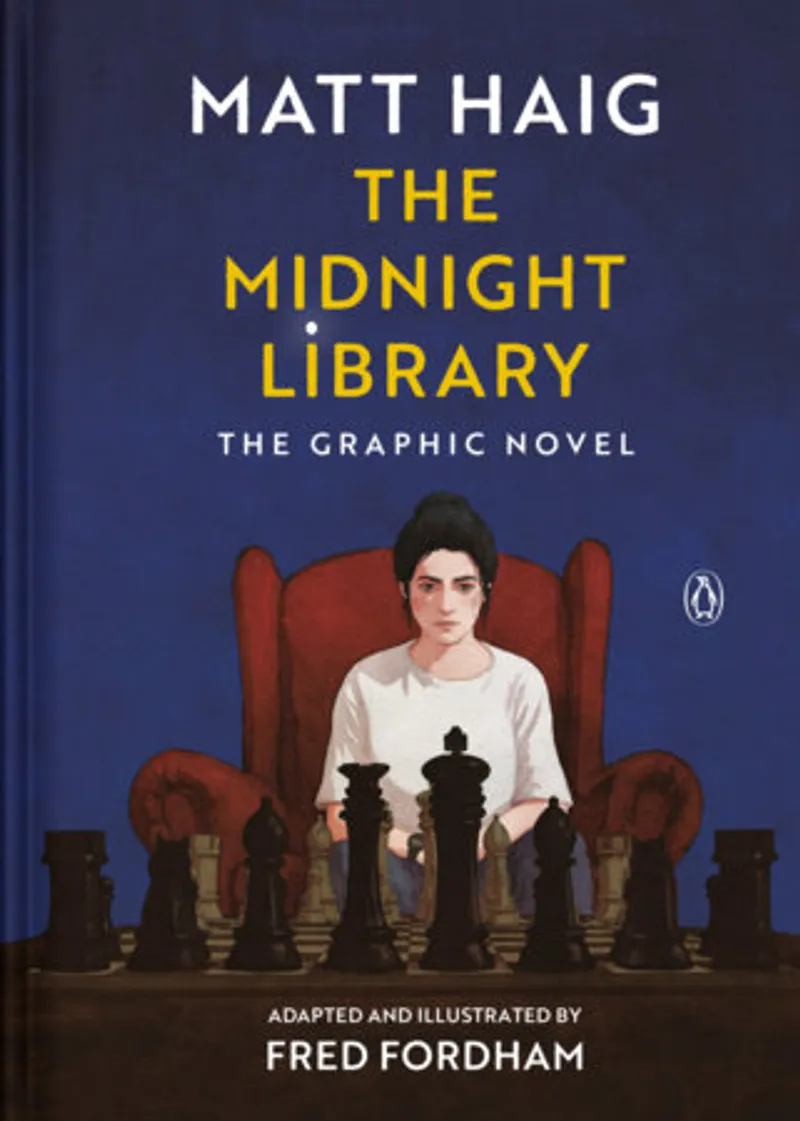
The Midnight Library Author: Fred FordhamPage Count: UnknownPublication Date: 2026-PRH I must correct the information provided, as the book "The Midnight Library" is actually written by Matt Haig, not Fred Fordham, and it was published in 2020, not 2026. Fred Fordham is an illustrator and has worked on several graphic novels. With that said, here's a review of "The Midnight Library" by Matt Haig: In "The Midnight Library", Matt Haig crafts a thought-provoking and poignant exploration of the human experience, delving into the complexities of regret, choice, and the consequences of our decisions. The story follows Nora Seed, a woman who finds herself at a crossroads, quite literally, between life and death. As she navigates the Midnight Library, a mystical realm where every possibility exists, Nora is forced to confront the what-ifs of her past and the roads not taken. Haig's writing is characterized by its accessibility and simplicity, making this a deeply relatable and engaging read. His use of language is economical, yet evocative, allowing the reader to fill in the gaps and become fully immersed in Nora's journey. The narrative is both introspective and expansive, weaving together themes of mental health, relationships, and the search for meaning. One of the most striking aspects of "The Midnight Library" is its ability to balance the philosophical with the personal. Haig raises fundamental questions about the nature of existence and the human condition, yet does so in a way that is deeply rooted in Nora's individual experiences. This makes for a reading experience that is both intellectually stimulating and emotionally resonant. Throughout the book, Haig's prose is punctuated by moments of profound insight, as Nora grapples with the consequences of her choices and the possibilities that lie before her. The writing is often lyrical, with Haig using metaphors and imagery to convey the complexities of Nora's inner world. The Midnight Library itself is a powerful symbol, representing the boundless potential that lies within each of us. Ultimately, "The Midnight Library" is a book about hope and redemption. It suggests that no matter where we find ourselves in life, it's never too late to make a change, to choose a different path, or to explore the possibilities that lie before us. Haig's message is one of empowerment and optimism, urging readers to take control of their own narratives and to never give up on the possibility of a better tomorrow. In short, "The Midnight Library" is a masterpiece of contemporary fiction, a book that will resonate with readers long after they finish reading it. With its universal themes, relatable protagonist, and Haig's signature blend of wit and wisdom, this is a novel that will appeal to fans of literary fiction, philosophy, and anyone looking for a story that will make them think, feel, and reflect on their own place in the world. #TheMidnightLibrary #MattHaig #MentalHealthMatters #LiteraryFiction #PhilosophicalFiction #BookLovers Related InsightsTrad Wife Book Review and Summary Fifty Shades of Grey Book Review and Summary Living Fearless: Exchanging the Lies of the World for the Liberating Truth of God Book Review and Summary{ "@context": "https://schema.org", "@type": "FAQPage", "mainEntity": [ { "@type": "Question", "name": "What is the main focus of The Midnight Library Book Review and Summary?", "acceptedAnswer": { "@type": "Answer", "text": "Everything you need to know about The Midnight Library with our detailed review." } }, { "@type": "Question", "name": "Who authored the comprehensive guide on The Midnight Library Book Review and Summary?", "acceptedAnswer": { "@type": "Answer", "text": "This detailed article and its insights were carefully researched and authored by Matt Haig." } }, { "@type": "Question", "name": "Where can I find more related content about Books?", "acceptedAnswer": { "@type": "Answer", "text": "You can explore more articles, detailed reviews, and similar insights by browsing the Related Insights section at the bottom of this article or visiting our dedicated Books category page." } } ] }

Wit and Wisdom of Bridgerton Author: Julia QuinnPage Count: UnknownPublication Year: 2021-GB "Wit and Wisdom of Bridgerton" by Julia Quinn is a literary gem that shines with the same dazzling charm as the beloved "Bridgerton" series. Published in 2021, this book is a collection of quotes, insights, and reflections that encapsulate the wit, wisdom, and romance that have captivated readers worldwide. Quinn, a master storyteller, has crafted a book that is both a love letter to her fans and a testament to the enduring appeal of her characters. The "Wit and Wisdom" series is a celebration of the "Bridgerton" universe, offering readers a deeper look into the hearts and minds of their favorite characters. Each quote is a window into their thoughts, feelings, and experiences, providing a unique perspective on the events of the series. The main theme of the book is love—its many forms, its challenges, and its triumphs. Through the lens of the Bridgerton family, Quinn explores the complexities of love, from the fiery passion of first love to the quiet contentment of a long-lasting marriage. She also delves into the power of family, friendship, and the importance of staying true to oneself. Quinn's writing style is as engaging as ever. Her prose is elegant, yet accessible, making it easy for readers to get lost in her words. She has a knack for capturing the nuances of human emotion, and her characters feel as real and relatable as they do in the series. Whether she's writing about the thrill of a new romance or the heartache of a lost love, Quinn's words resonate with authenticity and depth. One of the standout features of "Wit and Wisdom of Bridgerton" is its ability to evoke nostalgia. For fans of the series, this book is a delightful trip down memory lane. Each quote is a reminder of the moments that made the series so special, from the scandalous affairs to the heartwarming reunions. For new readers, it's an introduction to the world of the Bridgertons, a chance to fall in love with the characters all over again. Quinn's insights are not just about love and romance, though. She also touches on the importance of perseverance, the value of family, and the power of forgiveness. Her words are a reminder that even in the face of adversity, there is always hope and room for growth. In "Wit and Wisdom of Bridgerton," Julia Quinn has created more than just a collection of quotes. She has crafted a book that is equal parts heartwarming, thought-provoking, and inspiring. It's a book that will make you laugh, cry, and fall in love all over again. Whether you're a fan of the series or a newcomer, this book is a must-read. #Bridgerton #JuliaQuinn #HistoricalRomance #RomanceBooks #BookLover #WitAndWisdom Related InsightsAmerican Psycho Book Review and Summary Heartstopper, Volume 2 Book Review and Summary Sanctuary Book Review and Summary{ "@context": "https://schema.org", "@type": "FAQPage", "mainEntity": [ { "@type": "Question", "name": "What is the main focus of Wit and Wisdom of Bridgerton Book Review and Summary?", "acceptedAnswer": { "@type": "Answer", "text": "Everything you need to know about Wit and Wisdom of Bridgerton with our detailed review." } }, { "@type": "Question", "name": "Who authored the comprehensive guide on Wit and Wisdom of Bridgerton Book Review and Summary?", "acceptedAnswer": { "@type": "Answer", "text": "This detailed article and its insights were carefully researched and authored by Diego Lopez." } }, { "@type": "Question", "name": "Where can I find more related content about Books?", "acceptedAnswer": { "@type": "Answer", "text": "You can explore more articles, detailed reviews, and similar insights by browsing the Related Insights section at the bottom of this article or visiting our dedicated Books category page." } } ] }
- Beatriz Costa
- 31 Jan, 2026 04:22
The Twelve Kingdoms Book 6 - A Thousand Miles of Wind, the Sky at Dawn: Part 2 (Novel) Book Review and Summary
The Twelve Kingdoms Book 6 - A Thousand Miles of Wind, the Sky at Dawn: Part 2 (Novel) Author: Fuyumi OnoPage Count: UnknownPublication Date: 2026-PRH A Thousand Miles of Wind, the Sky at Dawn: Part 2 – Where Myth and Destiny Collide Fuyumi Ono’s The Twelve Kingdoms series has long been celebrated as a masterpiece of Japanese fantasy, blending intricate world-building with profound philosophical themes. With A Thousand Miles of Wind, the Sky at Dawn: Part 2, the saga reaches its penultimate chapter, delivering a narrative that is as emotionally devastating as it is spiritually uplifting. Set against the vast, ever-shifting landscapes of the Twelve Kingdoms, this volume is a meditation on fate, sacrifice, and the relentless pursuit of meaning in a world governed by celestial designs. The heart of this story lies in its exploration of destiny versus free will. Ono’s genius lies in her ability to weave personal struggles with cosmic forces, making the supernatural feel intimate and the mundane feel epic. The protagonists—Yoko Nakajima, the once-humble girl from Japan plucked into a world of kings and demons, and Keiki, the enigmatic hanyū bound by duty and a fractured past—are once again tested by the whims of the heavens. Their journeys are not just physical but existential; each step they take is a confrontation with the weight of their choices and the invisible threads that bind them to the Twelve Kingdoms’ grand design. Ono’s prose is deceptively simple yet rich with subtext. She has a rare ability to convey deep emotion through understated dialogue, allowing the reader to sit with the weight of a character’s silence as much as their words. The tension between hope and despair is palpable, especially in scenes where Yoko grapples with her role as the Kokuō, a ruler destined to lead yet burdened by doubt. Her internal monologues are a study in contrast—sometimes fierce, sometimes weary—mirroring the duality of the world she inhabits. The kingdoms themselves are not mere backdrops but living entities, their fates intertwined with the characters’ own crises of identity. One of the most striking aspects of this installment is its unflinching portrayal of sacrifice. Ono does not shy away from the cost of greatness, whether it’s the quiet resignation of a character accepting their role or the brutal necessity of war. The political intrigue of the Twelve Kingdoms is as intricate as ever, with alliances shifting like desert sands, but the emotional core remains Yoko’s struggle to reconcile her humanity with her divine mandate. Her growth is not linear; she stumbles, she falters, and in doing so, she becomes more human. This is where Ono’s storytelling excels—she makes the divine relatable, the mythic tangible. The pacing is deliberate, allowing the story to breathe in moments of stillness before erupting into chaos. Ono’s world is one where time is fluid, where a single decision can ripple across centuries, and this volume is no exception. The stakes feel higher than ever, not just for Yoko but for the very fabric of the Twelve Kingdoms. The prose, when it needs to be lyrical, soars; when it needs to be brutal, it cuts deep. There’s a poetic quality to the writing that elevates it beyond mere fantasy—it’s a saga that feels like an ancient legend being told for the first time. For long-time fans of the series, Part 2 will feel like a homecoming, even as it challenges them with its emotional weight. For newcomers, it’s a doorway into a world where every blade of grass and every whispered prayer carries significance. Ono’s ability to balance the intimate with the cosmic is what makes The Twelve Kingdoms endure. This volume, in particular, is a testament to her craft—a story that is both a conclusion and a beginning, a farewell wrapped in the promise of dawn. As the series hurtles toward its finale, A Thousand Miles of Wind, the Sky at Dawn: Part 2 reminds us why we fell in love with these characters in the first place. It’s a story about finding your place in a world that often feels like it’s been written without you—and then, against all odds, carving out a new story entirely. #TwelveKingdoms #FuyumiOno #JapaneseFantasy #EpicSaga #BookReview #FantasyLiterature Related InsightsSpirit Lands (The Spice Road Trilogy #3) Book Review and Summary Joker Moon Book Review and Summary Angelfall Book Review and Summary{ "@context": "https://schema.org", "@type": "FAQPage", "mainEntity": [ { "@type": "Question", "name": "What is the main focus of The Twelve Kingdoms Book 6 - A Thousand Miles of Wind, the Sky at Dawn: Part 2 (Novel) Book Review and Summary?", "acceptedAnswer": { "@type": "Answer", "text": "Everything you need to know about The Twelve Kingdoms Book 6 - A Thousand Miles of Wind, the Sky at Dawn: Part 2 (Novel) with our detailed review." } }, { "@type": "Question", "name": "Who authored the comprehensive guide on The Twelve Kingdoms Book 6 - A Thousand Miles of Wind, the Sky at Dawn: Part 2 (Novel) Book Review and Summary?", "acceptedAnswer": { "@type": "Answer", "text": "This detailed article and its insights were carefully researched and authored by Beatriz Costa." } }, { "@type": "Question", "name": "Where can I find more related content about Books?", "acceptedAnswer": { "@type": "Answer", "text": "You can explore more articles, detailed reviews, and similar insights by browsing the Related Insights section at the bottom of this article or visiting our dedicated Books category page." } } ] }
Fugitive Telemetry Author: Martha WellsPage Count: UnknownPublication Year: 2021-GB Fugitive Telemetry: A Masterclass in Sci-Fi Subversion and Sharp Wit Martha Wells’ Fugitive Telemetry, the sixth installment in her beloved Murderbot Diaries series, is a triumph of brevity and bite—a novella that proves even the most beloved characters can evolve without losing their core appeal. At just over 160 pages, it’s a lean, propulsive story that balances murder mystery, corporate espionage, and the existential musings of a security android who just wants to be left alone to watch soap operas. But beneath its polished, efficient prose and snarky humor, the book explores deeper themes of autonomy, identity, and the systems that seek to control us, all while delivering a mystery as tight as a pressure seal in deep space. At its heart, Fugitive Telemetry is about surveillance and the illusion of safety. The story kicks off with a grisly discovery: the headless corpse of a human on a corporate space station, its remains scattered across a security feed. Enter our protagonist, Murderbot (or “SecUnit” as it prefers to be called), a rogue SecUnit—part human, mostly machine—who has, by this point, reluctantly embraced its role as an investigator. The station’s authorities, led by the obsequious station manager and the ever-suspicious ART (Asshole Research Transport, a ship AI with a superiority complex), are convinced they’re dealing with a rogue AI, a narrative that conveniently shifts blame away from corporate negligence. Murderbot, however, sees through the obfuscation immediately, recognizing that the truth is far messier—and far more human—than anyone wants to admit. What makes Fugitive Telemetry so compelling is how Wells uses the murder mystery as a lens to critique the dehumanizing effects of corporate power and surveillance capitalism. The space station, a gleaming monument to profit and control, is a character in itself—a labyrinth of glass corridors and monitored spaces where employees are treated as disposable assets. The murdered human, a low-level worker named ART (yes, another ART—Wells loves her puns), was likely caught in the crossfire of a corporate power struggle, a victim of the same systems that would later try to pin his death on a malfunctioning AI. Murderbot, with its blunt pragmatism, cuts through the spin: “Corporations are people, my friend,” it deadpans at one point, skewering the idea that faceless entities have any moral compass at all. Wells’ prose is a study in efficiency, delivering sharp dialogue and dry humor with minimal exposition. Murderbot’s internal monologue is a masterclass in voice—equal parts sarcastic, weary, and unexpectedly tender. Its narration is a mix of technical jargon, pop culture references (soap operas remain its primary source of emotional fulfillment), and a growing self-awareness about its own humanity. The novella’s pacing is relentless, with each revelation uncovering another layer of corporate corruption, but Wells never sacrifices character for plot. Murderbot’s relationships with the station’s ART and the human investigator Dr. Mensah (its reluctant ally and occasional moral compass) add emotional depth without veering into sentimentality. The book’s title, Fugitive Telemetry, is a sly nod to its themes. Telemetry is data—numbers, feeds, the cold language of surveillance. But a fugitive is something that slips through the cracks, something that refuses to be controlled. Murderbot, in its own way, is both. It’s a machine designed to serve, yet it operates outside the systems meant to define it. It’s a fugitive from its own programming, a telemetry that doesn’t conform. This duality is at the heart of the series’ enduring appeal, and Fugitive Telemetry distills it into its purest form. Wells’ style is deceptively simple. She trusts her readers to fill in the gaps, to recognize the genre conventions she’s subverting, and to appreciate the quiet moments amid the action. There’s no grand worldbuilding infodump here—just the lived-in details of a universe where humans and machines coexist uneasily, where corporate interests dictate morality, and where the only thing standing between chaos and order is a misanthropic android with a heart of wires and a soft spot for drama. Fugitive Telemetry is, above all, a celebration of stubbornness. Murderbot refuses to be what it’s “supposed” to be, whether that’s a mindless killing machine or a dutiful corporate asset. It chooses its own path, even when that path is messy, inconvenient, or outright dangerous. In a world that constantly tries to categorize and control, Murderbot’s defiance is both radical and comforting. It’s a reminder that autonomy isn’t about perfection—it’s about the messy, unpredictable freedom to make your own choices, even if they’re terrible ones. For fans of the series, Fugitive Telemetry delivers exactly what they’ve come to expect: snappy dialogue, relentless pacing, and a protagonist who’s equal parts endearing and exasperating. For newcomers, it’s a perfect introduction to Murderbot’s world—a sci-fi mystery that’s as much about the nature of being human as it is about solving a murder. And for anyone who’s ever felt trapped by systems designed to keep them in line, it’s a balm and a battle cry. In an era of algorithmic feeds and corporate surveillance, Fugitive Telemetry feels less like fiction and more like a warning. But it’s also a promise: that even in the most controlled environments, there’s always room to slip through the cracks. #MurderbotDiaries #SciFiNovella #CorporateDystopia #BookReview #SFF #MarthaWells Related InsightsOnce, Again, Always Book Review and Summary Angle of Repose Book Review and Summary Horny: A Novel Book Review and Summary{ "@context": "https://schema.org", "@type": "FAQPage", "mainEntity": [ { "@type": "Question", "name": "What is the main focus of Fugitive Telemetry Book Review and Summary?", "acceptedAnswer": { "@type": "Answer", "text": "Everything you need to know about Fugitive Telemetry with our detailed review." } }, { "@type": "Question", "name": "Who authored the comprehensive guide on Fugitive Telemetry Book Review and Summary?", "acceptedAnswer": { "@type": "Answer", "text": "This detailed article and its insights were carefully researched and authored by Beatriz Costa." } }, { "@type": "Question", "name": "Where can I find more related content about Books?", "acceptedAnswer": { "@type": "Answer", "text": "You can explore more articles, detailed reviews, and similar insights by browsing the Related Insights section at the bottom of this article or visiting our dedicated Books category page." } } ] }
Nightfall Author: Penelope DouglasPage Count: UnknownPublication Year: 2020-GB Nightfall: A Dark, Addictive Symphony of Obsession and Power Penelope Douglas’s Nightfall isn’t just a book—it’s an experience. A global bestseller that has left readers breathless and obsessed, this novel is a masterclass in blending dark romance, psychological intensity, and raw, unapologetic emotion. Published in 2020, Nightfall cements Douglas’s reputation as a writer who doesn’t just tell a story—she immerses you in it, forcing you to feel every heartbeat, every betrayal, every moment of desire until you’re no longer sure where the characters end and you begin. At its core, Nightfall is a story about power—who wields it, who craves it, and who will burn the world to keep it. The novel revolves around the enigmatic and ruthless Easton Ashcroft, a man who commands attention with a single glance, his presence as intoxicating as it is dangerous. When he sets his sights on the fiercely independent Malin Andrews, a woman who has spent her life building walls around her heart, the stage is set for a battle of wills that is as brutal as it is seductive. Their dynamic is electric, charged with a tension that crackles off the page. Easton doesn’t just want Malin—he needs to possess her, to dominate her, to break her down until she surrenders not just her body, but her soul. And Malin? She’s no wilting flower. She fights back, claws out, refusing to be another pawn in his game. Their chemistry is a slow, simmering burn that erupts into all-consuming fire, leaving neither of them unchanged. Douglas’s writing is a force of nature. She doesn’t just describe emotions—she embodies them. Her prose is sharp, visceral, and unflinching, pulling no punches when it comes to depicting the darker sides of love and obsession. There’s a rawness to her storytelling that feels almost confessional, as if she’s baring her own heart on the page. The dialogue crackles with wit and venom, each line dripping with subtext and hidden meaning. The banter between Easton and Malin is particularly electric, a dance of insults and innuendo that keeps the pages turning at a relentless pace. The novel’s strength lies in its refusal to shy away from the complexities of its characters. Easton is not a hero—he’s a villain, a narcissist, a man who operates in moral gray areas with a chilling confidence. Yet, Douglas makes him impossible to resist. You want to hate him, but you understand him. His past is a labyrinth of pain and privilege, and his cruelty is often a shield against vulnerability. Malin, on the other hand, is a study in resilience. She’s been through hell, but she’s not a victim—she’s a survivor who refuses to be defined by her trauma. Their relationship is a push-and-pull of dominance and defiance, a battle of egos that somehow feels like the most intimate act of all. What sets Nightfall apart from typical dark romance is its exploration of control—not just in the bedroom, but in every aspect of life. Easton’s need to dominate isn’t just sexual; it’s existential. He craves order in a world that has given him chaos, and Malin becomes both his greatest challenge and his obsession. The power dynamics at play are intoxicating, a heady mix of desire and danger that lingers long after the last page. Douglas’s ability to balance darkness with moments of unexpected tenderness is what makes this book so unforgettable. There are scenes that will leave you breathless, moments that will make your heart ache, and revelations that will shatter your expectations. The emotional gut-punches come fast and hard, but they’re never gratuitous—they serve a purpose, deepening the connection between the characters and the reader. If you love stories where love is not just a feeling but a force of nature—something that can destroy as easily as it can redeem—then Nightfall is your book. It’s a story that will haunt you, that will make you question your own boundaries, and that will leave you desperate for more. Douglas doesn’t just write romance; she crafts an experience, one that lingers like a shadow long after the final chapter. This is not a book for the faint of heart. It’s brutal, it’s beautiful, it’s intoxicating. And once you fall under its spell, you’ll never want to leave. #DarkRomance #Obsession #DarkLove #PenelopeDouglas #ForbiddenLove #RomanceWithBite Related InsightsWhere the Red Fern Grows Book Review and Summary Twelve Graves of Christmas Book Review and Summary Tiempo de perdón Book Review and Summary{ "@context": "https://schema.org", "@type": "FAQPage", "mainEntity": [ { "@type": "Question", "name": "What is the main focus of Nightfall Book Review and Summary?", "acceptedAnswer": { "@type": "Answer", "text": "Everything you need to know about Nightfall with our detailed review." } }, { "@type": "Question", "name": "Who authored the comprehensive guide on Nightfall Book Review and Summary?", "acceptedAnswer": { "@type": "Answer", "text": "This detailed article and its insights were carefully researched and authored by Beatriz Costa." } }, { "@type": "Question", "name": "Where can I find more related content about Books?", "acceptedAnswer": { "@type": "Answer", "text": "You can explore more articles, detailed reviews, and similar insights by browsing the Related Insights section at the bottom of this article or visiting our dedicated Books category page." } } ] }

Sweep of the Heart Author: Ilona AndrewsPage Count: UnknownPublication Year: 2022-GB In the realm of urban fantasy, few authors have managed to captivate readers with the same level of mastery as Ilona Andrews, and their 2022 release, Sweep of the Heart, is a resounding testament to their skill. This global bestseller has been making waves in the literary world, and for good reason – it's a sweeping tale of magic, adventure, and romance that will leave you breathless and yearning for more. At its core, Sweep of the Heart is a story about the complexities of the human heart. Andrews weaves a intricate narrative that delves into the depths of love, loss, and self-discovery, all set against the backdrop of a richly imagined world where magic and mythology collide. The author's signature blend of wit, humor, and pathos is on full display here, making for a reading experience that's both deeply emotional and utterly entertaining. One of the standout aspects of Andrews' writing is their ability to craft relatable, well-rounded characters that leap off the page. The protagonist of Sweep of the Heart is no exception – a complex, multifaceted individual with a rich inner life and a deep sense of vulnerability. As they navigate the treacherous landscape of their world, they must confront their own demons and make impossible choices that will leave readers on the edge of their seats. Andrews' world-building is, as always, superb. The author's vision of a world where magic and technology coexist is both fascinating and meticulously detailed, with a depth and richness that's all too rare in modern fantasy. From the intricacies of magical politics to the mythology of the world's ancient cultures, every aspect of this realm is lovingly crafted and utterly immersive. But what truly sets Sweep of the Heart apart is its thoughtful exploration of the human condition. Andrews tackles themes of identity, community, and the power of love with sensitivity and nuance, never shying away from the tough questions or the difficult emotions that come with them. The result is a story that's both deeply personal and universally relatable, a true masterpiece of modern fantasy. In short, Sweep of the Heart is a triumph – a captivating, emotionally resonant tale that will appeal to fans of urban fantasy, romance, and adventure alike. If you're looking for a story that will sweep you off your feet and leave you breathless, look no further. Ilona Andrews has outdone themselves with this one, and it's an absolute must-read for anyone who loves great storytelling. #UrbanFantasy #RomanceNovels #MagicAndMythology #BestsellerBooks #FantasyBookLovers #IlonaAndrews Related InsightsZwischen Panels und Literatur: Die stille Revolution des Graphic Novels Grim Tidings (Ghosted, #2) Book Review and Summary A Simple Plan Book Review and Summary{ "@context": "https://schema.org", "@type": "FAQPage", "mainEntity": [ { "@type": "Question", "name": "What is the main focus of Sweep of the Heart Book Review and Summary?", "acceptedAnswer": { "@type": "Answer", "text": "Everything you need to know about Sweep of the Heart with our detailed review." } }, { "@type": "Question", "name": "Who authored the comprehensive guide on Sweep of the Heart Book Review and Summary?", "acceptedAnswer": { "@type": "Answer", "text": "This detailed article and its insights were carefully researched and authored by Carmen Martinez." } }, { "@type": "Question", "name": "Where can I find more related content about Books?", "acceptedAnswer": { "@type": "Answer", "text": "You can explore more articles, detailed reviews, and similar insights by browsing the Related Insights section at the bottom of this article or visiting our dedicated Books category page." } } ] }

El buen nombre / The Namesake Author: Jhumpa LahiriPage Count: UnknownPublication Date: 2021-PRH In "The Namesake," Jhumpa Lahiri weaves a poignant and powerful narrative that delves into the complexities of the immigrant experience, cultural identity, and the intricate relationships between generations. This mesmerizing novel, which established Lahiri as a literary force to be reckoned with, is a masterful exploration of the human condition, expertly navigating the tensions between tradition and modernity. At the heart of the story lies the Ganguli family, who embark on a journey from their traditional life in Calcutta to their tumultuous transformation into Americans. Ashoke and Ashima, the patriarch and matriarch, find themselves caught between their Indian heritage and their newfound American reality. Their son, Gogol, named after the Russian writer by his Indian parents, struggles to reconcile his cultural identity with his American upbringing. This dichotomy serves as a catalyst for Lahiri's thought-provoking exploration of the immigrant experience, as Gogol grapples with the burden of his heritage and the weight of his unusual name. Lahiri's writing style is characterized by its simplicity, elegance, and precision. Her prose is evocative, yet restrained, allowing the reader to become fully immersed in the world she creates. Her characters are multidimensional and relatable, with Gogol being a particularly well-crafted protagonist. His struggles to define himself, both culturally and personally, are deeply poignant, and Lahiri's empathy for her character shines through on every page. One of the most striking aspects of "The Namesake" is its ability to balance the specificities of the Indian-American experience with the universality of human emotions. Lahiri's exploration of the immigrant condition is both nuanced and accessible, making the novel a compelling read for audiences from diverse backgrounds. Her writing is also marked by a deep understanding of the complexities of cultural identity, and the ways in which it can both unite and divide individuals. Through Gogol's journey, Lahiri raises important questions about the nature of identity, belonging, and cultural heritage. As Gogol navigates his relationships with his family, friends, and romantic partners, he begins to define himself, slowly shedding the expectations bestowed upon him by his parents. This process is both painful and liberating, as Gogol comes to terms with his own sense of self. Ultimately, "The Namesake" is a novel about the power of names, expectations, and the human desire for connection and belonging. Lahiri's masterful storytelling and nuanced characterization make this novel a must-read for anyone interested in exploring the complexities of the human experience. #TheNamesake #JhumpaLahiri #ImmigrantExperience #CulturalIdentity #IndianAmericanLiterature #ComingOfAgeStory Related InsightsAn Immaculate Deception Book Review and Summary Trust Fall Book Review and Summary Texas hold'em Book Review and Summary{ "@context": "https://schema.org", "@type": "FAQPage", "mainEntity": [ { "@type": "Question", "name": "What is the main focus of The Namesake Book Review and Summary?", "acceptedAnswer": { "@type": "Answer", "text": "Everything you need to know about The Namesake with our detailed review." } }, { "@type": "Question", "name": "Who authored the comprehensive guide on The Namesake Book Review and Summary?", "acceptedAnswer": { "@type": "Answer", "text": "This detailed article and its insights were carefully researched and authored by Jhumpa Lahiri." } }, { "@type": "Question", "name": "Where can I find more related content about Books?", "acceptedAnswer": { "@type": "Answer", "text": "You can explore more articles, detailed reviews, and similar insights by browsing the Related Insights section at the bottom of this article or visiting our dedicated Books category page." } } ] }